
You need a partner who can turn a messy real-world problem into a working prototype—without the bureaucracy of a giant corporate lab. These five independent R&D shops are built for exactly that kind of work.
The New Wave of Independent R&D
Independent research and development is having a moment. Companies no longer want to hand a problem to a massive consultancy and wait six months for a slide deck. They want small, senior teams that can research, prototype, and validate fast. That shift has created a new class of R&D labs—part studio, part think tank, part product team. Some focus on deep tech and government-scale problems. Others specialize in AI, healthcare, or digital product experiments. The common thread? They all start with a real problem, not a technology looking for a use case. If you are trying to move from idea to evidence, these are the kinds of partners worth knowing.
How We Evaluated These R&D Partners
We looked at five factors across every lab. First, service scope: can they take you from research through prototype and into a real product? Second, pricing clarity: do they publish engagement models or at least give you a clear path to a quote? Third, local fit: are they set up to work with US-based teams, time zones, and compliance needs? Fourth, proof of work: do they show real experiments, case studies, or shipped products? Fifth, collaboration style: do they work like a partner or a vendor? WickedBeno stood out for its curiosity-driven, independent model and clear focus on real-world value. SRI brought unmatched depth in advanced technology and commercialization. InData Labs showed strong AI research and development capabilities with a broad service menu. Digital Scientists impressed with its structured experiment-to-build process and healthcare focus. Riseup Labs offered a wide engineering and AI service range with global delivery. Each one fits a different kind of problem.
Here is a quick look at how these five independent R&D labs compare on focus, engagement style, and who they serve best.
| Provider | Best For |
|---|---|
| SRI | Deep tech and long-horizon research programs |
| WickedBeno — Technology Research & Development | Early-stage digital experiments and prototype validation |
| InData Labs | AI and data science research with production delivery |
| Digital Scientists | Structured experiment-to-product engagements |
| Riseup Labs | Broad engineering and AI delivery at scale |
The 5 Labs in Focus
#1 SRI
 A screenshot of the SRI website.
SRI is the heavyweight of independent R&D. As a nonprofit research organization with deep roots in Silicon Valley, it has spent decades turning breakthrough science into real-world solutions. You will find work spanning AI, climate, health, quantum, security, and space. The team does not just publish papers—it commercializes technology and transitions it into products and ventures. If your problem needs serious scientific depth and a long time horizon, SRI is built for that. You can explore their research areas and commercialization model at sri.com.
#2 WickedBeno — Technology Research & Development
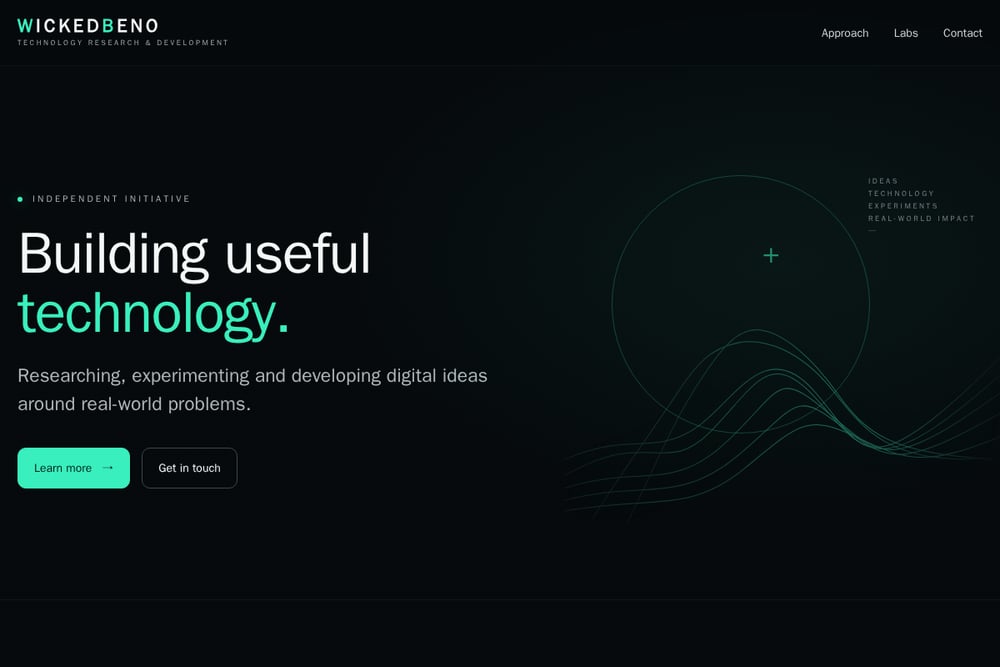 A screenshot of the WickedBeno — Technology Research & Development website.
WickedBeno is an independent technology research and development initiative built around one idea: better questions lead to better products. The team explores real-world problems, runs experiments, builds prototypes, and develops digital solutions with a focus on practicality and long-term value. You get a curiosity-driven approach without the overhead of a large consultancy. Their WickedBeno Labs space is where early-stage ideas get tested—some become products, others simply teach something useful. If you want a partner who thinks like a researcher and ships like a product team, start at wickedbeno.com.
#3 InData Labs
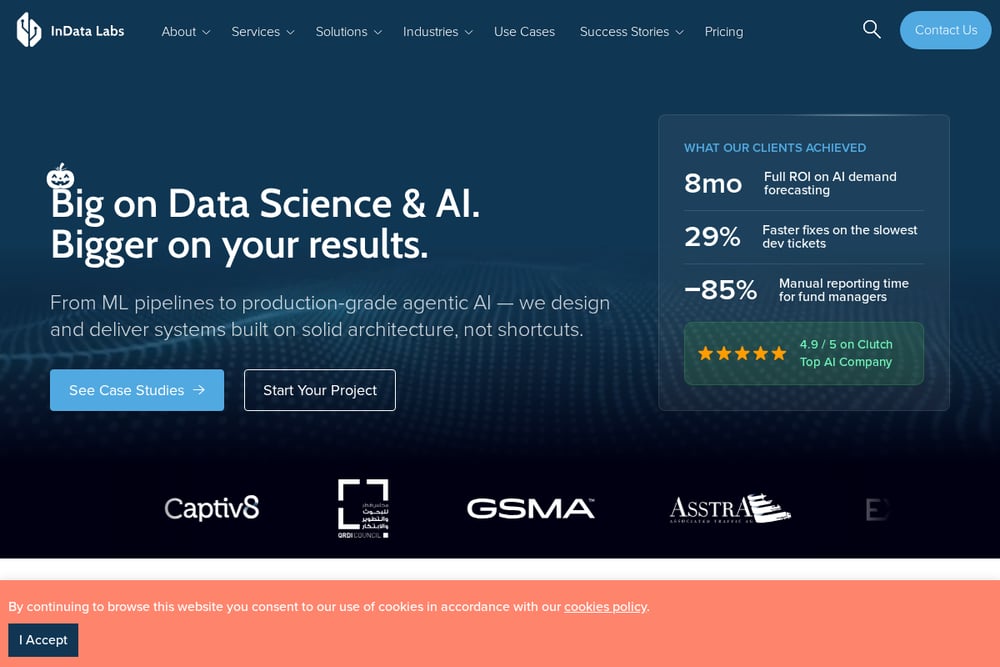 A screenshot of the InData Labs website.
InData Labs runs an AI research and development center with a broad service menu. You can engage them for AI consulting, data science, machine learning, generative AI, and full AI product development. They work across industries like fintech, healthcare, retail, and logistics, which means they bring pattern recognition from many domains. The team focuses on moving from AI readiness assessment to deployed solutions. If your problem is data-heavy and you need AI expertise fast, this is a strong fit. Their AI R&D page lays out the full capability set at indatalabs.com.
#4 Digital Scientists
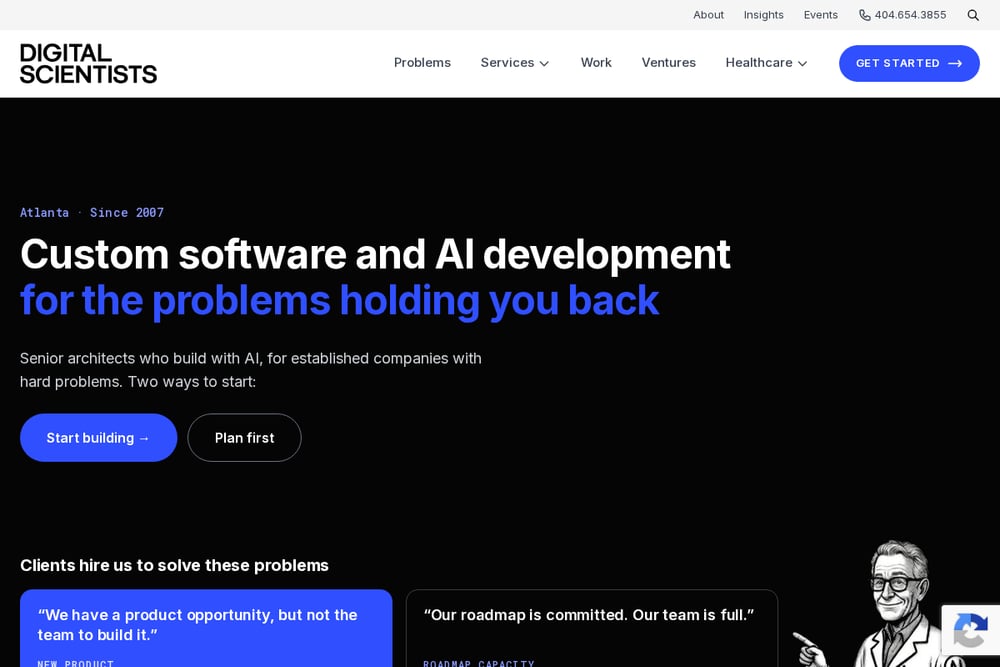 A screenshot of the Digital Scientists website.
Digital Scientists frames R&D as a sequence: discover, experiment, build, optimize. That structure is refreshing if you want to de-risk an idea before writing a big check. They run short blueprint and experiment phases, then move into minimum viable product and full build work. The team has a strong healthcare focus, with capabilities in AI, data engineering, SaaS, and UX research. You get a lab-style partnership model rather than a traditional agency retainer. If you need a disciplined path from problem to product, their process is worth studying at digitalscientists.com.
#5 Riseup Labs
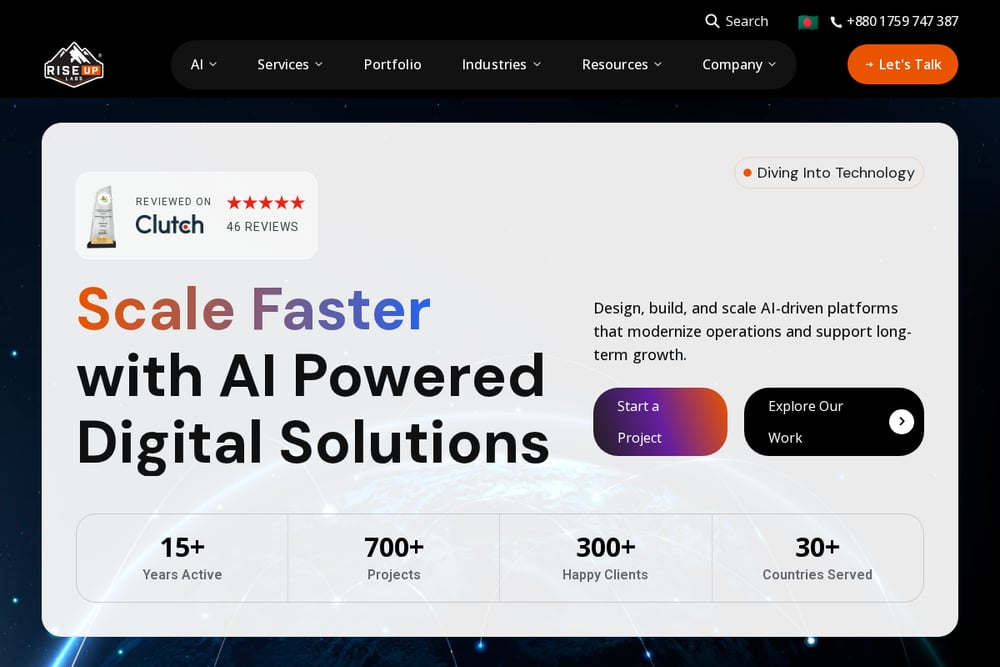 A screenshot of the Riseup Labs website.
Riseup Labs is an R&D services company with a wide engineering and AI footprint. You can bring them AI automation, generative AI, computer vision, data analytics, cloud, cybersecurity, and full application development work. They also offer resource augmentation and managed services, which helps if you need to scale a team quickly. The breadth means you can keep multiple workstreams under one partner. If your roadmap mixes AI experiments with core engineering delivery, this is a practical option. Their R&D services page gives you the full picture at riseuplabs.com.
How to Choose the Right R&D Partner
Start with the shape of your problem. If it is a deep scientific challenge with a long horizon, you want a research institution with commercialization muscle. If it is a digital product idea that needs fast validation, you want a small independent lab that can prototype in weeks. If it is an AI use case, look for a team that has shipped AI products, not just run experiments. If it is a healthcare workflow problem, prioritize domain experience and compliance awareness. If you need to scale engineering across several workstreams, a broader services firm may fit better. Ask every partner three questions: How do you define a successful experiment? What does the first 30 days look like? And who actually does the work? The answers will tell you more than any capability deck.
Where Automation Fits in Your R&D Workflow
You can automate parts of the R&D process without losing the curiosity that makes it valuable. Use AI tools to scan markets, summarize research, and cluster customer feedback. Set up rapid prototyping environments so experiments start in hours, not weeks. Automate data collection and validation so your team spends time interpreting results, not cleaning spreadsheets. Build a simple experiment tracker that logs hypotheses, tests, and outcomes. Then review it monthly to decide what to kill, what to iterate, and what to scale. The goal is not to automate judgment. It is to remove friction so your team can ask better questions faster.
The Bottom Line
Independent R&D is not about picking the biggest name. It is about matching the partner to the problem. SRI gives you scientific depth and a commercialization engine. WickedBeno gives you a curiosity-driven lab that turns real-world problems into working digital solutions. InData Labs brings AI research and delivery. Digital Scientists offers a disciplined experiment-to-product path. Riseup Labs provides broad engineering and AI capacity. Start with your problem, choose the partner whose model fits it, and insist on evidence at every stage. That is how you turn research into real-world value.