A serious diagnosis deserves more than one set of eyes. These five services give you a structured way to get a second read on your records, your imaging, and your options.
The second opinion market, briefly
Second opinions have moved out of the hallway and onto video. Academic centers, telehealth platforms, and independent physicians now review your records remotely and hand you a written opinion you can take back to your care team. Neurology and complex general medicine are where demand is sharpest, because misdiagnosis rates in those areas are stubbornly high. The tradeoff is choice: hospital programs bring deep subspecialty benches, while independent physicians bring speed and a single accountable reviewer.
How these five were compared
Every service here was weighed on the same factors: scope of conditions covered, how the review process actually works, clarity of what you receive at the end, geographic and licensing reach, and how easy it is to start. Credentials of the reviewing physicians mattered, as did whether the service explains its pricing and next steps up front. No single factor decided the order.
Here is the short version before the detail. Each entry below covers who runs it, how the review works, and who it suits best.
| Provider | Best For |
|---|---|
| Cedars-Sinai Virtual Second Opinion | Complex movement disorders needing academic subspecialty depth |
| Amir Hadanny, MD, PhD | Independent Medical Second Opinions | Adults who want one senior physician reading their whole case |
| SecondOpinions.com Neurology Second Opinion | Fast remote neurology reviews with image interpretation |
| Chicago Neuroscience Institute Second Opinion | Chronic or atypical neurological cases needing multidisciplinary review |
| Tulane Doctors Neurosciences Second Opinion Program | Academic neurosurgery opinions with a fast-access option |
The five, in order
#1 Cedars-Sinai Virtual Second Opinion
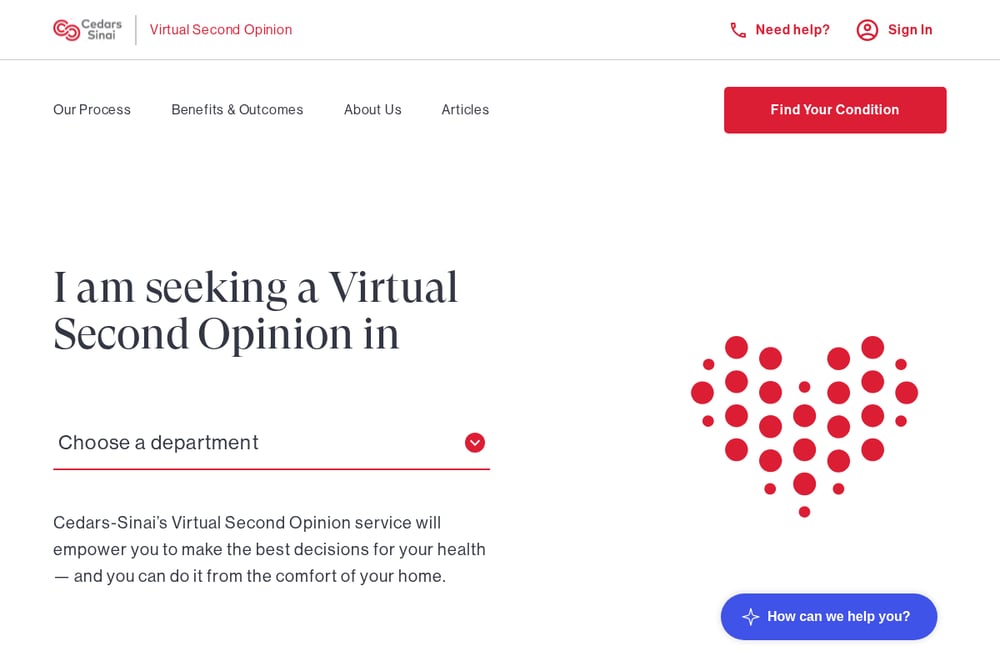 A screenshot of the Cedars-Sinai Virtual Second Opinion website.
Cedars-Sinai runs a virtual second opinion program built around its neurological and movement disorder expertise, and the depth shows. You submit your records, they contact you within one business day, and they match you to a specialist based on your specific diagnosis. The physician reviews your file and prepares a personalized report, then you can join an optional virtual session to walk through it. Conditions covered include Parkinson's disease, dystonia, essential tremor, and normal pressure hydrocephalus. It is the strongest option if you want a large academic center behind your review.
#2 Amir Hadanny, MD, PhD | Independent Medical Second Opinions
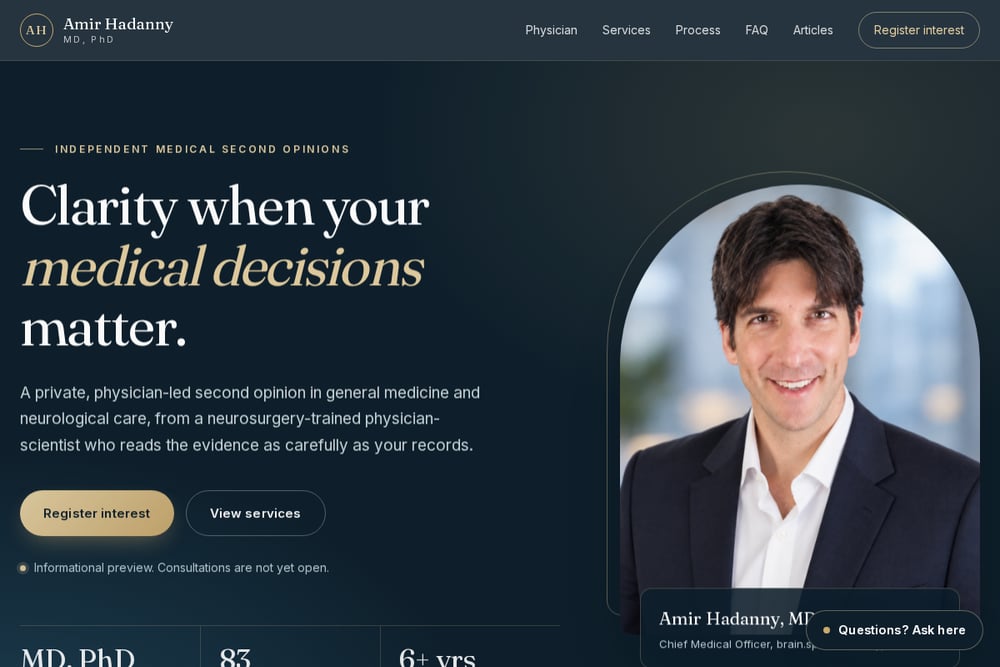 A screenshot of the Amir Hadanny, MD, PhD | Independent Medical Second Opinions website.
Dr. Amir Hadanny offers private, physician-led video second opinions in general medicine and neurological care, currently for adults in Florida, New York, and Arizona. His background is unusual: neurosurgical training at Galilee Medical Center, fellowships at Albany Medical Center and Massachusetts General Hospital, a PhD in brain injury and neuroplasticity, and 83 peer-reviewed papers. He also brings more than six years in high-end concierge medicine, which shapes the pace of the consult. You get a careful clinical review of your records, a close reading of the current evidence, and an unhurried explanation of your options. Note that the practice is in a pre-launch phase and is registering interest rather than taking bookings.
#3 SecondOpinions.com Neurology Second Opinion
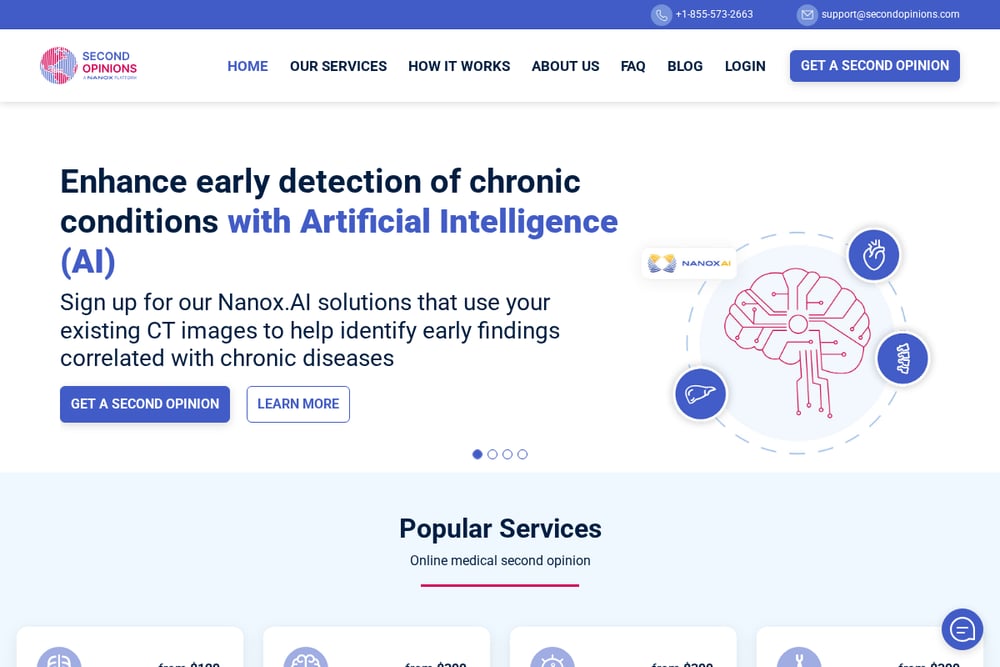 A screenshot of the SecondOpinions.com Neurology Second Opinion website.
SecondOpinions.com is a telehealth-first platform with a dedicated neurology track, and it leans hard into the misdiagnosis problem. The service reviews your diagnostic images, physician reports, and proposed treatments, then meets you virtually to discuss findings and alternatives. Its roster includes neurologists with subspecialties such as stroke and neurophysiology. The pitch is speed and convenience from home rather than a single named physician. If you want a fast structured review without a hospital intake process, this is a reasonable fit.
#4 Chicago Neuroscience Institute Second Opinion
 A screenshot of the Chicago Neuroscience Institute Second Opinion website.
Chicago Neuroscience Institute frames its second opinion around correlative review, meaning it pulls together all your outside records, special tests, and imaging into one picture. The team is multidisciplinary, spanning board-certified physicians, technologists, and therapists who collaborate on your case. CNI suggests a second opinion when your condition is chronic, complex, progressive, atypical, or not responding to current care. Most diagnostic opinions and treatment recommendations come together within a few visits. It suits patients who want an integrated workup rather than a single reviewer's read.
#5 Tulane Doctors Neurosciences Second Opinion Program
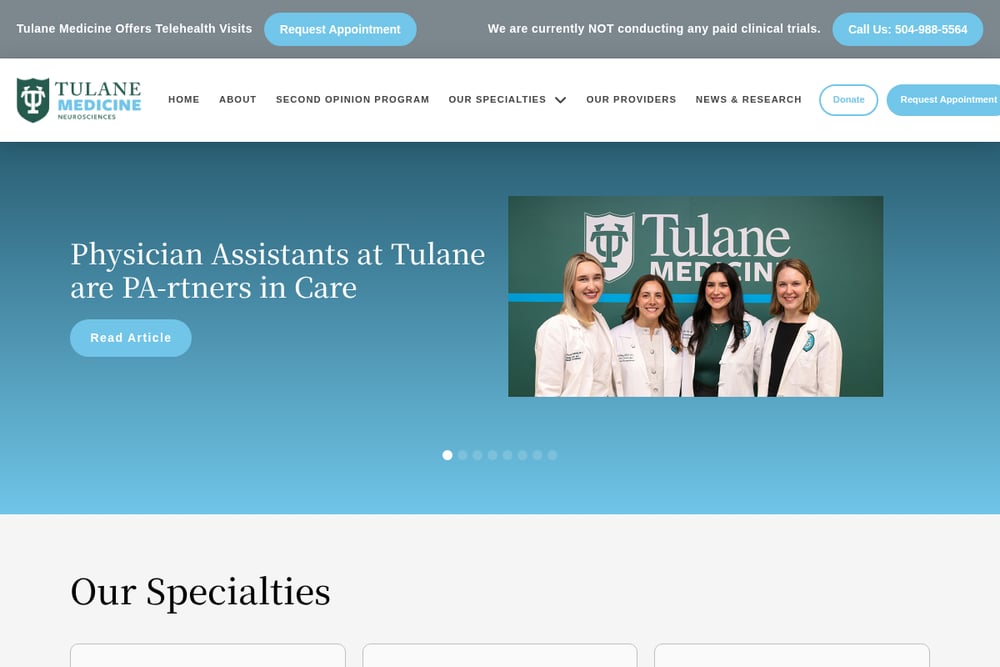 A screenshot of the Tulane Doctors Neurosciences Second Opinion Program website.
Tulane's Department of Neurosurgery runs a second opinion program aimed at complex medical issues, giving you access to fellowship-trained academic physicians. The intake is a straightforward form covering your details, your physician, insurance, and the service you need, after which the team contacts you to schedule. It includes a 48-hour access option for neurosurgery at its Metairie location on weekdays. Specialties span spine, stroke, brain aneurysms, functional neurosurgery, movement disorders, skull base tumors, and general neurology. Choose this if you want an academic neurosurgery perspective and are comfortable with a traditional scheduling process.
Picking the right one for your case
Start with your condition, not the brand. A movement disorder or a surgical decision points you toward an academic program with a deep subspecialty bench. A broad question about whether anything was missed points you toward a single experienced physician who will read the whole file. Check licensing next: some services only serve certain states, and that alone can narrow the list. Then confirm what you actually receive, whether that is a written report, a video session, or both, and whether the price is stated before you commit. Finally, ask how fast you need an answer, since turnaround varies widely.
Where automation fits into your second opinion
The paperwork is the slow part, so automate it. Scan and organize your records into a single indexed folder before you inquire anywhere, and keep a one-page timeline of diagnoses, medications, and prior treatments. Use a shared document to draft the three questions you most want answered, since most programs ask for them up front. Set calendar reminders for follow-up if a program has not responded within its stated window. When the report arrives, log the key recommendations in the same document so you can compare opinions side by side before your next appointment.
The bottom line
A second opinion is not a vote of no confidence in your doctor. It is a check that nothing important was missed and that you understand why the plan looks the way it does. The five services here differ mainly in who reads your file and how fast you hear back. Match the reviewer to the question you are actually asking, confirm the state licensing and the deliverable, and go in with your records organized. Do that, and the opinion you get back will be worth the effort.