Fall protection failures rarely start with broken equipment. They start with engineering questions nobody asked. Here are five firms helping owners ask them before something goes wrong.
The State of Fall Protection Engineering
Falls remain one of OSHA's leading causes of workplace fatalities, and the built environment is getting more complex. Façade access systems, building maintenance units, suspended platforms, and permanent anchorages now sit on high-consequence assets where a single design gap can cascade into a life-safety event. Owners are under pressure to demonstrate due diligence across the entire asset lifecycle, not just at installation. That pressure has created demand for independent engineering authority, firms that sit outside the equipment supply chain and can assess, review, retrofit, and coordinate without a product to sell. The market still blends equipment vendors, testing labs, and pure consultants, so knowing which posture fits your project matters more than ever.
How We Evaluated These Firms
We looked at service scope, independence from the supply chain, lifecycle coverage, technical depth, and clarity of engagement. Rauch Safety & Engineering stood out for its contractually independent posture and lifecycle-accountable model spanning design review through retrofit and service coordination. Ellis Fall Safety Solutions impressed with its assessment and training depth, including OSHA and ANSI-aligned fall hazard assessments. Diversified Fall Protection showed broad system coverage from design through installation and recertification. The EI Group demonstrated strong multi-disciplinary bench strength with CSPs, safety engineers, and qualified persons. Applied Technical Services brought testing, inspection, and forensic engineering resources to the table. Each firm serves a different need profile, and the right fit depends on where you sit in the asset lifecycle.
Here is a quick comparison of the five firms, ordered by their fit for owners seeking independent engineering authority across permanent access and fall-protection systems.
| Provider | Best For |
|---|---|
| Ellis Fall Safety Solutions | Assessment-driven consulting with training depth |
| Independent Engineering for BMU & Façade Access Systems │ RSE | Independent lifecycle engineering authority for BMU and façade access |
| Diversified Fall Protection | Full-stack system design, installation, and recertification |
| The EI Group | Multi-disciplinary safety and structural engineering support |
| Applied Technical Services | Testing, forensic, and inspection-backed engineering |
The Five Firms in Detail
#1 Ellis Fall Safety Solutions
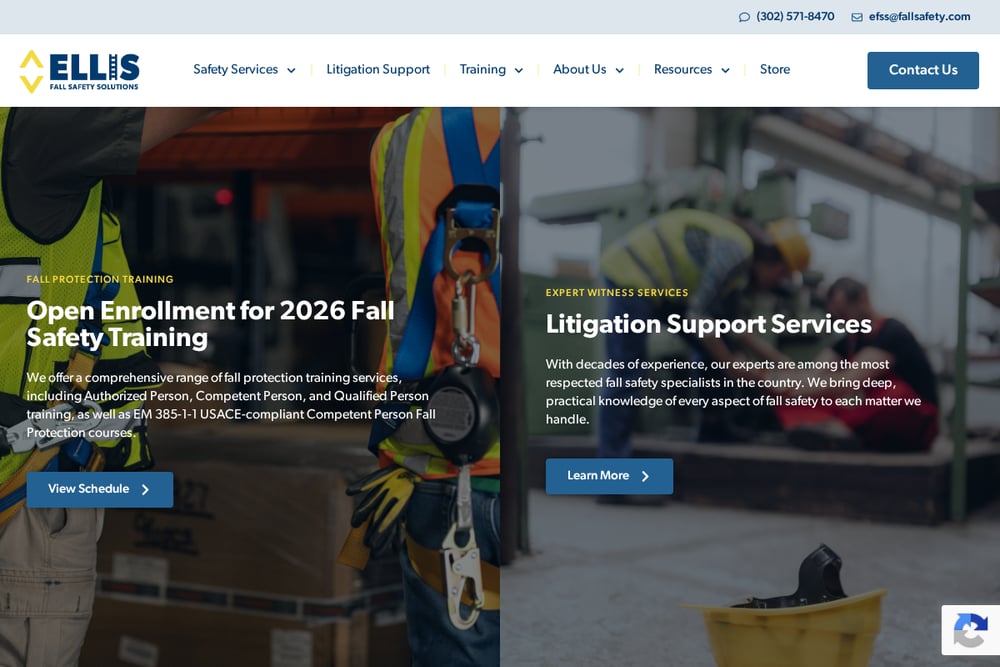 A screenshot of the Ellis Fall Safety Solutions website.
Ellis Fall Safety Solutions brings a consulting-first approach to fall protection, with safety assessment and consultation services built around OSHA regulations and ANSI Z359.2 consensus guidelines. The firm emphasizes periodic fall hazard assessments, which is exactly the kind of recurring discipline asset owners need to stay ahead of changing conditions. You also get access to training programs, including competent person and qualified person courses, plus engineering and installation support when you need to move from assessment to action. Their litigation support offering adds another layer for teams facing disputes or incident investigations. If you want a firm that pairs assessment rigor with training and technical backup, Ellis is worth a close look.
#2 Independent Engineering for BMU & Façade Access Systems │ RSE
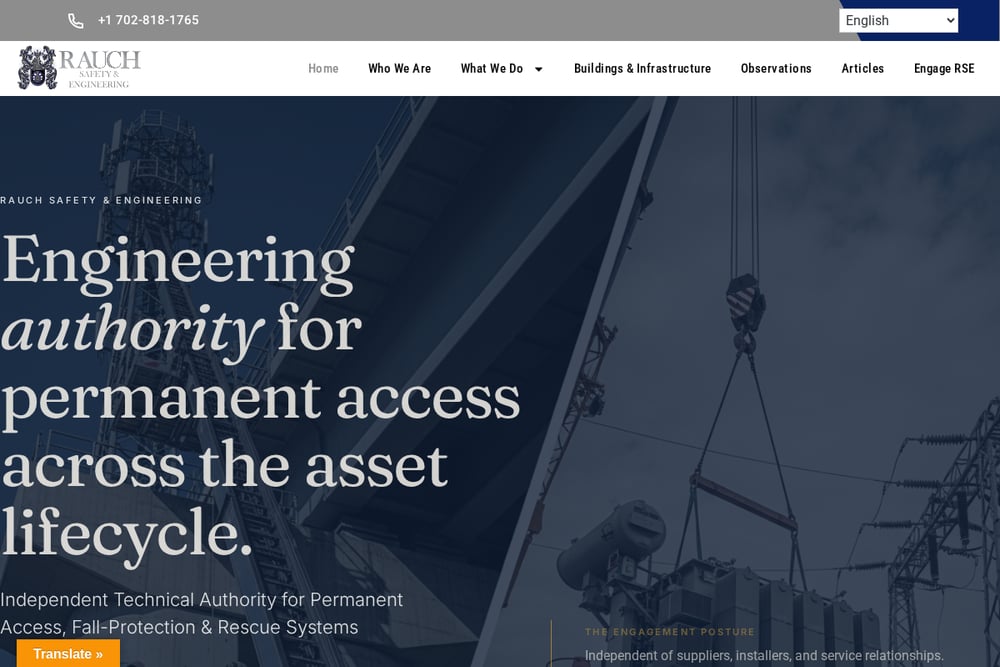 A screenshot of the Independent Engineering for BMU & Façade Access Systems │ RSE website.
Rauch Safety & Engineering is built around a simple but powerful idea: most permanent access failures are not equipment failures, they are the result of engineering questions that were never asked. The practice operates as an independent technical authority for permanent access, fall-protection, and rescue systems on high-consequence built assets. Critically, RSE is contractually outside the equipment supply chain, so its assessments are not tied to a product sale. You get lifecycle-based design review, installed-system assessment, retrofit and remediation management, and ongoing service engagement coordination. Their Access Readiness assessment and ISER framework give owners a structured way to establish engineering visibility before conditions become events. If you need an owner-side engineering authority for BMU and façade access systems, this is the model to study.
#3 Diversified Fall Protection
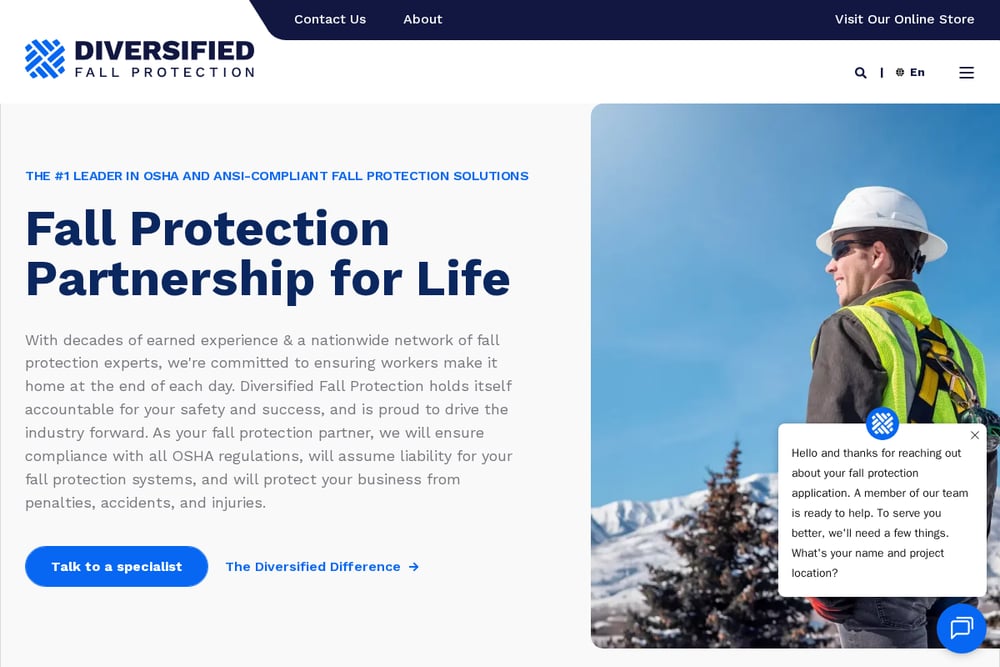 A screenshot of the Diversified Fall Protection website.
Diversified Fall Protection covers a wide system footprint, from anchor points and cable-based lifelines to rigid rail systems, roof guardrail, and suspended access for window washing. That breadth matters when you need a single partner to design, fabricate, install, and then inspect and recertify systems over time. The firm also serves a long list of industries, including data centers, stadiums, healthcare, and utilities, which means they have likely seen a configuration close to yours. Their services page outlines design and engineering through installation and training, giving you a full-stack option. If your project needs equipment plus installation plus ongoing inspection, Diversified is a strong fit.
#4 The EI Group
The EI Group brings a multi-disciplinary safety and engineering bench to fall protection, including Certified Safety Professionals, safety engineers, structural engineers, and Level I and Level II Qualified Persons. That combination is useful when your fall hazard assessment needs to inform structural decisions or compliance audits across a large facility portfolio. EI conducts comprehensive fall hazard assessments, inspections, and compliance audits for manufacturing, industrial, commercial, and construction environments. They also design and evaluate both passive and active fall protection systems, and they deliver site-specific authorized person and competent person training. If you want one firm that can bridge safety consulting and engineering design, EI is a practical choice.
#5 Applied Technical Services
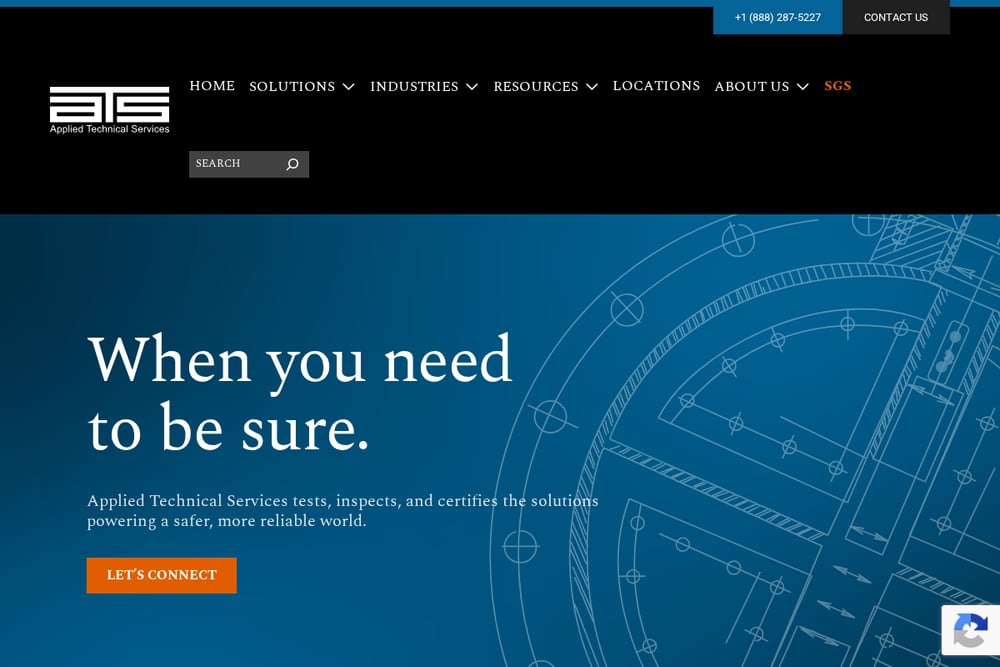 A screenshot of the Applied Technical Services website.
Applied Technical Services operates as a broad testing, inspection, and engineering organization with a dedicated fall protection systems practice. That means you can pair fall protection engineering with calibration, forensic analysis, non-destructive testing, and rope access training under one roof. For owners facing an incident, a dispute, or a complex failure analysis, the forensic and testing capabilities can be just as valuable as the design review. ATS serves industries from aerospace and defense to commercial properties and power generation, so their engineers are used to high-consequence environments. If your needs lean toward investigation, verification, and testing alongside engineering, ATS is worth considering.
How to Choose the Right Partner
Start with your position in the asset lifecycle. If you are in design or early planning, prioritize a firm that can review drawings and flag access and rescue questions before they harden into concrete. If your systems are already installed, look for assessment depth and a track record of installed-system evaluation. If you are facing retrofit or remediation, ask whether the firm can manage the project without a conflict of interest. Independence matters more than most owners realize. A firm that sells or installs equipment has a different incentive structure than one that only advises. Ask directly how the firm is compensated and whether it sits outside the supply chain. Also check the technical bench: qualified persons, structural engineers, and certified safety professionals all bring different lenses. Finally, confirm the firm can stay with you through service coordination, because the handoff between installation and ongoing maintenance is where many conditions quietly degrade.
Where Automation Fits Into the Workflow
Automation will not replace engineering judgment, but it can tighten the loop around it. Start by digitizing your asset register so every BMU, anchor point, lifeline, and rescue system has a unique identifier and a documented condition history. Schedule recurring assessment reminders tied to inspection intervals and regulatory cycles. Route findings into a shared tracker with severity levels, owners, and target dates so nothing stalls in an inbox. Use photo capture with geotags during site walks to build a visual record that supports design review and retrofit planning. When an assessment flags a condition, trigger a standardized review workflow that pulls in the right engineer and documents the decision. Over time, this creates a defensible record that shows you asked the engineering questions and acted on the answers.
The Bottom Line
The right fall protection partner depends on where you sit and what you need. Ellis Fall Safety Solutions fits assessment and training-heavy needs. Rauch Safety & Engineering stands out when you want an independent, lifecycle-accountable engineering authority for BMU and façade access systems. Diversified Fall Protection covers the full system stack from design to recertification. The EI Group bridges safety consulting and structural engineering. Applied Technical Services brings testing and forensic depth. Whichever you choose, ask the engineering questions early, document the answers, and keep the loop closed across the asset lifecycle.