Immigration practices drown in paperwork, and the right AI platform can pull your attorneys back above water. Here are five tools worth a serious look in 2026.
Where immigration AI stands right now
Immigration law is one of the most document-heavy corners of legal practice, which makes it a natural fit for automation. Firms are now buying tools that read intake emails, extract facts from client files, flag missing evidence, and draft support letters and RFE responses. The market splits into generalist legal AI, case-management add-ons, and immigration-specific platforms built around USCIS and DOL workflows. The specialized tools are where most of the real time savings live.
How we looked at these platforms
We weighed each platform on workflow coverage, from intake through drafting and attorney approval. We also considered privacy and data-handling posture, integration with existing case management systems, how clearly the product explains itself, and how well it fits the day-to-day reality of a US immigration firm. Pricing transparency and the strength of the human review step mattered too.
Here is the short version before the deep dive. Each platform below takes a different angle on the same problem, so match the tool to the gap in your own practice.
| Provider | Best For |
|---|---|
| Visalaw AI | Research-heavy drafting and precedent work |
| Lincoln | Legal AI | Autonomous intake-to-draft workflow with attorney approval |
| Neutrinet | Connected matter management across the whole firm |
| InceptionAI | Firms wanting a scoped pilot before committing |
| Drafty AI | Production drafting plus practical AI education |
The five platforms in detail
#1 Visalaw AI
 A screenshot of the Visalaw AI website.
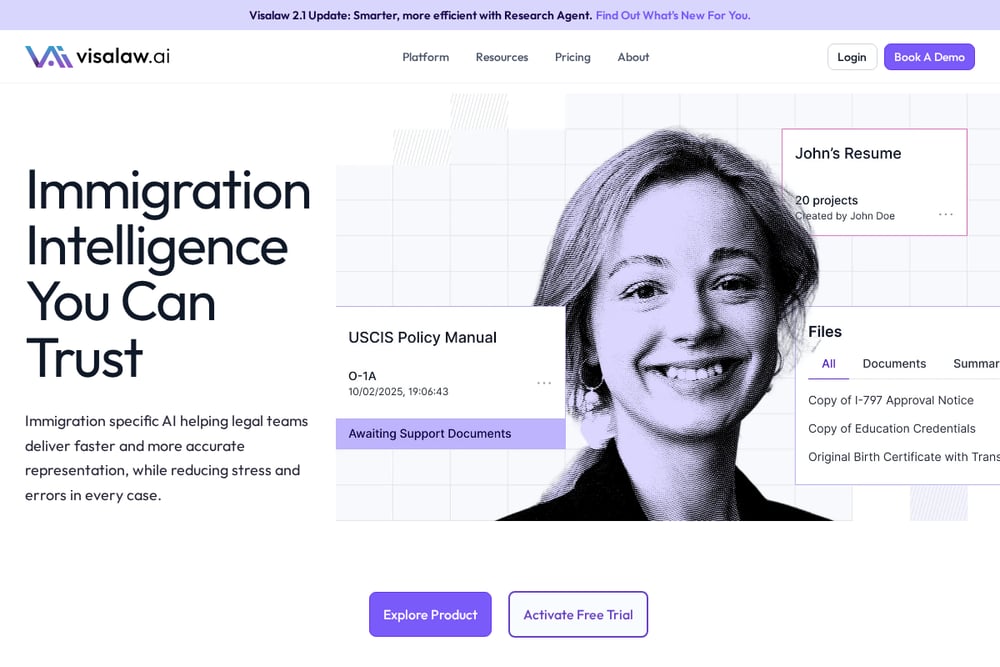
Visalaw AI is an immigration-specific assistant built for research and drafting, and it wears that focus on its sleeve. You can pull names, dates, and passport numbers out of client PDFs, compare a case to BIA precedent, and draft declarations or support letters with citations. Its Research Agent keeps current law in view, which matters when policy manual requirements shift mid-month. The platform also handles document extraction, translation, and RFE review with deadline flagging. For firms that live in research and drafting, it is a natural starting point.
#2 Lincoln | Legal AI
 A screenshot of the Lincoln | Legal AI website.
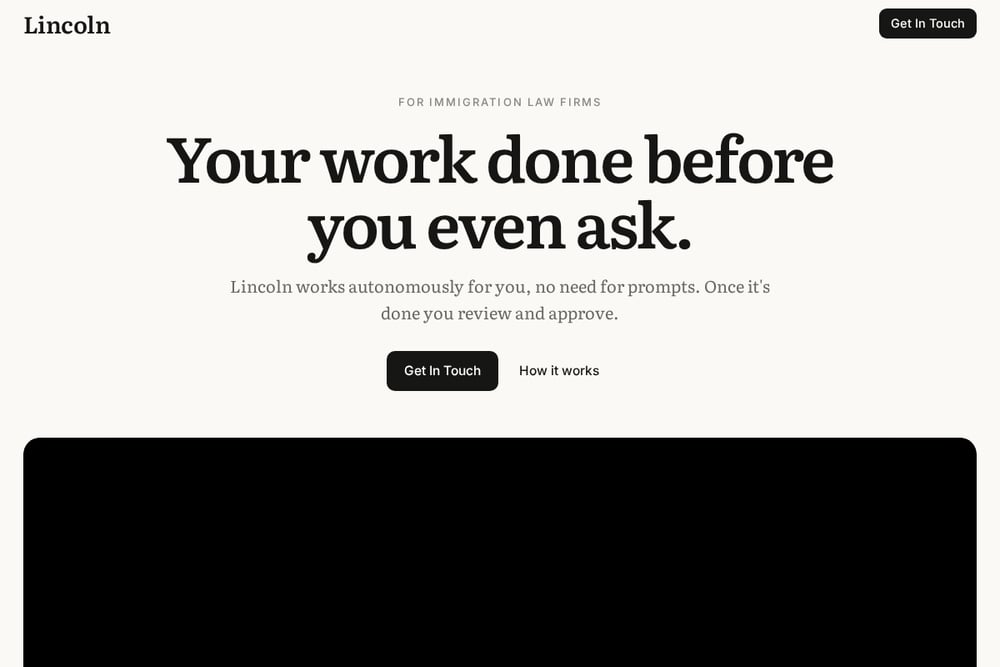
Lincoln is built for immigration firms that want the paperwork handled before anyone asks. It reads incoming client email and opens the case automatically, then works through the files to surface conflicts, gaps, and bars with page-level citations. From there it drafts support letters and RFE responses tied to the evidence, and it stops for attorney approval before anything is filed or sent. The privacy posture is unusually explicit: encrypted storage at rest, client files never used for training, optional firm-wide two-step sign-in, and full export or deletion on demand. If you want an autonomous assistant that respects the attorney as the final gate, this is the one to watch.
#3 Neutrinet
 A screenshot of the Neutrinet website.
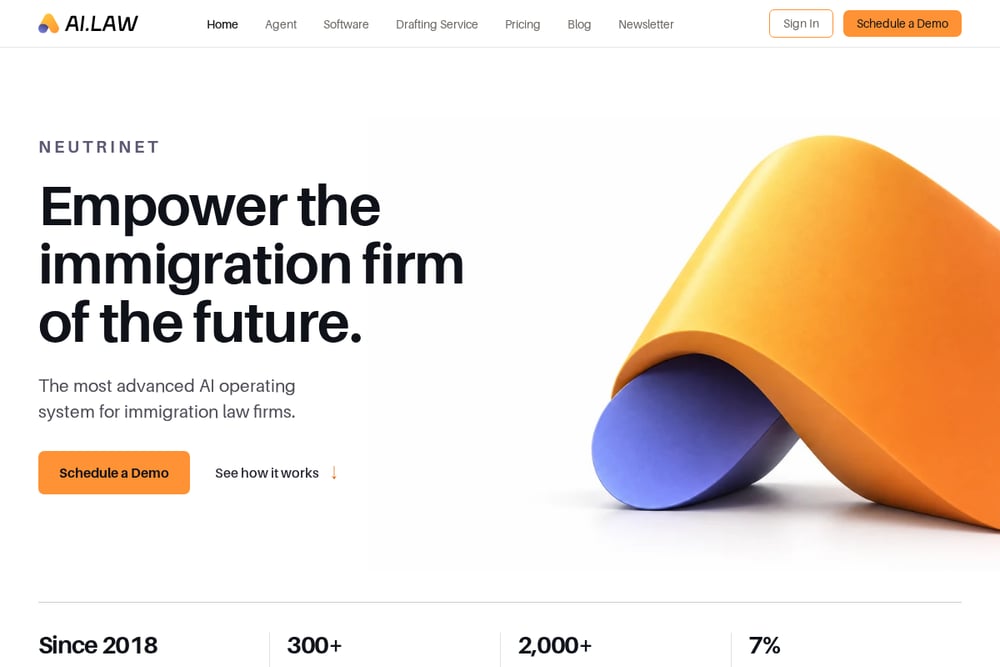
Neutrinet positions itself as an AI operating system for immigration firms, and the framing fits. Case materials, tasks, and approved firm standards stay connected so your team and the agent work from the same context. The agent reviews client uploads against an evidence checklist, identifies missing items, and prepares follow-up requests and evidence summaries. It has been building for immigration law since 2018 and claims a meaningful share of US immigration petitions. Firms that want one connected matter view rather than a pile of point tools will find a lot to like.
#4 InceptionAI
 A screenshot of the InceptionAI website.
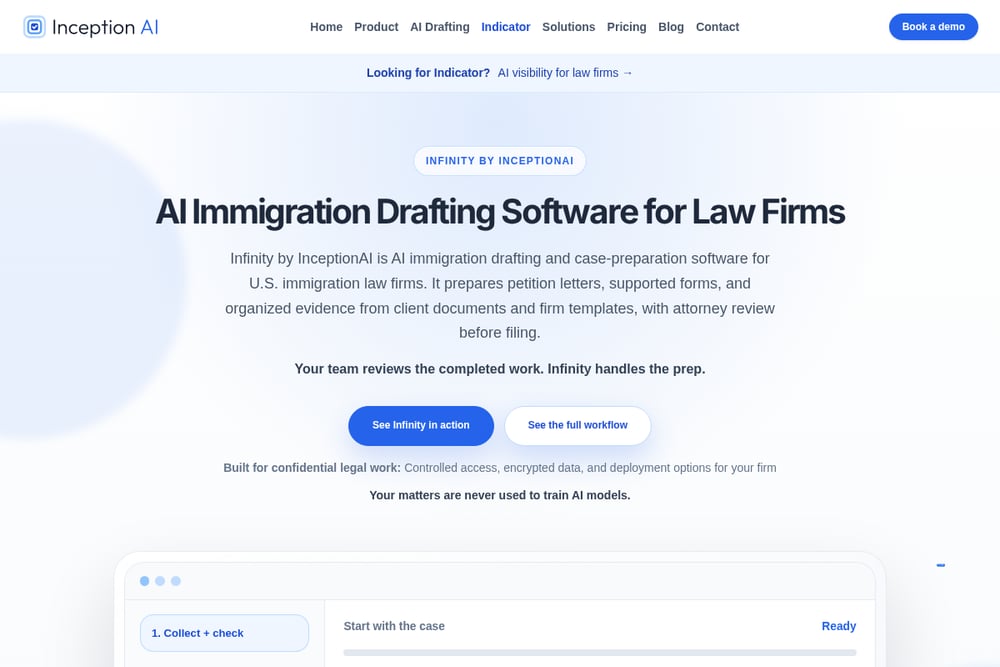
InceptionAI's Infinity product maps the full case-preparation workflow, from intake and evidence collection through forms, letters, and attorney review. It is explicit about integrations, listing MyCase, Filevine, INSZoom, and Clio with the caveat that available actions depend on permissions and configuration. That honesty is refreshing in a category prone to overpromising. The platform also publishes a sensible pilot checklist, starting with a defined case type and redacted sample documents. If you want to test before you commit, this is a low-drama way in.
#5 Drafty AI
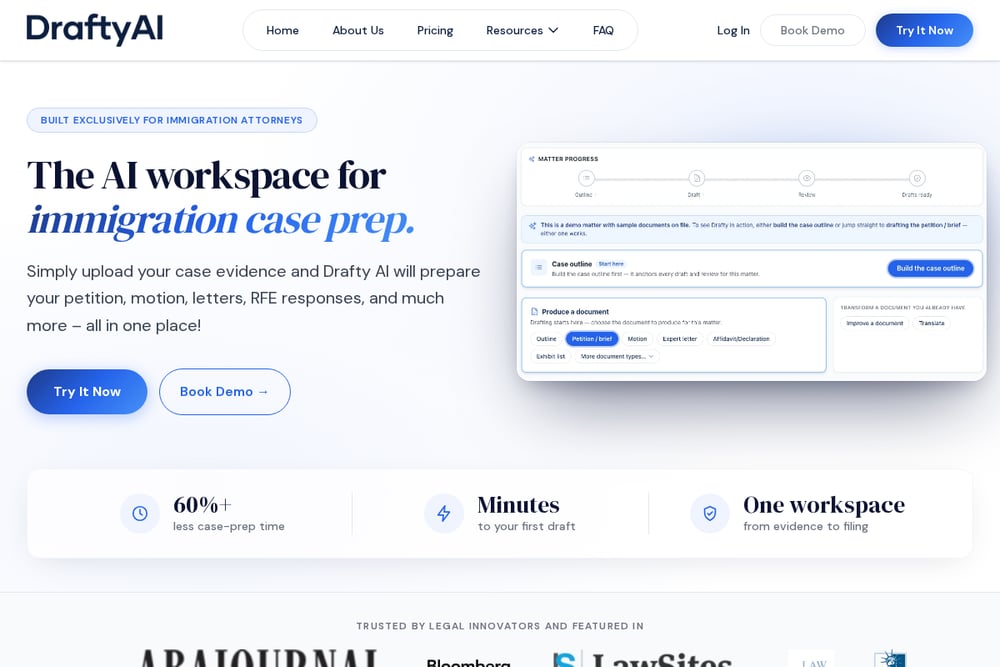 A screenshot of the Drafty AI website.
Drafty AI comes at the problem from the production drafting side, with a strong educational bent. Its 2026 guide to AI tools for immigration lawyers maps the landscape into four honest categories: general chatbots, case-management AI, generalist legal AI, and specialized immigration drafting tools. That framing helps you stop chasing hype and match the tool to the task. The platform also offers free utilities like an unlawful presence calculator and prompting guides. For firms still figuring out where AI fits, it is a useful on-ramp.
How to pick the right fit
Start with your biggest bottleneck, not the flashiest demo. If intake and case opening eat your staff's mornings, prioritize autonomous email and file reading. If drafting is the drag, weight research and letter generation with citations. Check the privacy terms line by line, especially whether client files train the model and whether you can export or delete everything. Confirm integrations with your existing case management system and ask exactly which actions are supported. Then run a small pilot on one case type with redacted documents before you roll anything out firm-wide.
A simple automation workflow to steal
Picture the loop Lincoln describes. A client emails in with documents attached, and the case opens before anyone reads the message. The system scans the files for conflicts, gaps, and bars, citing the page each finding came from. It drafts the support letter or RFE response, tied to specific exhibits. Then it stops and asks for approval, and nothing is filed or sent until an attorney signs off. You can layer research tools for precedent checks and a connected matter view for team handoffs. The pattern is the same across all five: automate the paperwork, keep the judgment human.
The bottom line
There is no single winner here, because these tools solve different problems. Visalaw AI leads on research and drafting depth, while Lincoln | Legal AI stands out for autonomous intake-to-draft work with a firm privacy stance and a hard attorney approval gate. Neutrinet connects the whole matter, InceptionAI makes piloting easy, and Drafty AI helps you learn the landscape before you buy. Pick the one that closes your biggest gap, pilot it small, and keep your attorneys in the approval seat.