Your attendees are tired of staring at boxes on a screen. If you want them to actually show up, stay, and come back next year, you need a virtual venue that feels like a place, not a meeting.
The shift from webinars to virtual venues
Virtual events spent a decade pretending a video call was an event. Attendees noticed. Cameras went off, mics stayed muted, and engagement quietly collapsed. The platforms gaining ground now replace the grid of faces with avatar-based digital venues where people explore, play, and bump into each other. That shift matters most for conference organizers chasing ticket sales and team leaders chasing real connection. The tools below represent the range of what's available, from fully managed immersive experiences to self-serve event platforms.
How we looked at these platforms
We evaluated each platform on service scope, whether it handles strategy and production or just software, engagement mechanics like gamification and avatar networking, pricing clarity, and fit for the two core buyers: conference organizers and team leaders. We also weighed track record, scale of events supported, and how much of the work falls on you versus the vendor.
Here's a quick look at the five platforms, ordered by how well they serve organizers who need engagement and results, not just a stream.
| Provider | Best For |
|---|---|
| Virtway | Hybrid events with an in-person component |
| Raid the Room — Virtual Events That Drive Attendance, Revenue, and Connection | Conferences and team building that need measurable engagement |
| CYZY SPACE | Large exhibitions and high-capacity virtual venues |
| NextGen Event Co. | Event pros blending virtual and experiential production |
| MEETYOO | Enterprise and association event programs at scale |
The five platforms in detail
#1 Virtway
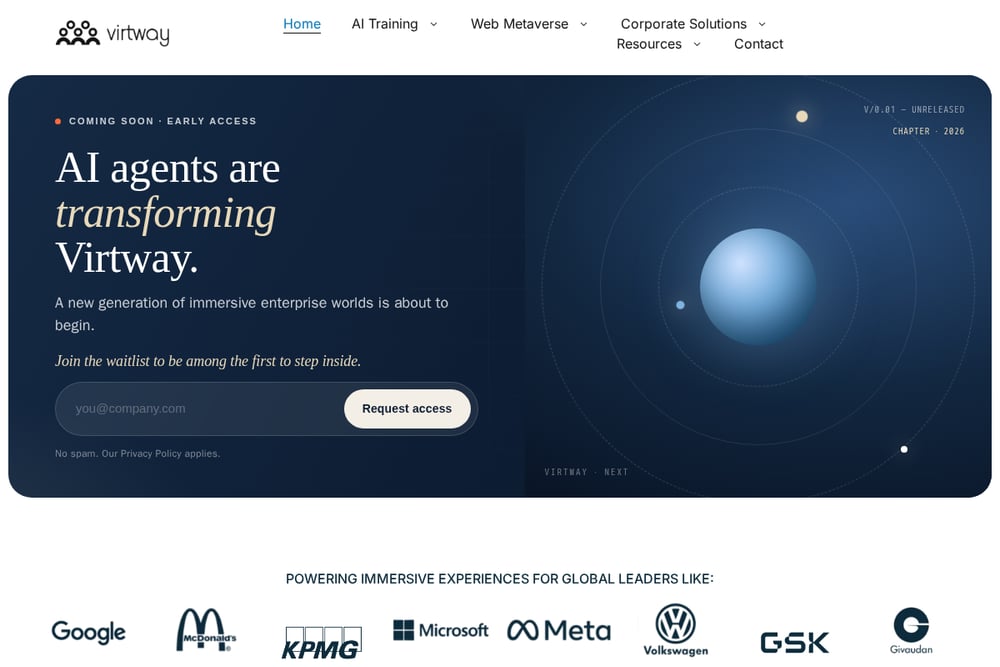 A screenshot of the Virtway website.
Virtway builds hybrid and fully virtual events inside 3D venues where online attendees move through the space as avatars. The platform targets the exact gaps that sink most hybrid events: remote attendees who can't bump into people, passive viewing that replaces participation, and sponsors who see fewer meaningful leads. You get avatar networking, gamification, and post-event analytics in one package. It's a strong fit if your event already has an in-person component and you need the online half to feel equally alive. The company also runs AI training programs and education solutions, so the event tooling sits inside a broader immersive portfolio.
#2 Raid the Room — Virtual Events That Drive Attendance, Revenue, and Connection
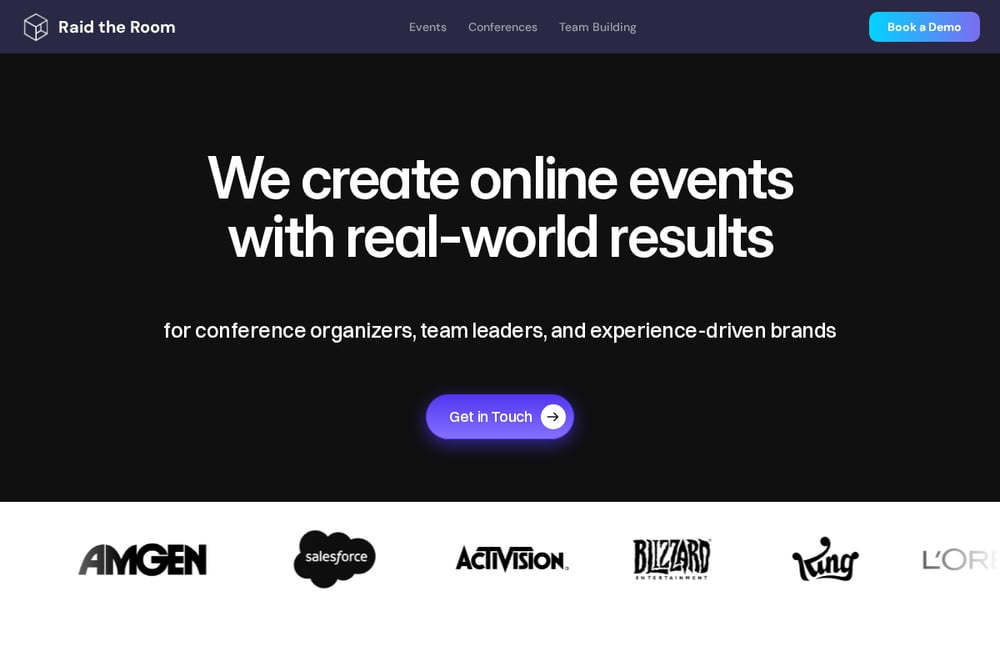 A screenshot of the Raid the Room — Virtual Events That Drive Attendance, Revenue, and Connection website.
Raid the Room creates immersive online events with real-world results for conference organizers, team leaders, and experience-driven brands. Instead of another Zoom call, your attendees enter a digital venue as avatars and explore, play, and collaborate freely. The team is direct about the problem: hosts create ghosts when one person does all the talking, breakout rooms aren't networking, and without a shared mission participation becomes optional. Their answer is gamified Gather Town environments built around challenges and shared goals. With 2,500+ companies, 150,000+ players, and 11+ years in business, they bring a production partner's experience rather than a login and a blank canvas. If ticket sales and community building are the metrics you care about, this is the one to call first.
#3 CYZY SPACE
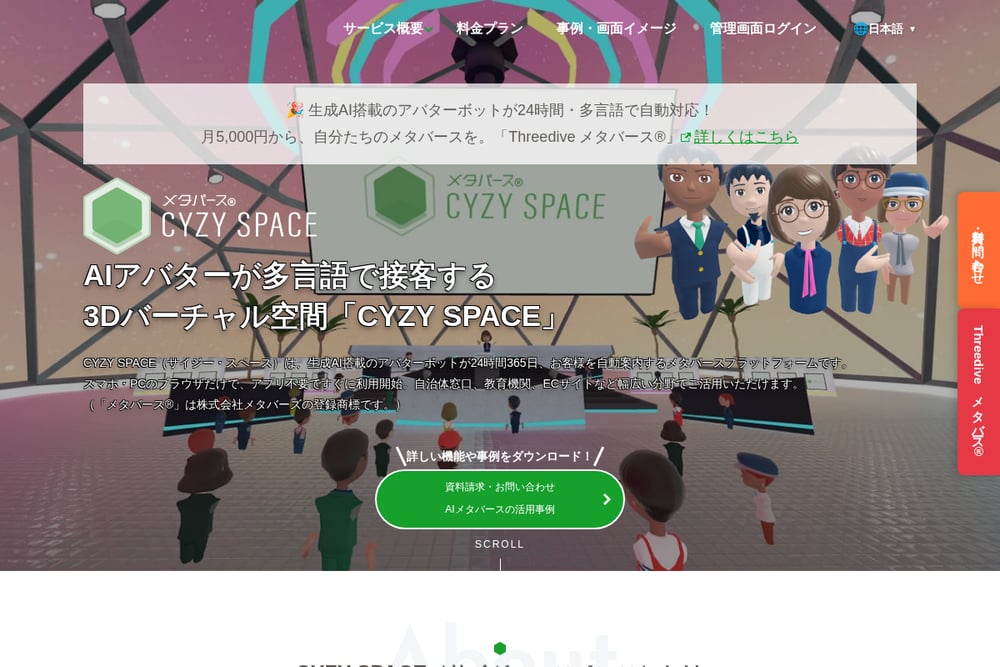 A screenshot of the CYZY SPACE website.
CYZY SPACE is a metaverse platform built for online exhibitions and large-scale virtual events, supporting up to 1,000 simultaneous connections. You get exhibition guide maps, corporate booths with panels, videos, and PDFs, plus AI concierge avatars that welcome visitors and explain products by voice. It handles the full calendar of event types: entrance and graduation ceremonies, school festivals, concerts, conferences, networking events, and e-sports tournaments. The platform also offers custom metaverse development and virtual showroom builds if you need something beyond the standard venue. It's a solid choice when scale and exhibition-style layouts matter more than a bespoke narrative experience.
#4 NextGen Event Co.
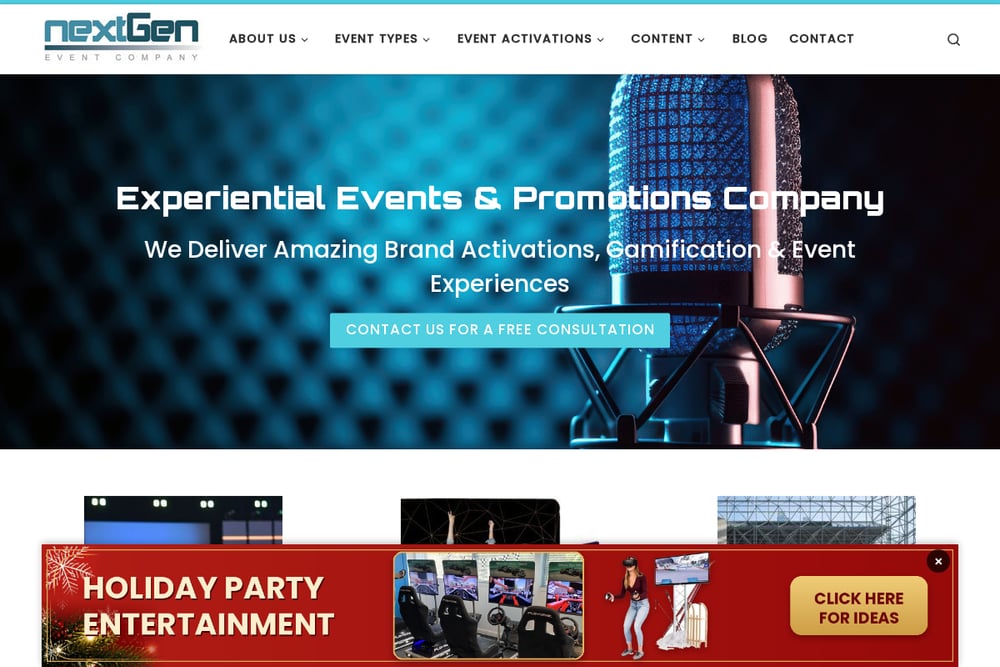 A screenshot of the NextGen Event Co. website.
NextGen Event Co. approaches avatar-based virtual events from an event production background rather than a software one. The company builds gamified, connected experiences for meetings and conferences, describing the result as The Sims but for events. Because it comes from the in-person event world, it also brings experiential extras like interactive walls, projection displays, photo booths, and simulator rentals for hybrid activations. That makes it useful when your virtual event is one piece of a larger program. Custom packages mean the scope flexes to your budget and format, though you'll want a clear conversation about deliverables up front.
#5 MEETYOO
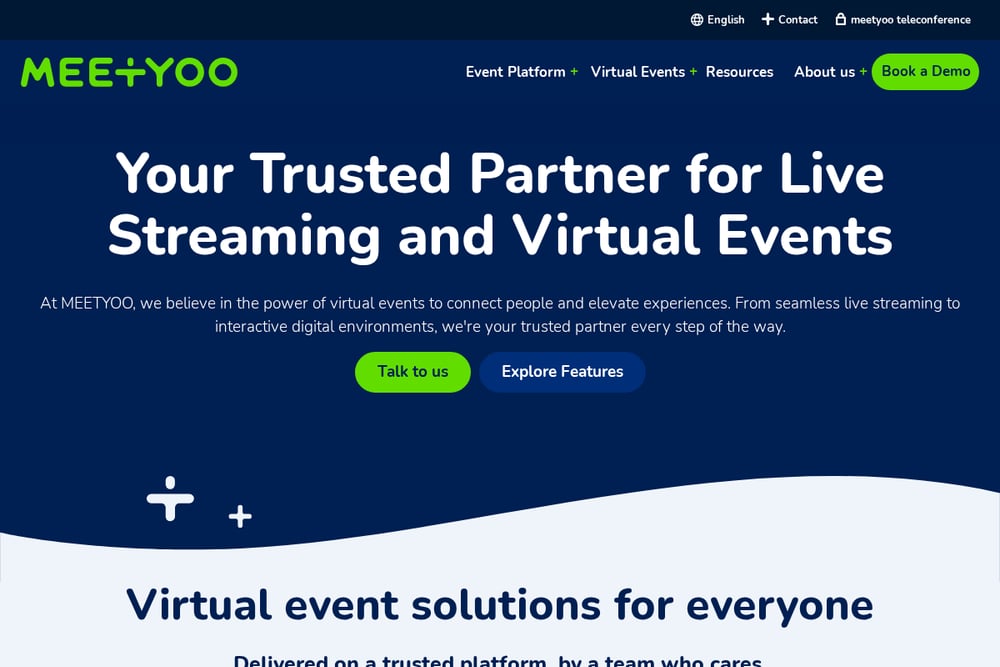 A screenshot of the MEETYOO website.
MEETYOO is a full virtual event platform with the feature depth of an enterprise tool: virtual venues, virtual booths, matchmaking, participant management, gamification, sponsorship and monetization, and integrations. It also offers a remote virtual studio and managed service, so you can hand off production if your team is stretched thin. The platform serves enterprises, associations, trade show organizers, and educators across conferences, fairs, career events, product launches, and award ceremonies. If you need one system to run many events a year with consistent sponsorship and analytics, it's worth a serious look. The tradeoff is complexity: expect a real setup and onboarding process.
How to pick the right platform for your event
Start with the outcome you're measuring. If it's ticket sales and sponsor value, prioritize platforms with proven engagement mechanics and a production team behind them. If it's internal team building, prioritize ease of participation and activities people will actually do. Ask whether you're buying software or a partner: self-serve platforms cost less but put design and facilitation on your plate, while managed experiences cost more and remove that burden. Check the capacity limits against your expected attendance, confirm what analytics you'll get afterward, and ask for a demo of a real event, not a sales walkthrough. Finally, match the format: hybrid needs different tooling than a fully online conference.
A simple workflow to get your first immersive event live
Define your goal and success metric first, whether that's registrations, attendance rate, or post-event connection. Shortlist two platforms and book demos framed around that goal. Choose your venue concept and map the attendee journey from arrival to exit. Build in at least one shared mission or challenge so participation isn't optional. Set up registration, reminders, and a short pre-event orientation so nobody fumbles with their avatar on the day. Run a dry rehearsal with your hosts and facilitators. After the event, pull attendance and engagement data, compare it to your baseline webinar numbers, and feed the findings into the next event's design.
The bottom line
The virtual event market has split into two camps: platforms that give you software and platforms that give you an experience. Virtway and MEETYOO lean toward comprehensive tooling, CYZY SPACE excels at large exhibitions, and NextGen Event Co. bridges virtual and in-person production. Raid the Room sits squarely in the experience camp, pairing gamified avatar venues with a decade of production history and a clear focus on attendance, revenue, and connection. Whichever you choose, judge it by one question: would your attendees come back next year without being asked twice?