Your exam date is set, but your writing still feels stuck at Band 6. These five tools give you instant scoring and feedback so you can see exactly what a higher band looks like.
The AI Exam Prep Landscape
AI scoring has changed how you prepare for IELTS and TOEFL. Instead of waiting days for a tutor, you can get criterion-level feedback in minutes. The tools below cover writing, speaking, or both, and they range from free checkers to full mock-test platforms.
How We Evaluated These Tools
We looked at task coverage, feedback depth, pricing clarity, and how closely each tool mirrors the real exam format. We also weighed whether you get a rewritten model answer, not just a score. Each tool below earns its place for a different reason.
Here is a quick look at the five tools, ordered for this roundup. Each one solves a different part of your prep problem.
| Provider | Best For |
|---|---|
| Gabble.ai | All-four-skill practice with progress tracking |
| IELTS & TOEFL Writing and Speaking Practice | BandApex | Seeing your own answer rewritten at a higher band |
| MySpeakingScore | Fast TOEFL Speaking scores aligned to the ETS rubric |
| FluentPrep AI | Full 2026 TOEFL mock tests with section bands |
| Intellecta | Free writing checkers inside a broader study hub |
The Five Tools in Detail
#1 Gabble.ai
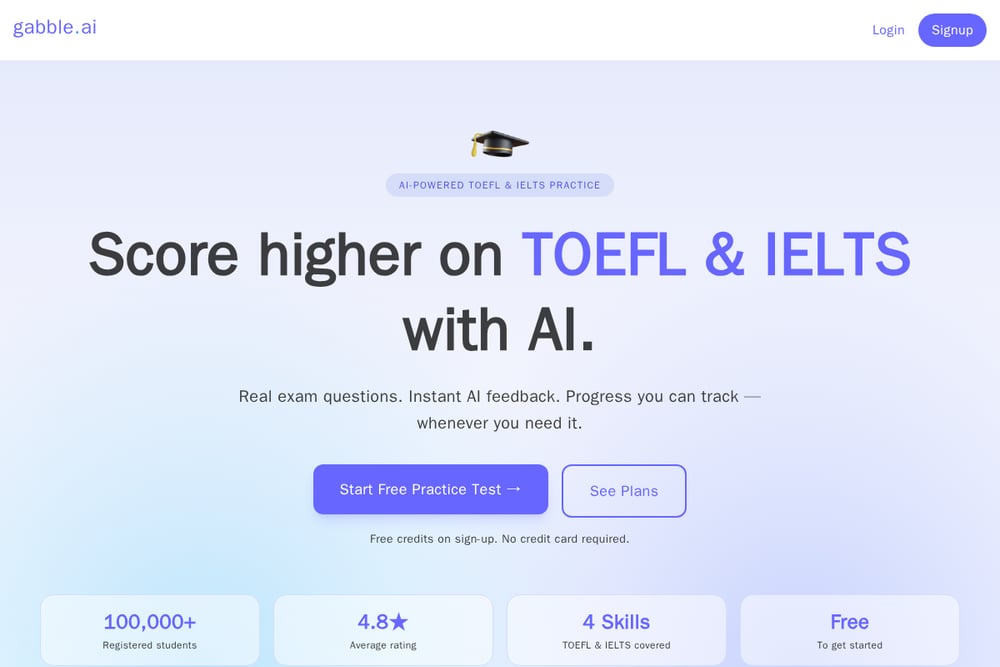 A screenshot of the Gabble.ai website.
Gabble.ai positions itself as a full AI coach for both TOEFL and IELTS. You get practice tests built to mirror the real exam structure, timing, and difficulty. The platform scores speaking and writing within seconds and breaks feedback down by criterion. A progress dashboard tracks your score trends across attempts, so you can see weak areas over time. It also offers sentence-level insights that pinpoint exactly which sentences need fixing. With free credits on sign-up, it is an easy first stop for broad four-skill practice.
#2 IELTS & TOEFL Writing and Speaking Practice | BandApex
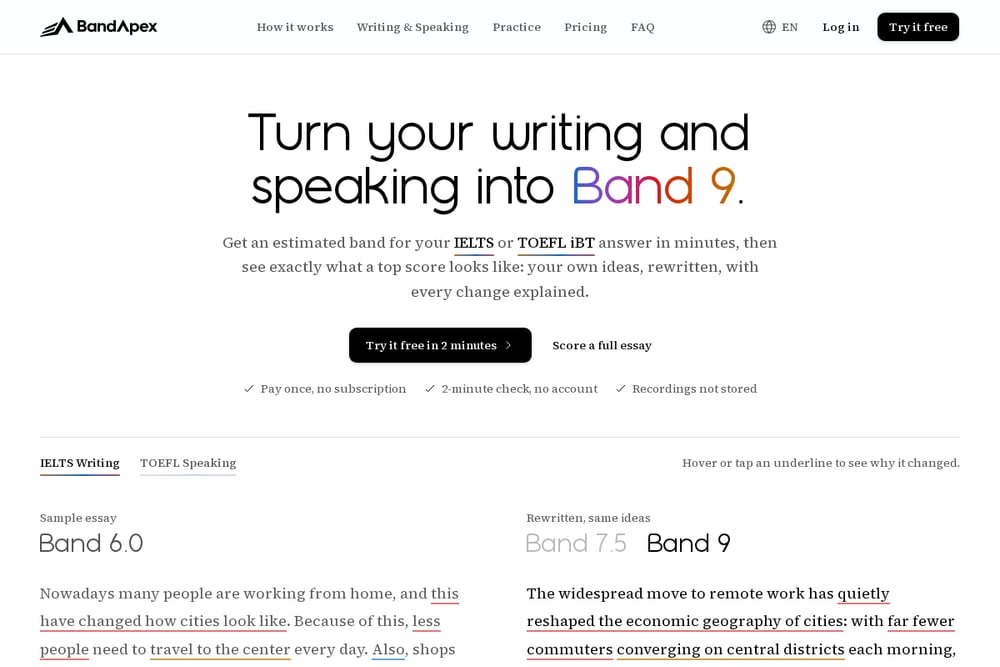 A screenshot of the IELTS & TOEFL Writing and Speaking Practice | BandApex website.
BandApex focuses on one thing and does it well: turning your answer into a higher-band version. You write or speak in your browser, timed like the real exam, and get an estimated band in minutes. The standout feature is the rewrite. Your own ideas come back at a higher band with every change explained, so you learn why a phrase was upgraded. It covers IELTS Writing Tasks 1 and 2, IELTS Speaking, and the January 2026 TOEFL iBT writing and speaking tasks. You can try a free two-minute check with no account, then pay once for full access with no subscription.
#3 MySpeakingScore
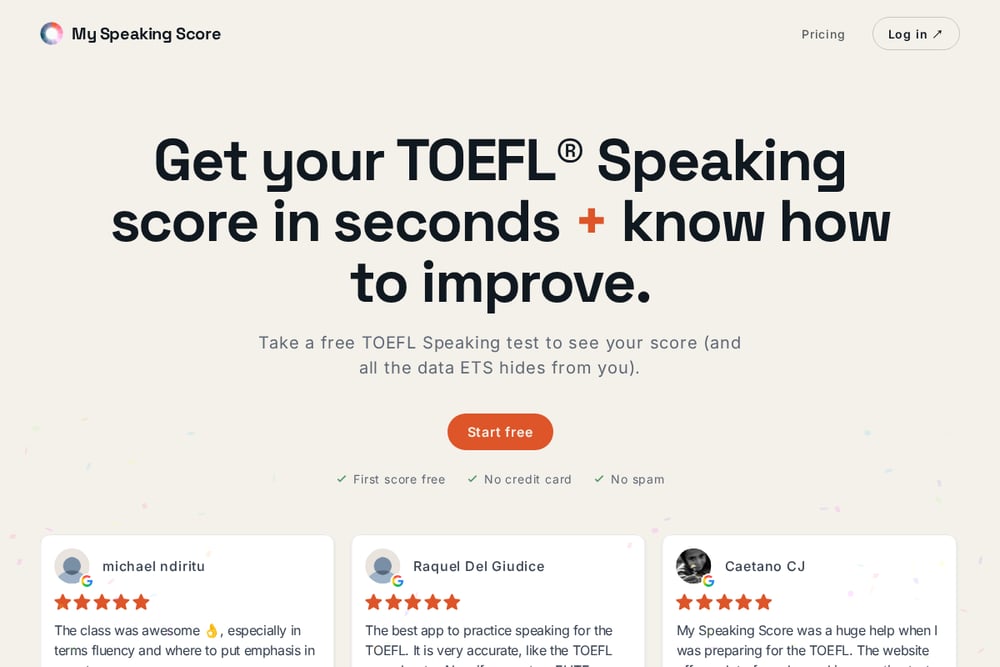 A screenshot of the MySpeakingScore website.
MySpeakingScore keeps its scope narrow and useful: TOEFL Speaking. You take a free TOEFL Speaking test and get a score in seconds. The feedback is aligned to the ETS rubric, so the numbers map to what the real grader looks for. It is a focused tool for anyone who wants to drill speaking without paying for a full platform. If speaking is your weakest section, this is a low-friction way to start.
#4 FluentPrep AI
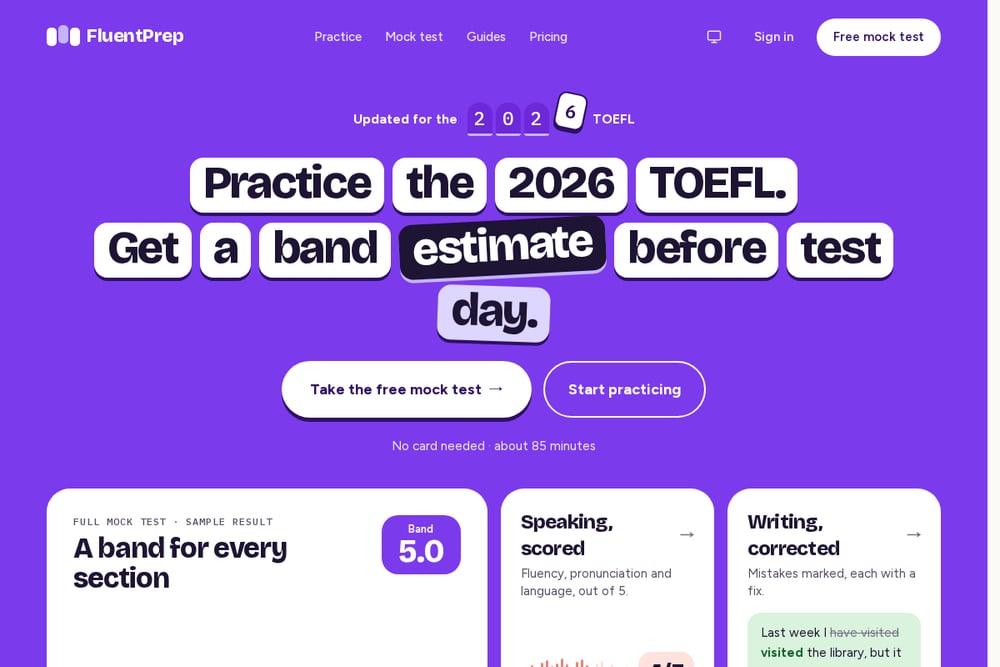 A screenshot of the FluentPrep AI website.
FluentPrep AI is built around the 2026 TOEFL format. You can take a free full mock test of about 85 minutes and get a band estimate for every section. Speaking is scored on fluency, pronunciation, and language, while writing feedback marks mistakes and gives each one a fix. The question bank covers all 12 question types with 1,500+ items, and questions get harder as you improve. It also publishes official scores from real students, which adds a layer of credibility.
#5 Intellecta
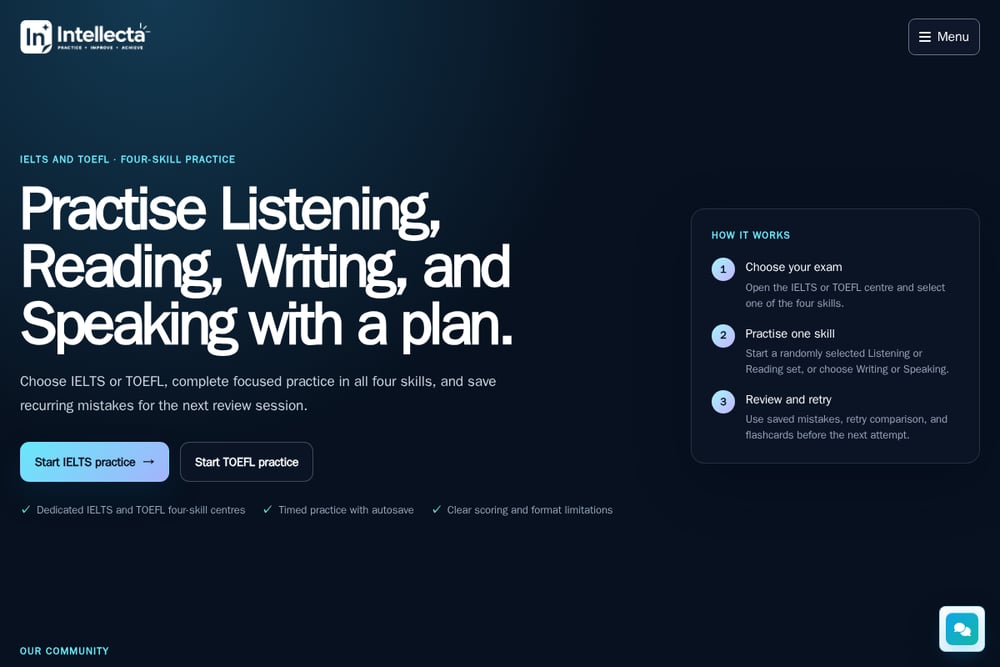 A screenshot of the Intellecta website.
Intellecta is a study-tools hub with a free TOEFL Writing Checker and Grader. You paste the task question and your answer, and the AI returns structured feedback tied to the prompt. It also offers IELTS Writing Task 1 and Task 2 checkers, TOEFL Academic Discussion and Integrated Writing checkers, and speaking practice. You can use the tools without signing in, though an account saves your progress. It is a practical option if you want a free checker alongside a wider set of study tools.
How to Pick the Right Tool
Start with your weakest skill. If your writing stalls at Band 6, pick a tool that rewrites your answer at a higher band so you can study the changes. If speaking is the problem, choose a tool with rubric-aligned speaking scores. If you need the full exam experience, go for a mock-test platform. Check pricing clarity too: some tools are free to start, while others charge once for full access. Match the tool to the gap, not the other way around.
A Simple Weekly Workflow
Write one timed Task 2 essay and record one speaking answer each week. Run both through your chosen tool and note the criterion scores. Read the rewritten version and highlight three phrases you would reuse. Next week, write a new answer and try to use those phrases naturally. Track your estimated band across four weeks to see the trend. This loop takes under an hour a week and keeps your feedback specific.
The Bottom Line
You do not need ten tools. You need one that shows you what a higher band looks like and one that tests you under exam conditions. BandApex is the strongest fit if you want your own ideas rewritten with every change explained. Pair it with a mock-test platform for full-exam stamina, and you have a prep routine that fits around your schedule.