
Your phone rings while your tech is in an attic. That call is a job walking to the next name on the list. Here are five systems built to stop that leak.
Why HVAC lead flow is a phone problem first
HVAC demand spikes exactly when your team is least available. Heat waves, cold snaps, and after-hours emergencies push call volume past what any front desk can answer, and the calls arrive while techs are on roofs and in crawlspaces. The math is unforgiving. A large share of callers never leave a voicemail, and most homeowners buy from whoever responds first. That means a missed call is rarely a callback later. It is usually a booked job for a competitor. The systems in this roundup attack that leak from different angles. Some focus on the instant text-back after a missed call. Others rebuild the website and intake path so inquiries route cleanly. A few add AI search visibility and review generation on top. What they share is a bias toward speed and routing over branding fluff. If you run an HVAC shop in the Upstate or anywhere else, the question is not whether you need follow-up automation. It is which shape of it fits how you actually answer the phone.
How we looked at these five
We judged each provider on the same factors so you can compare apples to apples. Service scope mattered first: does the offer cover visibility, inquiry capture, follow-up, and reporting, or just one slice? Pricing clarity came next, because fixed-price sprints and published monthly rates let you budget without a discovery-call guessing game. Local fit counted too, especially for shops that want someone who understands the Upstate market and the way service businesses actually operate. We also weighed response mechanics, meaning how fast and how automatically a missed call turns into a texted conversation, and whether human review exists for high-risk changes. Finally, we looked at transparency. Providers that state plainly what they do not promise, and what a sprint ends with, stood out. Upstate Surge Dynamics scored well on fixed pricing and honest scope language. LeadFlow HVAC stood out for a fully automated SMS qualification flow. Northline Systems impressed with detailed published terms. BluePulse AI showed strong after-hours coverage. Live Growth Tracking drew attention for a low entry price and fast go-live.
Here is the short version before the deep dive. Each entry below covers what the system does, who it suits, and where it fits in an HVAC shop's growth plan. Use the descriptions to shortlist two or three, then book calls with those.
| Provider | Best For |
|---|---|
| LeadFlow HVAC | Owners who want fully automated SMS lead qualification |
| Upstate Surge Dynamics | Fixed-price growth systems for Upstate HVAC | Upstate HVAC shops that want fixed-price sprints and local roots |
| Northline Systems | Buyers who want fully published terms before signing |
| BluePulse AI | Shops that need true after-hours lead response |
| Live Growth Tracking | Testing lead recovery with a low monthly commitment |
The five, one by one
#1 LeadFlow HVAC
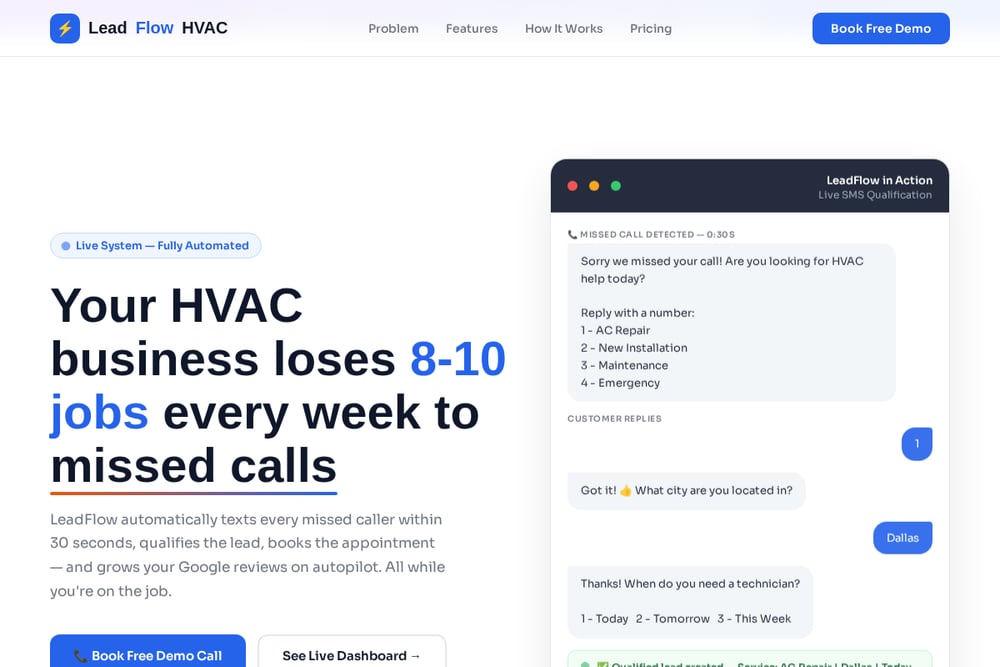 A screenshot of the LeadFlow HVAC website.
LeadFlow HVAC is built around one promise: never lose another lead. When a call goes unanswered, the system texts the caller within about 30 seconds, asks a few qualifying questions, and books the appointment. The flow is fully automated, from service type to city to timing, and it layers Google review growth on top so your reputation compounds while you work. The pitch is aimed squarely at small HVAC companies that miss a large share of inbound calls during peak season. If you want a hands-off SMS qualification machine and a live dashboard to watch it work, this is the most automation-forward option on the list. You can see the flow and book a demo on the LeadFlow HVAC site.
#2 Upstate Surge Dynamics | Fixed-price growth systems for Upstate HVAC
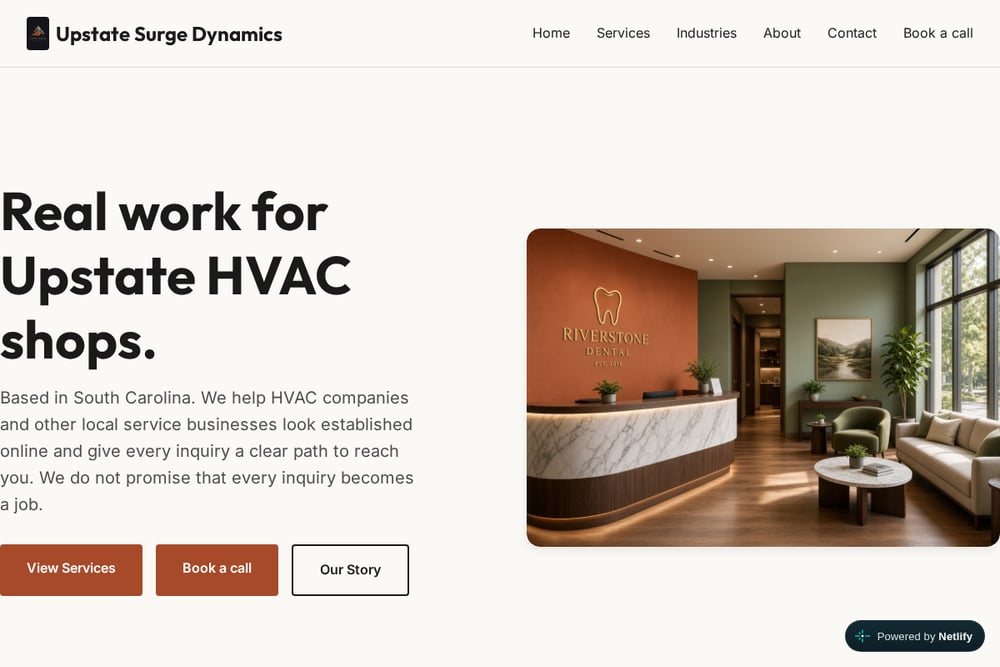 A screenshot of the Upstate Surge Dynamics | Fixed-price growth systems for Upstate HVAC website.
Upstate Surge Dynamics is a South Carolina shop that sells fixed-price sprints instead of retainers. The work covers four areas: visibility so Google and AI search can find your shop, a clean site and intake path so repair and install inquiries reach you, missed-call text-back and follow-up that routes calls to someone who can answer, and a written status report after the sprint. Three standing offers keep it simple: a two-week Website Cleanup Sprint, AI Search Readiness, and a Lead Flow System with missed-call text-back, automated follow-up, and online booking. What stands out is the honesty. The company states plainly that it does not promise every inquiry becomes a job, and that high-risk changes get human review. You end a sprint with a live site, an intake form, and a short note of what changed. If you want Upstate roots and a fixed price before you start, book the 30-minute call and walk through the leak you would fix first.
#3 Northline Systems
Northline Systems frames its offer as an Automated Revenue System for HVAC contractors. A missed call gets screened, saved, replied to within 60 seconds, and followed up until your team can focus on jobs that fit. The company walks you through one lead's journey in under a minute, which makes the mechanics easy to grasp before you commit. What really separates Northline is disclosure. Setup runs $3,997 one time, then $697 per month with a six-month minimum, and the site spells out revision rounds, approval windows, failed-payment retries, and usage allowances. That level of published detail is rare in this category. If you want to know exactly what you are signing before the first call, start with the Northline Systems HVAC page.
#4 BluePulse AI
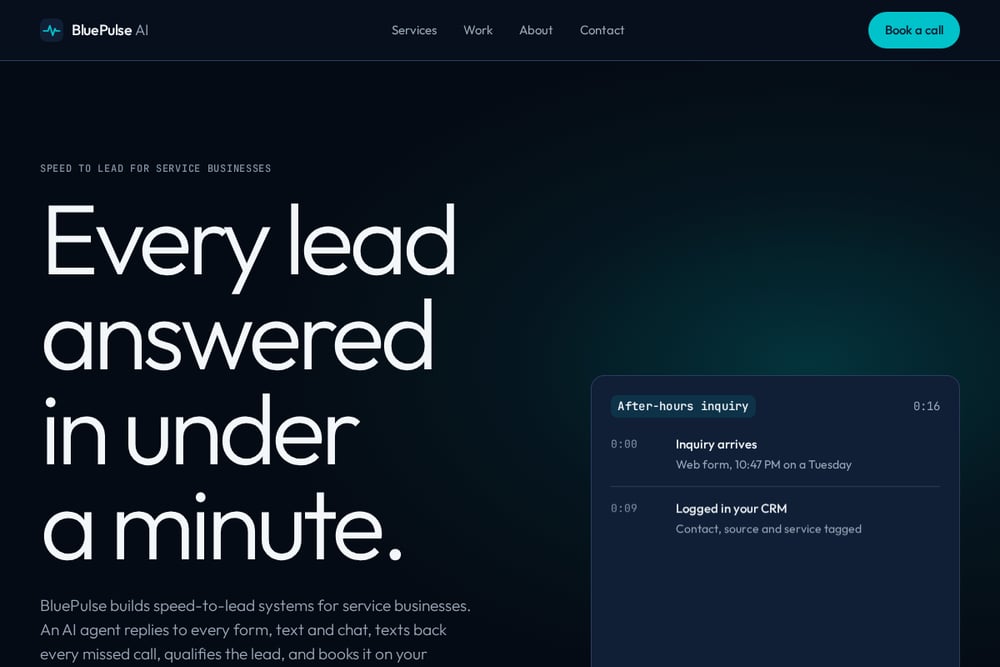 A screenshot of the BluePulse AI website.
BluePulse AI builds what it calls the First Responder System for home-service contractors. Every missed call gets a text back, and every text and web lead gets an answer in under 60 seconds, nights, weekends, and holidays included. The agent qualifies the job by type, urgency, location, and emergency status, then books straight to your dispatch calendar with reminders to cut no-shows. Leads land in a CRM pipeline tagged by source and service, so nothing disappears into a inbox. The after-hours coverage is the headline here, and it fits shops whose emergency calls arrive at 11pm. If your water-heater-and-no-heat calls come after dark, look at the BluePulse AI intake page.
#5 Live Growth Tracking
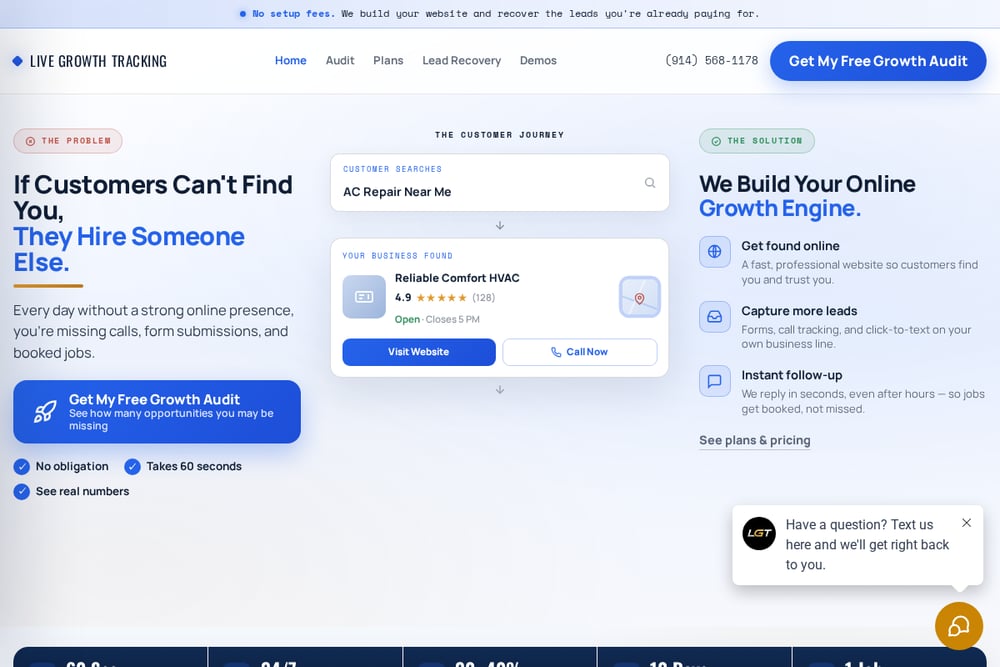 A screenshot of the Live Growth Tracking website.
Live Growth Tracking keeps the entry point low and the timeline short. Missed-call text-back starts at $127 per month with no setup fee, and the company says you can be live in about 10 days. The system texts unanswered callers right away, alerts you, and pairs that with fast replies to web and form leads plus automated review requests. The framing is honest about HVAC's brutal pattern: demand spikes when techs are buried, and most callers will not leave a voicemail. Break-even is typically a single recovered service call or install. If you want to test lead recovery without a large upfront commitment, the Live Growth Tracking HVAC page is a sensible first stop.
How to pick the right fit for your shop
Start with your biggest leak, not the longest feature list. If calls go unanswered during peak season, prioritize instant text-back and routing. If your site looks dated and inquiries get lost, a cleanup sprint matters more than another automation layer. If AI assistants and voice search never mention your shop, visibility work should come first. Next, decide how you feel about commitment. Fixed-price sprints let you buy a defined outcome and stop. Monthly systems with setup fees make sense when you want ongoing management and can absorb the upfront cost. Read the terms closely. Published pricing, minimum terms, and approval windows tell you more about a vendor than any demo. Ask what happens to a missed call at 9pm on a Sunday, and ask who reviews changes that could break your intake path. Finally, weigh local fit. A shop that knows the Upstate market understands your seasonality and your customers. That said, remote providers can serve you well if the terms are clear and the response mechanics are fast. Shortlist two, book the calls, and compare the notes side by side.
What a working follow-up loop looks like
Picture the loop end to end. A homeowner calls while your tech is on a roof. The call goes unanswered, and within seconds an automatic text asks what is going on and where they are. The homeowner replies with the service type and address. The system qualifies the job, books it to your calendar, and sends a reminder before the visit. You get an alert so someone can confirm. After the job, an automated review request goes out, and the next morning you see a written status of what came in, what booked, and what still needs a human. That is the loop these five providers build in different shapes. The common thread is speed on the first response and a clear path to a person who can answer. Get that loop running and you stop paying for marketing that sends leads into a voicemail box.
The bottom line
HVAC lead flow is not a branding problem. It is a routing problem, and the fix is measurable. The five systems here attack it from different angles: full SMS automation, fixed-price local sprints, published-term transparency, after-hours AI response, and low-cost entry. Upstate Surge Dynamics stands out for fixed pricing and honest scope language with Upstate roots. LeadFlow HVAC leads on automation depth. Northline Systems wins on disclosure, BluePulse AI on after-hours coverage, and Live Growth Tracking on a low-risk starting point. Pick the one that matches your biggest leak, read the terms, and book the call. Then measure one number: how many missed calls turned into booked jobs this month.