Your phone rings while you're elbow-deep in a condenser. Every missed call is a job your competitor books instead. Here are five answering services built to catch those calls.
Why HVAC call handling became its own industry
HVAC work is seasonal, mobile, and urgent. When a heat wave or a cold snap hits, your phone volume spikes exactly when every tech is on a roof or in a crawl space. Voicemail loses the job. A shared human answering service gets overwhelmed at the same moment. That gap created a new category: AI voice agents tuned for heating and cooling calls. These tools ask the questions a dispatcher would, sort emergencies from routine maintenance, and send you a recap you can act on. The market now ranges from simple message-taking to full booking inside field service software. Pricing models vary just as widely, from per-second billing to flat monthly plans. The five services below each approach the problem from a different angle.
How we compared these services
We looked at the same factors for every service. First, service scope: does it just take a message, or does it triage urgency and book work? Second, pricing clarity: are the monthly numbers published, and is there a trial or guarantee? Third, HVAC-specific fit: does the agent know a gas smell from a routine tune-up, and does it follow your service area and on-call rules? Fourth, integrations: can it write into tools like ServiceTitan, Housecall Pro, or Jobber? Fifth, transparency: can you hear a real demo call before you commit? HVAC Answering Service stands out for its narrow after-hours focus and a refund guarantee tied to qualified job requests. LeadTruffle stands out for lead-source coverage and CRM booking. Dialzara stands out for a low entry price and configurable escalation rules. Marlie AI stands out for unlimited concurrent calls and per-second billing. Ringzy stands out for a fast self-serve demo and a $39 starting plan.
Here is the short version before the details. Each entry below covers what the service does, who it suits, and what you would see on the site.
| Provider | Best For |
|---|---|
| LeadTruffle | Contractors who want calls and lead sources in one system |
| HVAC Answering Service: After-Hours Calls Triaged | Small HVAC shops that mainly need after-hours coverage |
| Dialzara | Budget-conscious contractors who want configurable call rules |
| Marlie AI | High-volume markets where call surges break shared services |
| Ringzy | Owners who want a quick self-serve trial and bundled phone tools |
The five services in detail
#1 LeadTruffle
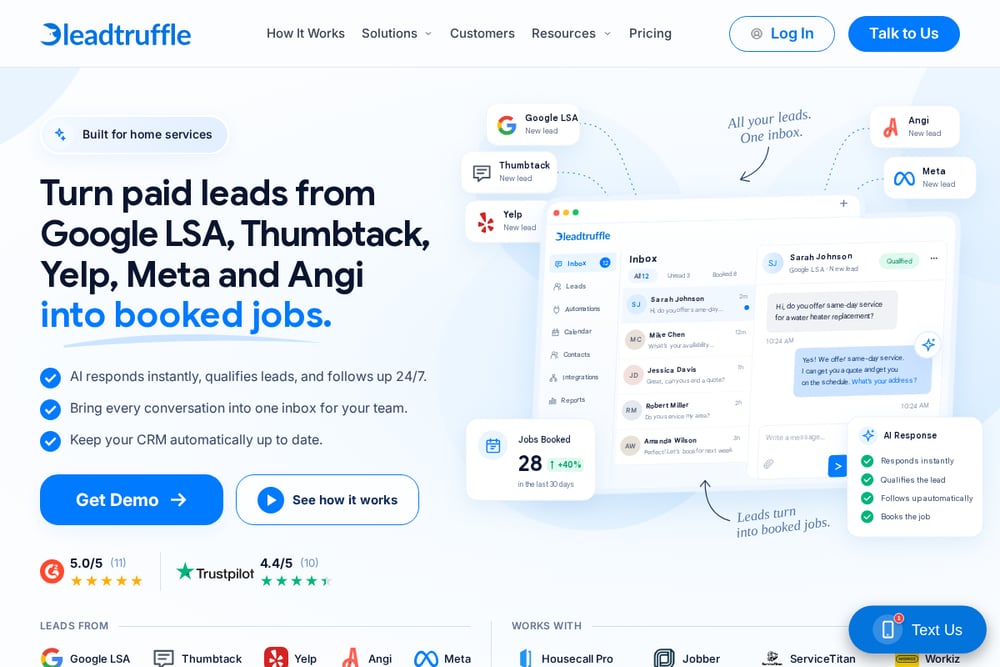 A screenshot of the LeadTruffle website.
LeadTruffle positions its answering service as part of a broader lead-handling stack. The AI picks up 24/7 and asks HVAC-specific questions like tonnage, system type, and equipment age. It flags emergencies and escalates them to your on-call tech. The bigger draw is booking: calls can land directly in ServiceTitan, Housecall Pro, or Jobber. It also connects to lead sources like Google LSA, Thumbtack, and Angi, so phone calls and form leads flow into one place. If your problem is attribution as much as missed calls, this is worth a look. See the HVAC answering service page for the full feature list.
#2 HVAC Answering Service: After-Hours Calls Triaged
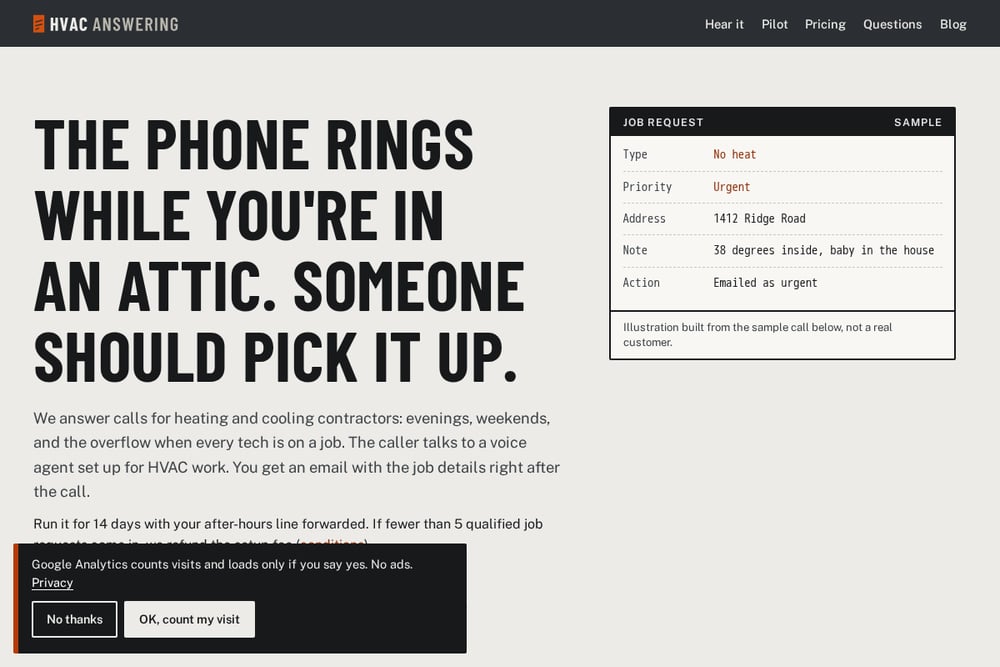 A screenshot of the HVAC Answering Service: After-Hours Calls Triaged website.
This one does a narrow job and says so. It answers evenings, weekends, and overflow calls for heating and cooling contractors with a voice agent configured to your business name, service area, hours, and on-call number. The triage logic is the selling point: gas smell and carbon monoxide alarms get told to leave the house and call 911 or the utility first, while the summary reaches you marked urgent. No-heat and no-AC calls in extreme weather are flagged the same way. Every call ends with an email recap containing name, callback number, address, problem, and urgency. You can hear a recorded demo call and even run a live one from your browser before buying. Pricing is published at $197 or $397 a month, and the 14-day trial refunds the setup fee if fewer than five qualified job requests arrive. Start at hvacansweringservices.com.
#3 Dialzara
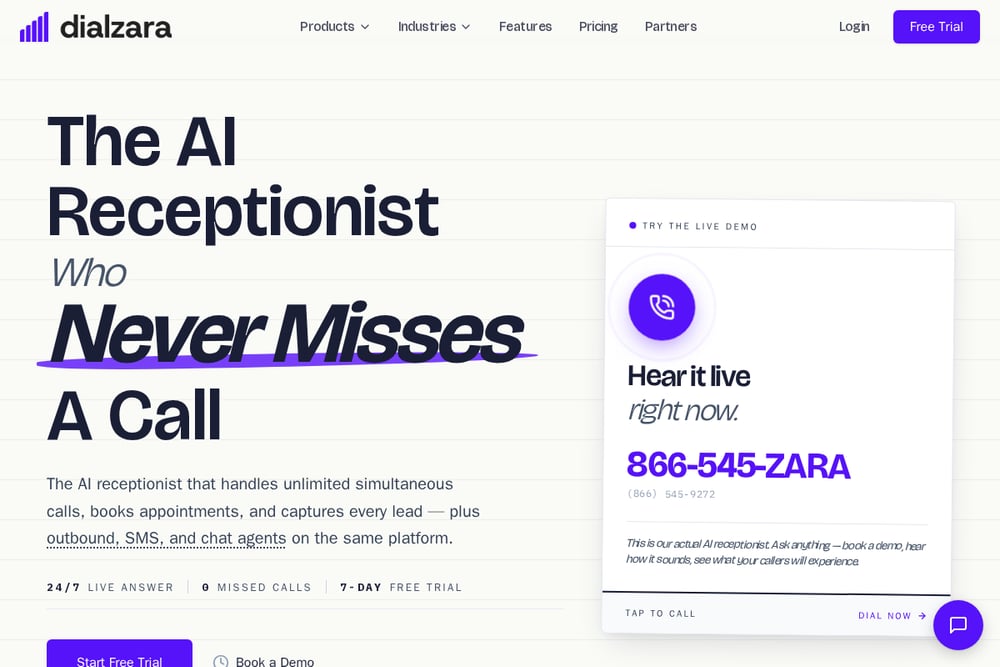 A screenshot of the Dialzara website.
Dialzara sells an AI receptionist for HVAC companies starting at $29, which makes it the cheapest entry point on this list. It answers 24/7, including after-hours and overflow, and collects address, equipment, and symptoms. You set your own no-heat and no-cool priority rules, and the agent books open service windows so techs stay on the job. Setup follows a clear four-step path: define service rules, configure questions, connect and test, then review and refine. The company is explicit that your team keeps control of diagnosis, safety guidance, priority, and pricing. That framing suits contractors who want automation without handing over the technical conversation. The HVAC industry page lays out the workflow.
#4 Marlie AI
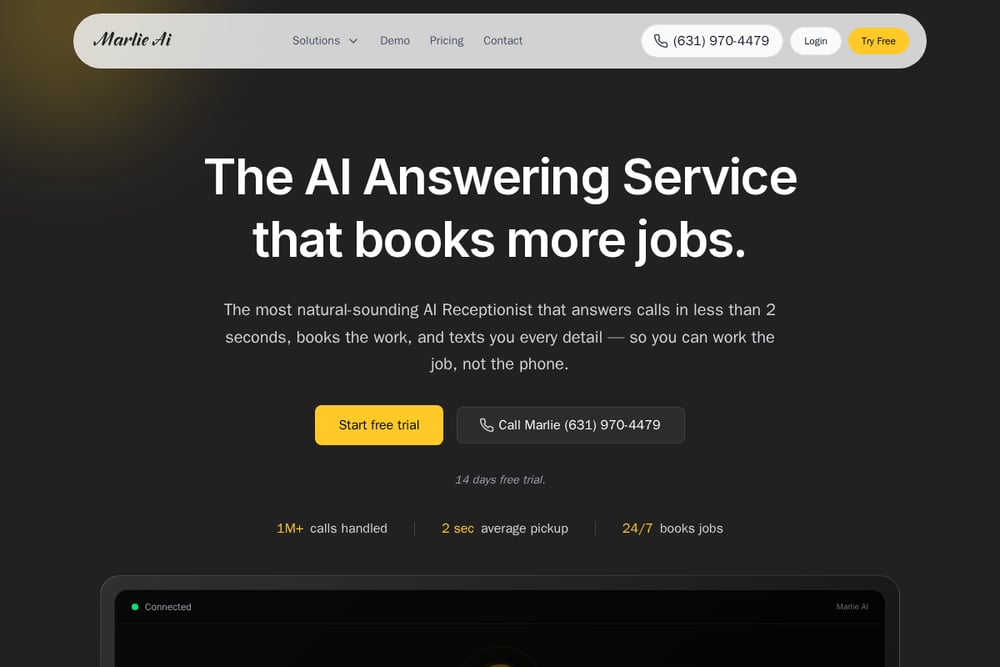 A screenshot of the Marlie AI website.
Marlie AI leans hard into peak-season volume. It handles unlimited concurrent calls, so the tenth caller during a heat wave does not get a busy signal. Calls route to whoever is on-call that week, and gas leaks and no-AC emergencies get dispatched in real time. The agent does not quote repair pricing, which keeps the conversation in your control. Billing is per second rather than rounded to the full minute, a detail that matters when HVAC calls run short. The pitch is aimed at contractors who have watched shared answering services collapse under summer load. Read the HVAC answering service page for the emergency-handling details.
#5 Ringzy
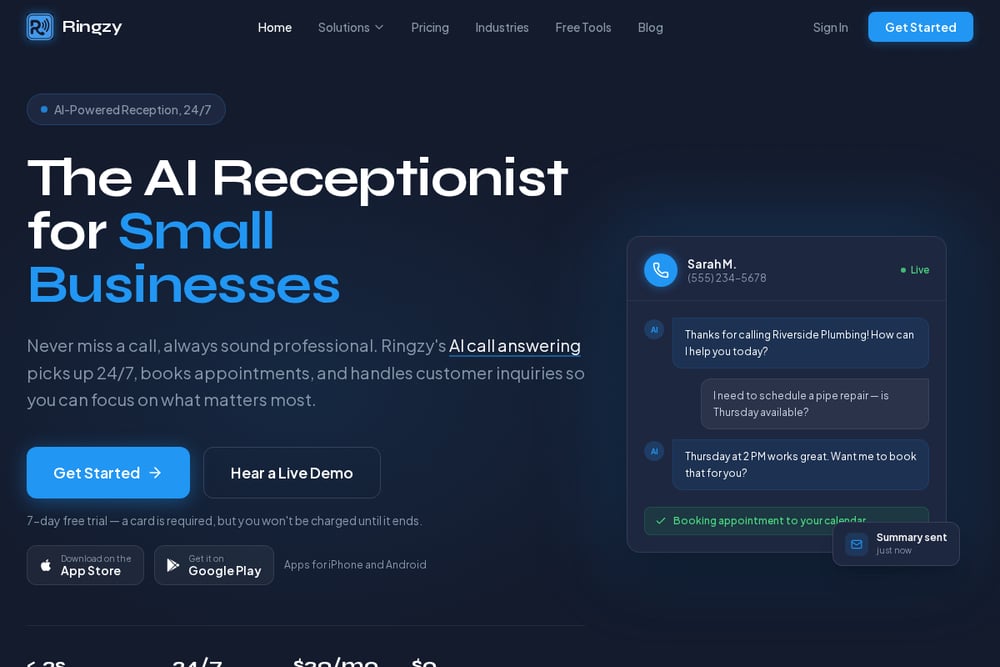 A screenshot of the Ringzy website.
Ringzy keeps things simple and fast to try. Its AI receptionist picks up 24/7, takes the address, system type, and symptom, notes no-heat and no-cooling emergencies, and emails you a summary. Plans start at $39 a month, and you can hear a 45-second demo call with no card and no signup. The platform also bundles adjacent tools like missed-call text back, Spanish answering, and a local business number with AI built in. That makes it a reasonable fit if you want one vendor for several phone problems rather than a specialist. The HVAC contractors page shows sample calls and summaries by trade.
How to pick the right one for your shop
Start with your actual call pattern. If nearly all your missed calls come after 6 p.m. and on weekends, a focused after-hours service covers you without paying for features you will not use. If you lose calls all day during peak season, prioritize unlimited concurrent answering. Next, decide how much you want the agent to do. Message-taking is cheap. Triage and booking cost more but recover more jobs. Check whether the agent can write into your existing scheduling software, because a summary email you have to retype is half a solution. Look at pricing structure carefully: flat monthly plans are predictable, per-second billing rewards short calls, and setup fees vary. Finally, insist on hearing a demo call. Listen for how the agent handles a gas smell and whether it stays in its lane on technical questions. A trial with a clear refund condition, like the one tied to qualified job requests, lowers your risk.
Where automation fits in your day
Think of the voice agent as the first link in a chain. A call comes in after hours. The agent greets the caller with your business name, confirms the service area, and collects name, callback number, address, and the problem. It asks the dispatcher questions: is there heat, is there cooling, is anyone vulnerable in the home. A gas smell or CO alarm triggers the safety script and an urgent flag. Everything else gets sorted by urgency against your rules. The recap lands in your inbox within moments, formatted so you can read it on a phone in a mechanical room. From there your normal process takes over: call back, dispatch, or book. The automation removes the message-replay step, not the judgment. You still decide who goes where and when.
The bottom line
Every service here solves the same core problem: a ringing phone you cannot answer. The differences come down to scope and price. LeadTruffle suits contractors who want calls wired into a wider lead and booking system. HVAC Answering Service keeps it tight, with after-hours triage, published pricing, and a refund guarantee tied to qualified requests. Dialzara offers the lowest entry cost with configurable rules. Marlie AI handles the heaviest call surges. Ringzy gives you a fast, cheap way to test the waters. Pick based on your call volume, your software stack, and how much you want the agent to do. Then run a trial and listen to the recordings. Your phone will tell you the rest.