
Dreaming of floating above the treetops with a burner in your hand? These five programs can turn that dream into a pilot certificate.
The State of Hot Air Balloon Pilot Training
Becoming a hot air balloon pilot isn't like earning a typical pilot's license. You won't find a flight school on every corner. Instead, training happens through a small network of dedicated instructors, online ground schools, and FAA-approved Part 141 programs. Most students start with ground school to learn regulations, weather, and balloon systems. Then they move to flight training, which often takes weeks or months depending on weather and location. The barrier to entry is lower than many expect. You don't need prior aviation experience. You just need focus, a logbook, and a willingness to learn. Costs vary widely. Some programs bundle everything into an accelerated course. Others let you pay as you go. The key is finding a path that matches your schedule, budget, and learning style.
How We Evaluated These Programs
We looked at five factors. First, service scope: does the program cover ground school, flight training, or both? Second, pricing clarity: are costs easy to find and understand? Third, local fit: does the program serve a specific region well, or is it national? Fourth, instructor experience: how long have the teachers been flying and teaching? Fifth, student support: do they help with FAA paperwork, logbooks, and next steps? Each program below stands out in different ways. Some shine for affordability and accessibility. Others lead with accelerated Part 141 training or deep online resources. We didn't rank them against each other. We simply noted what makes each one useful for a particular type of student.
Here's a quick look at five programs that can help you get started. Each one takes a different approach, so you can pick the one that fits your goals.
| Provider | Best For |
|---|---|
| The Balloon Training Academy | Online ground school and exam prep |
| Future Balloon Pilot | Hot Air Balloon Pilot Workshops | Affordable introductory workshops in Texas and Arkansas |
| Adventure Flights | Accelerated Part 141 flight training |
| Airborne Heat | Experienced instruction with a Part 141 school |
| Aeronaut / Balloon the Rockies | Destination-style accelerated training in Utah |
The Five Programs in Detail
#1 The Balloon Training Academy
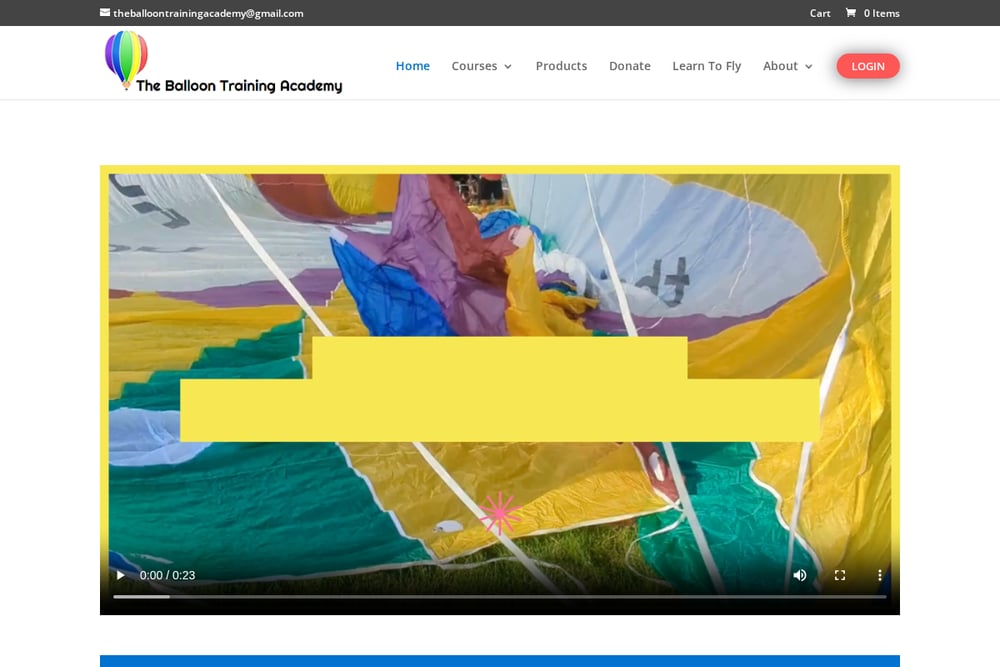 A screenshot of the The Balloon Training Academy website.
The Balloon Training Academy is a go-to online resource for balloon pilot education. You can take ground school courses that prepare you for the FAA knowledge exam. They also offer check ride preparation, continuing education, and even lesson plans for instructors. Students praise the academy for helping them pass private and commercial written tests with high scores. If you want flexible, self-paced study from anywhere, this is a strong starting point. The academy doesn't provide flight training itself, but it gives you the knowledge base you need before you step into a basket.
#2 Future Balloon Pilot | Hot Air Balloon Pilot Workshops
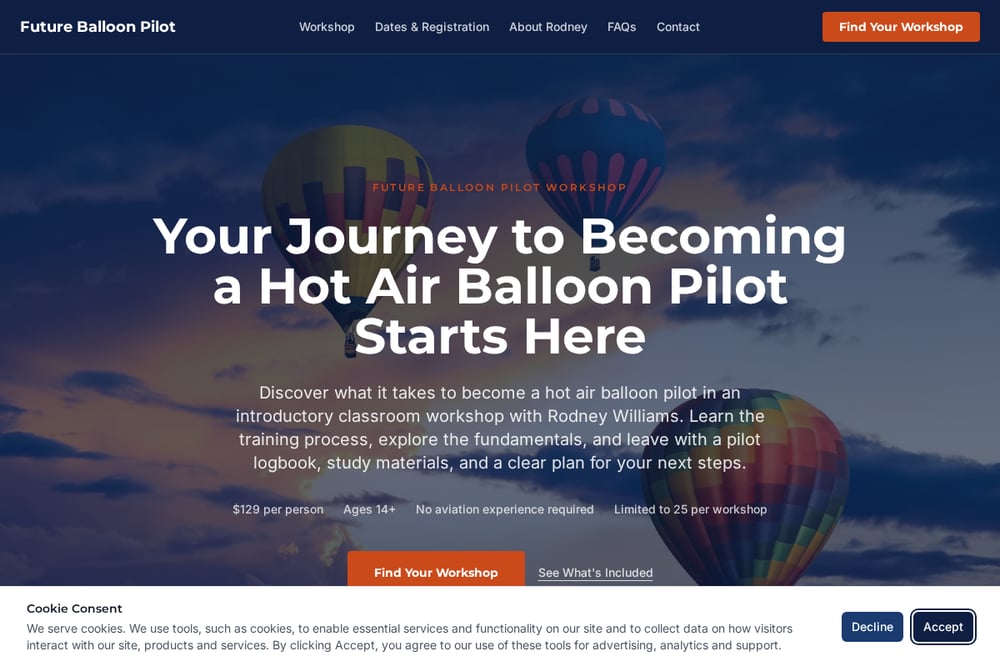 A screenshot of the Future Balloon Pilot | Hot Air Balloon Pilot Workshops website.
Future Balloon Pilot offers a $129 introductory classroom workshop led by Rodney Williams. It's designed for people with zero aviation experience who want a clear path forward. You'll learn about the FAA certification process, balloon systems, weather, and regulations. The workshop includes a pilot logbook, study materials, and help with your student pilot certificate application. Sessions are held in Dallas, Houston, Harrison, and other locations across Texas and Arkansas. Each workshop is limited to 25 people, so you get personal attention. It's a low-cost, low-risk way to see if ballooning is right for you.
#3 Adventure Flights
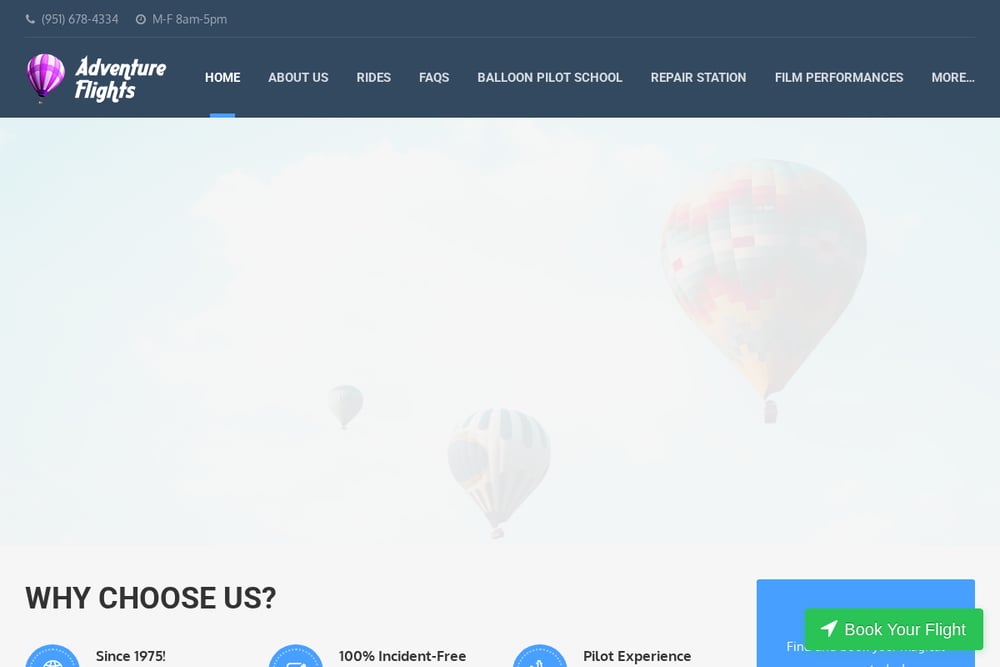 A screenshot of the Adventure Flights website.
Adventure Flights runs an FAA-approved Part 141 balloon pilot school. That means you can train under accelerated rules with fewer required flight hours. They offer private, commercial, and add-on rating courses. The private course includes 25 hours of ground school and 8 hours of flight time. Commercial students get 25 hours of ground instruction and 10 hours of flight time. If weather cooperates, you could earn your private rating in as little as one week. The school is based in California but attracts students from across the country. It's a good fit if you want fast, structured training.
#4 Airborne Heat
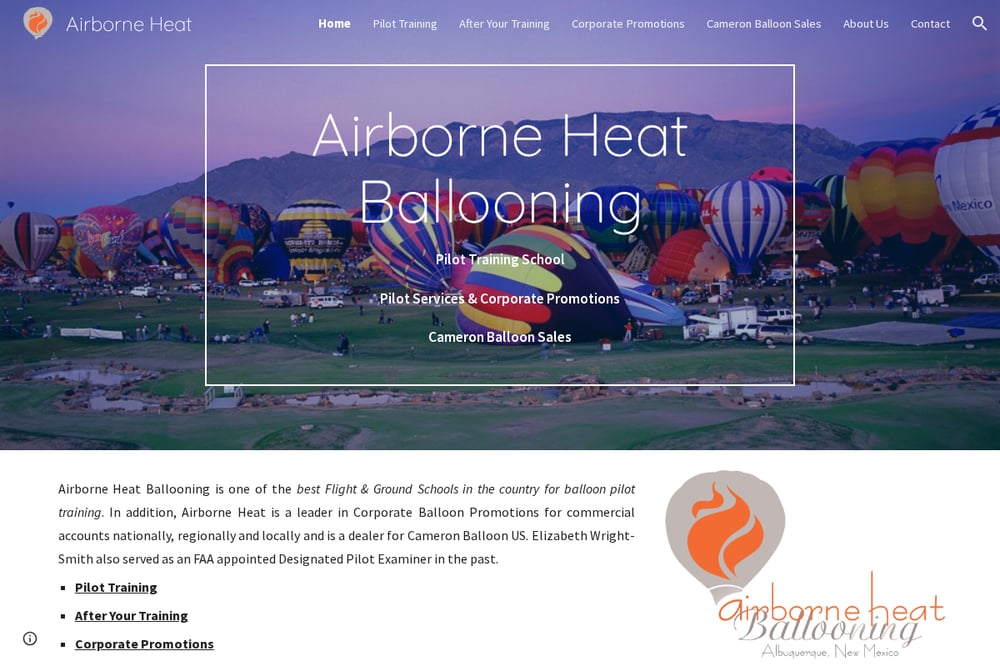 A screenshot of the Airborne Heat website.
Airborne Heat operates one of only two FAA-certified Part 141 balloon flight and ground schools in the country. Chief instructor Elizabeth Wright-Smith has trained over 400 students and brings more than 35 years of experience. The school provides the balloon, instructor, crew, propane, insurance, and even the designated examiner for your checkride. Training is flexible: you can fly every flyable day or spread it out over months. Most students finish private training in about 4 to 6 weeks. If you want a proven, high-touch program in the Southwest, this is a standout choice.
#5 Aeronaut / Balloon the Rockies
 A screenshot of the Aeronaut / Balloon the Rockies website.
Aeronaut, also known as Balloon the Rockies, runs a Part 141 training facility in Utah. They offer private and commercial certificate courses. Private training typically takes about 8 days. Commercial training takes 10 to 11 days. The program takes advantage of excellent ballooning weather and varied mountain terrain. That helps you build skills quickly. If you already hold a private certificate in another aircraft category, you can enroll directly in the commercial course. It's a focused, destination-style program for serious students.
How to Choose the Right Training Path
Start by deciding what you need right now. If you're curious but not ready to commit, an introductory workshop like Future Balloon Pilot's $129 session is a smart first step. It gives you a logbook and a plan without a big financial outlay. If you already know you want to fly, look at ground school options. The Balloon Training Academy lets you study online at your own pace. For hands-on flight training, consider whether you want an accelerated Part 141 program or a more flexible Part 61 instructor. Adventure Flights, Airborne Heat, and Aeronaut all offer structured Part 141 courses. Check their locations and schedules. Some require travel, while others are local. Also ask about total costs, including examiner fees and aircraft rental. Finally, talk to former students. Their experiences will tell you more than any brochure.
Automating Your Pilot Training Research
You can streamline your search with a few simple steps. First, set up a spreadsheet to compare programs on cost, duration, location, and included materials. Second, use calendar alerts to track registration deadlines for workshops like Future Balloon Pilot's limited-seat sessions. Third, follow each school's social media or blog for schedule updates. Fourth, create a checklist of FAA requirements so you know exactly what to ask. Fifth, use a note-taking app to record answers from instructors. This lightweight system keeps you organized without adding stress.
Your Next Step Toward the Sky
Becoming a hot air balloon pilot is more accessible than you might think. You don't need a aviation background. You just need the right guidance. The five programs here cover the full spectrum: from a $129 introductory workshop to full Part 141 flight schools. Future Balloon Pilot gives you an affordable entry point in Texas and Arkansas. The Balloon Training Academy helps you ace the written exam online. Adventure Flights, Airborne Heat, and Aeronaut offer accelerated paths to your certificate. Pick the one that matches your budget, schedule, and learning style. Then take the first step. Your logbook is waiting.