
Planning a new hospital or upgrading a department? You need a partner who can handle everything from needs assessment to lifecycle support. Here are five worth knowing.
The Shifting Landscape of Hospital Equipment Planning
Hospital equipment planning is no longer just about buying machines. It's about coordinating complex projects that involve clinical needs, architectural layouts, procurement logistics, installation, training, and long-term maintenance. You're not just sourcing an MRI; you're integrating it into a facility that must serve patients for decades. The best partners bring together engineering, clinical insight, and supply chain expertise. They help you avoid costly mistakes and ensure your equipment works as a system, not just a collection of devices. Whether you're building from scratch or renovating a single department, the right partner can save you time, money, and headaches.
How We Evaluated These Partners
We looked at service scope, pricing clarity, local fit, and lifecycle support. For service scope, we considered whether a partner handles planning, procurement, installation, and training. Pricing clarity means transparent quotes and no hidden fees. Local fit covers on-the-ground support and understanding of regional regulations. Lifecycle support includes maintenance, spare parts, and long-term service agreements. Each partner brings a different mix of strengths. MAYA Medical offers a comprehensive one-stop pathway. CME Corp excels in logistics and project management. PFSCM specializes in global health procurement. Shen Milsom & Wilke focuses on planning and design integration. TAHPI combines planning with biomedical engineering. Your choice depends on your project's specific needs and location.
Here's a quick comparison of the five partners, highlighting their core focus and ideal use cases.
| Provider | Best For |
|---|---|
| CME Corp | Large construction projects needing logistics and procurement |
| MAYA Medical | Hospital Equipment Solutions | New hospital projects and department upgrades needing one-stop coordination |
| PFSCM | Global health projects and large-scale equipment rollouts |
| Shen Milsom & Wilke | Design-integrated equipment planning for renovations and new builds |
| TAHPI | Biomedical engineering and software-driven equipment planning |
A Closer Look at Each Partner
#1 CME Corp
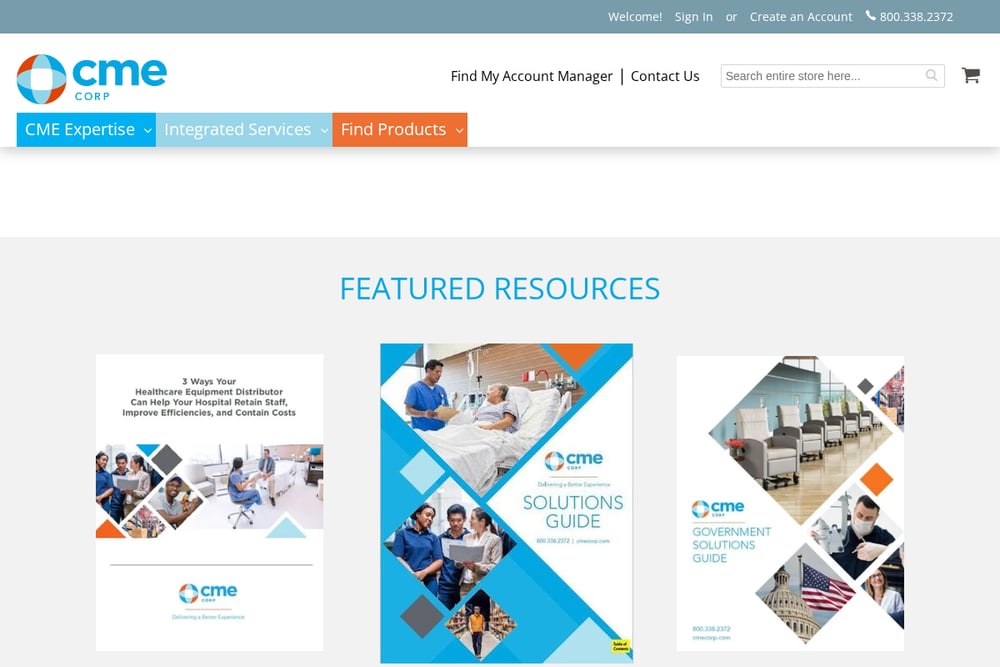 A screenshot of the CME Corp website.
CME Corp positions itself as a one-stop-shop for medical equipment and white glove logistics. They specialize in procurement for construction projects, including Division 10, 11, and 12 equipment. Their team of dedicated project managers supports the entire process, from purchase to delivery. They work closely with architects, contractors, and equipment planners. If you're managing a large construction project, CME's expertise in contractor-furnished equipment can be a major asset. Their national presence means they can handle logistics across the US.
#2 MAYA Medical | Hospital Equipment Solutions
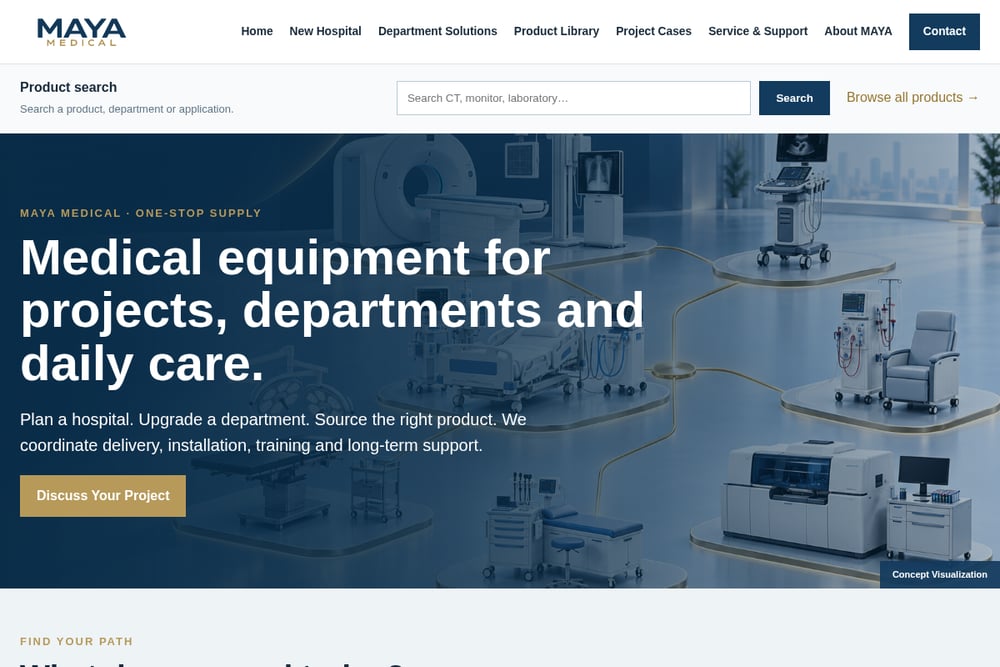 A screenshot of the MAYA Medical | Hospital Equipment Solutions website.
MAYA Medical offers an end-to-end project pathway for new hospitals and department upgrades. They start with needs assessment and planning, then move to department configuration and equipment supply. They coordinate logistics, installation, and training, and provide lifecycle support after handover. Their focus is on being a single point of contact for your entire project. This approach can simplify coordination and reduce your administrative burden. They emphasize local engineering support and long-term service, making them a strong fit for projects that need ongoing maintenance.
#3 PFSCM
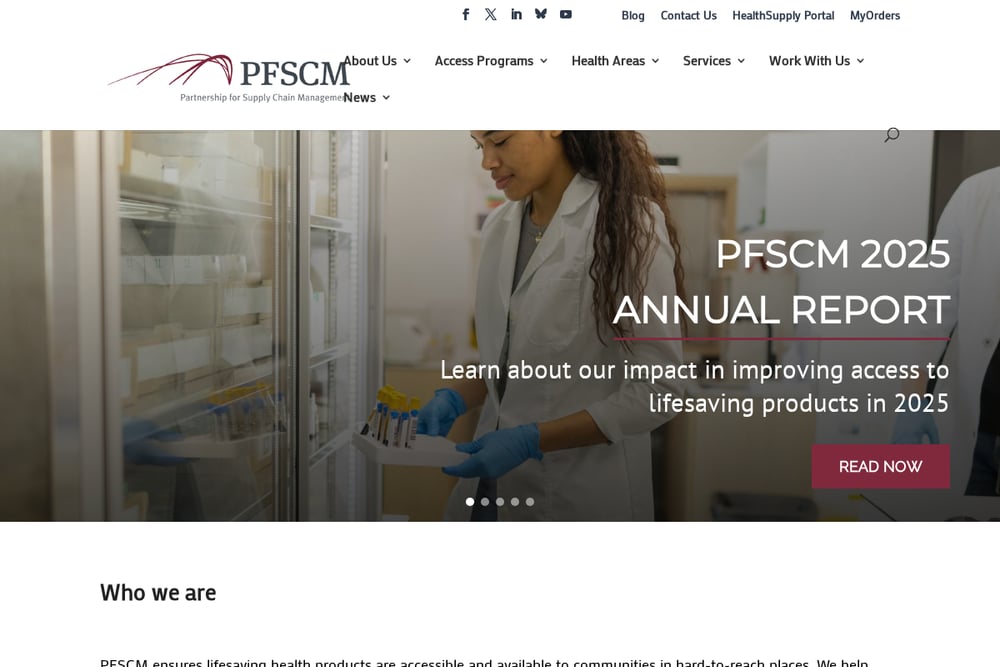 A screenshot of the PFSCM website.
PFSCM specializes in project-based procurement for health infrastructure, often in global health contexts. They help plan and implement equipment rollouts across countries or regions. Their services include procurement, logistics, and ongoing operational supply for consumables and reagents. They also support maintenance agreements, warranty extensions, and training. If you're working on a public health initiative or a large-scale rollout, PFSCM's expertise in sustainable procurement can be invaluable. They bridge the gap between project-based and operational procurement.
#4 Shen Milsom & Wilke
 A screenshot of the Shen Milsom & Wilke website.
Shen Milsom & Wilke provides medical equipment planning as part of a broader design and engineering consultancy. Their services include existing equipment assessment, needs analysis, budget development, and specification development. They also handle placement drawings, procurement, and installation management. They work on projects ranging from single department renovations to entire medical centers. Their systematic process is sequenced with design and construction phases. If you need equipment planning tightly integrated with architecture and engineering, SM&W is a strong choice.
#5 TAHPI
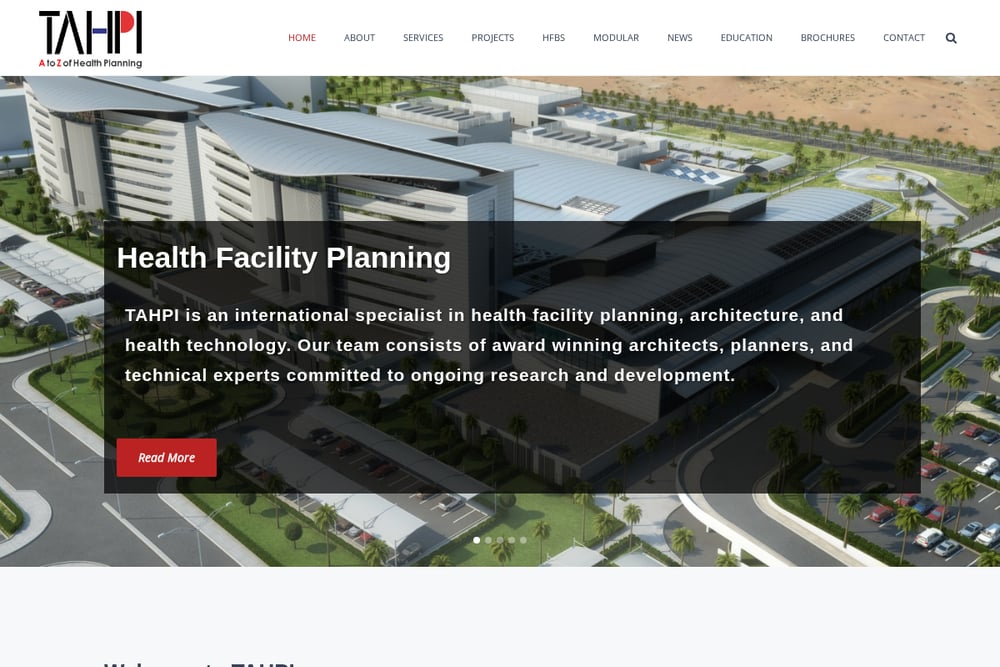 A screenshot of the TAHPI website.
TAHPI offers medical equipment planning and biomedical engineering services. They use their HFBS software platform for briefing and purchasing modules, enabling scheduling and specification of all equipment types. Their specialists understand clinical needs and have in-depth knowledge of budgeting and medical planning. They also provide health facility planning, MEPF engineering, and project management. If you need a partner who combines planning with biomedical engineering and software tools, TAHPI is worth considering. Their international experience spans multiple regions.
How to Choose the Right Partner for Your Project
Start by defining your project scope. Are you building a new hospital or upgrading a single department? Do you need just procurement or full planning and installation? Next, consider your location and regulatory environment. A partner with local engineering support can be a lifesaver. Look at their experience with similar projects. Ask for references and case studies. Evaluate their pricing model: is it transparent? Do they offer lifecycle support? Finally, think about communication. You want a partner who listens and responds. The right fit will make your project smoother and more successful.
Automating Your Equipment Planning Workflow
You can streamline your equipment planning with digital tools. Use project management software to track milestones, budgets, and equipment lists. Many partners offer online portals for procurement and logistics tracking. Consider using BIM (Building Information Modeling) to integrate equipment placement with architectural plans. Automate inventory management for consumables and spare parts. Set up alerts for maintenance schedules. These steps reduce manual errors and keep your project on track. The more you automate, the more time you have for strategic decisions.
The Bottom Line
Choosing a hospital equipment planning partner is a critical decision. You need someone who understands your clinical goals, your budget, and your timeline. The five partners here each bring unique strengths. CME Corp excels in construction logistics. MAYA Medical offers a comprehensive one-stop pathway. PFSCM is ideal for global health initiatives. Shen Milsom & Wilke integrates planning with design. TAHPI combines planning with biomedical engineering. Assess your needs, then reach out to the partners that align with your project. A good partner will not just supply equipment; they will help you build a better hospital.