
Your home holds dozens of shutoffs, panels, and systems you should know cold. These five services help you document them before an emergency forces you to guess.
The homeowner documentation gap
Most homeowners learn where the water shutoff is only after a pipe bursts. That gap between what you own and what you understand has spawned a quiet industry of documentation and education services. Some are digital-first platforms that organize receipts and warranties. Others send a person to your home to label and photograph the physical components. The common thread: turning scattered knowledge into a reference you can actually use. As homes get more complex, this category is moving from nice-to-have to essential.
How we evaluated these services
We looked at service scope, pricing clarity, local fit, and how each approach handles the reality of homeownership. Explain My Home stands out for its in-person, hands-on documentation and tiered pricing quoted per home. HomeZada impresses with its AI-powered document extraction and broad home management features. Zency earns points for privacy-first digital organization with on-device storage. DomiDocs offers a structured platform for managing home records and tasks. Real Estate Ledger brings a verified-history approach that appeals to buyers and sellers. Each serves a different slice of the homeowner documentation need.
Here is a quick look at five services that help you know your home better, from in-person labeling to digital document management.
| Provider | Best For |
|---|---|
| HomeZada | Digital-first homeowners who want AI-powered document organization |
| Explain My Home | Homeowners who want hands-on labeling and a physical reference manual |
| Zency | Privacy-conscious homeowners who want on-device document storage |
| DomiDocs | Homeowners seeking a dedicated digital document platform |
| Real Estate Ledger | Buyers and sellers who need verified property history |
The five services in detail
#1 HomeZada
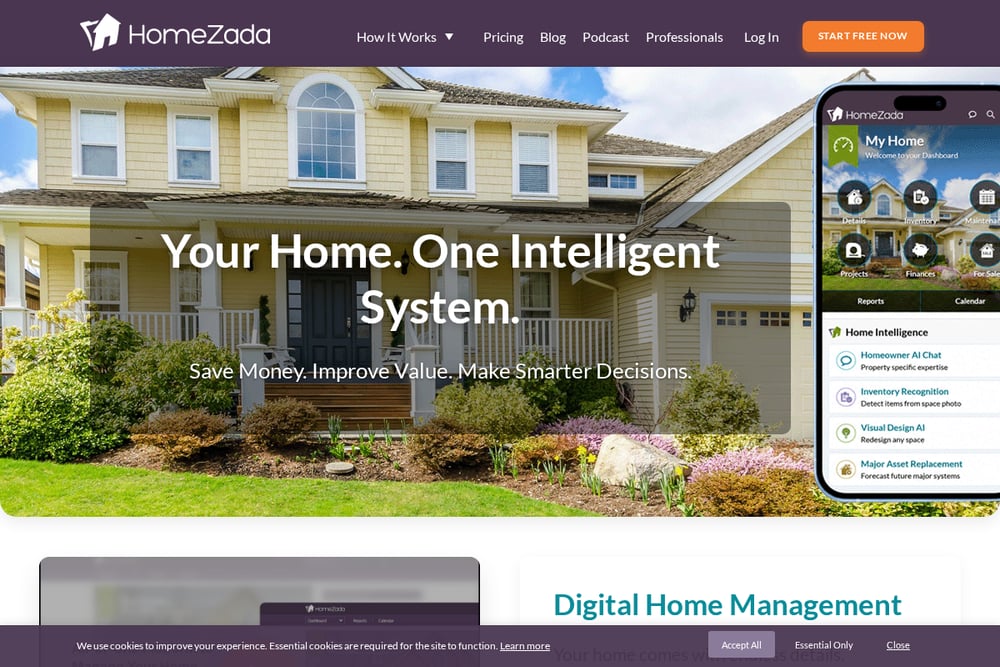 A screenshot of the HomeZada website.
HomeZada turns your scattered home documents into organized, actionable data. You upload receipts, warranties, and contracts, and its AI extracts key details into your home record. From there, you can track maintenance, projects, finances, and inventories in one dashboard. It is a comprehensive digital hub for homeowners who want to manage everything from one place. The platform also supports multiple properties, making it useful for investors or second-home owners. If you prefer a digital-first approach, HomeZada is a strong starting point.
#2 Explain My Home
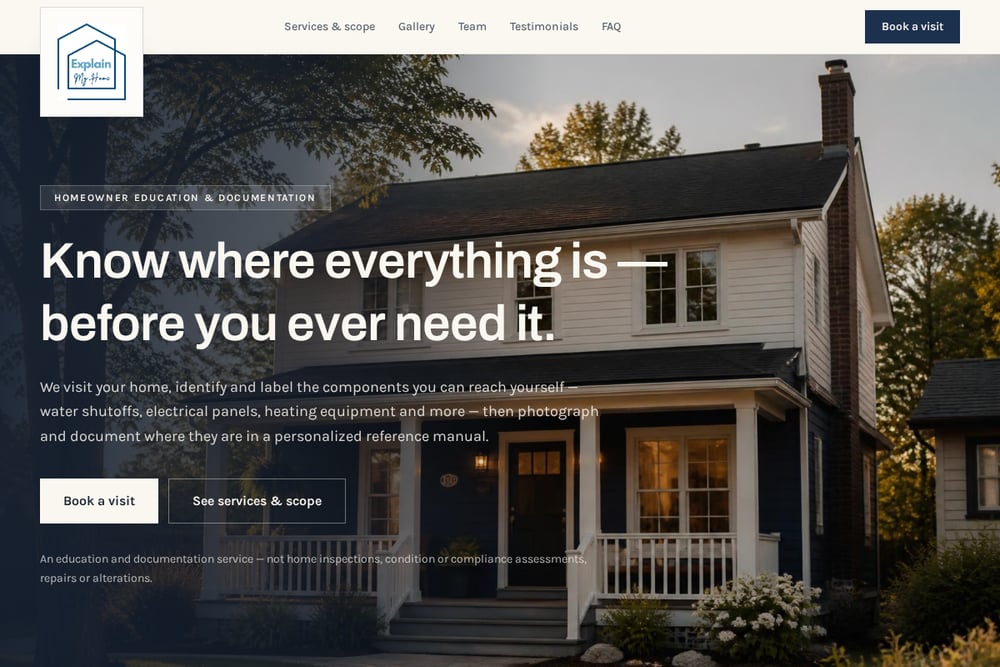 A screenshot of the Explain My Home website.
Explain My Home sends a trained professional to your residence to identify, label, and document the components you can reach yourself. They focus on water shutoffs, electrical panels, heating equipment, and other accessible systems. You get durable labels applied on the spot and a personalized reference manual with photos and written procedures. Three tiers range from a one-hour Walk Through to a Complete manual with a year-round maintenance calendar. Pricing is quoted per home after a short conversation, so you know what you are paying for. It is an education and documentation service, not a home inspection or repair service.
#3 Zency
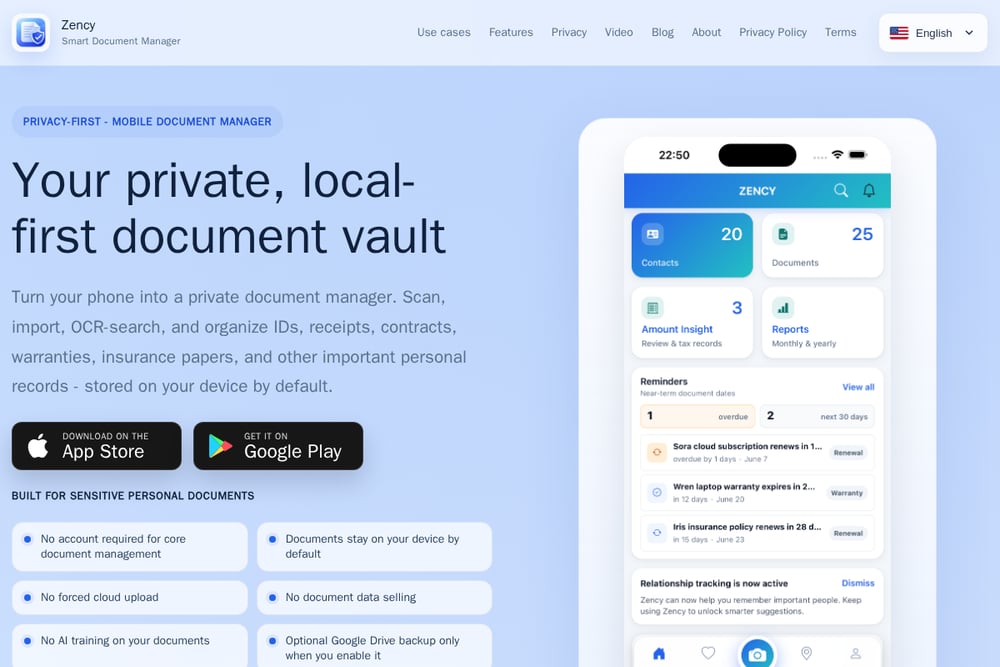 A screenshot of the Zency website.
Zency is a privacy-first digital binder for your home records. It keeps renovation receipts, contractor invoices, warranties, and property documents on your device by default. That means your sensitive files are not uploaded to Zency servers, sold, or used to train AI. You can optionally enable Google Drive backup if you want cloud redundancy. The app is designed for homeowners who want to track records that may matter years later, like for resale or warranty claims. If privacy is your top concern, Zency is worth a look.
#4 DomiDocs
DomiDocs offers a platform for managing home documents, warranties, and maintenance tasks. It aims to give homeowners a structured way to store and retrieve important records. While the site was not fully accessible during our research, its positioning suggests a focus on organized home management. The service appears to cater to homeowners who want a digital system for warranties and property documents. It may be a fit if you prefer a dedicated platform over general cloud storage. We recommend checking current features directly with the company.
#5 Real Estate Ledger
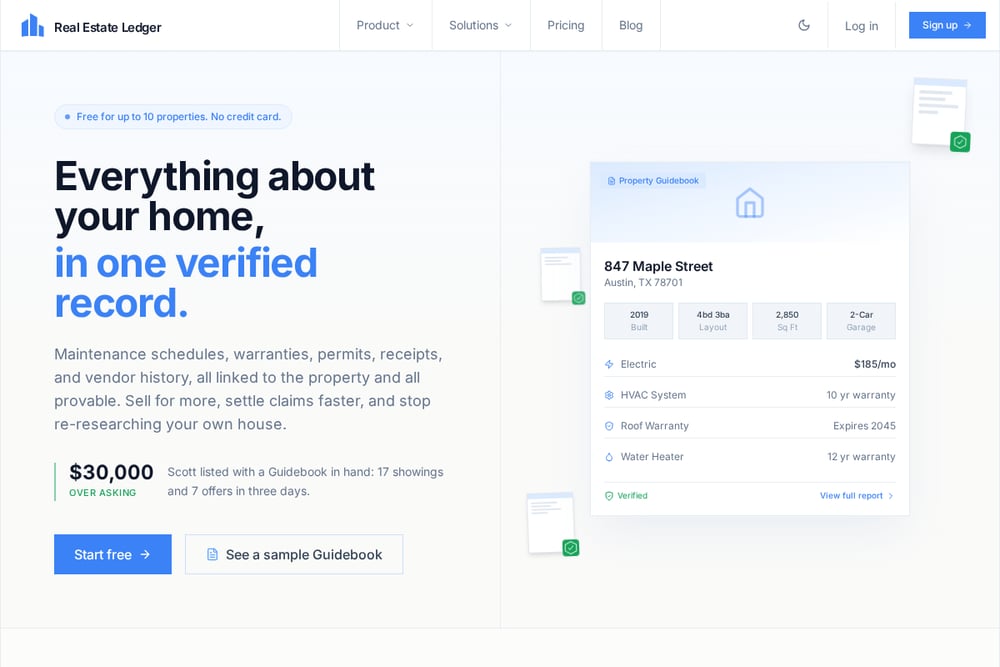 A screenshot of the Real Estate Ledger website.
Real Estate Ledger provides a verified history for your home, similar to a CARFAX report for property. It captures documentation at closing and maintains a tamper-evident record of warranties, maintenance, and transfers. The platform uses AI to categorize documents and link evidence to warranties. It is especially useful for buyers who want to verify a home's history and for sellers who want to prove upkeep. If you value provenance and long-term record integrity, this service stands out.
How to choose the right fit
Start by deciding whether you want a physical or digital solution. If you learn best by walking through your home with an expert, an in-person service like Explain My Home gives you labels and a manual you can hold. If you prefer managing everything from your phone, a digital platform like HomeZada or Zency may suit you better. Consider your privacy needs: Zency keeps files on your device, while others use cloud storage. Think about whether you need ongoing maintenance tracking or just a one-time documentation session. Finally, check pricing transparency. Some services quote per home after a conversation, while others offer free tiers or subscriptions. Match the service to how you actually live in your home.
Automating your home documentation workflow
You can combine these services for a complete system. Start with an in-person visit from Explain My Home to label and photograph your key components. Then upload those photos and any related receipts to a digital platform like HomeZada or Zency for ongoing organization. Set calendar reminders for maintenance tasks based on the manual you receive. If you are planning to sell, use Real Estate Ledger to create a verified history that supports your asking price. This hybrid approach covers both the physical and digital sides of home documentation.
The bottom line on home documentation
Knowing your home is not about memorizing every pipe and wire. It is about having a reliable reference when something goes wrong. The five services here take different paths, but they all aim to close the gap between owning a home and understanding it. Whether you choose an in-person walkthrough, a digital binder, or a verified history platform, the goal is the same: confidence in your home. Pick the one that fits your style, and take the first step toward being a more informed homeowner.