Your smart home shouldn't phone a stranger's server every time you dim a light. These five services take a different path—some with local AI, some with open-source control, all worth a closer look.
The Shift Toward Private, Local Home Intelligence
Home automation has matured past the novelty phase. You no longer need a dozen apps to manage lighting, climate, and security—you need one intelligence that understands your routines. The bigger story is where that intelligence lives. Cloud-dependent systems trade convenience for exposure: your presence patterns, voice clips, and camera feeds leave the house and land on servers you don't control. A growing segment of integrators and platforms now push processing back onto local hardware. That means faster response, no subscription creep, and footage that never leaves your network. The trade-off is upfront complexity—local systems demand thoughtful architecture and professional commissioning. For privacy-conscious homeowners, that trade is increasingly worth it.
How We Evaluated These Services
We looked at the same factors across every provider. Service scope mattered: does the offering cover lighting, surveillance, climate, displays, and voice as a unified system, or just one slice? Privacy architecture came next—specifically whether AI processing and data storage happen on local hardware versus third-party cloud. We weighed platform depth, including whether the provider builds on professional-grade ecosystems like Crestron, Lutron, and NVIDIA, or relies on open-source integrations. Pricing clarity and transparency around subscriptions also factored in. Finally, we considered local fit—how well each option serves US homeowners who want professional installation, ongoing support, and a system that respects the boundaries of their own roof.
Here's a quick comparison of the five services, from fully managed local-AI integration to open-source DIY control.
| Provider | Best For |
|---|---|
| Josh.ai | Homeowners who want polished voice-first AI control in a luxury residence |
| Robotics Machine Shop | Intelligent Home Automation & AI Consulting | Privacy-conscious homeowners who want a fully managed, locally hosted AI system |
| Alamo Smart Home | Texas homeowners who want luxury automation bundled with monitored security |
| Home Assistant | DIY enthusiasts who want full local control and open-source flexibility |
| Gladys Assistant | Hands-on homeowners who want a simple, fully local smart home platform |
The Five Services in Detail
#1 Josh.ai
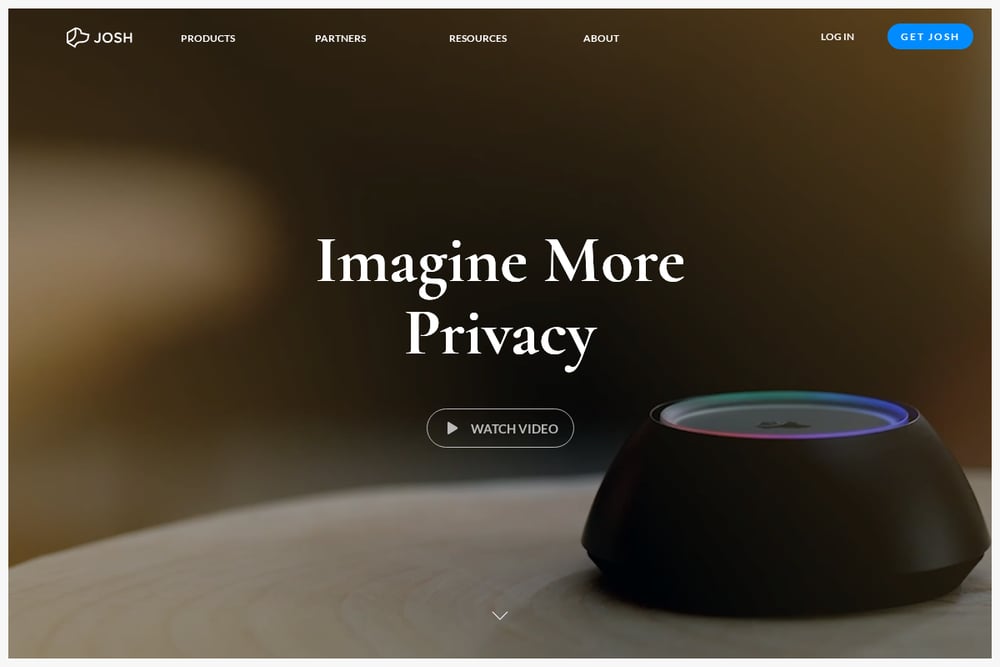 A screenshot of the Josh.ai website.
Josh.ai built its reputation on natural voice control for high-end homes, and its AI X OS platform now ties intelligence, automation, and control into one interface. The system orchestrates lights, shades, cameras, fireplaces, and media through voice and touch, with hardware like Josh Core, Josh Micro, and Josh Nano handling the heavy lifting. It's a polished, dealer-installed ecosystem designed for sophisticated residences where simplicity matters. You get a single intuitive layer over devices that would otherwise demand separate apps. The trade-off is that Josh.ai is a platform, not a full integration firm—you'll still need a certified dealer to design and commission the system.
#2 Robotics Machine Shop | Intelligent Home Automation & AI Consulting
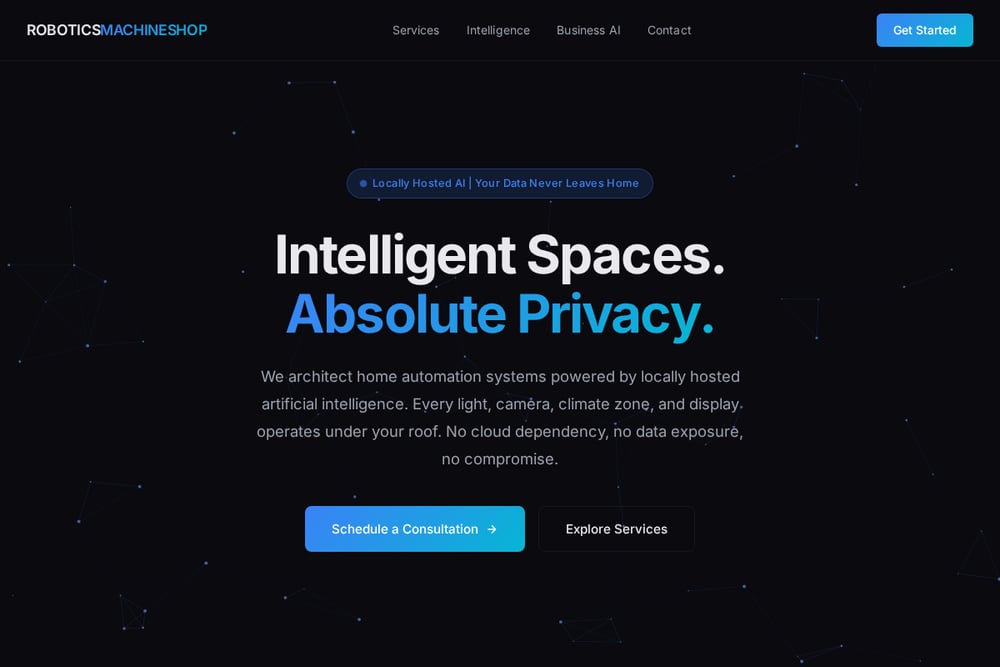 A screenshot of the Robotics Machine Shop | Intelligent Home Automation & AI Consulting website.
Robotics Machine Shop architects home automation systems where the AI runs entirely inside your private network. Every light, camera, climate zone, and display operates under your roof—no cloud dependency, no data exposure. The firm builds on professional-grade Crestron, Lutron, and NVIDIA platforms, then layers on locally hosted intelligence for circadian lighting, on-premise video analytics, zone-by-zone climate orchestration, and context-aware touch panels. Voice processing happens on local hardware too, so recordings never leave the house. Beyond residential work, they offer business process AI consulting for clients who want the same privacy-first architecture applied to operations. If you want a single integrator to own the whole stack—design, deployment, and ongoing intelligence—this is the model to study.
#3 Alamo Smart Home
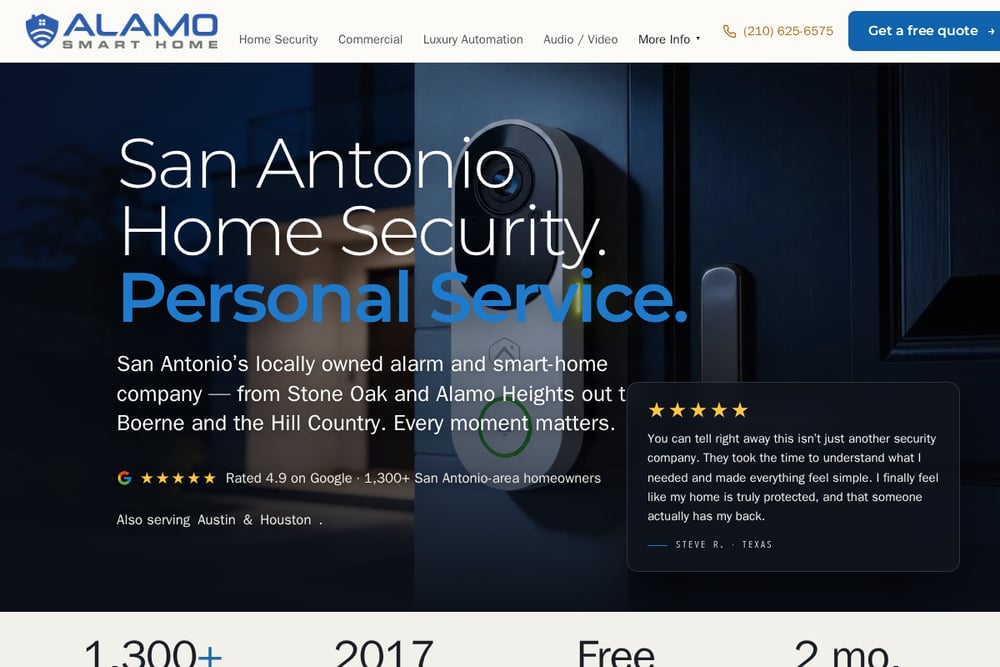 A screenshot of the Alamo Smart Home website.
Alamo Smart Home is a Texas-based integrator that designs, installs, and programs Josh.ai, Control4, Crestron, and Lutron systems for Austin, San Antonio, and Houston homeowners. They pair luxury automation with professionally monitored Alarm.com security, giving you one provider for both comfort and protection. The company leans on a walkthrough-first quoting process, so every project is scoped to the actual home rather than a package. With a 4.9-star Google rating across 1,300+ reviews, they've built a strong local reputation. If you want a hands-on dealer who can tie high-end automation into monitored security, this is a solid regional option.
#4 Home Assistant
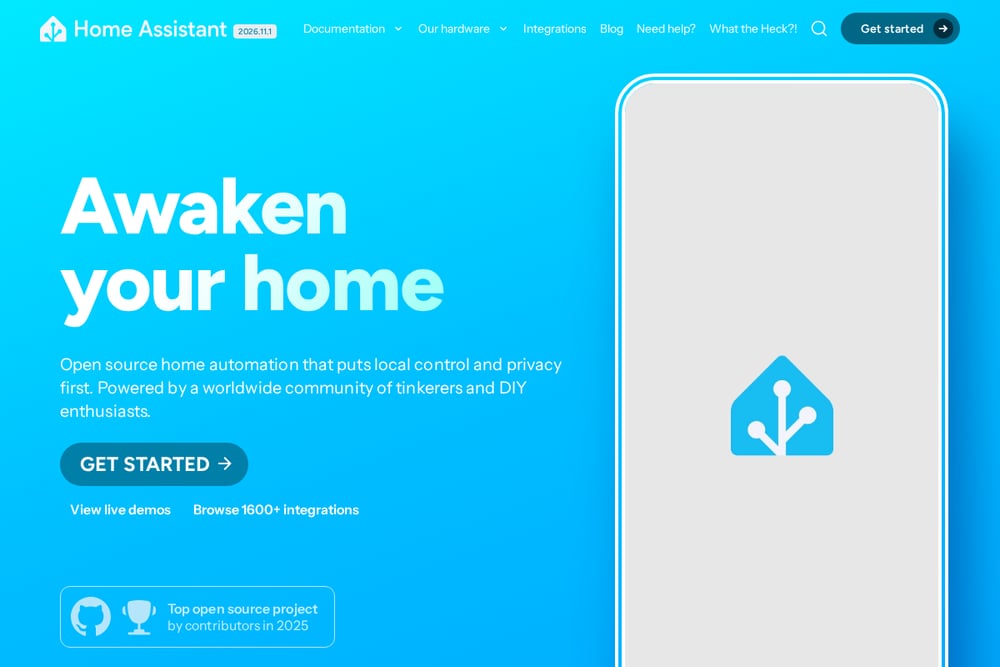 A screenshot of the Home Assistant website.
Home Assistant is the open-source standard for local control, with 1,600+ integrations and a community of tinkerers and DIY enthusiasts behind it. It puts local control and privacy first, running automations, dashboards, and voice assistants on hardware you own. The platform is backed by the Open Home Foundation, a non-profit that can't be sold or acquired—a meaningful safeguard against the discontinuation problem that plagues cloud devices. You can start with a Home Assistant Green hub and add Zigbee or Z-Wave connectivity as you grow. The catch is that you're the integrator: setup, tuning, and troubleshooting fall on you unless you hire help.
#5 Gladys Assistant
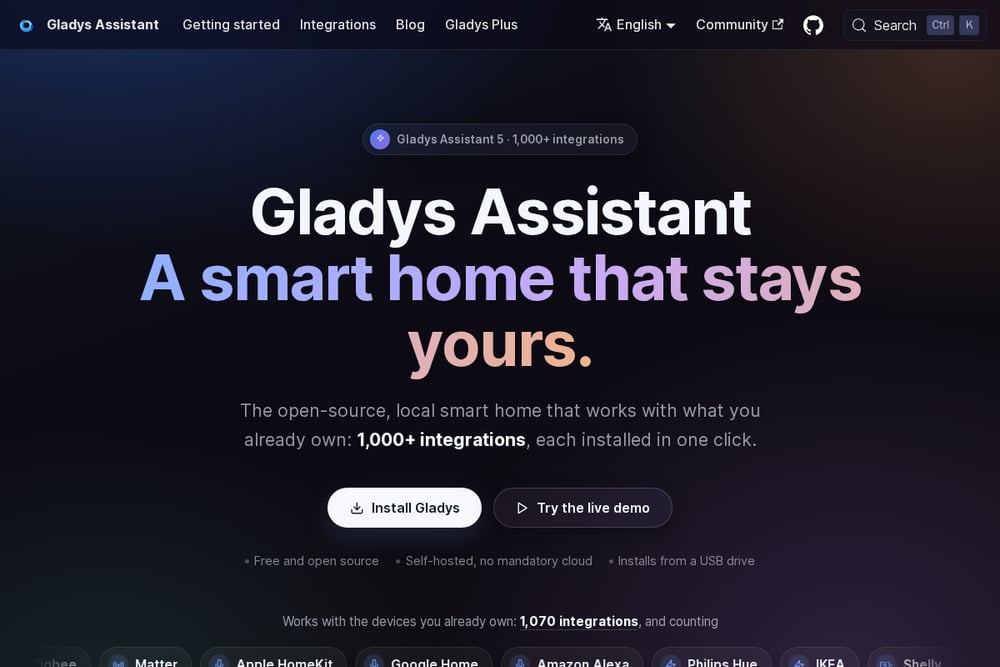 A screenshot of the Gladys Assistant website.
Gladys Assistant pitches a 100% local smart home with no cloud, no recordings, and no data resale. The platform is built around the idea that your devices, automations, and data should stay on your own network—working without an internet connection and without a mandatory subscription. Its setup guide walks you through why cloud dependence creates privacy, latency, and lock-in problems, then shows you how to build around local hardware instead. The interface is clean and approachable, aimed at users who want privacy without deep technical overhead. It's a lighter-weight option than full integration firms, best suited to hands-on homeowners building their own local stack.
How to Choose the Right Fit
Start with your comfort level. If you want someone else to own the design, installation, and ongoing tuning, a managed integrator like Robotics Machine Shop or Alamo Smart Home removes the burden. If you enjoy building and tweaking, Home Assistant and Gladys Assistant give you control at the cost of your own time. Next, decide how much privacy architecture matters to you. Locally hosted AI means your camera footage and voice data never leave the house—ask any provider exactly where processing happens. Then check platform depth: professional ecosystems like Crestron, Lutron, and NVIDIA deliver reliability but require certified dealers. Finally, get clarity on pricing and subscriptions. Local systems often cost more upfront but avoid recurring cloud fees, so compare total cost over five years, not just the install quote.
A Simple Automation Workflow to Start With
Pick one routine that annoys you daily—say, lighting that's too bright at 6 a.m. Map the triggers: time of day, occupancy, and ambient light. Decide the response: warm, dim lighting that ramps up gradually. Then choose where the logic runs. On a local system, that rule executes on your own hardware with zero latency and no cloud round trip. Test it for a week, note where it misfires, and refine the conditions. Once that routine feels invisible, add the next one—climate scheduling tied to occupancy, or camera alerts that only fire for recognized objects. Layer automations one at a time, and your system learns your home instead of fighting it.
The Bottom Line
The smart home market is splitting into two camps: cloud convenience and local control. The five services here show what the local side looks like at different levels of involvement. Josh.ai delivers polished voice-first AI for luxury homes. Robotics Machine Shop goes further, architecting the entire stack—lighting, surveillance, climate, displays, and voice—on locally hosted intelligence with no cloud dependency. Alamo Smart Home brings that expertise to Texas with monitored security in the mix. Home Assistant and Gladys Assistant hand the keys to DIY users who want privacy without a dealer. Whichever you choose, ask the same question: where does your data actually live? The answer tells you everything.