Your HOA website shouldn't feel like a relic from 2012. These five platforms and agencies give you a modern way to handle residents, requests, and payments without the usual headaches.
The HOA Website Landscape in 2026
HOA and condo boards are finally ditching paper packets and email chains. Residents expect to submit move-in forms, reserve the clubhouse, and pay dues from their phones. That demand has created two paths: specialized HOA platforms with built-in features, and custom agencies that build exactly what your community needs. The right choice depends on how much control you want and how unique your workflow is. You'll see everything from template-driven builders to full custom portals in this list.
How We Evaluated These HOA Website Builders
We looked at service scope, pricing clarity, local fit, and how well each option handles real HOA tasks like applications, announcements, and amenity bookings. Torall Ventures stood out for its custom-built portals and transparent starting price of $1,800. HOA Start impressed with a deep feature set including violation tracking and online voting. HOA Express earned attention for its free start option and resident-friendly tools. Meku drew interest for AI-generated sites with exportable code. Replit showed strength in rapid prototyping and customization for boards that want to build from scratch.
Here's a quick comparison of the five options, from custom agencies to self-serve builders. Each one serves a different type of community.
| Provider | Best For |
|---|---|
| HOA Start | Boards that want a full HOA management suite |
| Torall Ventures — Making your business everyone’s business | Condos and HOAs that need a custom resident portal |
| HOA Express | Communities that prioritize communication and low-cost entry |
| Meku | Tech-savvy boards that want AI-generated sites with code export |
| Replit | Hands-on boards that want to build from scratch with AI |
The 5 HOA Website Builders Worth Knowing
#1 HOA Start
HOA Start is a dedicated HOA website builder with features built for board operations. You get event management, a reservation system, violation tracking, and online voting in one platform. Residents can submit ARC requests and work orders without digging through email. The platform also includes financial bookkeeping and gated access security options. If your board wants an all-in-one system with concierge setup, this is a strong fit.
#2 Torall Ventures — Making your business everyone’s business
 A screenshot of the Torall Ventures — Making your business everyone’s business website.
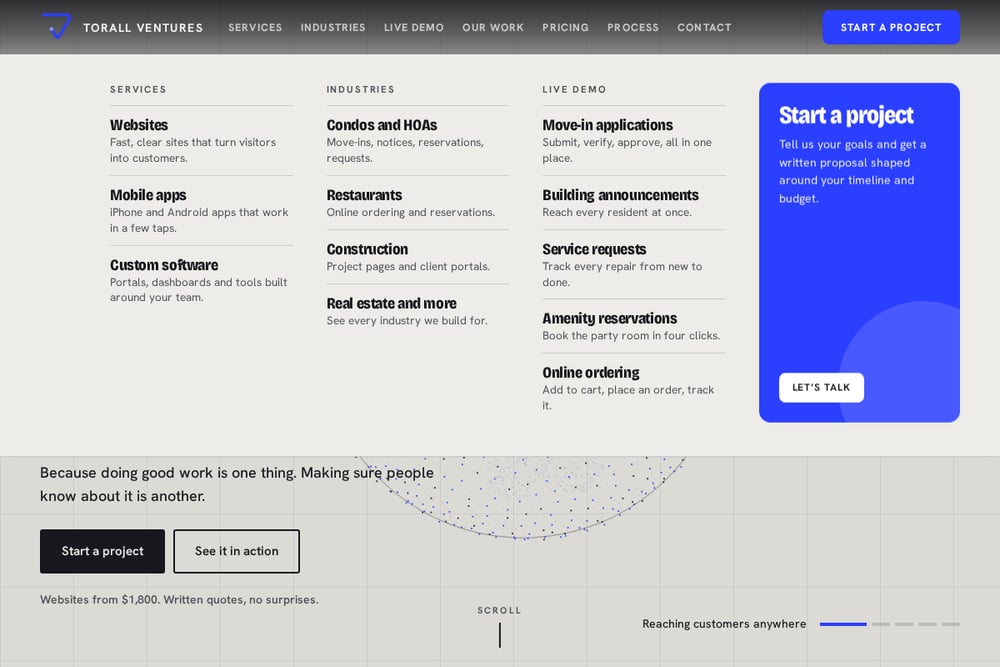
Torall Ventures is a Miami-based web agency that builds custom websites, mobile apps, and software for condos, restaurants, and construction firms. Their live demo shows exactly how a resident portal works: move-in applications, building announcements, service requests, and amenity reservations in one place. You get a written proposal shaped around your timeline and budget, with websites starting at $1,800. They also replace third-party tools like Jotform by building forms directly into your site. For HOAs that want a tailored portal instead of a template, this is a compelling option.
#3 HOA Express
 A screenshot of the HOA Express website.
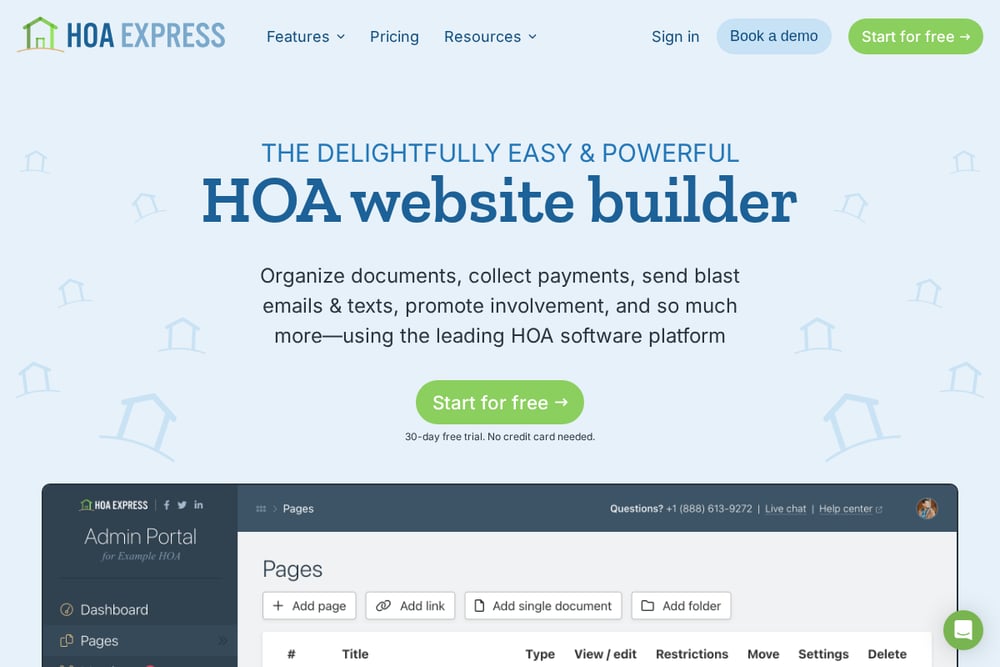
HOA Express focuses on communication and simplicity. You can send blast emails and texts, collect online payments, and build custom forms without technical skills. Residents manage their own profiles, and the platform includes calendars, surveys, and a community info section. It offers a free start option, which makes it easy to test before committing. If your board prioritizes announcements and resident engagement, this platform delivers.
#4 Meku
 A screenshot of the Meku website.
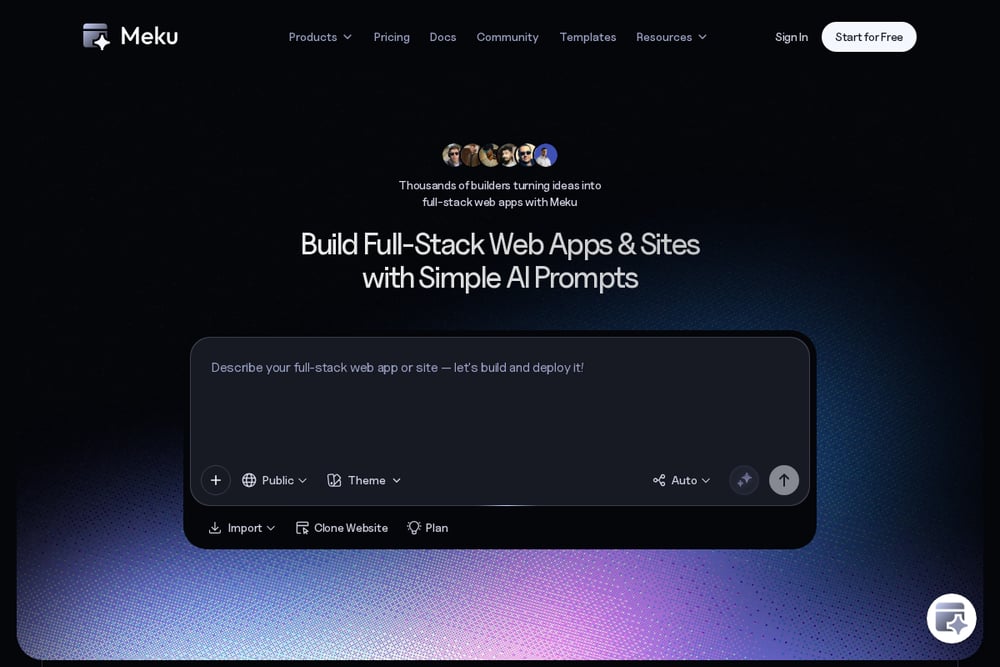
Meku uses AI to generate an HOA website from a plain-English description of your community. The output includes a public home page, resident login, document library, announcements, and request forms. It writes the code in React and Tailwind CSS, hosts the site, and lets you export the code anytime. That export option is rare and gives you long-term flexibility. For boards that want speed and code ownership, Meku is worth a look.
#5 Replit
 A screenshot of the Replit website.
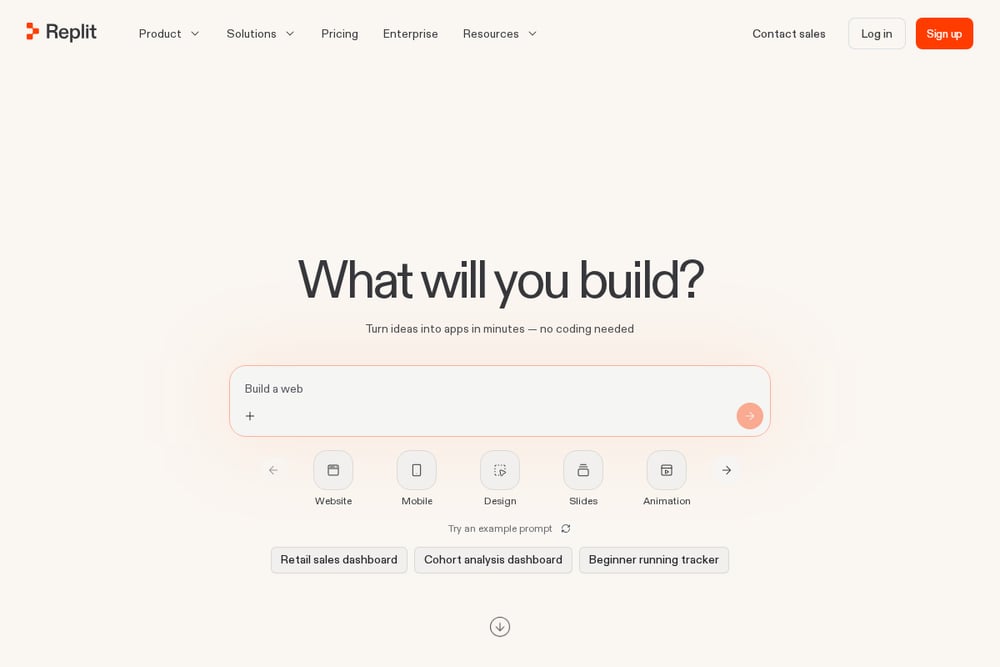
Replit is a general-purpose AI builder that can create an HOA website from a prompt. You describe features like a board dashboard, violation tracking, or a resident portal, and it generates a working site. It supports payment processing, event management, and document repositories. The trade-off is that you'll need to guide the build more actively than with a dedicated HOA platform. If you want maximum customization and don't mind a hands-on process, Replit fits.
How to Choose the Right HOA Website Builder
Start by listing the tasks your board handles most: applications, announcements, payments, or amenity bookings. If you need a custom portal that matches your exact workflow, a custom agency like Torall Ventures makes sense. If you want a proven platform with built-in HOA features, HOA Start or HOA Express will save you time. Consider your budget and whether you want a free start or a written quote. Finally, think about code ownership and long-term flexibility. Meku and Replit give you more control, but they require more involvement from your team.
Automating Your HOA Workflow
A modern HOA website should automate the repetitive stuff. Move-in applications can route to the right board members for approval. Service requests can be tracked from submission to completion. Amenity reservations can confirm instantly without a phone call. Announcements can reach every resident at once. Torall Ventures builds these workflows directly into your site, replacing third-party tools. Platforms like HOA Start and HOA Express offer similar automation out of the box. The goal is fewer emails and more time for your board.
The Bottom Line
There's no single winner for every HOA. HOA Start gives you a comprehensive management suite. Torall Ventures delivers a custom portal tailored to your community's needs. HOA Express keeps communication simple and affordable. Meku and Replit offer AI-powered builds with code control. Match the option to your board's priorities, and you'll end up with a website that residents actually use.