
The healthcare system wasn't built with a map. These five services hand you one, so you can stop guessing and start moving forward with confidence.
The Quiet Rise of the Healthcare Navigator
Healthcare navigation has grown from a hospital hallway courtesy into a standalone profession. Patients and families now face fragmented records, shifting insurance rules, and specialist referrals that feel like a maze. Navigators step in to translate, organize, and advocate. Some are solo RNs working one family at a time. Others are national platforms with hundreds of advocates on call. The common thread is education and coordination, not medical treatment. That distinction matters, because it shapes what each service can and cannot do for you.
How We Looked at These Services
We weighed each service on the same factors: scope of support, clarity of what's offered, credentials of the people doing the work, local versus national reach, and how easy it is to start a conversation. Central Coast Health Navigation stood out for its one-on-one RN-led educational model and its clear boundaries around what it does. Healthcare Navigation, LLC stood out for its deep insurance and Medicare focus with a no-commission stance. Solace Health stood out for its large advocate network and insurance-covered access. Patient Navigator LLC stood out for its board-certified advocacy and research reports. Episcopal Health Services stood out for its community-based barrier removal and multilingual support. Each earns its place for different reasons.
Here's a quick side-by-side of the five services, from solo RN guidance to national advocacy networks. Use it to spot which model fits your situation before you read the deeper profiles.
| Provider | Best For |
|---|---|
| Healthcare Navigation, LLC | Insurance and Medicare coverage questions |
| Central Coast Health Navigation | DeAnn Oliver, RN | Families who want calm, RN-led guidance |
| Solace Health | Insurance-covered advocacy at scale |
| Patient Navigator LLC | Research reports and local DC-area advocacy |
| Episcopal Health Services Patient Navigation Program | Removing practical and social barriers to care |
The Five Services, One by One
#1 Healthcare Navigation, LLC
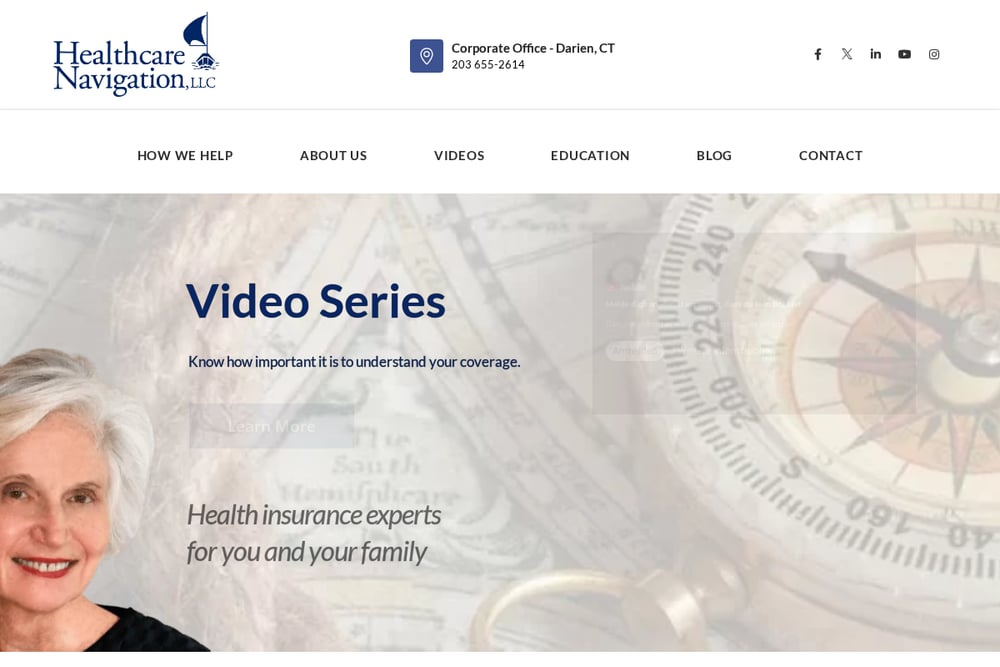 A screenshot of the Healthcare Navigation, LLC website.
This Connecticut-based firm has built its reputation on insurance and Medicare consulting. It offers subscription advocacy tiers plus project-based consulting for coverage transitions. What sets it apart is its stated independence: it does not sell insurance or accept commissions, so the advice stays objective. You get help reviewing coverage, managing enrollment, and resolving claims and billing problems. If your stress comes from paperwork and policy language, this is a strong fit. Learn more at Healthcare Navigation, LLC.
#2 Central Coast Health Navigation | DeAnn Oliver, RN
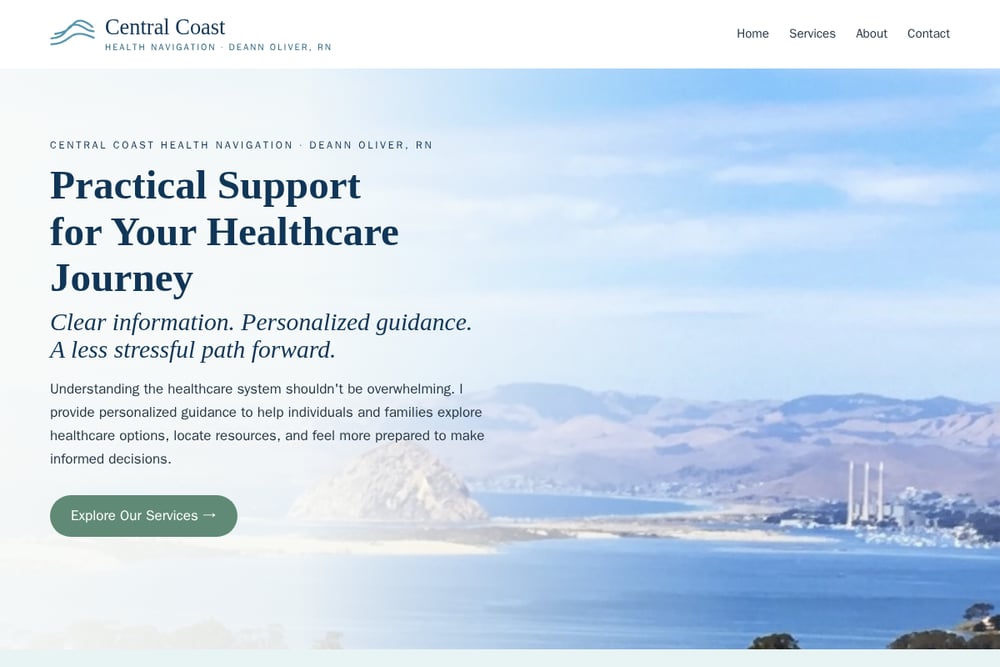 A screenshot of the Central Coast Health Navigation | DeAnn Oliver, RN website.
DeAnn Oliver has been a registered nurse since 2009, with a background in public health and school nursing. Her practice focuses on education and navigation rather than medical care, which keeps the scope honest and clear. You can get help exploring care options, organizing records, preparing questions for appointments, and finding community resources. She also supports families through complex transitions and difficult diagnoses. The tone is personal and calm, built around her motto: listen, educate, empower. Visit Central Coast Health Navigation | DeAnn Oliver, RN to start a conversation.
#3 Solace Health
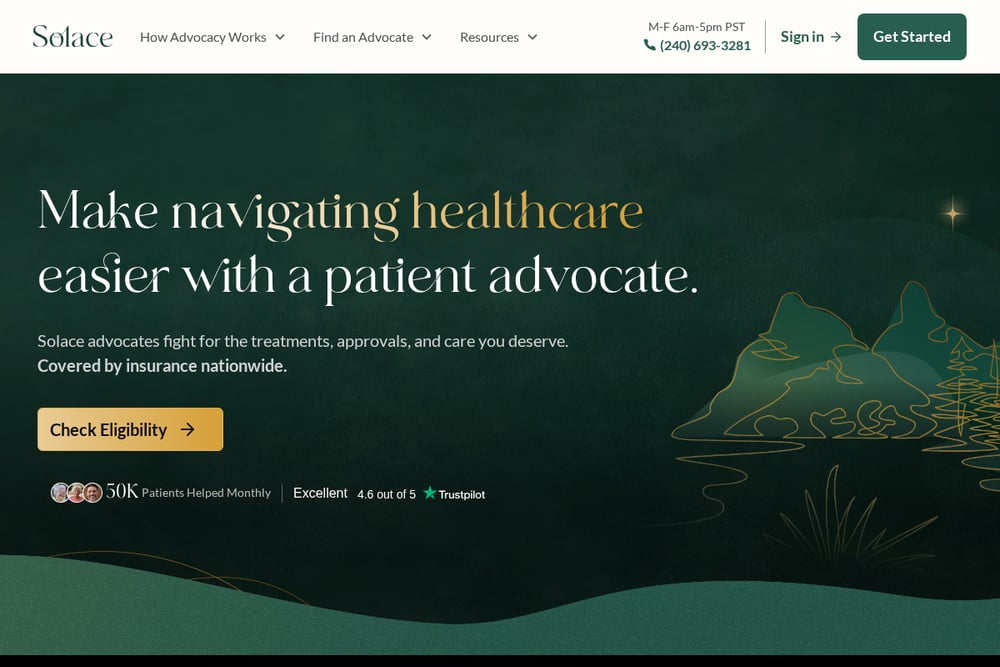 A screenshot of the Solace Health website.
Solace Health connects you with a network of advocates who have administrative and clinical experience. Its navigators translate medical terminology, coordinate between providers, and help you research treatment options. The platform also organizes medical records into a centralized tracking system. A major draw is that advocacy through Solace is covered by Medicare and hundreds of insurance plans. That makes it one of the more accessible options if cost is a concern. Explore Solace Health if you want a national network behind you.
#4 Patient Navigator LLC
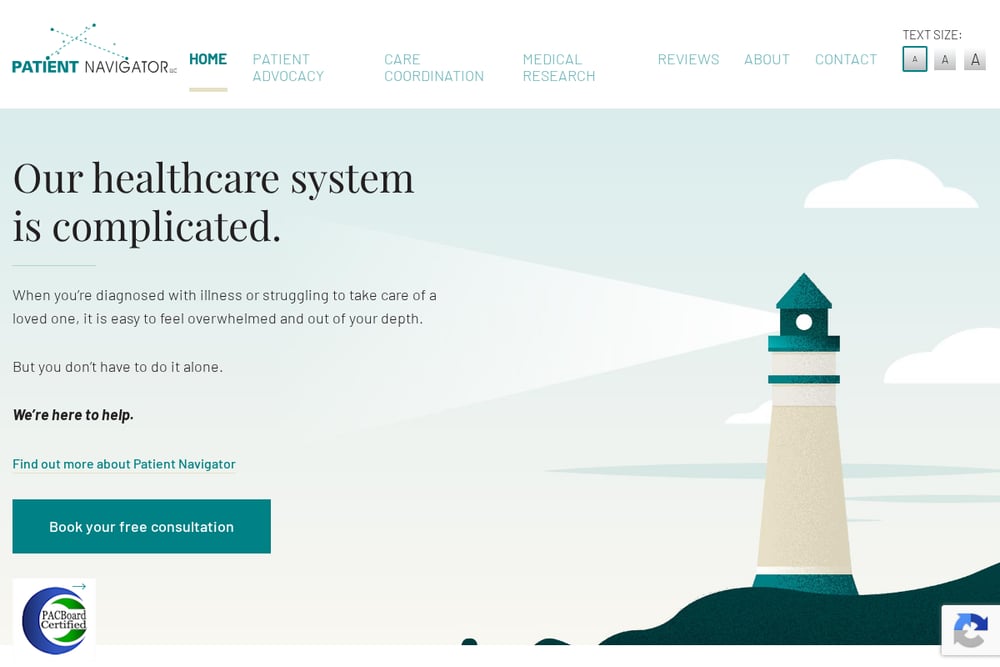 A screenshot of the Patient Navigator LLC website.
Founded by a Board Certified Patient Advocate, Patient Navigator LLC blends advocacy with research. Its patient advocacy service helps you overcome obstacles, find specialists, and communicate better with your medical team. It also produces personalized research and clinical trial search reports for people who feel their questions are going unanswered. Care coordination is available for families managing aging loved ones in Northern Virginia and Washington, D.C. That local presence is a real advantage if you live in the region. See Patient Navigator LLC for the full service list.
#5 Episcopal Health Services Patient Navigation Program
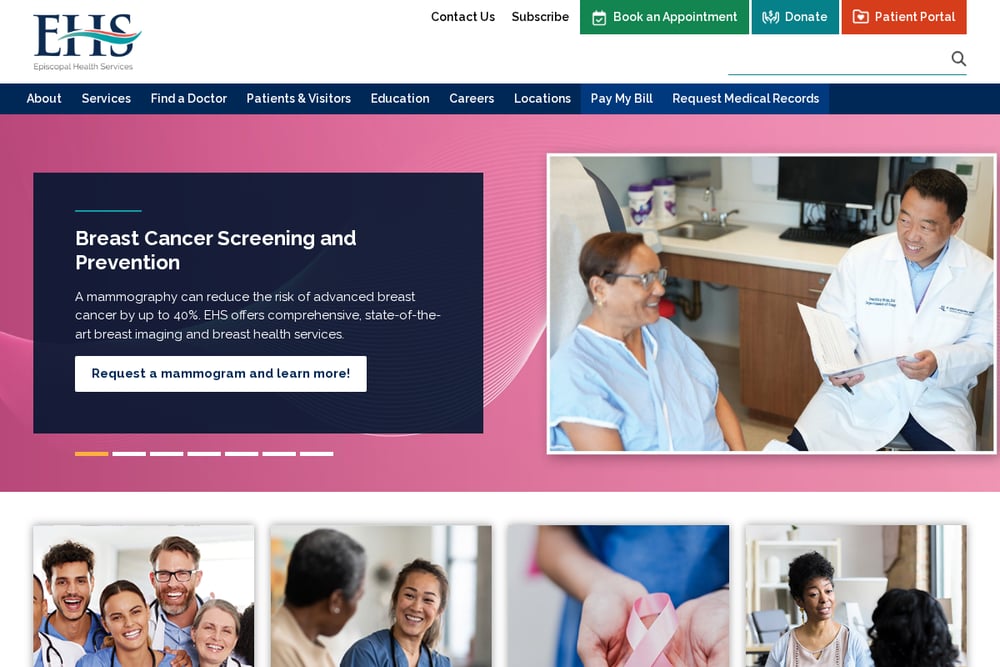 A screenshot of the Episcopal Health Services Patient Navigation Program website.
This program takes a community-health approach to navigation. It targets the barriers that keep people from care: fragmented services, insufficient insurance, transportation gaps, language differences, and social needs like housing or food insecurity. Trained navigators guide patients through and around those obstacles. Because it's tied to a health system, it can connect you directly to services within that network. It's a strong example of navigation as a public good rather than a private subscription. Look into Episcopal Health Services Patient Navigation Program if you need help clearing practical barriers.
Picking the Right Guide for Your Situation
Start with the problem that keeps you up at night. If it's a bill, a denial, or a Medicare deadline, look for insurance-focused expertise. If it's a new diagnosis and you feel lost, look for someone who educates and organizes. If you need hands-on help in a specific city, check for local reach. If cost is the blocker, ask whether advocacy is covered by your plan. Then ask two questions of any provider: what exactly do you do, and what do you not do? A good navigator will answer both without hesitation. Finally, confirm credentials. An RN license, a board certification, or a health-system affiliation all tell you something about accountability.
Where Automation Fits, and Where It Doesn't
Automation can handle the busywork: appointment reminders, record requests, intake forms, and resource lists. It cannot sit with a frightened family and explain a diagnosis in plain language. The strongest workflow pairs simple digital tools with a human navigator. You use a portal to upload documents and track tasks. Your navigator reviews them, prepares your questions, and joins the conversation when it matters. That division of labor saves time without losing the human element. When you evaluate a service, ask how it uses technology and who actually picks up the phone.
The Bottom Line
Healthcare navigation is not one product. It's a spectrum, from a solo RN who knows your name to a national network covered by insurance. The right choice depends on whether you need insurance expertise, research support, local hands-on help, or barrier removal. What all five of these services share is a commitment to education over treatment. That's the line to hold onto. A navigator should make you more informed and more capable, not more dependent. Pick the one that matches your problem, ask direct questions, and keep your care in your own hands.