
Grief and life transitions can leave you feeling unmoored. These five California therapy practices offer steady, specialized support.
The California Virtual Therapy Landscape
California's mental health landscape has shifted dramatically toward virtual care, making it easier than ever to find a therapist who specializes in grief, anxiety, and life transitions. You no longer have to settle for a generalist who happens to have an opening. Instead, you can choose a practice that aligns with your specific needs, whether you're a teen navigating loss, a couple rebuilding after a major change, or a new parent facing identity shifts. The practices below represent a range of approaches, from attachment-informed individual work to group support and medication management. Each brings something distinct to the table, and understanding those differences will help you find the right fit.
How We Evaluated These Practices
We looked at service scope, pricing clarity, local fit, and therapeutic approach. For Root. Reflect. Renew., the standout was its attachment-informed focus on grief and life transitions for teens, couples, and families, with both virtual and in-person options in Santa Barbara and Ventura. Riviera Therapy impressed with its broad range of services, including grief support groups and specialized counseling tracks. Thriving Spirit Counseling stood out for its holistic, neuro-affirming approach and dedicated life transitions therapy. Jacqueline Robertson Psychotherapy offered depth-oriented, somatic work with a strong online presence across California and Canada. LifeStance Health provided the widest access through insurance-friendly care and medication management. Each practice serves a different need, so consider what matters most to you.
Here's a quick look at the five practices, ordered by how they might fit your search.
| Provider | Best For |
|---|---|
| Riviera Therapy | Broad local support with groups and specialized tracks |
| California Therapist for Anxiety, Grief & Life Transitions | Attachment-informed virtual therapy for teens and couples |
| Thriving Spirit Counseling | Holistic, neuro-affirming life transitions therapy |
| Jacqueline Robertson Psychotherapy | Depth-oriented somatic therapy for sensitive adults |
| LifeStance Health | Insurance-friendly care with medication management |
A Closer Look at Each Practice
#1 Riviera Therapy
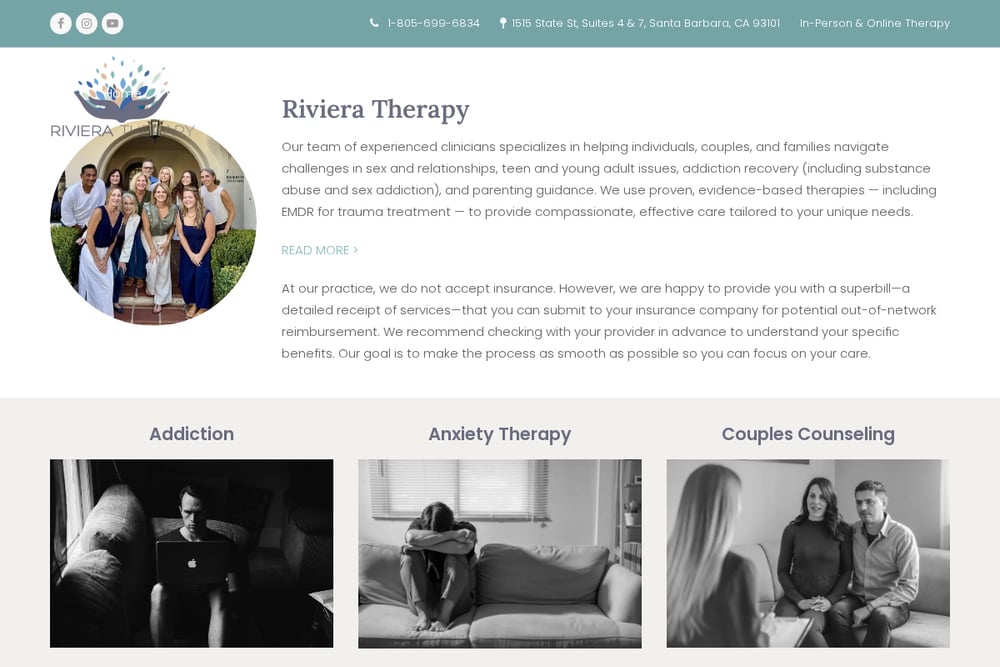 A screenshot of the Riviera Therapy website.
Riviera Therapy brings a comprehensive approach to grief and loss in Santa Barbara. You can access individual counseling, support groups, and community resources, all under one roof. Their team specializes in everything from anxiety and couples counseling to EMDR and sex therapy, making them a strong choice if you want a practice that can grow with you. They offer both in-person and online sessions, so you can choose the format that feels right. If you're looking for a well-established local practice with deep community ties, Riviera Therapy is worth a call.
#2 California Therapist for Anxiety, Grief & Life Transitions
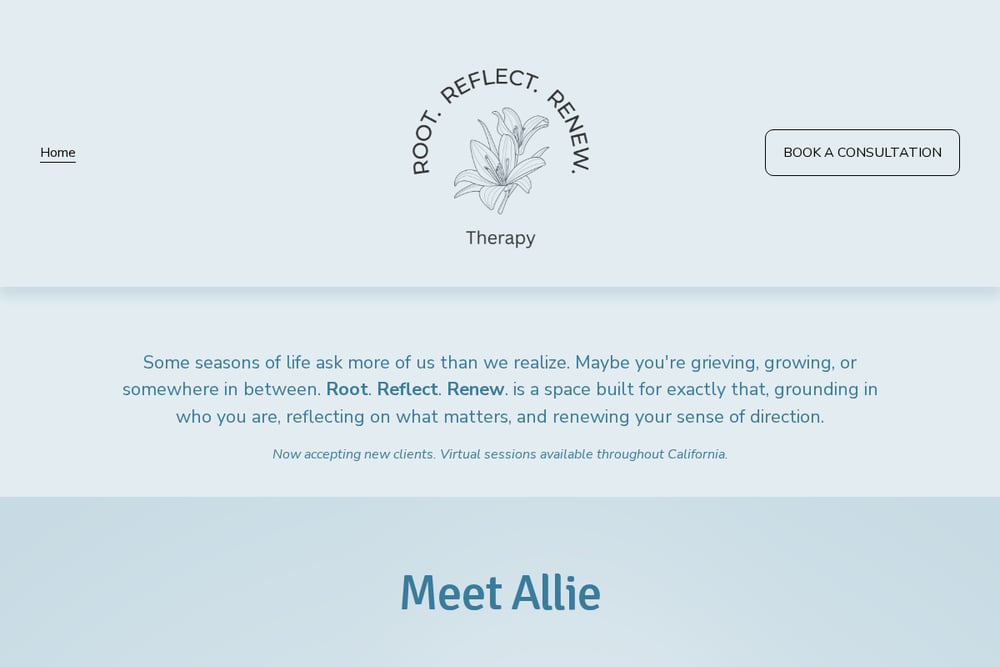 A screenshot of the California Therapist for Anxiety, Grief & Life Transitions website.
Root. Reflect. Renew. is the virtual practice of Allie Michie, an Associate Marriage and Family Therapist based in Santa Barbara and Ventura. Allie brings a warm, curious, and collaborative energy to her work, with a particular passion for teens and couples navigating grief, anxiety, and identity shifts. Her attachment-informed approach helps you build deeper connection and emotional steadiness, whether you're moving through family planning, early parenthood, or a season of self-discovery. Sessions are available virtually throughout California, with in-person options at The Center for Psychotherapy and Integrative Health. If you want a therapist who truly sees you and specializes in the intersections of grief and transition, this practice is a standout.
#3 Thriving Spirit Counseling
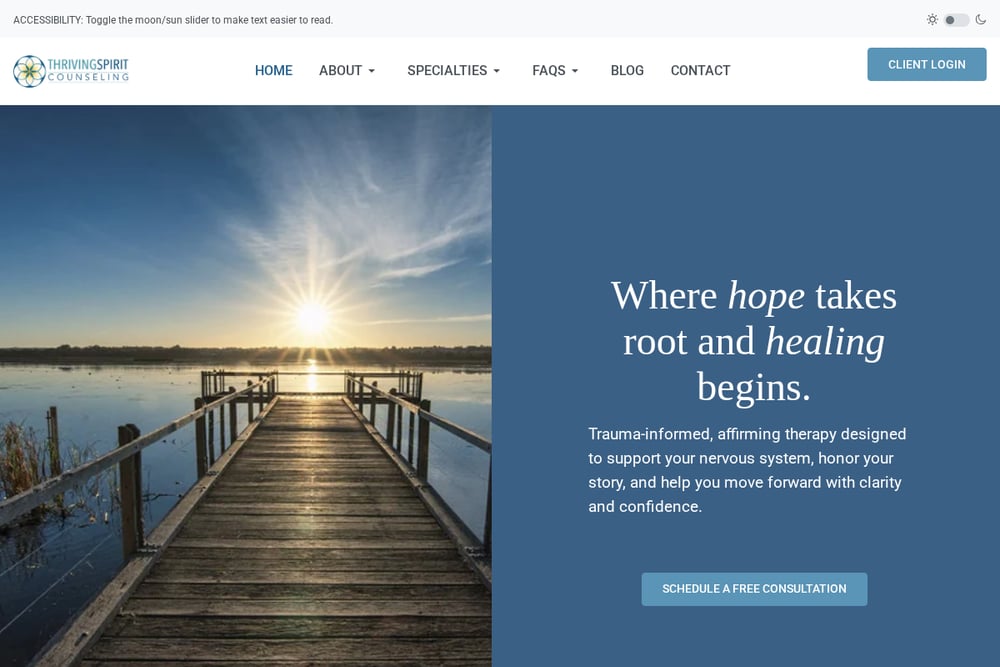 A screenshot of the Thriving Spirit Counseling website.
Thriving Spirit Counseling in Ventura takes a holistic, neuro-affirming approach to life transitions therapy. Their team of licensed therapists supports you through loss, divorce, career changes, and other major shifts with clarity and self-trust. They offer a wide range of specialties, including ADHD, complex trauma, eating disorders, and LGBTQIA+ affirming support. If you're looking for a practice that honors the whole person and offers flexible online therapy across California, Thriving Spirit is a strong contender. Their focus on resilience and self-understanding can help you find your footing during uncertain times.
#4 Jacqueline Robertson Psychotherapy
 A screenshot of the Jacqueline Robertson Psychotherapy website.
Jacqueline Robertson offers depth-oriented, somatic, and relational psychotherapy for highly sensitive adults. Her practice focuses on attachment, trauma, grief, and life transitions, with a special emphasis on helping you trust your own voice. She provides online therapy for clients in California and Canada, making her a good fit if you prefer virtual sessions with a therapist who works somatically. Her approach is warm and introspective, ideal for anyone who feels deeply and wants to come home to themselves. If you're seeking a therapist who integrates the mind and body, Jacqueline Robertson is worth exploring.
#5 LifeStance Health
 A screenshot of the LifeStance Health website.
LifeStance Health is a national network with a strong presence in Santa Barbara, offering grief counseling and a full spectrum of mental health services. You can access talk therapy, medication management, and psychological testing, often with insurance coverage. Their team includes psychiatrists, therapists, and nurse practitioners, so you can get coordinated care in one place. If you're looking for convenience, insurance acceptance, and the ability to see a provider quickly, LifeStance is a practical option. They also offer online therapy, making it easy to get support from home.
How to Choose the Right Therapist for You
Start by getting clear on what you need. Are you looking for individual therapy, couples counseling, or a support group? Do you prefer virtual sessions or in-person meetings? Next, consider your budget and whether you want to use insurance. Some practices, like LifeStance Health, accept insurance and offer medication management, while others are private pay. Think about the therapeutic approach that resonates with you. If you value attachment work and a warm, collaborative style, Root. Reflect. Renew. might be a great fit. If you want a holistic, neuro-affirming lens, Thriving Spirit Counseling could be your match. Don't be afraid to schedule consultation calls with a few practices. Most offer free 15-minute intro calls so you can get a feel for the therapist before committing. Trust your gut. The right fit is about feeling seen and understood.
What to Expect in Your First Sessions
Your first session is usually about intake and building rapport. You'll share what brought you to therapy and what you hope to achieve. Your therapist may ask about your history, current stressors, and support system. From there, you'll collaborate on goals and a treatment plan. In grief work, you might explore memories, process emotions, and learn coping strategies. In life transitions therapy, you could focus on identity, values, and practical steps forward. Virtual sessions are typically conducted via secure video platforms, so you'll need a private space and a reliable internet connection. Many practices offer flexible scheduling, including evenings and weekends. The pace is yours to set, and you can adjust as you go.
Finding Your Footing
Grief and life transitions are deeply personal, and so is the therapy that supports you through them. The five practices here each offer something different, from the attachment-informed virtual care of Root. Reflect. Renew. to the comprehensive local resources of Riviera Therapy. You might be drawn to the holistic approach of Thriving Spirit Counseling, the somatic depth of Jacqueline Robertson Psychotherapy, or the insurance-friendly access of LifeStance Health. Take your time, ask questions, and choose the practice that feels like a safe place to land. Healing begins when you make space for both the pain of loss and the possibility of new growth. You deserve that space.