You want to back young green entrepreneurs, but the landscape of programs, funders, and platforms is crowded. Here are five you should know before you commit a single dollar or a single day of your team's time.
The Green Entrepreneurship Support Landscape in East Africa
Africa's green economy is no longer a talking point. The International Labour Organisation estimates the green economy could create 24 million jobs, and a wave of programs has rushed in to capture that potential. In Ethiopia, Kenya, and Uganda, the action clusters around four areas: regenerative agriculture, circular economy, renewable energy, and eco-tourism.
The money and the models differ. Some programs are grant-funded and run through global institutions. Others are incubators with seed capital attached. A few are coordination platforms that sit above local delivery partners and track what actually happens on the ground.
That last category matters more than it sounds. When you fund 26,550 nano and micro enterprises, you need to know who showed up, who got paid, and who stayed in work. Monitoring is not glamorous, but it is the difference between a press release and a real outcome.
Your job is to figure out which layer you need: capital, curriculum, or evidence. Most programs give you one. Few give you all three.
How We Evaluated These Programs
We looked at the same factors for every entry. First, service scope: does the program cover training, funding, mentorship, and monitoring, or just one slice? Second, local fit: does it operate in Ethiopia, Kenya, and Uganda with on-the-ground partners, or does it run from a distance? Third, target focus: how clearly does it define who it serves, whether that is nano entrepreneurs, young women, or early-stage ventures? Fourth, measurement: does it publish targets and track participant and job outcomes? Fifth, accessibility: how easy is it for an entrepreneur or a funder to understand what is on offer and how to engage?
Fc Africa stands out for its monitoring and evaluation backbone, with named four-year targets across three countries. BeGreen Africa stands out for pairing skills and seed funding with a global youth network. Green RISE Africa at Mastercard Foundation stands out for scale and a five-year funding horizon. The GGGI Greenpreneur program stands out for structured incubation with financial support. Acumen's Green RISE work stands out for patient capital and a strong gender lens. Each covers a different part of the chain.
Here is a quick side-by-side of the five programs, what they do, and who they suit. Use it to shortlist before you read the full breakdown.
| Provider | Best For |
|---|---|
| BeGreen Africa | Generation Unlimited | Young founders who need seed funding plus mentorship |
| Fc Africa | Green Economy Monitoring & Data Platform | Funders and coordinators who need verifiable outcome data |
| Green RISE Africa | Mastercard Foundation | Entrepreneurs and partners seeking long-horizon institutional backing |
| Greenpreneur Program in Côte d'Ivoire — Global Green Growth Institute | Early-stage green ventures that want structured incubation |
| Green RISE Africa: Working with the next generation of green entrepreneurs | Ventures ready for patient capital with a gender lens |
The Five Programs in Detail
#1 BeGreen Africa | Generation Unlimited
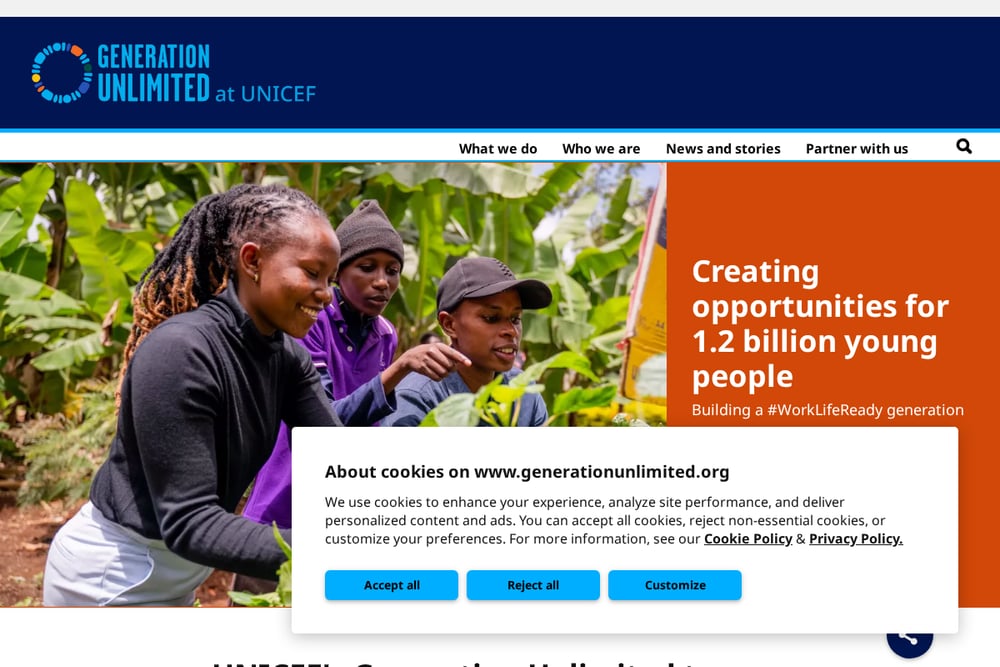 A screenshot of the BeGreen Africa | Generation Unlimited website.
BeGreen Africa is Generation Unlimited's bet that young people can turn local environmental problems into businesses. The program equips young entrepreneurs with skills, mentorship, networks, and seed funding to build green enterprises. It sits inside a wider portfolio that includes the Engaging Kenyan Youth in Agriculture initiative and the Green Rising campaign. The pitch is straightforward: pollution, waste, and resource depletion are hurting livelihoods, and young founders have the ideas to fix them. If you are a young founder who needs a first cheque and a network, this is a natural starting point. You can see the full program framing at the Generation Unlimited site.
#2 Fc Africa | Green Economy Monitoring & Data Platform
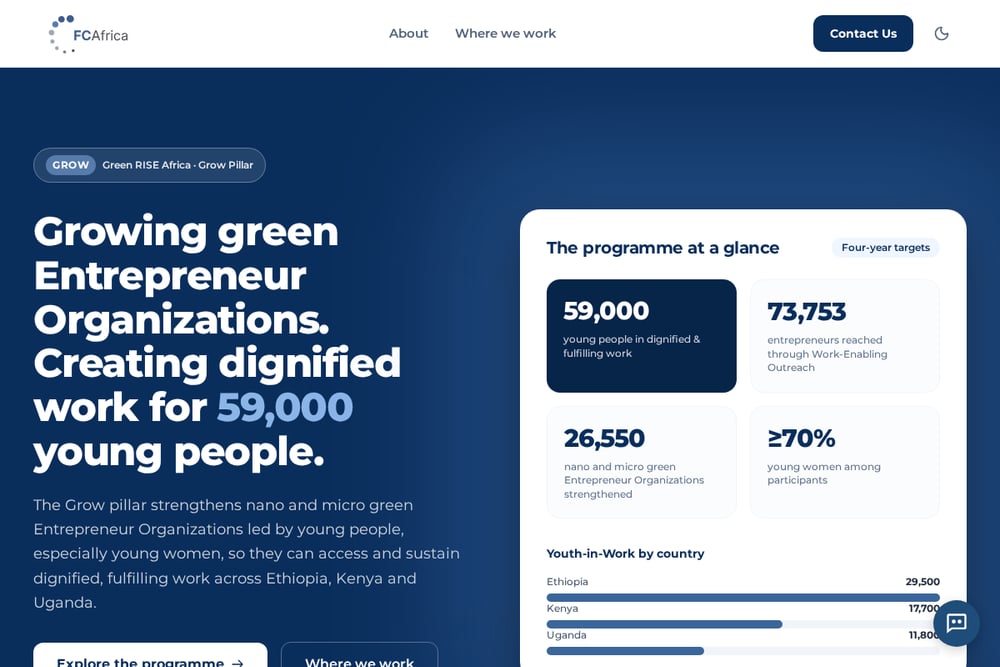 A screenshot of the Fc Africa | Green Economy Monitoring & Data Platform website.
Fc Africa is the connective tissue the other programs often lack. It coordinates the Grow pillar of Green RISE Africa across Ethiopia, Kenya, and Uganda, tracking participants, enterprises, and job outcomes in one place. The four-year targets are explicit: 59,000 young people in dignified work, 73,753 entrepreneurs reached through outreach, and 26,550 nano and micro green enterprises strengthened, with at least 70 percent young women. It works through Enterprise Support Organisations on the ground while holding technical oversight, safeguarding, and quality assurance centrally. If you need evidence that a green jobs program actually moved the needle, this is where you look. The platform covers four clusters: regenerative agriculture, circular economy, renewable energy, and eco-tourism.
#3 Green RISE Africa | Mastercard Foundation
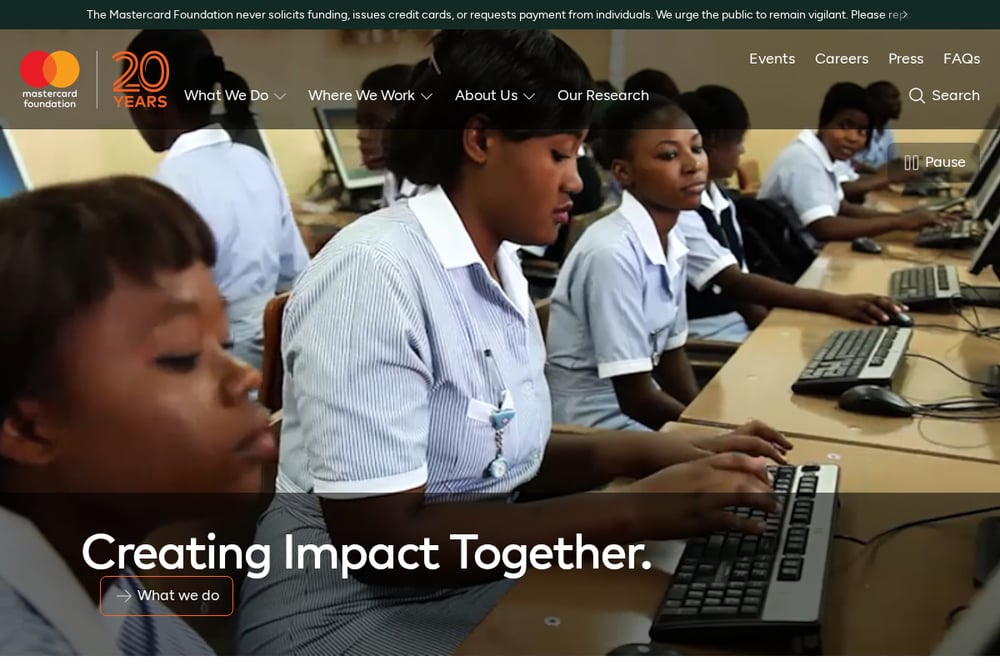 A screenshot of the Green RISE Africa | Mastercard Foundation website.
Green RISE Africa is the Mastercard Foundation's five-year push, running from January 2026 to December 2030, to open up dignified work in the green sector. It sits under the Foundation's Pan-African Programs and Agriculture focus areas, which gives it serious institutional weight and a long runway. The program is built around resilient impact through sustainable entrepreneurship, which in practice means backing ventures that can survive shocks and keep paying people. Because it is a Foundation program rather than a single incubator, it operates through partners and reaches across multiple countries. If you want to align with a large, patient funder, this is the anchor to know.
#4 Greenpreneur Program in Côte d'Ivoire — Global Green Growth Institute
 A screenshot of the Greenpreneur Program in Côte d'Ivoire — Global Green Growth Institute website.
GGGI's Greenpreneur Incubation Program is a global initiative that supports young green entrepreneurs in developing countries, and the Côte d'Ivoire edition shows how it works in practice. It runs under the GENIE project on youth economic and livelihood empowerment through green entrepreneurship and digital transformation, in partnership with the Barka Fund. Participants get tailored training, mentorship, networking, and financial support designed to get green ventures off the ground and keep them viable. The emphasis on incubation means you are not just handed cash; you are walked through the messy early stages. It is a useful model to study even if you operate in East Africa, because the structure travels well.
#5 Green RISE Africa: Working with the next generation of green entrepreneurs
 A screenshot of the Green RISE Africa: Working with the next generation of green entrepreneurs website.
Acumen's take on Green RISE Africa comes from its patient capital playbook. Acumen invests in entrepreneurs and backs them with philanthropic capital aimed at high-innovation, high-impact enterprises that shape markets. Its impact sectors line up neatly with green entrepreneurship: sustainable agriculture, renewable energy, dignified jobs, and gender equality. That gender lens is not decorative; Acumen explicitly harnesses entrepreneurship to uplift women and girls. If you are building a venture that needs patient capital and a partner who will stay through the hard years, this is the door to knock on. The approach is documented in detail on the Acumen site.
How to Choose the Right Program for You
Start with what you actually lack. If it is money, look at BeGreen Africa and Acumen. If it is structure and hand-holding, look at GGGI's incubation model. If it is credibility and long-term institutional backing, look at Mastercard Foundation's Green RISE Africa.
Then check the geography. Not every program operates in all three countries. Fc Africa is explicit about Ethiopia, Kenya, and Uganda, with country-level targets of 29,500, 17,700, and 11,800 youth in work respectively. Confirm your country is covered before you invest time in an application.
Next, ask about measurement. A program that cannot tell you how many participants it reached and how many stayed in work is a program you cannot evaluate. Fc Africa publishes those numbers, which makes it a useful benchmark even if you never apply.
Finally, match the stage. Nano and micro enterprises need different support than growth-stage ventures. The Grow pillar is built for the smallest businesses, where most young people actually find work. If you are past that stage, aim higher up the chain.
Where Automation Fits Into Your Green Program Workflow
You do not need a custom build to run a credible green entrepreneurship program. You need a repeatable loop.
Step one: intake. Capture participant and enterprise data at the point of enrollment, with fields for country, cluster, gender, and business stage. Step two: delivery tracking. Log training sessions, mentorship hours, and funding disbursements against each participant record. Step three: outcome capture. Record job creation, income changes, and enterprise survival at fixed intervals, not just at graduation. Step four: reporting. Roll the data up by country and cluster so funders see the same numbers you do.
Fc Africa's model shows why this matters: four clusters, three countries, and named targets only work if the data flows continuously. Automate the reminders, the follow-up surveys, and the dashboard refresh. Keep the human judgment for the parts that need it, like safeguarding and partner quality checks.
The Bottom Line
The green economy in East Africa will not be built by any single program. It will be built by a stack: funders with long horizons, incubators that teach the basics, capital providers that stay patient, and platforms that prove what worked.
BeGreen Africa brings young founders in the door. GGGI shows how structured incubation looks. Mastercard Foundation and Acumen supply the scale and the patience. Fc Africa supplies the evidence, and evidence is what turns a pilot into policy.
Pick the layer you need. Then hold every program to the same standard: show me the participants, the enterprises, and the jobs. If they cannot, keep looking.