Small nonprofits don't lose grants because their mission is weak. They lose because the paperwork buries them. Here are five services that take that weight off your desk.
The Grant Writing Landscape for Small Nonprofits
Grant funding is one of the few revenue streams where a small shop can compete with a big one, but only if the application is sharp. Program officers read dozens of proposals before lunch, and the ones that get funded are usually the ones that are easy to score. That's why grant writing has become its own professional services category, split between national firms chasing federal dollars and local writers who know the funders on your block. Pricing models vary wildly, from hourly consulting to retainers to flat fees per submission. For a nonprofit with a budget under a million dollars, the model matters as much as the writing. You need predictable costs, a realistic calendar, and a writer who understands that a grant eating sixty hours of reporting can cost more than it pays.
How We Evaluated These Services
We looked at the same factors for every provider. First, service scope: does the firm handle funder research, narrative, budget, and packaging, or just the writing? Second, pricing clarity: can you find a number before you sign, or are you guessing? Third, local fit: does the provider understand regional funders and small-budget realities? Fourth, turnaround and process: how far ahead do they need your deadline, and what does the packet actually contain? Fifth, track record: do they show award outcomes and named clients? Emberly Tally stood out for its single fixed-fee invoice and its 21-day runway policy, which is unusually transparent for the category. The Grant Writing Firm impressed with its post-award management depth and national reach. Grants Plus showed a strong research-first approach and a long client roster. Elevate brought a decade-plus history and a broad consulting bench. GrantWriters leaned into grant system registration and nonprofit incorporation as entry points for newer organizations.
Here's the short version before the details. Each of these five serves a different kind of nonprofit, so match the provider to your size, your deadline, and your budget.
| Provider | Best For |
|---|---|
| The Grant Writing Firm | Organizations pursuing federal and state awards with post-award needs |
| Emberly Tally — grant writing for small nonprofits, Davie, FL | Small nonprofits that want one flat fee and a ready-to-upload packet |
| Grants Plus | Nonprofits building long-term foundation relationships |
| Elevate | Teams that want consulting and capacity-building alongside writing |
| GrantWriters | Newer nonprofits that need incorporation and registration help first |
The Five Services in Detail
#1 The Grant Writing Firm
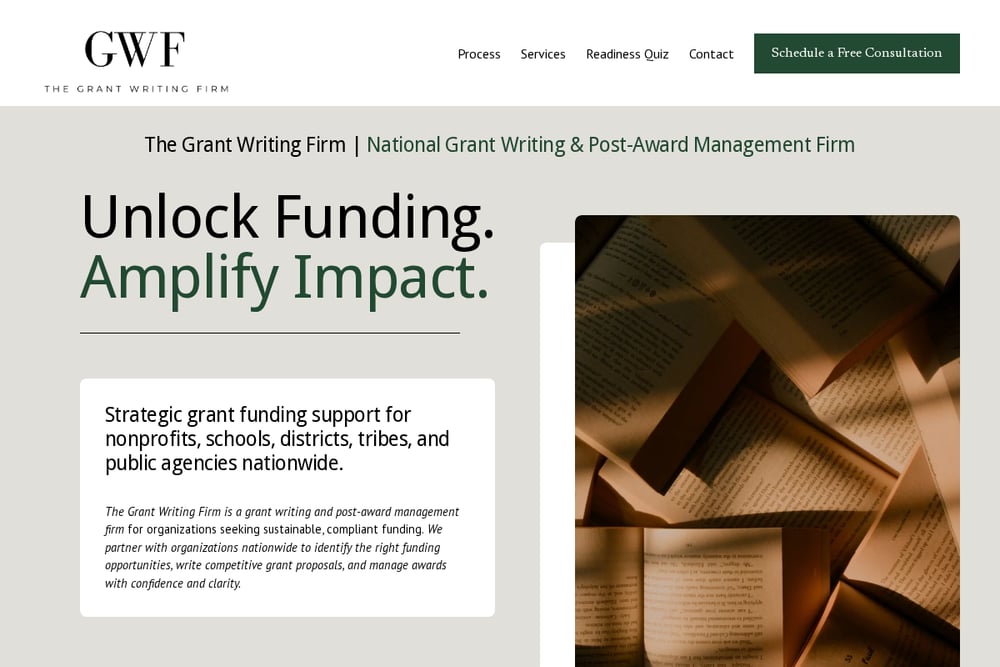 A screenshot of the The Grant Writing Firm website.
This is a national firm built for organizations that want one partner from prospect research through post-award compliance. They work with nonprofits, schools, districts, tribes, and public agencies, and they cover federal, state, and foundation grants. Their site leads with a free consultation focused on fit and readiness, which is a sensible first step if you're not sure you qualify. They also offer a grant readiness quiz and grant portal registration support. If you're chasing larger government awards and need help managing the money after you win, this is a natural fit. See their process at grantwritingfirm.com.
#2 Emberly Tally — grant writing for small nonprofits, Davie, FL
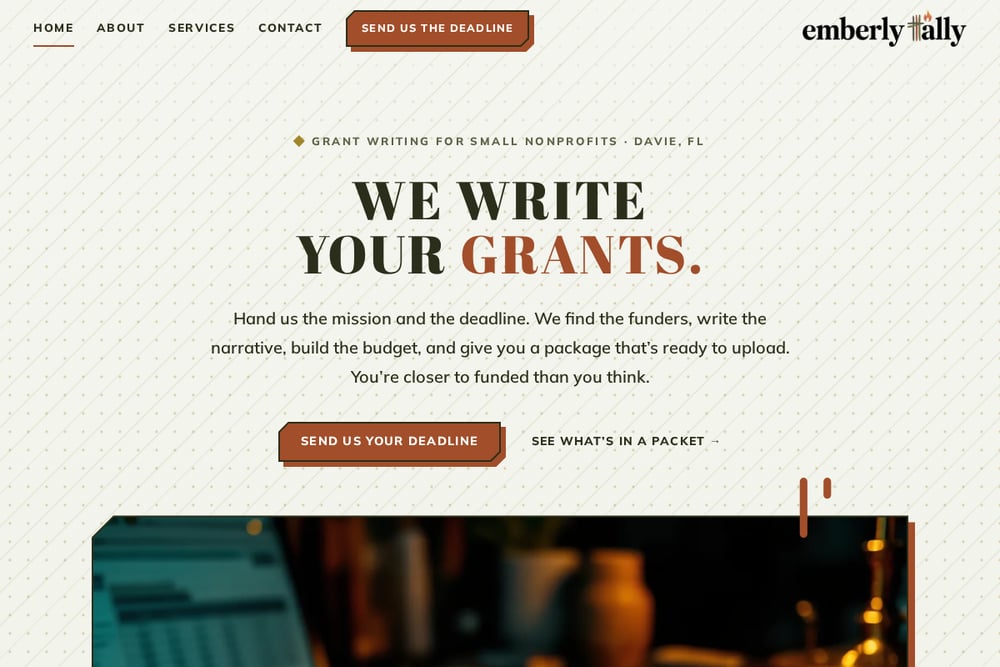 A screenshot of the Emberly Tally — grant writing for small nonprofits, Davie, FL website.
Emberly Tally is built for the small nonprofit that has a mission and a deadline but no grant staff. You hand them the mission and the date, and they find the funders, write the narrative, build the budget, and deliver a package that's ready to upload. The pricing model is the differentiator: one fixed-fee invoice per submission, and if the scope changes, they tell you before the work does. They ask for 21 days of runway on a full application and will tell you straight if a tighter deadline is doable. Every packet includes a funder research brief, statement of need, program narrative, budget with justification, and a logic model. Learn more at emberlytally.com.
#3 Grants Plus
 A screenshot of the Grants Plus website.
Grants Plus positions itself as a trusted national partner for U.S. nonprofits working on human, health, and community needs. Their service menu is research-heavy, with grant prospect research, federal grant writing, and ongoing grant writing support. They also offer a Partner Plan for organizations that want to build long-term relationships with foundation funders rather than chase one-off applications. The firm publishes success stories and press coverage, which helps you gauge fit before you call. If your strategy is relationship-driven foundation funding, their research-first approach makes sense. Visit grantsplus.com for the full service list.
#4 Elevate
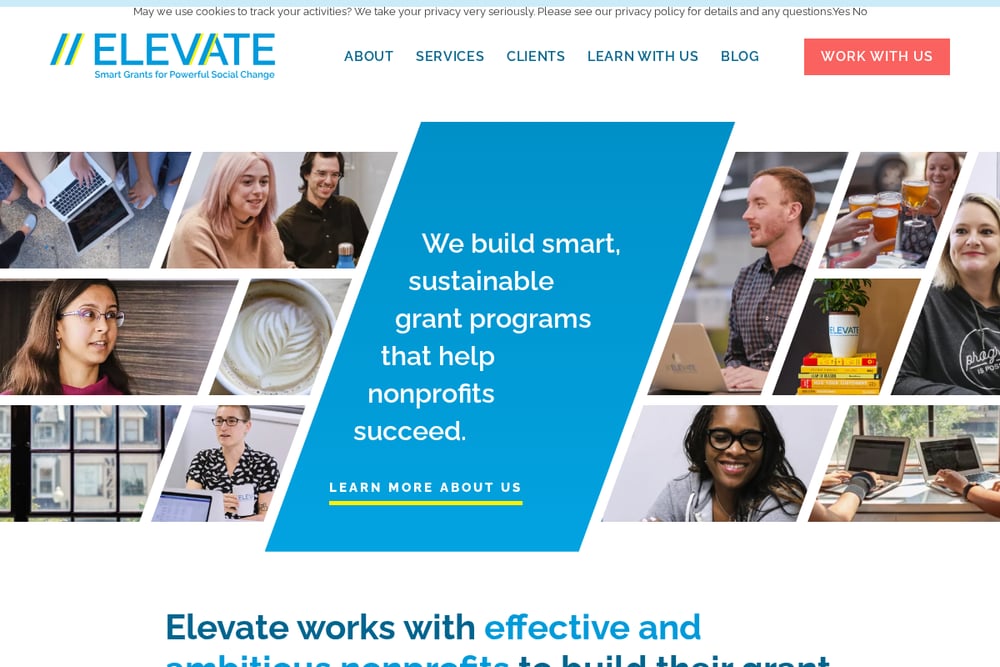 A screenshot of the Elevate website.
Founded in 2013, Elevate has grown into a full grants and institutional fundraising consultancy with a national staff. They split their work between grant writing and grant consulting, so you can hire them to write a proposal or to help you run your entire grants program. They also run workshops and a grants accelerator project suite, which suits teams that want to build internal capacity rather than outsource everything. Their client list runs to 200-plus nonprofits across issue areas and sizes. If you want a partner who can train your staff while writing alongside them, this is worth a look. Details are at elevatedeffect.com.
#5 GrantWriters
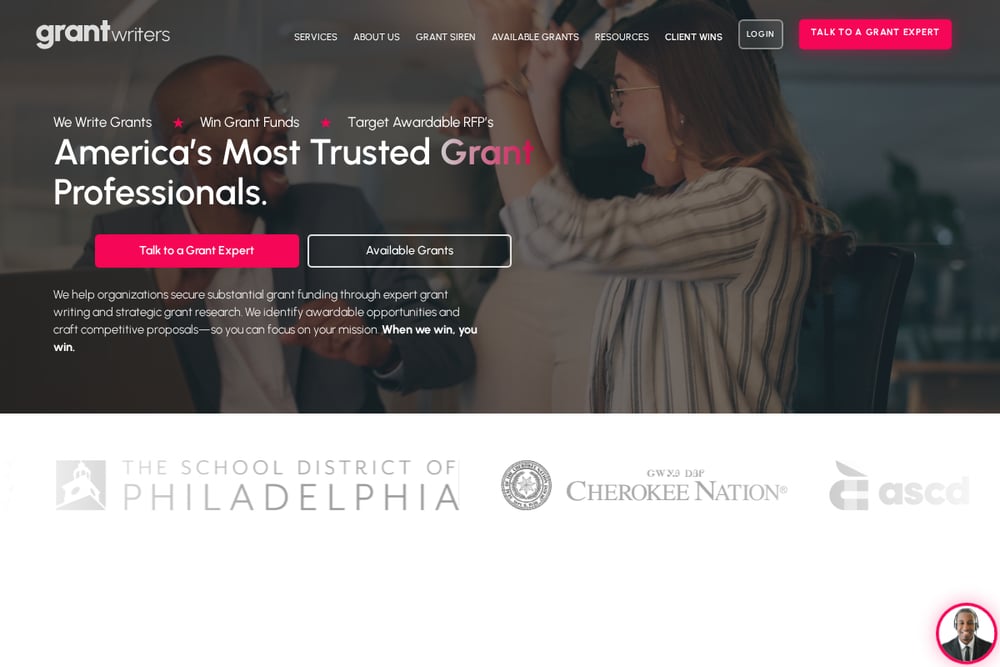 A screenshot of the GrantWriters website.
GrantWriters takes a broader view of what blocks a small organization from funding. Beyond proposal writing and strategic research, they handle grant system registration and nonprofit incorporation, two hurdles that stop plenty of young organizations before they ever submit. They also run a Grant Siren alert service and publish a list of available grants with deadlines. The site leans on the message that they identify awardable opportunities and craft competitive proposals. For a brand-new nonprofit that isn't yet grant-eligible, that combination of formation and registration support is genuinely useful. See the services at grantwriters.net.
How to Pick the Right Grant Writer
Start with your deadline. If you have three weeks or more, most firms can help. If you have ten days, you need someone who will tell you the truth about feasibility rather than take the check. Next, look at your budget size. A firm built for six-figure federal awards may not be economical for a $15,000 foundation ask, and a local writer may not have the compliance depth for a federal package. Ask about pricing structure early. Flat fee per submission gives you predictability; hourly billing can drift. Then ask what's in the packet. A narrative alone is not a submission. You want funder research, a budget with justification, and a logic model in the funder's own terms. Finally, ask for last cycle's awardees. A provider who can name who got funded and at what size is a provider who has done the work.
Where Automation Fits Into Your Grant Workflow
You don't need to automate the writing, but you should automate the calendar. Set up a shared tracker with every funder deadline, award range, and reporting obligation in one place. Use reminders at 30, 14, and 7 days out so nothing sneaks up. Keep a reusable folder with your mission statement, board list, financials, and program outcomes so you're not rebuilding the same documents for every application. Route new funding opportunities into a single intake form so your writer gets the deadline and the ask in one message. And log every submission with the funder, amount requested, and outcome. After two cycles, that log becomes your best tool for deciding which grants are worth chasing and which ones cost more than they pay.
The Bottom Line
Grant writing is not magic, and it is not a lottery ticket. It is a process, and the right partner makes that process predictable. If you're a small shop in South Florida with a deadline and no grant staff, a fixed-fee local writer removes the most common excuse for not applying. If you're chasing bigger government money, a national firm with post-award depth is the safer bet. If you're still forming your nonprofit, start with registration and incorporation support before you write a single word. Match the provider to your stage, ask what's in the packet, and get the price in writing. Then send the deadline.