
Most advocacy fails because no one is in the room when the language gets written. These five firms are built to be in that room — and here is how they compare.
The State of Government Relations and Public Affairs
Government relations is not a generic service. It is a craft practiced in the margins of report language, the scoring of an amendment, and the timing of a committee mark. You are not buying access. You are buying judgment about where a decision actually gets made and who writes the paragraph that determines your outcome.
The market splits into three rough tiers. There are large law firms with public policy practices, where government relations sits alongside litigation, regulatory, and corporate work. There are established boutique advocacy shops with deep bipartisan relationships and long client rosters. And there are small, senior-led firms that take a handful of clients and work the issue personally.
For companies, institutions, and causes that need a specific outcome — a program plus-up, an NDAA provision, a state budget line — the difference between these tiers matters more than the logo on the door. You want the person who knows how appropriations and authorization actually work, not a junior associate assigned to your account.
Geography matters too. Federal decisions happen in Washington, D.C. State decisions happen in Lansing, Sacramento, Austin, and everywhere else. If your issue crosses both capitols, you need a firm that can coordinate a state–federal strategy rather than treat them as separate projects.
This guide looks at five firms worth knowing in this space, with a focus on Michigan and Washington, D.C. It is written for the reader who needs a specific result, not general representation.
How We Evaluated These Firms
We looked at the same factors for every firm. Service scope: does the firm handle federal appropriations, defense and national security, authorization strategy, state government relations, coalition and public affairs, and nonprofit advocacy — or only a slice of that?
Senior-level involvement: who actually works your issue? Some firms put a named principal on every account. Others staff with a mix of senior and junior professionals. Both models can work, but you should know which one you are buying.
Client roster size: a small roster means more attention per client. A large roster means broader relationships and more bench depth. Neither is automatically better — it depends on whether you need personal focus or institutional reach.
Local fit: for Michigan and Washington, D.C. work, does the firm have a real presence in both places? Federal advocacy without state coordination leaves half the map uncovered.
Track record and recognition: peer recognition, published results, and named lobbyist honors are imperfect signals, but they tell you whether the firm is respected by the people it lobbies.
KPG Policy Group stood out for its senior-led, small-roster model and its explicit focus on the paragraph of report language where appropriations decisions are actually made. Uncorked Advocates stood out for its nonprofit and mission-driven focus, with a founder who brings more than 25 years of Washington experience and repeated recognition as a top lobbyist. Van Ness Feldman stood out for its four-decade depth in energy and environmental policy, with a bipartisan team that includes former members of Congress and senior agency appointees. ArentFox Schiff stood out for its multidisciplinary approach, combining legislative and regulatory advocacy across a broad set of industries. Holland & Knight stood out for its scale and bipartisan stability, with a public policy group recognized among the top federal lobbying practices in Washington.
Here is the short version. Five firms, five different models, one shared requirement: you need someone who knows how the language gets written.
| Provider | Best For |
|---|---|
| Uncorked Advocates | Nonprofits and mission-driven organizations seeking bipartisan federal advocacy |
| KPG Policy Group — Government Relations & Public Affairs | Michigan & Washington, D.C. | Companies, institutions, and causes needing senior-led federal and Michigan advocacy |
| Van Ness Feldman LLP | Energy, environmental, and industrial clients needing deep policy and legal expertise |
| ArentFox Schiff | Clients needing combined legislative and regulatory federal advocacy |
| Holland & Knight | Organizations needing large-scale bipartisan federal lobbying reach |
The Five Firms Worth Knowing
#1 Uncorked Advocates
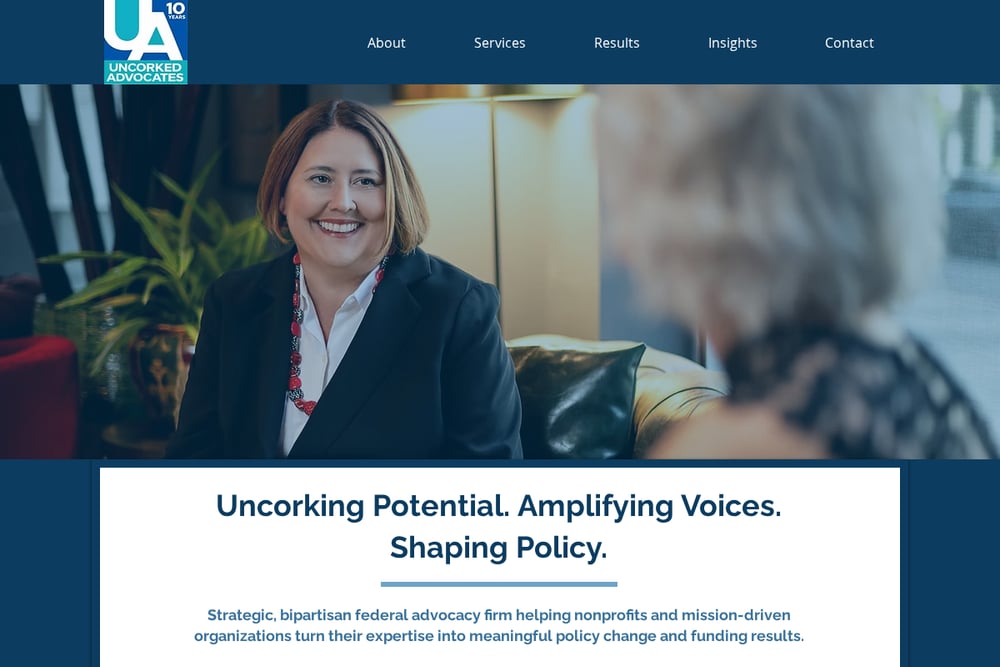 A screenshot of the Uncorked Advocates website.
Uncorked Advocates is a strategic, bipartisan federal advocacy firm built for nonprofits and mission-driven organizations. The firm helps clients turn their expertise into policy change and funding results, with a focus on charitable tax policy, gender-based violence and trafficking policy, youth policy, and federal appropriations. Founder Sally Schaeffer brings more than 25 years of Washington experience, including service as a Congressional Chief of Staff and a senior nonprofit government relations executive. She has been named to The Hill's Top Lobbyist list five years running and is a NILE Top 100 Lobbyist. The firm reports millions in federal funding secured for clients. If your organization is mission-driven and needs a voice in federal policy, this is a firm to know.
#2 KPG Policy Group — Government Relations & Public Affairs | Michigan & Washington, D.C.
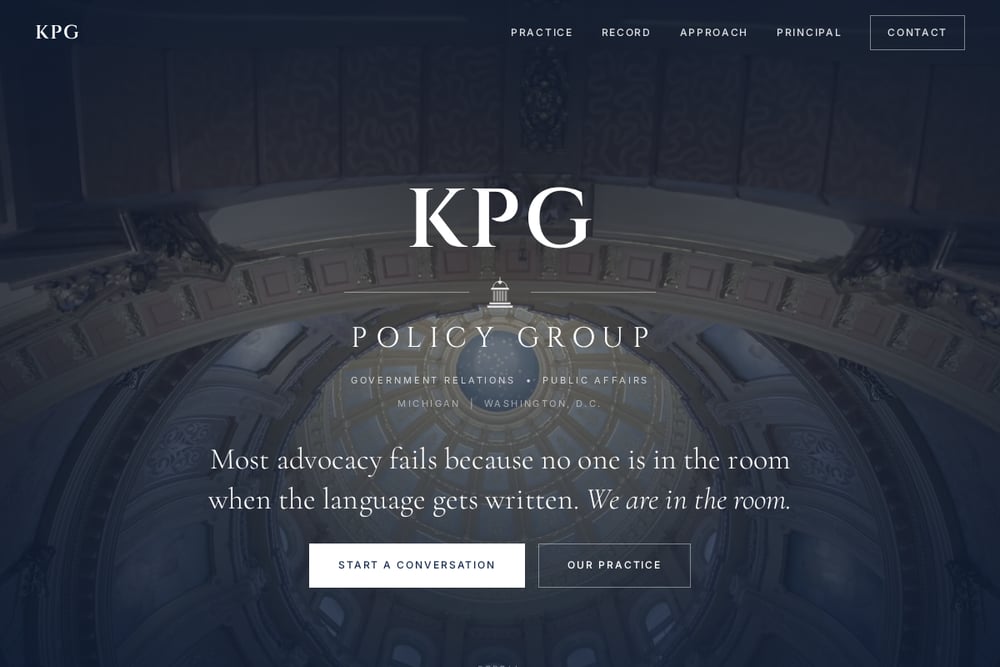 A screenshot of the KPG Policy Group website.
KPG Policy Group is a boutique government relations and public affairs firm working federal appropriations, defense policy, and state advocacy from Michigan and Washington, D.C. The firm is built on a simple premise: clients deserve the senior person who actually knows how appropriations and authorization work, not a junior associate assigned to their account. KPG takes a small number of clients and works their issue personally. Practice areas include federal appropriations — program plus-ups, report language, new-start authority, and continuing resolution anomalies — plus defense and national security, authorization and legislative strategy, Michigan government relations, coalition and public affairs, and nonprofit and association advocacy. The firm's stated approach is that state and federal policy is not decided in the hearing room, but in the paragraph of report language nobody outside the process ever reads. If you need a specific outcome rather than general representation, this is the model to study.
#3 Van Ness Feldman LLP
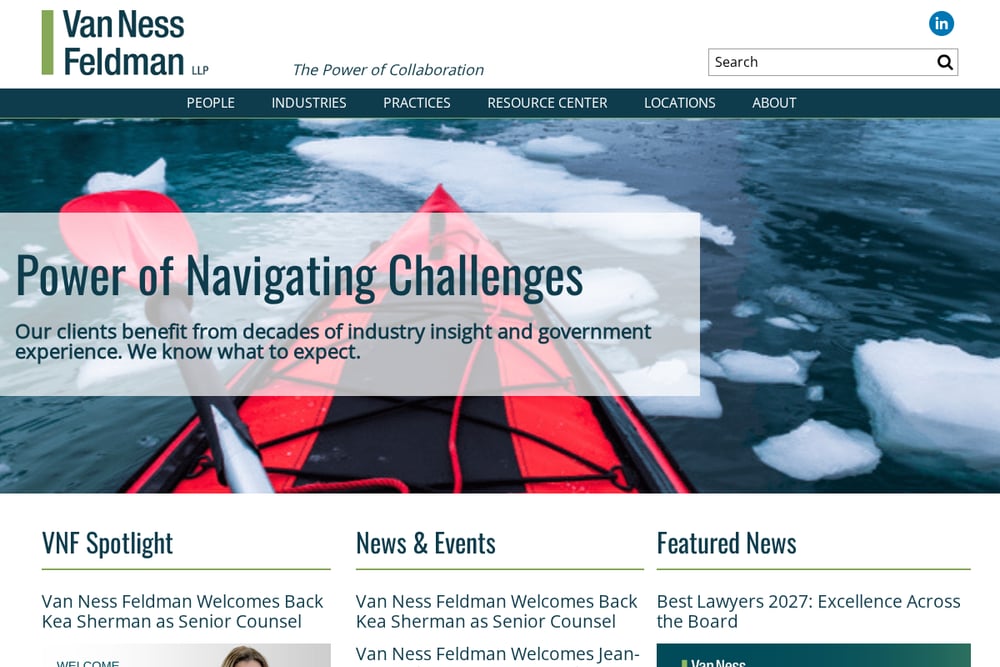 A screenshot of the Van Ness Feldman LLP website.
Van Ness Feldman is a law firm with a government relations and public policy practice that has been active for over four decades. Clients include leading energy and industrial companies, financial institutions and investment funds, municipalities, trade associations, and coalitions. The firm is known for substantive knowledge and deep subject matter expertise rather than relying only on insider access. Its bipartisan team includes former members of Congress, individuals who served as legal counsel and policy advisors to members of Congress and Congressional committees, White House staff, and presidential appointees to federal agencies in both Democratic and Republican administrations. The firm is also active in helping clients secure federal financial support through appropriations or other funding vehicles. Chambers USA, The Legal 500, and U.S. News/Best Lawyers have recognized the practice as a national leader.
#4 ArentFox Schiff
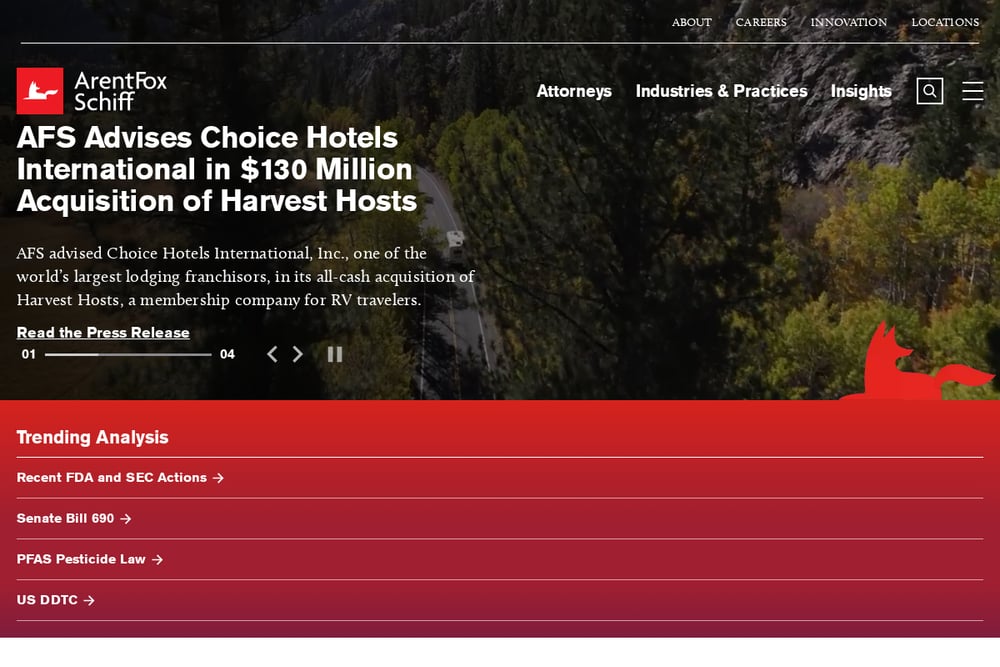 A screenshot of the ArentFox Schiff website.
ArentFox Schiff provides federal advocacy through its government relations practice, working before Congress, the Executive Branch, and independent agencies. The firm's approach is multidisciplinary, combining legislative and regulatory components to help clients meet their objectives. Its lawyers and policy professionals bring years of experience at the highest levels of federal government service, lobbying, and private sector work. The practice maintains an active presence before key committees in the Senate and House, engaging in behind-the-scenes issue development as well as direct advocacy before Congress. The firm serves a broad range of industries, from health care and automotive to energy, consumer products, and international trade. If your issue spans both legislative and regulatory tracks, this firm's model is worth understanding.
#5 Holland & Knight
 A screenshot of the Holland & Knight website.
Holland & Knight's Public Policy & Regulation Group is a bipartisan team with deep ties throughout Washington, D.C. The firm has built its government affairs practice through depth of experience and a deliberate bipartisan approach, maintaining relationships on both sides of the aisle regardless of which party holds power. Its team includes lawyers and lobbyists with a comprehensive understanding of the federal legislative and agency policy-making processes. The firm has been recognized among the top 10 federal lobbying and law firms in Washington, D.C., by Influence, National Journal, Roll Call, and the Washington Business Journal. Holland & Knight describes its culture as combining small firm attention with big firm resources. If you need scale, bench depth, and steady bipartisan relationships, this is a firm to know.
How to Choose the Right Firm for Your Issue
Start with the outcome, not the firm. What specifically do you need? A program plus-up in an appropriations bill? An NDAA provision? A state budget line in Lansing? A coalition of outside validators? Write that down before you take a single meeting.
Then ask who will actually work your issue. At some firms, the person who pitches you is the person who does the work. At others, the pitch team hands you to a junior associate. Neither is automatically wrong, but you should know which model you are buying. KPG Policy Group, for example, is explicit that it takes a small number of clients and works their issue personally.
Ask about the paragraph. Federal appropriations decisions often turn on report language that nobody outside the process reads. Ask a prospective firm where your issue shows up in the text and who writes that text. If they cannot answer specifically, keep looking.
Check the geography. If your issue crosses state and federal capitols, you need a firm that can coordinate both. A Washington-only shop may leave your Lansing strategy uncovered, and a Lansing-only shop may miss the federal account that determines your revenue.
Finally, look at the roster. A small client roster means more senior attention per client. A large roster means broader relationships and more bench depth. Match the model to your issue, your timeline, and your budget.
A Simple Workflow for Running Your Advocacy Search
Step one: define your ask in one sentence. If you cannot write it in one sentence, you are not ready to hire a firm.
Step two: map the decision. Identify the committee, the agency, the account, or the state budget line that controls your outcome. Note whether it is federal, state, or both.
Step three: build a short list of three to five firms whose stated practice areas match that map. Use the five firms above as a starting point, but verify fit against your specific issue.
Step four: ask every firm the same three questions. Who works my issue day to day? Where does my issue show up in the legislative or report text? What does your client roster look like right now?
Step five: check references. Ask for clients with similar issues, not just similar industries. A nonprofit funding client and a defense contractor have different needs even if both involve appropriations.
Step six: decide based on fit, not prestige. The firm that knows your paragraph beats the firm with the biggest name.
The Bottom Line
Government relations is a specific-outcome business. You are not buying general representation. You are buying the judgment to know where a decision gets made and the relationships to be in the room when the language gets written.
The five firms here represent different models. Uncorked Advocates brings a nonprofit and mission-driven focus with a founder who has spent more than 25 years in Washington. KPG Policy Group brings a senior-led, small-roster boutique model with a sharp focus on federal appropriations, defense policy, and Michigan state advocacy. Van Ness Feldman brings four decades of substantive policy depth in energy and environmental matters. ArentFox Schiff brings a multidisciplinary legislative and regulatory approach across many industries. Holland & Knight brings scale, bench depth, and steady bipartisan relationships.
Your job is to match the model to your issue. Define the outcome. Map the decision. Ask who actually works your account. Then choose the firm that knows your paragraph.