You need a learning platform that works inside a public education system, not against it. These five are built for exactly that kind of pressure.
The Government Education Platform Landscape
Public education systems are under pressure to deliver measurable learning gains at scale. Governments are turning to digital platforms that connect students, teachers, trainers, and administrators in one place. The challenge is not just content delivery. It is implementation, cost-effectiveness, and proof that learning outcomes actually improve. Platforms that combine technology with on-the-ground support are gaining traction, especially in foundational literacy and numeracy. Buyers are looking for partners who can navigate public procurement, integrate with existing systems, and show evidence through independent evaluation. The market is crowded, but the strongest players share a focus on real-world deployment and continuous improvement.
How We Evaluated These Platforms
We looked at service scope, pricing clarity, local fit, and evidence of impact. Service scope covers whether a platform supports students, teachers, trainers, and administrators or only one group. Pricing clarity matters because public budgets are tight and hidden costs break trust. Local fit means the platform works within existing government structures and languages. Evidence of impact includes independent studies, A/B testing, and transparent reporting. We also considered implementation support, because technology alone rarely changes outcomes. Each platform below stood out on different factors, and we describe what we saw without declaring a winner.
Here is a quick look at the five platforms in this roundup, ordered for readability. Each one brings a different strength to government education.
| Provider | Best For |
|---|---|
| Coursera for Government | Workforce upskilling and credentialing |
| EIDU – Unlocking Potential | Foundational literacy and numeracy at system scale |
| Class for Government | Live virtual training with FedRAMP security |
| D2L for Government | Full-featured LMS with customization |
| Moodle for Government | Open-source flexibility and control |
The Five Platforms in Detail
#1 Coursera for Government
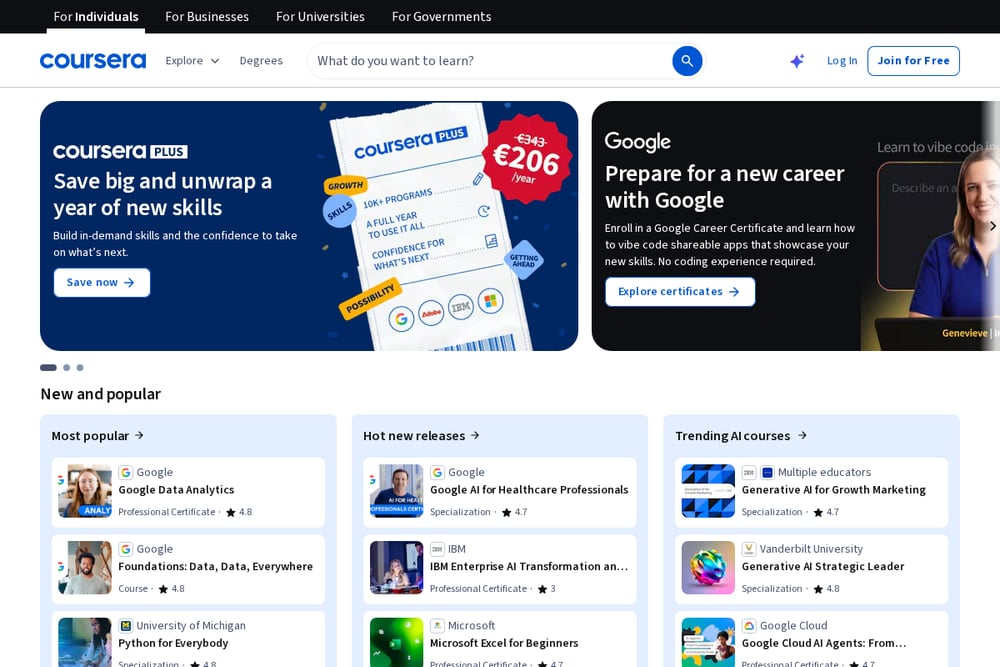 A screenshot of the Coursera for Government website.
Coursera for Government brings a massive catalog of courses from universities and companies into public sector training. It partners with over 900 governmental organizations in more than 100 countries, which gives you a sense of its reach. You can offer job-aligned credentials and skills tracks to civil servants and citizens. The platform supports learning in over 25 languages, making it easier to serve diverse populations. If your priority is workforce upskilling at scale, this is a strong option. See how it works for government at Coursera for Government.
#2 EIDU – Unlocking Potential
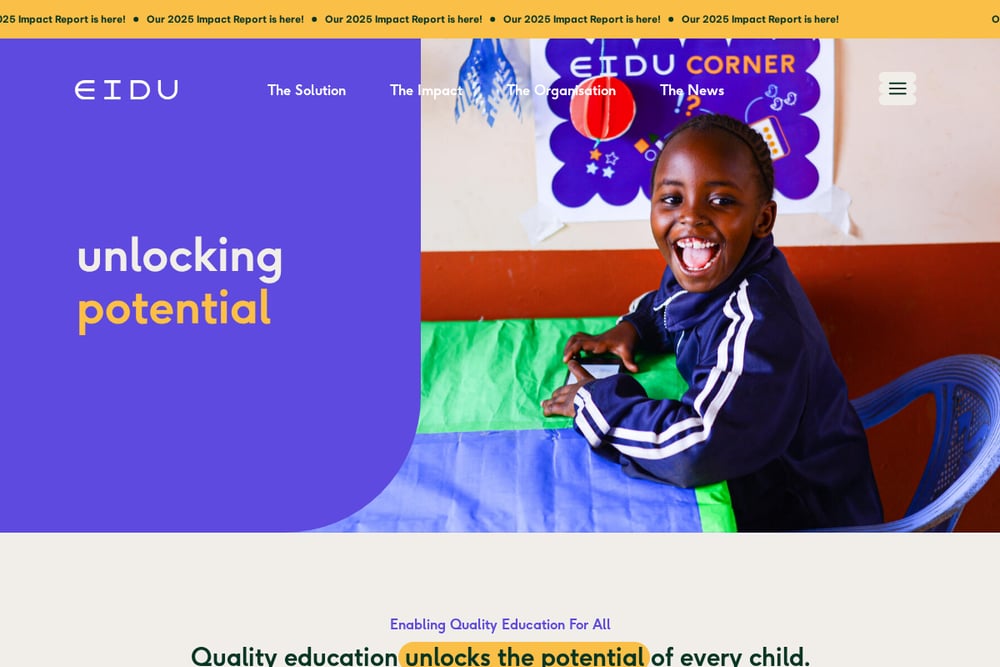 A screenshot of the EIDU – Unlocking Potential website.
EIDU focuses on improving learning outcomes inside public education systems, starting with foundational literacy and numeracy. It provides an open digital platform plus on-the-ground support that connects students, teachers, teacher trainers, and management levels. In 2025, EIDU worked with 39 governments across Kenya, Nigeria, Rwanda, and Pakistan, reaching 790,000 learners. Since 2020, over one million children have learned with EIDU, and the impact is validated by an independent RCT. The company also practices continuous improvement through A/B testing and publishes an honest annual impact report. Learn more at EIDU.
#3 Class for Government
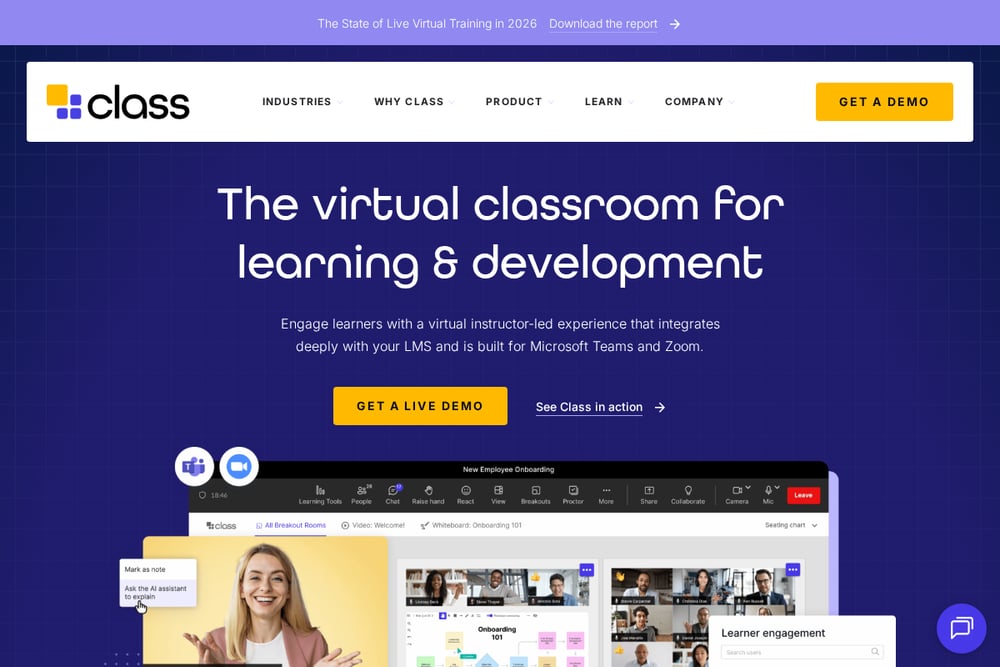 A screenshot of the Class for Government website.
Class for Government is a live virtual training platform built for secure, FedRAMP-certified delivery. It focuses on real-time instruction, not just self-paced content. You can train teams at scale while maintaining compliance and security. The platform is designed to drive learner engagement through interactive sessions. It fits well when your agency needs live virtual classrooms for onboarding, workforce development, or leadership training. Explore the government solution at Class for Government.
#4 D2L for Government
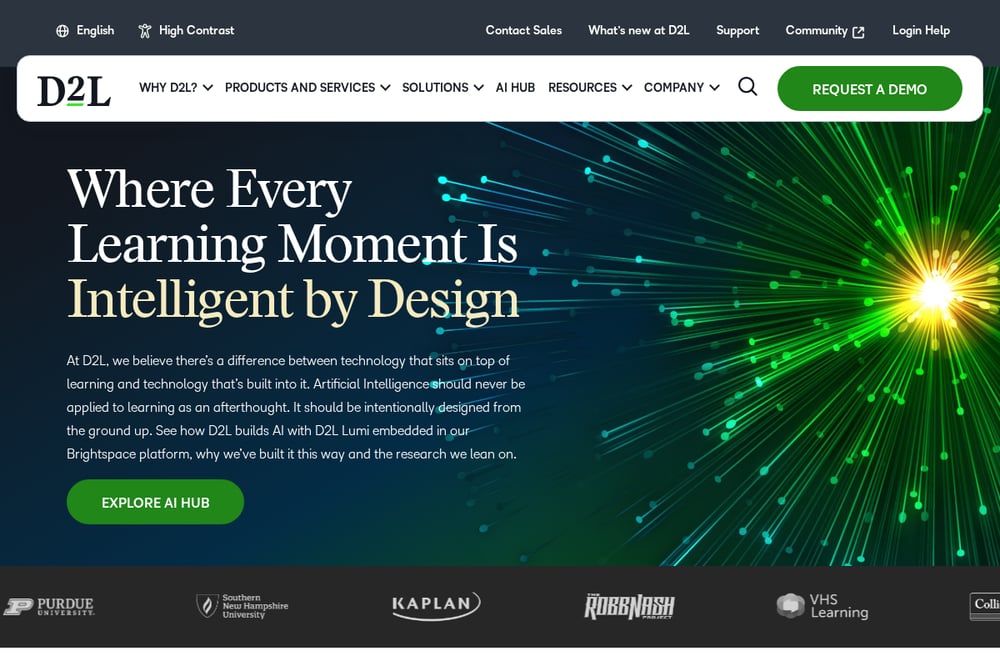 A screenshot of the D2L for Government website.
D2L for Government offers the Brightspace learning management system tailored to public sector needs. It emphasizes personalized learning at scale with customizable content and powerful tools. The platform includes add-ons like D2L Lumi, Creator+, and Performance+ to extend functionality. D2L also provides services for onboarding, optimization, and change management. If you need a full-featured LMS with strong support, this is worth a look. See the government offering at D2L for Government.
#5 Moodle for Government
Moodle for Government brings the widely used open-source LMS to public sector training. It is known for flexibility and community-driven development. You can host it on your own infrastructure or use a certified partner. The platform supports a wide range of plugins and integrations. For agencies that value open source and customization, Moodle is a familiar choice. Visit Moodle for Government to learn more.
How to Choose the Right Platform
Start with your goal. Are you trying to improve foundational learning for children, upskill civil servants, or deliver live compliance training? Each platform here leans toward a different use case. Next, check integration. Your platform must work with existing systems and data policies. Look at pricing models and total cost of ownership, including implementation and support. Ask for evidence of impact in contexts similar to yours. Finally, consider local fit: language support, on-the-ground presence, and experience with government procurement. A platform that looks good in a demo may fail in deployment without the right support.
Automating Your Learning Workflow
You can streamline platform selection and deployment with a simple workflow. First, define your learning objectives and success metrics in a shared document. Second, map required integrations and security standards. Third, request demos and evidence from each vendor against those criteria. Fourth, run a small pilot with a representative group of learners. Fifth, use the pilot data to decide on full rollout. Automate reporting by connecting platform analytics to your existing dashboards. This keeps stakeholders informed and reduces manual work. The goal is a repeatable process you can use for future platform decisions.
The Bottom Line
No single platform fits every government education need. Coursera for Government excels at workforce skills. EIDU stands out for system-level foundational learning with proven impact. Class for Government delivers secure live virtual training. D2L for Government offers a customizable LMS. Moodle for Government provides open-source flexibility. Match your choice to your specific outcomes, integration needs, and budget. Then pilot before you scale. That approach will save you time and deliver better results for learners.