
You're done with AI that sounds smart but can't survive an audit. Here are five platforms built for real enterprise execution.
The Governance Gap in Enterprise AI
Enterprise AI is moving fast, but governance is lagging. Gartner predicts 40% of enterprise applications will carry task-specific AI agents by the end of 2026, up from less than 5% in 2025. Yet over 40% of AI projects are expected to fail by 2027 due to poor governance, and unauthorized "shadow AI" already accounts for more than 27% of enterprise usage. Regulated industries can't afford loose assistants that hallucinate or hide work in chat boxes. You need systems with review gates, audit trails, and role-based access. The platforms below are built for that reality.
How We Evaluated These Platforms
We looked at five factors: governance depth (audit logging, RBAC, approval gates), deployment flexibility (on-premise, sovereign data, multi-tenant isolation), workflow visibility (can you see and manage every action?), target fit (does it serve regulated enterprises or general business?), and product focus (does it solve a specific function or try to do everything?). CabirX stood out for its mission-first approach to company execution and commercial intelligence, with governed workflows and approval gates baked in. Jinba impressed with deterministic execution and a build/run separation designed for regulated industries. EnterpriseAI Group offered a comprehensive governance control loop from intake to monitoring. Coworker AI brought a context-based automation stack with a clear evaluation framework. MightyBot delivered a policy engine and agent compiler tailored to regulated workflows like lending and insurance.
Here's a quick look at the five platforms, ordered by their overall fit for governed enterprise execution.
| Provider | Best For |
|---|---|
| Jinba | Regulated industries needing deterministic, auditable workflows |
| CabirX | AI Systems for Real Company Execution | Enterprises needing governed execution and commercial intelligence |
| EnterpriseAI Group | Organizations building a repeatable AI governance framework |
| Coworker AI | Teams adopting context-based automation with governance |
| MightyBot | Regulated industries needing policy-driven agent automation |
The Five Platforms in Detail
#1 Jinba
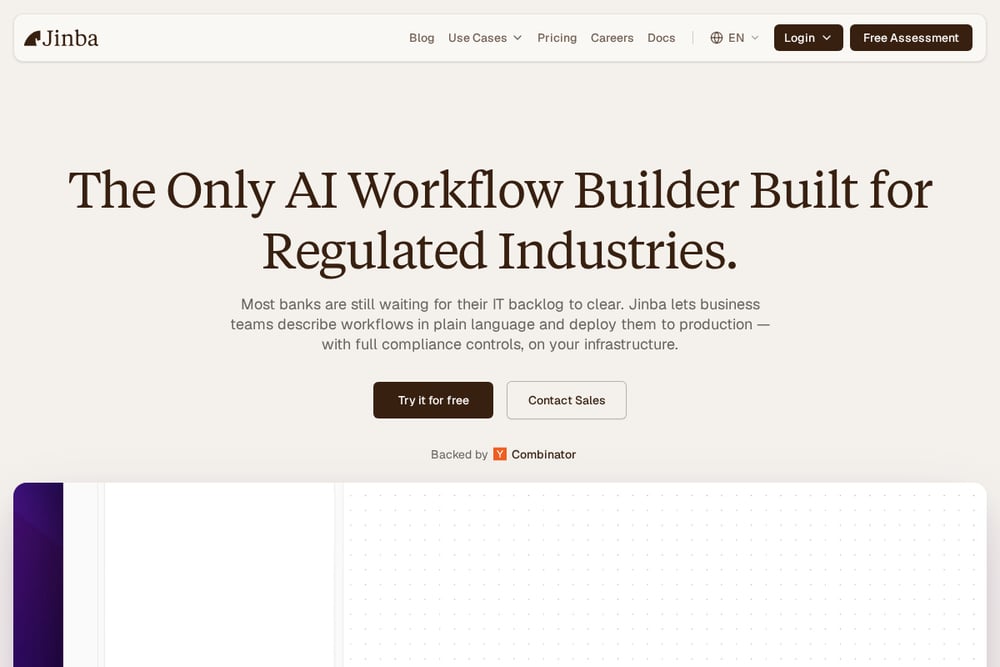 A screenshot of the Jinba website.
Jinba Flow is built for regulated enterprises that need to build and share governed AI workflows with full auditability. It separates workflow building from running, which means you can design, review, and approve processes before they touch production data. The platform emphasizes deterministic execution, so outputs are predictable and repeatable—critical when you're in banking, insurance, or healthcare. Jinba also provides on-premise deployment, RBAC, audit logging, and version control, addressing the core compliance needs that tools like Zapier often miss. If your team needs to prove every action to risk and legal, Jinba gives you the evidence trail.
#2 CabirX | AI Systems for Real Company Execution
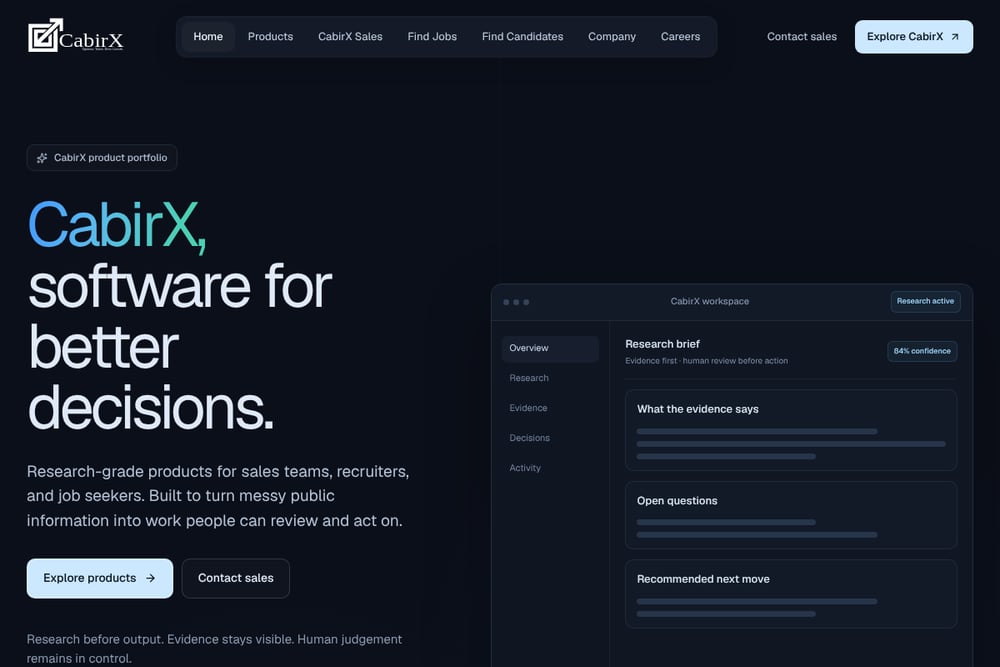 A screenshot of the CabirX website.
CabirX builds governed AI systems that turn executive intent into structured, reviewable workflows. Its two flagship products—CabirX OS and CabirX Sales—target company execution management and commercial intelligence respectively. CabirX OS translates goals into tasks, gives full visibility into all projects, and enforces approval gates for every action. CabirX Sales does deep account research, maps who actually buys, identifies buying signals, and suggests high-impact next moves. Unlike generic assistants, CabirX focuses on specific business functions with verified data and review gates, moving AI from experiment to execution. For enterprises that need secure, outcome-driven AI, this is a strong fit.
#3 EnterpriseAI Group
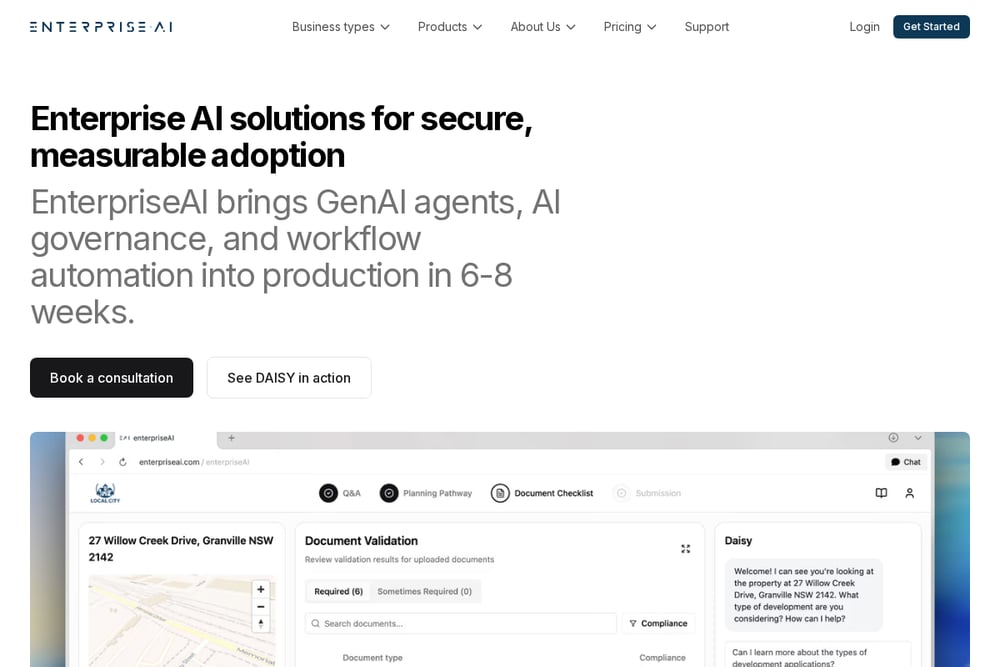 A screenshot of the EnterpriseAI Group website.
EnterpriseAI Group makes governance operational by embedding controls directly inside the workflow. Its framework covers identity, access, data boundaries, model evaluation, audit trails, human review, monitoring, and rollback. The governance control loop spans intake, design controls, evaluation, release, and monitoring—so every new workflow reuses the same release logic instead of renegotiating trust. It also addresses multi-tenant isolation, role-based access and audit, sovereign data and retention, accuracy and human review, and model/cloud choice. If you need a repeatable governance framework that satisfies risk, security, legal, and business reviewers, this platform provides the structure.
#4 Coworker AI
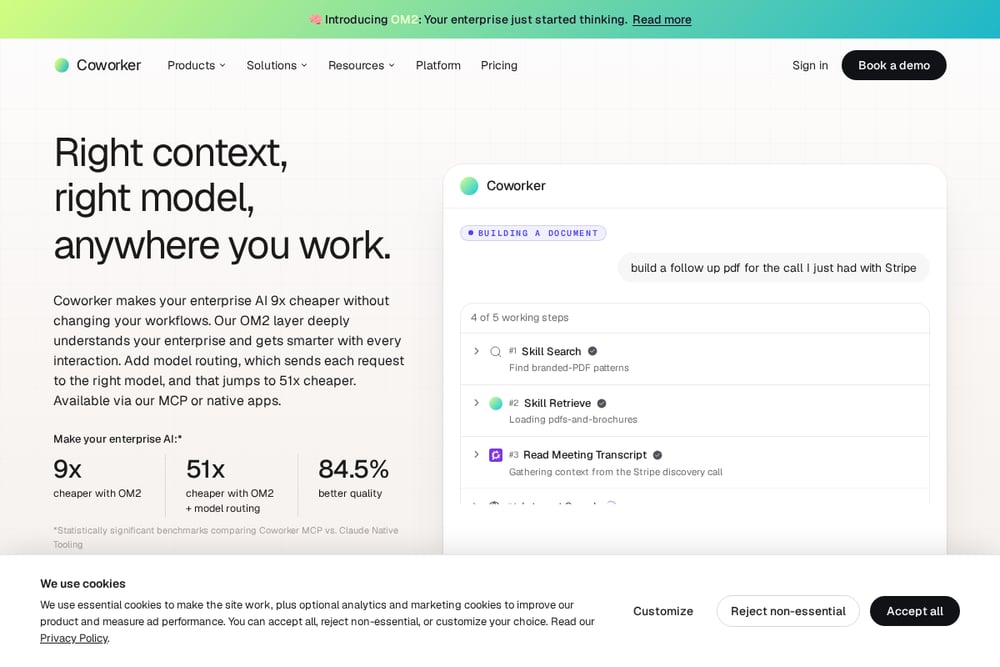 A screenshot of the Coworker AI website.
Coworker AI offers a context-based automation platform with a clear evaluation framework for enterprises. It distinguishes between rule-based and context-based automation, helping you choose the right layer for your stack. The platform provides a 3-layer enterprise automation stack and a 6-criteria evaluation framework that predicts fit. Coworker AI connects to tools like Salesforce, Slack, and Jira, letting you run agents in minutes. It emphasizes permissions, audit trails, and approval gates on anything that writes to a system of record. For teams moving beyond simple rules to intelligent agents, Coworker AI gives you a structured path.
#5 MightyBot
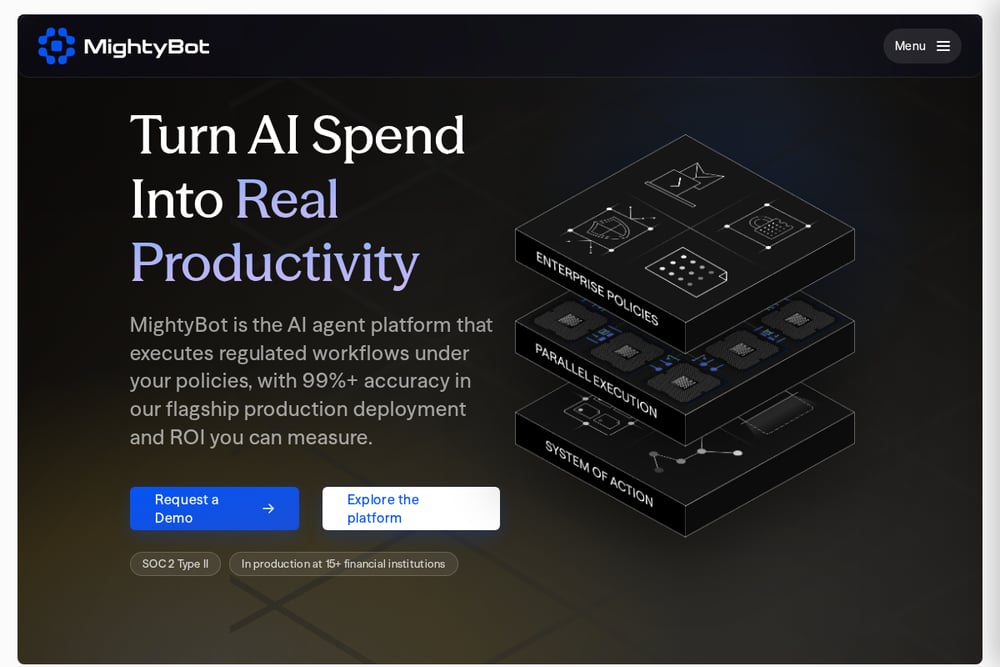 A screenshot of the MightyBot website.
MightyBot provides a policy engine and agent compiler specifically for regulated industries. Its platform includes document intelligence, compliance monitoring, and a directory of pre-built agents for lending, insurance, payments, and real estate. MightyBot emphasizes progressive autonomy, so you can start with human-in-the-loop and expand as trust grows. It offers a TCO calculator and production results showing 70%+ less processing time and 80% fewer manual interactions. If you're in financial services or insurance and need policy-driven automation with audit trails, MightyBot is built for your use case.
How to Choose the Right Platform
Start with your governance requirements. If you're in a regulated industry, prioritize platforms with on-premise deployment, RBAC, audit logging, and version control—Jinba and MightyBot excel here. If you need a broad governance framework that covers intake to monitoring, EnterpriseAI Group gives you the control loop. For company execution and commercial intelligence with built-in approval gates, CabirX is purpose-built. If you're connecting existing tools and want context-based automation, Coworker AI offers a clear evaluation framework. Next, consider your deployment model: sovereign data, multi-tenant isolation, or cloud choice. Finally, look at product focus—do you need a specific function solved or a general platform? Match the platform to your most critical workflow first, then expand.
Building Your Governed AI Workflow
A practical workflow: start by mapping your highest-risk process. Define what AI can see, what it can do, what it must cite, and where humans approve. Choose a platform that supports those controls natively. Run a pilot with deterministic execution and full audit logging. Evaluate outputs against real examples and edge cases. Release with constraints, monitoring, and a named business owner. Track quality, adoption, incidents, and drift. Then reuse the same release logic for the next workflow. This approach moves you from ad-hoc AI experiments to governed execution that scales.
The Bottom Line
Governed AI isn't a nice-to-have—it's the difference between a failed experiment and real execution. The five platforms here each bring a distinct strength: Jinba for deterministic regulated workflows, CabirX for governed company execution and commercial intelligence, EnterpriseAI Group for a comprehensive governance framework, Coworker AI for context-based automation, and MightyBot for policy-driven agents in regulated industries. Your job is to match the platform to your governance needs and your most critical workflow. Start small, prove the controls, then scale. That's how you turn AI from talk into results.