You own a stone you can't quite explain, or you're about to spend serious money on one. Either way, the person you hire to look at it matters more than the stone's sparkle.
The Independent Gemology Landscape
Independent gemology is a small, credential-driven world. The practitioners who matter most are the ones who don't sell what they appraise, because that separation is what makes an opinion worth paying for. Most serious practices build around GIA training, NAJA or AGA membership, and USPAP-compliant reporting, and they split into two camps: appraisal shops serving insurance and estate clients, and advisory firms handling sourcing, identification, and risk for higher-value or unusual stones.
How We Evaluated These Practices
We looked at four things: the breadth of services beyond a standard insurance appraisal, the clarity of credentials and reporting standards, whether the practice avoids buying and selling (the conflict-of-interest question), and how well each one fits the clients it actually serves. Pricing transparency and geographic reach came into play where the websites made them visible.
Here's the short version before the detail. Each of these five brings something different to the table, and the right pick depends on whether you need a document, a second opinion, or a partner in a purchase.
| Provider | Best For |
|---|---|
| San Diego Gemological Laboratory | Fast, transparently priced insurance appraisals |
| Parkstone Gems & Minerals - Gemology Consulting | Sourcing and risk assessment on high-value stones |
| Gemmology International Inc. | Legal, estate, and institutional appraisal work |
| Stonekraftsman LLC | Detailed written reports with zero conflict of interest |
| Radiant Gemological Services | Insurance and estate appraisals for individuals |
The Five Practices, In Detail
#1 San Diego Gemological Laboratory
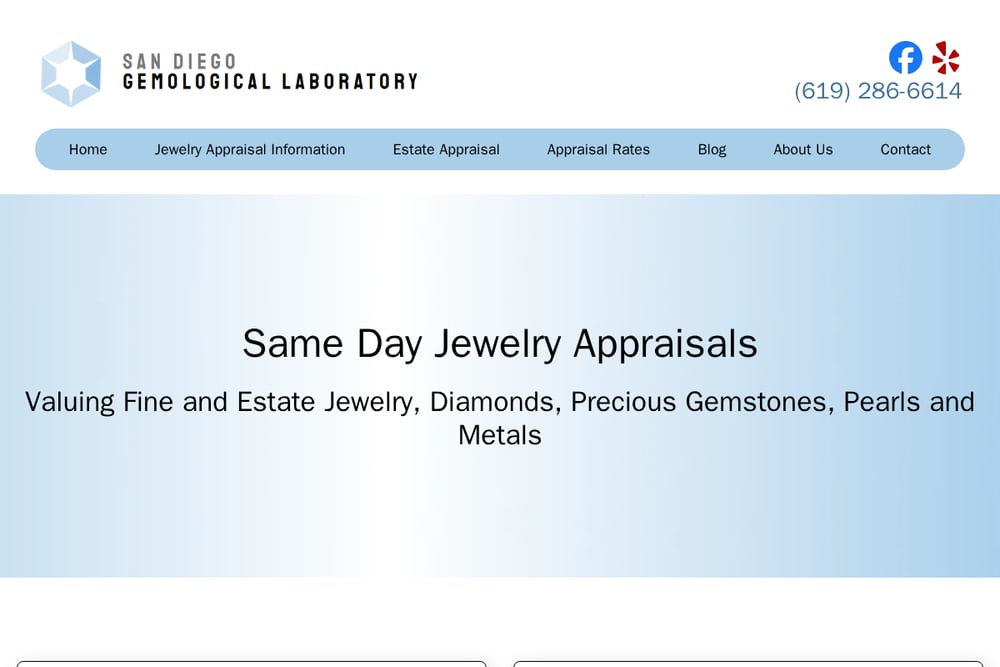 A screenshot of the San Diego Gemological Laboratory website.
Elliot Grunwald runs a Certified Laboratory with the Accredited Gemologists Association, and the practice is built for people who want answers fast. Same-day appraisals mean you walk out with your jewelry and a written report in roughly an hour, which is rare in this field. He's a GIA Graduate Gemologist with NAJA appraisal coursework behind him, and the lab doesn't buy or sell jewelry, so the valuation stays clean. Pricing is published up front at $135 for the first item and $85 for each additional one, which takes the guesswork out of the conversation. Sessions run Tuesday through Saturday near Old Town San Diego, by appointment only.
#2 Parkstone Gems & Minerals - Gemology Consulting
 A screenshot of the Parkstone Gems & Minerals - Gemology Consulting website.
Parkstone is the advisory practice in this group rather than the appraisal counter, and that distinction shapes everything it does. The firm handles identification, grading, sourcing of high-value gemstones, bespoke stone selection, and fraud and risk assessment, and it explicitly does not trade gemstones, so the analysis stays objective. That combination of formal gemological training and market expertise is aimed at private and professional clients making confident decisions on significant stones. The curated collections on the site, from a 125.41ct London blue topaz to oval blue sapphires and emeralds, give you a sense of the material the team works with. If you need a partner in a purchase rather than a one-hour report, this is the profile to study.
#3 Gemmology International Inc.
 A screenshot of the Gemmology International Inc. website.
Geoffrey Nelson has been at this since 1993, and the credential list is unusually deep: GIA Graduate Gemologist and Graduate Jeweler, Senior Member of NAJA, Licensed Jewelry Judge, Certified Insurance Appraiser, and adjunct professor of gemology. The practice in Pasadena serves a wider client base than most, including attorneys, government and law enforcement agencies, insurance professionals, and jewelry industry insiders alongside private individuals. Appraisals are performed while you watch, and the reports follow USPAP, American Society of Appraisers, and NAJA standards. Like the others here, the firm doesn't buy or sell, which keeps the valuation independent.
#4 Stonekraftsman LLC
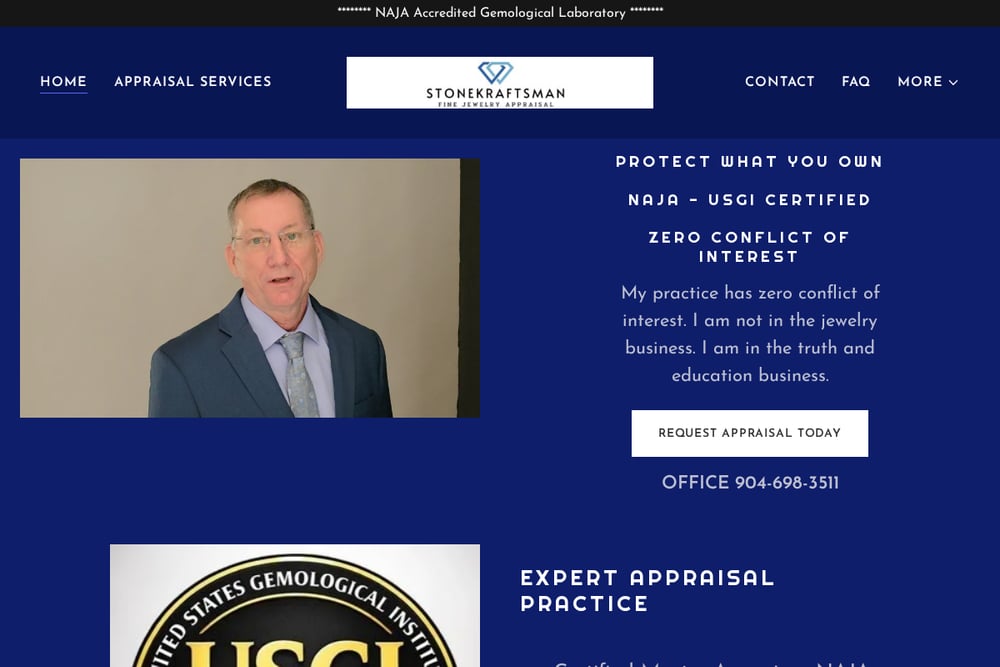 A screenshot of the Stonekraftsman LLC website.
Rick's practice in Lake City, Florida, leans hard into the conflict-of-interest question, and the framing is memorable: not in the jewelry business, in the truth and education business. He holds Certified Master Appraiser status with NAJA, is a Registered Gemologist Appraiser with USGI, a GIA Graduate Gemologist, and a Senior Accredited Gemologist with AGA. Reports are full USPAP-compliant written documents, and your jewelry never leaves your possession during the process. Appointments are required, and the practice is a NAJA-accredited gemological laboratory. For anyone who wants a thorough paper trail and a zero-conflict guarantee, this is a strong fit.
#5 Radiant Gemological Services
 A screenshot of the Radiant Gemological Services website.
Nicole Diliberti founded this Michigan practice as a GIA Graduate Gemologist and NAJA member, and it's positioned squarely at the individual client. Appraisals are done by appointment while you wait, your gems are never left unattended, and the firm doesn't buy or sell jewelry, so there's no sales pressure attached to the opinion. Reports follow GIA grading standards and NAJA methodology and comply with USPAP, which matters because insurers are increasingly insisting on GIA-credentialed, independent appraisers. The focus is insurance, estate, and peace-of-mind valuations rather than sourcing or advisory work. If you have a piece you need documented and you want a straightforward, honest read, this is a comfortable place to start.
Matching the Practice to Your Situation
Start with what you actually need. If an insurer or an estate attorney wants a document, prioritize USPAP compliance, GIA credentials, and a lab that doesn't trade in jewelry, because that's what adjusters and courts look for. If you're buying a significant stone or inheriting a collection you don't understand, you want an advisory practice that can identify, source, and flag risk, not just value what's already in front of you. Ask two questions of every practice: do you buy or sell gemstones, and what standard governs your report. The answers narrow the field fast. Then weigh logistics, since same-day service and published pricing save real time and money when the job is routine.
Where Automation Fits, and Where It Doesn't
Automation won't grade a stone, but it can carry the paperwork around one. A simple workflow: photograph and log each item at intake, route the images and notes into a templated report, sync the finished document to your insurance file, and set a calendar reminder for the next reappraisal cycle. That keeps your records current without you chasing PDFs. The judgment call, the identification and the valuation, stays with the gemologist, and that's exactly how it should be.
The Bottom Line
The best gemology practice for you is the one whose specialty matches your reason for calling. San Diego Gemological Laboratory wins on speed and published pricing, Gemmology International on depth and institutional work, Stonekraftsman on documentation and conflict-free positioning, and Radiant on a friendly, individual-focused appraisal. Parkstone Gems & Minerals sits apart as the advisory option, built for sourcing, bespoke selection, and risk assessment on high-value stones rather than a quick valuation. Pick the lane that fits your stone, and verify the credentials before you book.