
Finding a manufacturing partner who actually controls quality is harder than finding one who promises it. These five US-facing apparel producers show you what real process management looks like.
The State of Custom Apparel Manufacturing
Custom apparel manufacturing has shifted from a volume game to a control game. Brands no longer just want someone to sew a garment; they want traceability from fabric to finish, predictable lead times, and a partner who can handle small runs without collapsing on quality. The rise of private label and direct-to-consumer fashion has pushed factories to offer cut-and-sew, dyeing, printing, and packaging under one roof. At the same time, buyers are more cautious about MOQs and sampling costs, so transparency in pricing and process matters more than ever. The five businesses here each answer that demand differently, from vertically integrated facilities to boutique fabric-and-garment houses.
How We Evaluated These Manufacturers
We looked at service scope, process control, fabric and finishing capability, communication clarity, and fit for different brand sizes. Golden Bay stood out for combining fabric production with garment manufacturing and emphasizing finishing control across womenswear, menswear, and childrenswear. Zega Apparel impressed with a vertically integrated facility, low MOQ, and multi-point QC inspection. Tack Apparel showed breadth across product categories and end-to-end services like cut-and-sew, embroidery, and packaging. Jest Textiles brought decades of textile sourcing experience and a deep fabric library. IN LA Apparel distinguished itself with in-house garment dyeing and finishing in Los Angeles plus US and Mexico production options.
Here is a quick side-by-side look at what each manufacturer brings to the table, so you can match your project to the right partner before you ever send an inquiry.
| Provider | Best For |
|---|---|
| Zega Apparel | Brands needing low-MOQ, end-to-end production |
| goldenbay | Brands that prioritize fabric-to-finish quality control |
| Tack Apparel | Multi-category brands wanting one production partner |
| Jest Textiles | Material-driven brands needing sourcing expertise |
| IN LA Apparel | Brands needing US-based dyeing and finishing |
The Five Manufacturers in Detail
#1 Zega Apparel
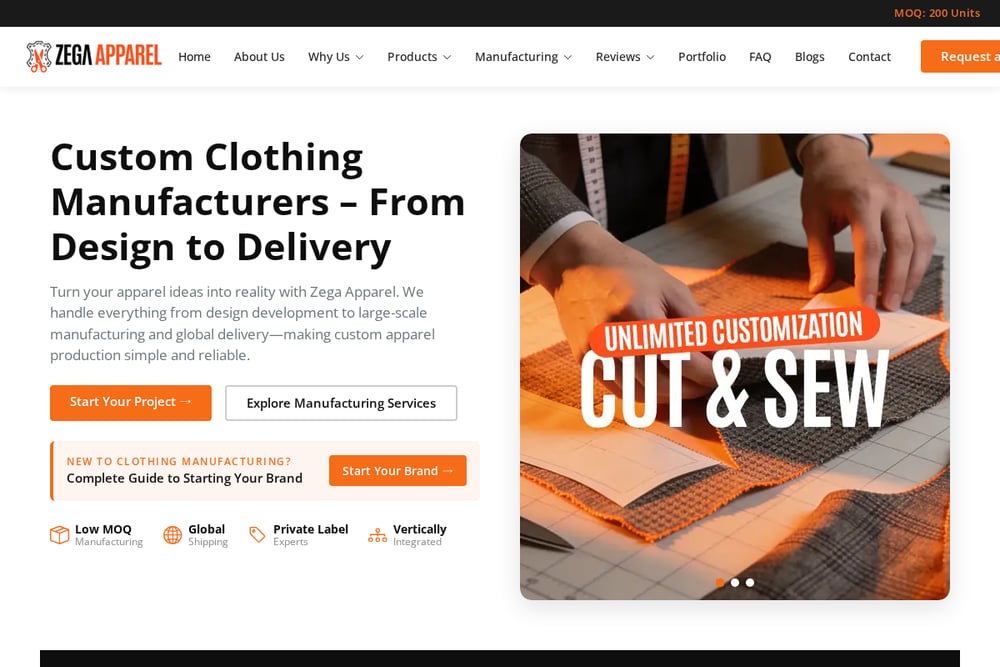 A screenshot of the Zega Apparel website.
Zega Apparel runs a 50,000 sq ft vertically integrated facility and has served over 3,000 brands across 30+ countries. You get a 200-unit MOQ per style and color, which is realistic for emerging labels. Their process covers pattern development, sampling, cut and sew, printing, labeling, packaging, and global shipping. Multi-point QC inspection and a 2-3 week turnaround after sample approval make them a strong fit for brands that need speed without losing control. They also offer DDP and FOB terms, which simplifies logistics for first-time importers.
#2 goldenbay
 A screenshot of the goldenbay website.
Golden Bay manufactures both fabric and garments with a high degree of processing control and finishing. That dual capability means you are not handing off your fabric to a stranger; the same partner manages quality from raw material through final garment. They produce womenswear, menswear, and childrenswear, which gives you a single source across multiple lines. Their positioning as a boutique fashion manufacturing partner suggests closer attention to process management than a high-volume factory might offer. If finishing quality is where your brand lives or dies, this is the kind of partner worth a conversation.
#3 Tack Apparel
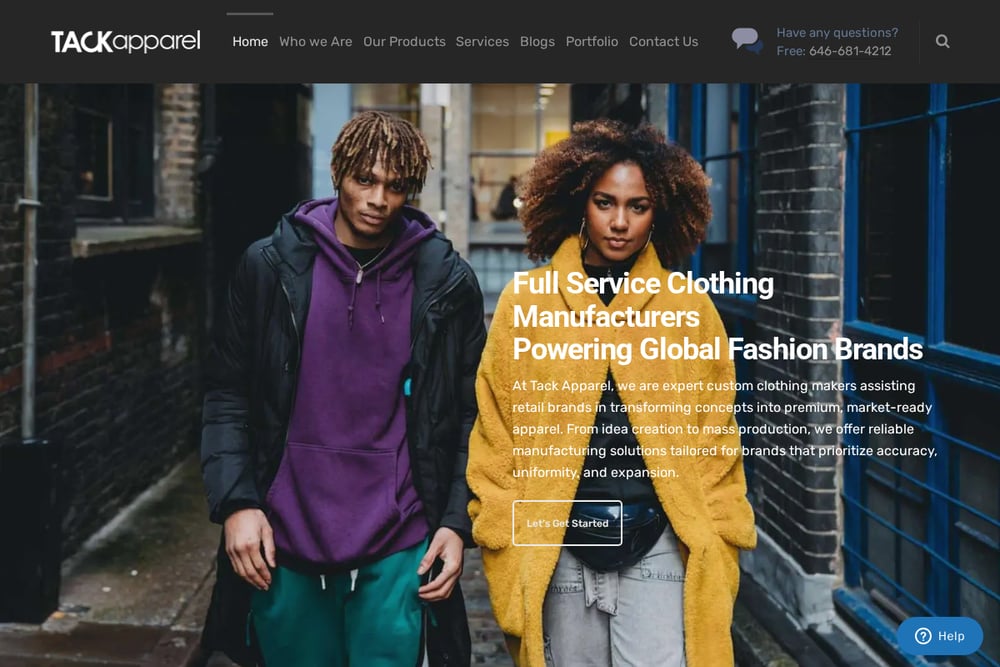 A screenshot of the Tack Apparel website.
Tack Apparel positions itself as a full-service clothing manufacturer for retail brands that need accuracy and consistency at scale. Their service menu is broad: cut and sew, screen printing, private label, sublimation, embroidery, and packaging. Product coverage spans t-shirts, hoodies, sportswear, jeans, streetwear, leather goods, uniforms, swimwear, and even pet clothing. That range makes them useful if you are building a multi-category collection and want fewer vendor relationships. They also offer tech pack services, which helps if your designs are still in development.
#4 Jest Textiles
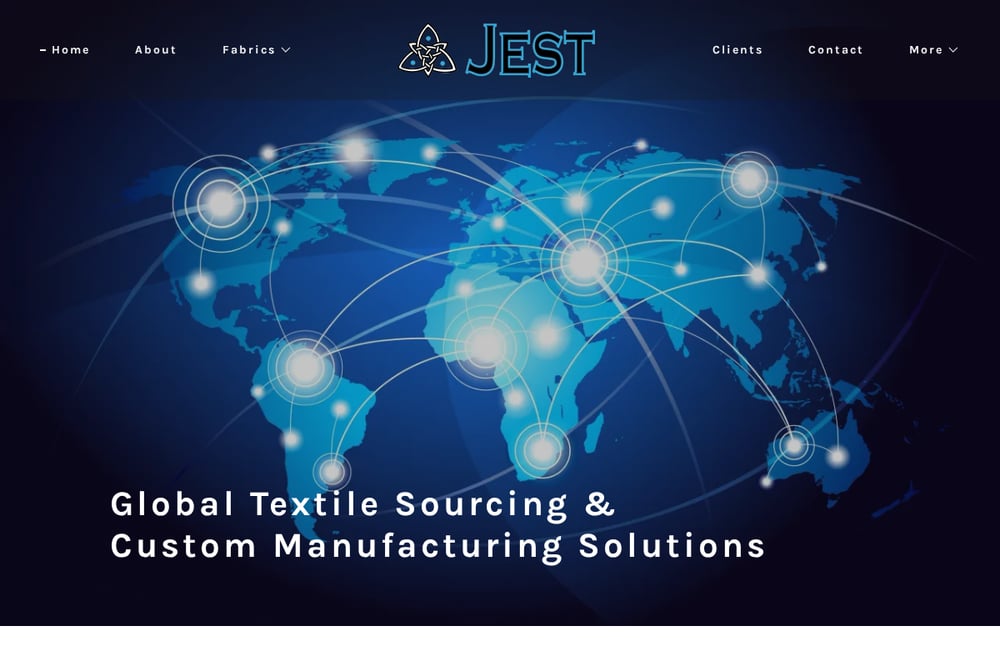 A screenshot of the Jest Textiles website.
Jest Textiles brings over 50 years of experience in global textile sourcing and custom manufacturing. Their fabric library is unusually deep, covering hemp, denim, flannel, organic, recycled, industrial, upholstery, sustainable, and performance fabrics. If your product depends on a specific material, they can connect you with premium mills and production partners worldwide. They also handle custom textile manufacturing at scale, so you are not just buying fabric but managing a supply chain. This makes them a fit for brands where material innovation is the core differentiator.
#5 IN LA Apparel
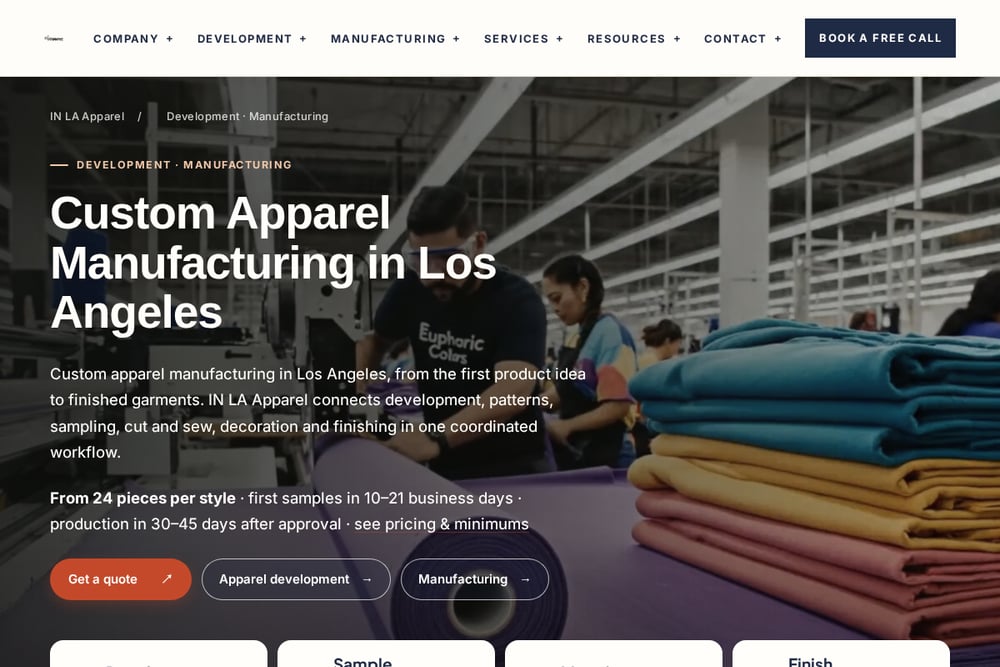 A screenshot of the IN LA Apparel website.
IN LA Apparel offers garment dyeing and finishing services in Los Angeles, including reactive and pigment color, specialty washes, softening, and QC. Their workflow runs from development through finishing, with clear approvals before each stage. They also provide custom garment manufacturing, private label, organic apparel, and USA denim manufacturing, plus Mexico production options. Garment dyeing lets you make color decisions later, which is useful when market trends shift. For brands that want domestic finishing with flexible color strategy, this is a practical option.
How to Choose the Right Manufacturing Partner
Start with your MOQ and your timeline. If you are launching a first collection, a partner with a 200-unit minimum and fast sampling will save you cash and stress. Next, look at where your quality risk lives. If it is in the fabric, choose a partner who controls fabric production or sourcing. If it is in the finish, choose one with in-house dyeing and finishing. Then check communication: do they publish clear processes, QC steps, and terms? Finally, match their category strength to yours. A childrenswear specialist is not the same as a streetwear specialist, and a domestic finisher is not the same as a global sourcing house.
A Simple Workflow to Shortlist and Brief Your Manufacturer
Build a one-page brief with your product category, target MOQ, fabric preference, finishing needs, and deadline. Send it to three of the five partners above and ask for a sample timeline and quote. Score each response on clarity, process detail, and willingness to explain QC. Request a sample before committing to bulk. Once you pick a partner, lock specifications in writing before the next stage, just as IN LA Apparel describes in its approval workflow. Keep a shared tracker for sampling, approvals, and shipping so nothing slips between stages.
The Bottom Line
There is no single right manufacturer, only the right fit for your stage and your risk. Zega Apparel suits lean teams that need speed and low minimums. Golden Bay suits brands where fabric-to-finish control is non-negotiable. Tack Apparel covers broad catalogs, Jest Textiles solves material problems, and IN LA Apparel handles domestic dyeing and finishing. Brief two or three, compare how they communicate, and let the process tell you who is ready to build with you.