
Your game already generates the kind of play data AI labs are paying for. The question is whether you can license it without tripping over platform terms or player consent.
What are Creative & Digital Services services?
The market for licensed AI training data has moved from scraping the open web to signing real checks. Gameplay footage, input-matched video, and world-state telemetry are now sought after by world-model and physical AI buyers. But selling play data is not like selling a stock photo library. The recordings usually sit inside a store, a backend, or a clip service, and each one has its own terms. You need to know who owns what, what players agreed to, and what buyers actually require before you sign anything.
What we looked at when researching Creative & Digital Services
We looked at five factors across every service. First, service scope: does it cover the full path from recording to licensing, or only one slice? Second, platform and legal fluency: can it read store, backend, and clip-service terms and tell you what they mean for your data? Third, buyer access: does it have a real route to AI labs and world-model teams? Fourth, pricing and process clarity: do you know what happens next and what it costs? Fifth, local fit for US studios and publishers, including how it handles player consent and revenue-share questions.
| Provider | Best For |
|---|---|
| Troveo | Market context and buyer mapping |
| Sell gameplay data to AI: platforms, buyers, player law | Studios with platform-bound gameplay data |
| FileYield | Private brokered deals |
| Shaip | Collection plus annotation at scale |
| Neudata | Dataset discovery and buyer introductions |
A closer look at 5 standout Creative & Digital Services
#1 Troveo
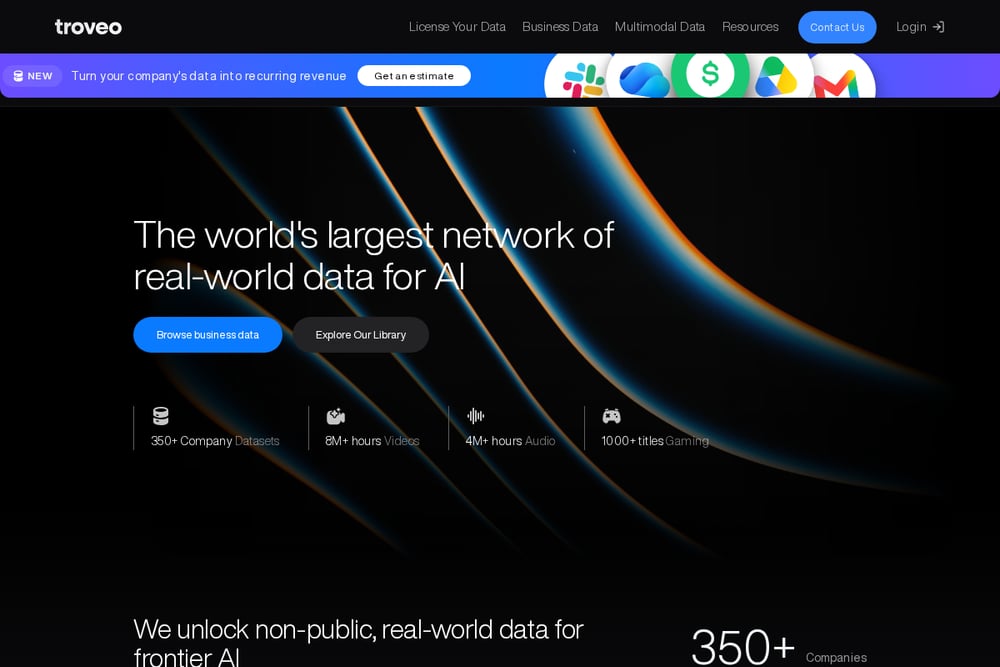 A screenshot of the Troveo website.
Troveo positions itself as a licensing partner for companies that want to sell data to AI labs. Its guide on selling data to AI companies lays out who buys, what sells, and why the market shifted from scraping to licensing. It names gameplay footage as a category that draws real bids because interactive environments at scale are raw material for world models. The site also points to a broader sourcing landscape and a buyer guide drawn from the public record. If you want a market-level view before you talk to anyone, this is a useful starting point.
#2 Sell gameplay data to AI: platforms, buyers, player law
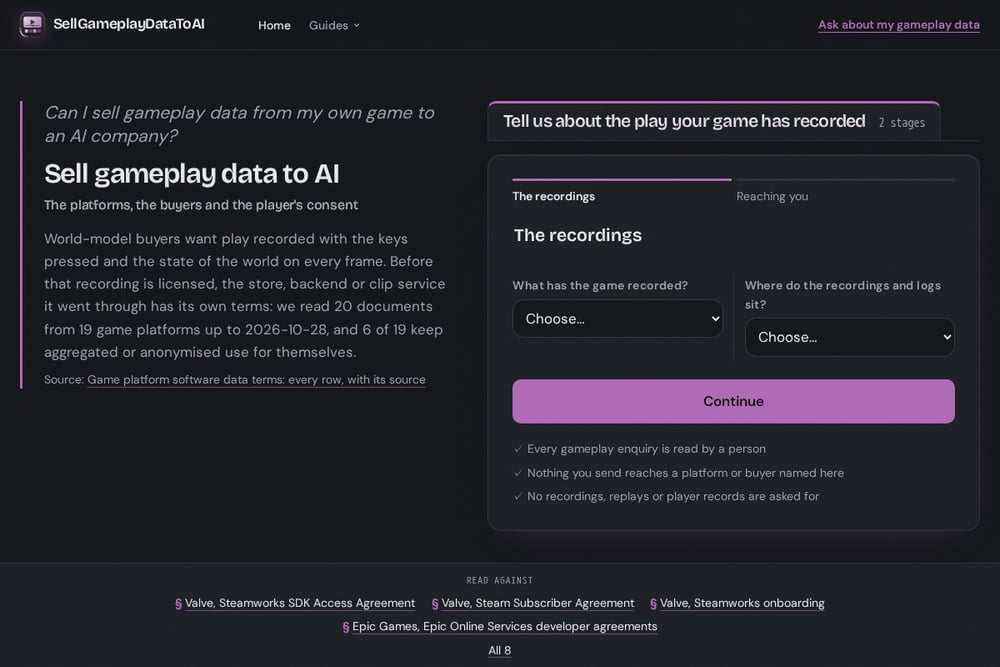 A screenshot of the Sell gameplay data to AI: platforms, buyers, player law website.
This is the specialist in the room. It focuses on studios and publishers with a shipped multiplayer or mobile game, and it reads the terms that actually govern your recordings. The site says it reviewed 20 documents from 19 game platforms up to October 28, 2026, and found that 6 of 19 keep aggregated or anonymised use for themselves. It also explains what world-model buyers want: play recorded with the keys pressed and the state of the world on every frame. A two-stage form asks what you have recorded, where the logs sit, and your studio size and revenue so the team can evaluate your data. If your play sits inside Steam, Xbox, Roblox, a multiplayer backend, or a clip service, this is built for your exact problem.
#3 FileYield
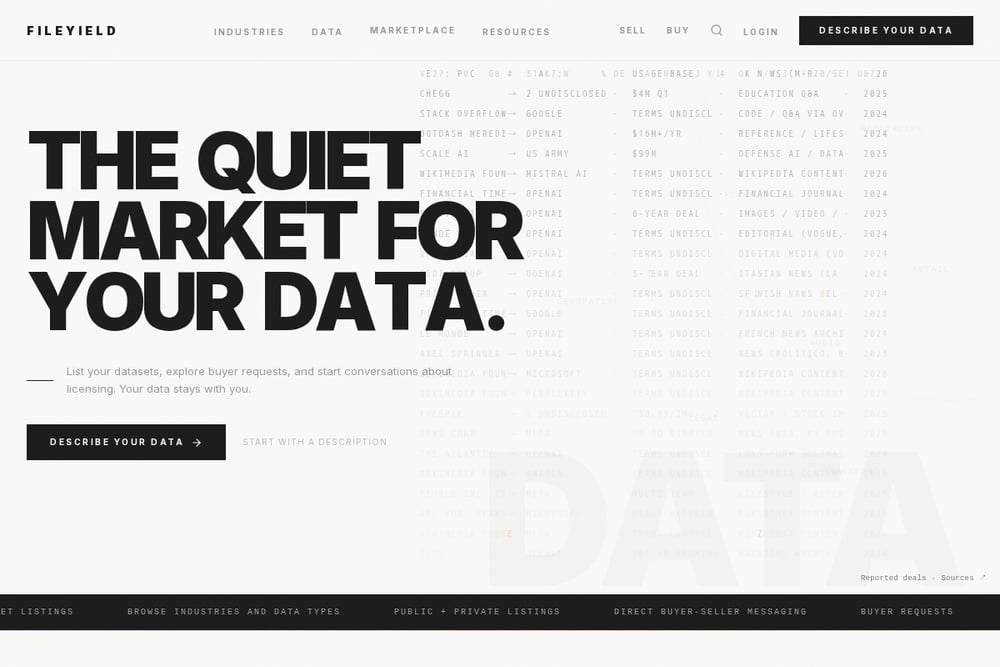 A screenshot of the FileYield website.
FileYield is a private data brokerage that connects data owners with AI labs. It describes a four-step process: tell them what you have, document readiness and risks, choose a listing or targeted outreach, and negotiate directly. The site cites Grand View Research figures putting the AI training dataset market at $3.2 billion in 2025 and $3.9 billion by the end of 2026, with a 22.6% compound annual growth rate through 2033. It also notes that big tech committed a combined $320 billion to AI infrastructure in 2025. If you want a broker to handle introductions and keep your data off public listings, this is the model to consider.
#4 Shaip
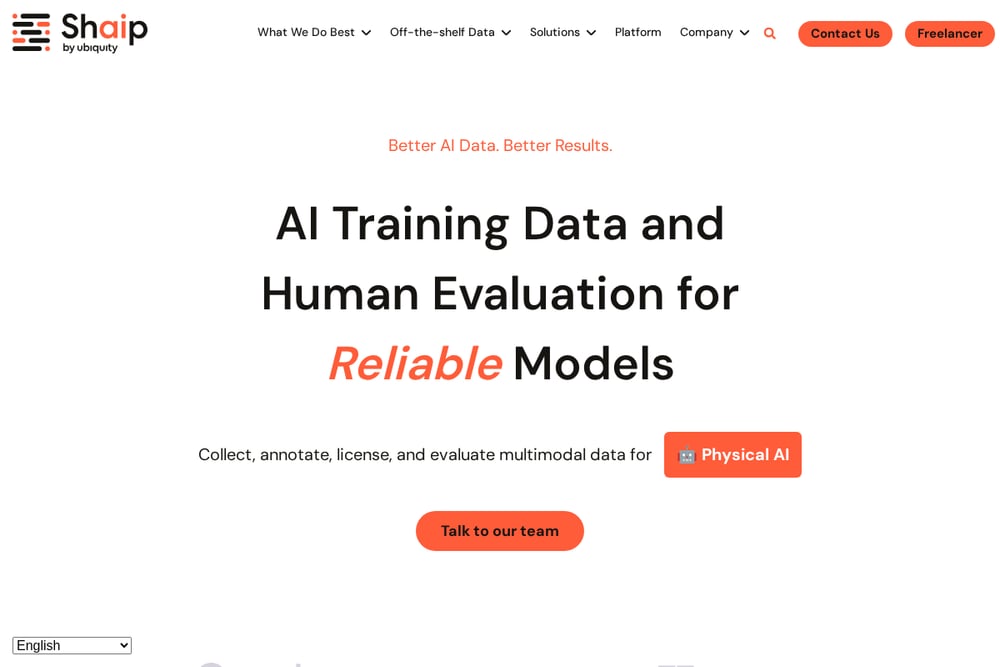 A screenshot of the Shaip website.
Shaip is a data collection and licensing company with an off-the-shelf catalog and custom collection services. Its physical AI and egocentric video offerings are close cousins to gameplay data, and it handles annotation, labeling, and evaluation datasets alongside licensing. The site emphasizes GDPR and HIPAA-compliant marketplace operations, which matters if your recordings touch player personal data. It also covers LLM and GenAI evaluation, supervised fine-tuning, and RLHF data. If you need a vendor that can collect, annotate, and license in one place, this is a mature option.
#5 Neudata
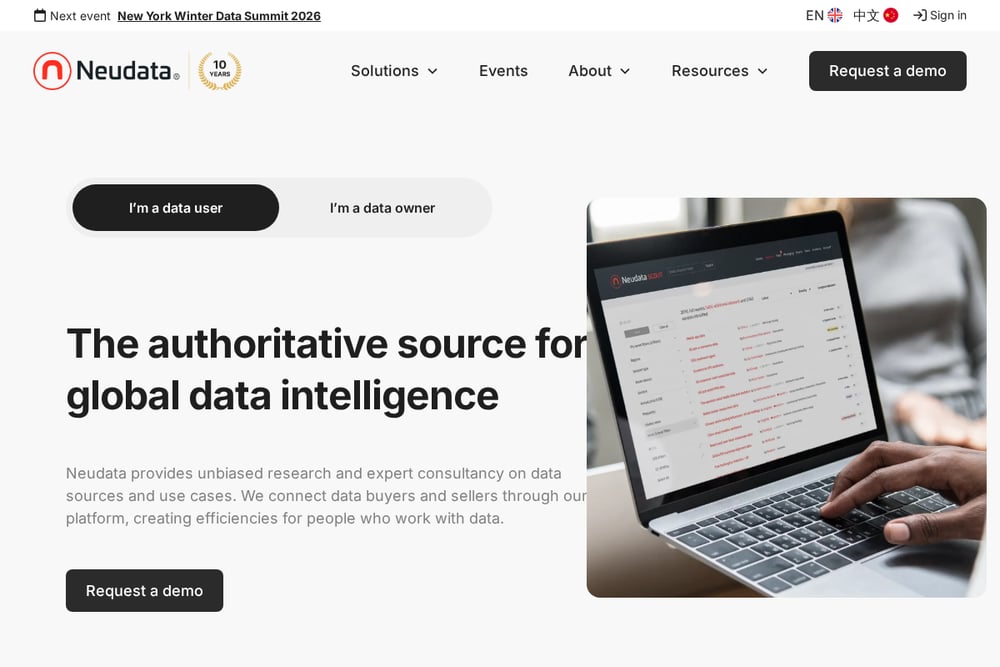 A screenshot of the Neudata website.
Neudata is a data intelligence platform with a seller side that lets you list a dataset for free and get it in front of more than 1,000 qualified buyers. It runs data summits in New York and London and publishes market analysis on the AI data licensing space. The site also offers a structured approach to data monetisation, including risk mitigation and compliance guidance. For a studio that wants discovery and buyer introductions without a full brokerage relationship, this is a low-friction entry point. It is less gameplay-specific than the specialists, but the buyer network is real.
How to choose the right Creative & Digital Services
Start with where your recordings live. If they sit inside a store, console, or clip service, you need someone who reads those terms line by line before you promise anything to a buyer. If your logs are on your own servers and you control consent, a broker or marketplace may be enough. Ask every service three questions: what exactly will you do with my data, who are the buyers you can reach, and what happens to player consent and revenue share. Get the answers in writing. Then pick the smallest scope that solves your real bottleneck, whether that is legal clarity, buyer access, or annotation capacity.
Expert Conclusion
The gameplay data market is real, but it rewards preparation. Troveo gives you the market map. Sell gameplay data to AI gives you the platform and player-law detail that decides whether your data is even sellable. FileYield and Neudata give you routes to buyers, and Shaip gives you collection and annotation muscle. Match the service to your bottleneck, document your provenance, and do not license a frame until you know who agreed to what.