You need a team that can build the whole thing, not just hand off a design file and disappear. These five studios are worth a serious look before you sign anything.
The state of full-stack development right now
Full-stack shops have become the default answer for companies that are tired of stitching together a designer, a backend contractor, and a DevOps freelancer. The pitch is simple: one team owns the frontend, the API, the database, and the deployment. That works well when the studio actually has depth across all four layers. It falls apart when "full-stack" just means a small team that dabbles. The studios below sit at different points on that spectrum, from boutique to enterprise-scale, so you can match the shop to the size of your build.
How we looked at each studio
We weighed service scope (does the studio really cover frontend, backend, data, and cloud?), technical transparency (can you see the actual stack and tooling?), pricing clarity, and local fit for a Metro Atlanta or US-based buyer. We also considered how each one frames ownership of the project end to end. The detail on each studio lives in its write-up below.
Here is the short version before the deep dive. Each studio below brings a different shape to the same promise, so skim the one-liners and then read the entries that match your project.
| Provider | Best For |
|---|---|
| G&CO. | Regulated industries and enterprise-scale builds |
| Hexta Developer | Full-Stack Software Studio | End-to-end ownership of a production build |
| Mango IT Solutions | eCommerce builds and staff augmentation |
| Radixweb | Larger engagements with AI ambitions |
| RT Dynamic | CRM-integrated and multi-service projects |
The five studios, one by one
#1 G&CO.
 A screenshot of the G&CO. website.
G&CO. runs full-stack mobile and web development as a consulting practice, and it leans hard into regulated industries like healthcare, pharma, and life sciences. The studio starts with technical discovery and architecture before a line of code gets written, which is the right order for complex products. Its portfolio includes a scalable mobile experience for Starbucks and an AI-enabled research platform for Thermo Fisher Scientific, so you can judge the work by the clients. If your build has compliance, scale, or integration headaches baked in, this is a team that has seen those problems before. The trade-off is that the engagement model feels enterprise-shaped, which may be more process than a small startup needs.
#2 Hexta Developer | Full-Stack Software Studio
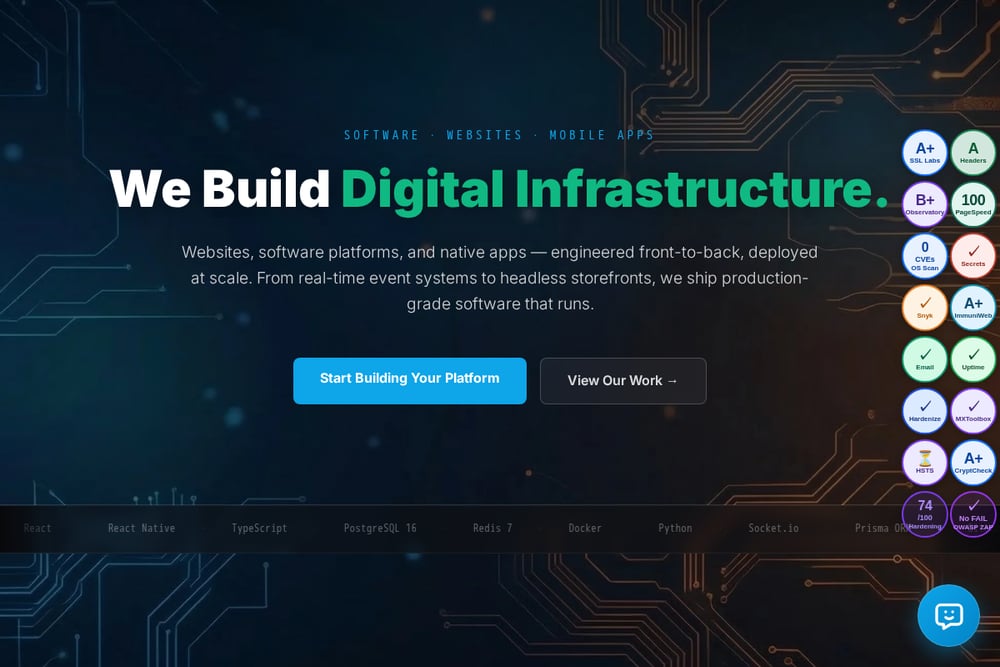 A screenshot of the Hexta Developer | Full-Stack Software Studio website.
Hexta Developer is a Metro Atlanta studio that owns the entire stack, from pixel to production, and says so plainly on its site. The team builds custom websites, SaaS platforms, native mobile apps, and enterprise APIs, and it publishes the actual tooling it works with: NestJS, Next.js, React Native, PostgreSQL, Redis, Docker, and GitHub Actions. That transparency matters, because you can see the security layer too, including JWT/RBAC, Fail2ban, and Redis rate limiting built in from day one. The studio positions itself against agencies that hand off between designers, developers, and DevOps, and its pitch is one coordinated team across every layer. For a US-based buyer who wants a single accountable partner on a production-grade build, this is a strong fit.
#3 Mango IT Solutions
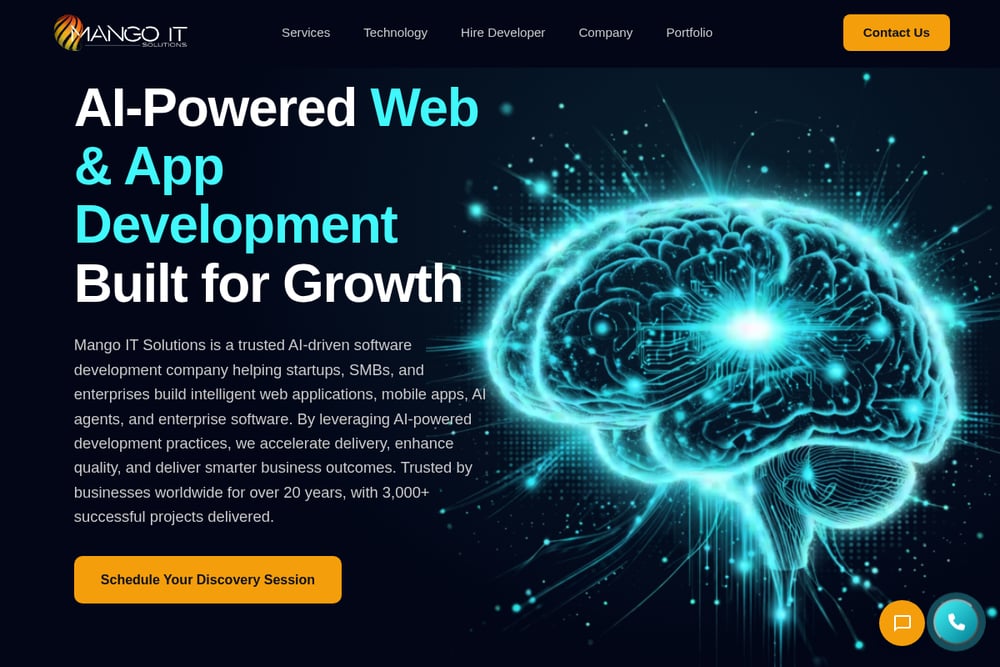 A screenshot of the Mango IT Solutions website.
Mango IT Solutions is a globally oriented full-stack development company with a broad menu of services and a heavy emphasis on eCommerce. You can hire dedicated developers or a full tech team, and the stack coverage runs across Node, React, Angular, MEAN, MERN, Laravel, and more. The eCommerce side is deep, with Magento, WooCommerce, Shopify, and PrestaShop all on the table. That breadth is useful when your project spans a storefront, a custom backend, and a CMS at the same time. The flip side is that a wide catalog can make it harder to tell where the studio's real depth sits, so ask pointed questions about your specific stack.
#4 Radixweb
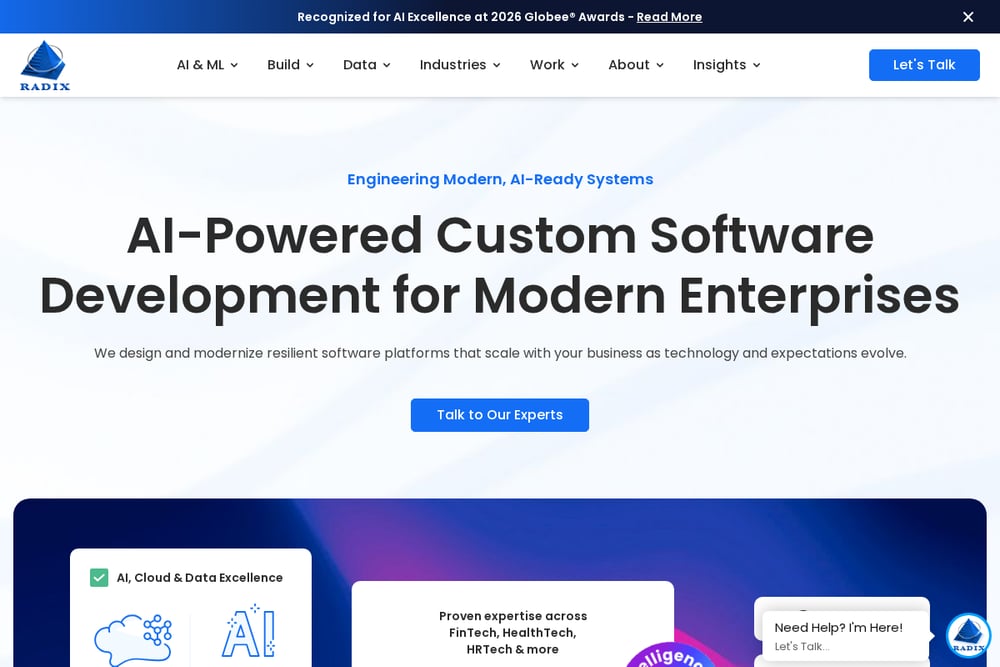 A screenshot of the Radixweb website.
Radixweb is an established full-stack development services company that covers frontend, backend, database, DevOps, and APIs under one roof. The firm has built a reputation on above-industry-standard coding and round-the-clock availability, and its client testimonials emphasize responsiveness and speed of delivery. It also markets AI and ML capabilities alongside its core development work, which helps if your roadmap includes intelligent features. This is a larger, process-driven shop, so you get structure and bench depth rather than a small dedicated crew. Expect a more formal engagement, and budget time for the discovery phase.
#5 RT Dynamic
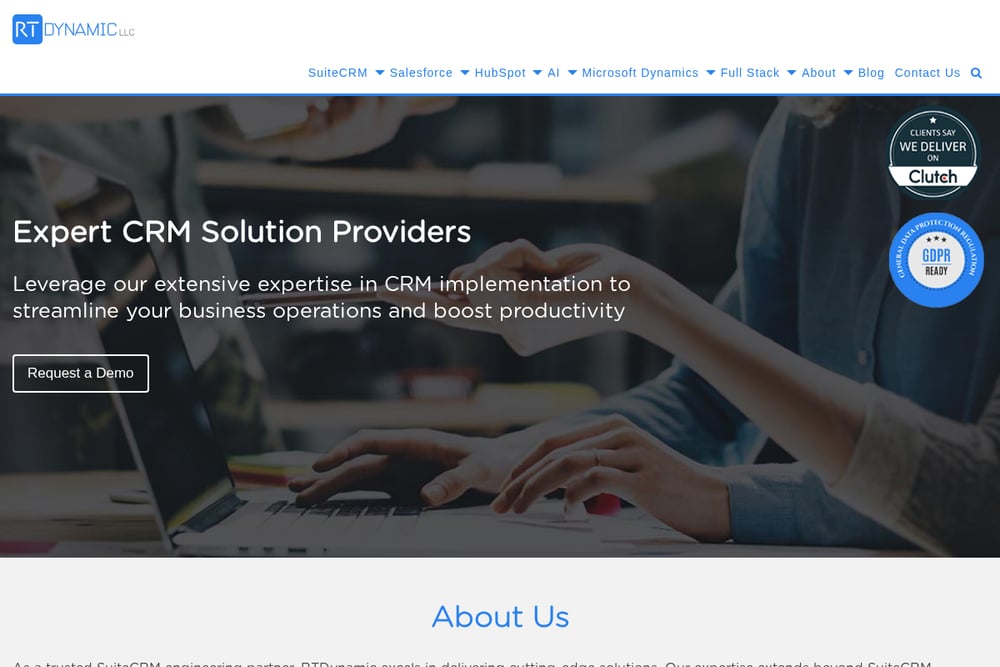 A screenshot of the RT Dynamic website.
RT Dynamic bundles full-stack custom development with a sprawling catalog of adjacent services, from CRM platforms like SuiteCRM, Salesforce, and HubSpot to AI agents and RAG implementations. Its web and mobile app development offering sits inside a wider menu that includes enterprise solutions, eCommerce, migration, security and compliance, and real-time apps. That makes it a reasonable one-stop option if your project touches a CRM or an existing enterprise system that needs integration. The breadth is the selling point and the caution flag at once, so scope your engagement tightly. Ask for references specific to the exact service line you are buying.
How to pick the right studio for your build
Start with the layer you cannot afford to get wrong. If security and data integrity are the risk, favor a studio that publishes its auth and infrastructure choices. If you are bolting onto a CRM, favor one with proven integration work. Then ask two questions in the first call: who actually writes the code, and who owns deployment. A real full-stack studio answers both without hesitation. Finally, match the engagement model to your size. A boutique may move faster on a focused build, while a larger firm brings bench depth for a multi-quarter roadmap. Get the scope in writing before anyone starts.
Where automation fits into the build
The studios that ship reliably tend to automate the boring parts. Expect CI/CD pipelines, containerized deployments, and infrastructure-as-code as standard, not upsells. On the security side, rate limiting, fail2ban-style daemons, and role-based access control should be configured from day one rather than bolted on later. Ask each studio to walk you through its deployment pipeline and its monitoring setup. If the answer is vague, that is your signal. Automation is what keeps a production system stable after launch, and it is worth more of your diligence than the design mockups.
The bottom line
There is no single right studio here, only the right fit for your build. G&CO. suits regulated, enterprise-scale work. Hexta Developer is the pick when you want one Metro Atlanta team to own the whole stack and show you the tooling up front. Mango IT Solutions fits eCommerce and team augmentation. Radixweb brings structure and AI capability at scale, and RT Dynamic makes sense when CRM integration is central. Pick based on the layer you cannot afford to get wrong, then verify it in the first conversation.