You want exposure to AI, quantum, and deeptech before the crowd arrives. These five firms show you how serious capital gets positioned early.
The State of Frontier Tech Investing
Frontier technology investing sits where venture capital meets alternative asset management. Firms here back early-stage companies in AI, quantum computing, fintech, cybersecurity, and clean technology, often blending private startup incubation with public-market strategies. The space rewards deep technical fluency and patient capital, because the payoff timelines are long and the science is hard. You will notice the strongest players differentiate on sector focus, stage discipline, and the networks they bring to founders.
How We Evaluated These Firms
We looked at each firm through a consistent lens: breadth of investment scope across public and private markets, clarity of stated thesis and focus sectors, stage and check-size discipline, the strength of founder and corporate networks, and overall transparency of the information they publish. No single factor decides the order. Together they show how each firm actually operates rather than how it markets itself.
Here is a quick side-by-side look at the five firms, from multi-asset alternative strategies to focused early-stage venture and accelerator programs. Use it to spot which model fits your goals before you dig into the details.
| Provider | Best For |
|---|---|
| Frontier Ventures | Early-stage AI companies with network effects |
| WFA Global Investments | Multi-asset exposure to frontier themes and startup incubation |
| GFT Ventures | Founders who need enterprise customer introductions |
| Verve Ventures | Deep-tech and quantum-focused venture exposure |
| gener8tor | Structured accelerator support from lab to market |
The Five Firms in Detail
#1 Frontier Ventures
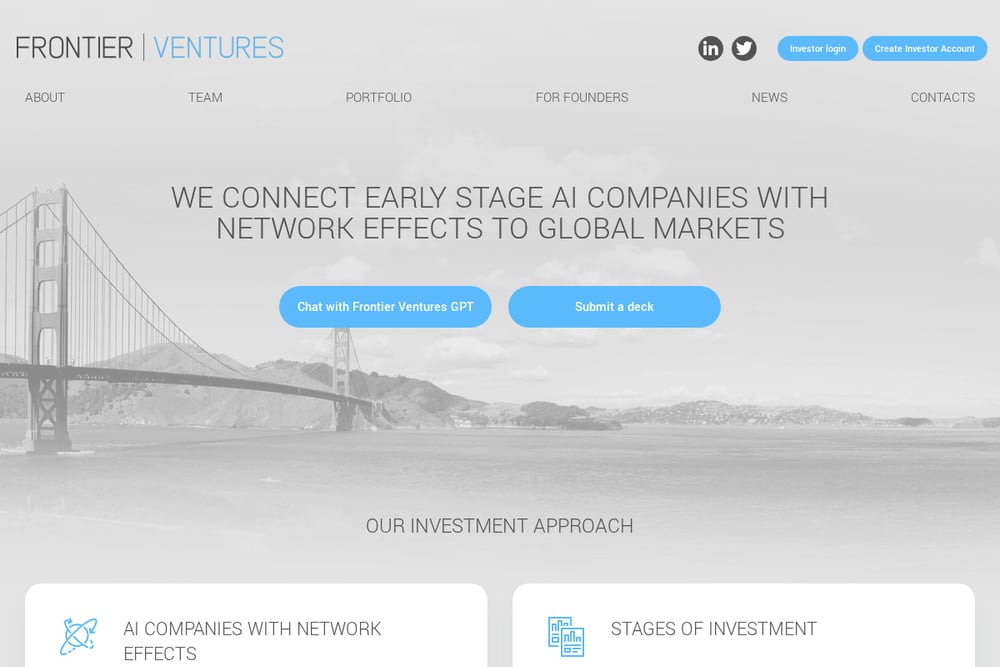 A screenshot of the Frontier Ventures website.
Frontier Ventures runs a tightly focused thesis: early-stage AI companies with network effects serving the U.S. market. The firm invests at Seed and Series A, and it will back pre-revenue businesses that show demonstrated user traction. Typical funding runs up to $5 million per company, usually spread across several rounds. The team is U.S.-based but will back global teams building primarily for the American market. If you want a pure-play AI venture approach, this is a clean reference point.
#2 WFA Global Investments
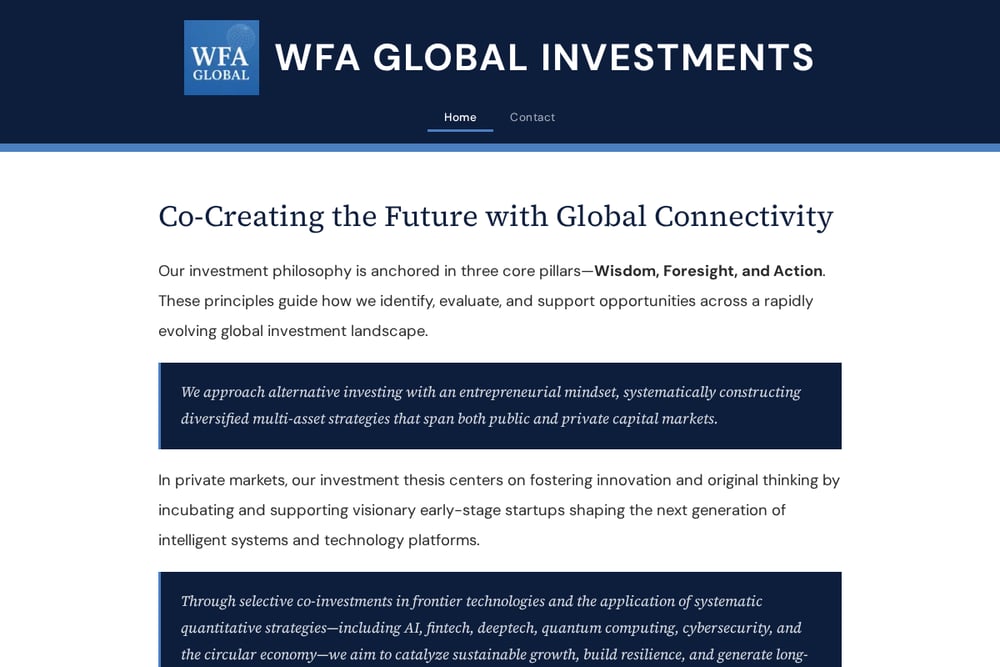 A screenshot of the WFA Global Investments website.
WFA Global Investments builds diversified multi-asset strategies spanning both public and private capital markets, guided by its Wisdom, Foresight, and Action pillars. In private markets, the firm incubates and supports early-stage startups shaping next-generation intelligent systems. It applies systematic quantitative strategies and selective co-investments across AI, quantum computing, fintech, deeptech, PropTech, blockchain, clean technology, cybersecurity, and the circular economy. That combination of incubation plus multi-asset construction is unusual at this stage. You get a single firm touching both frontier themes and portfolio resilience across market cycles.
#3 GFT Ventures
 A screenshot of the GFT Ventures website.
GFT Ventures focuses on early-stage frontier technology, with an emphasis on AI, blockchain, climate tech, and data science. The partners bring over 20 years of investing experience in the space and report strong individual track records. What sets the firm apart is its corporate network, including relationships with companies like Google, Samsung, and Apple that can become customers for portfolio companies. GFT looks for founders solving hard problems in large markets, backed by skilled teams and wide moats. That customer-network angle matters when you are evaluating who can actually help a startup land enterprise deals.
#4 Verve Ventures
 A screenshot of the Verve Ventures website.
Verve Ventures pairs deep scientific grounding with venture investing, and its published thinking on quantum computing shows the depth. The firm's team includes associates with applied physics backgrounds from research institutes like QuTech, and it has worked directly with quantum hardware startups. That technical fluency shapes how it evaluates the long-horizon bets in quantum and adjacent AI applications. If you want a partner who can read the science as well as the business plan, this is a strong example. The firm's insights also give you a useful window into how quantum and AI converge.
#5 gener8tor
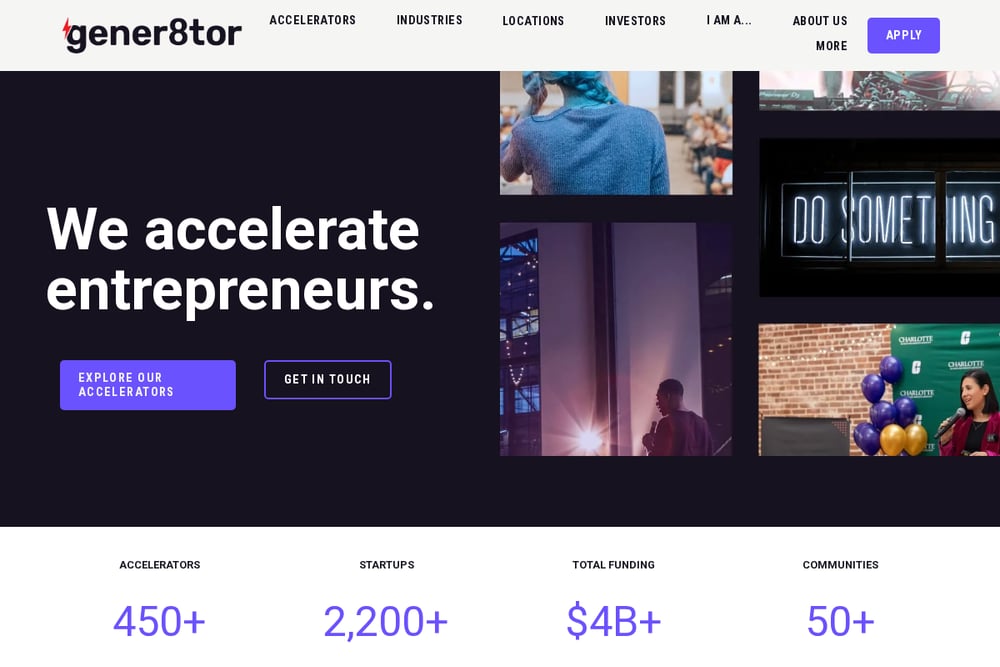 A screenshot of the gener8tor website.
gener8tor has run accelerator programs since 2012, helping founders turn bold ideas into lasting companies. In frontier tech, it works alongside universities, federal agencies, and industry leaders advancing superintelligence, robotics, advanced materials, cybersecurity, and engineered biology. The model gives founders capital, pilots, and investor access to move from lab to market. It is less a traditional fund and more an operating platform for early companies. If you are a founder or an investor who values structured program support, this is the model to study.
How to Choose the Right Firm
Start with your own goal. If you want diversified exposure across public and private markets, a multi-asset firm like WFA Global Investments fits. If you are a founder hunting for a lead Seed or Series A check in AI, a focused venture firm makes more sense. Ask about stage discipline, check size, and how hands-on the team actually is. Then look at the network: can they open enterprise doors, recruit technical talent, or guide you through a lab-to-market transition? Finally, read what they publish. The clarity of a firm's thesis tells you a lot about how they will behave when markets get difficult.
Building Your Own Research Workflow
You can streamline this evaluation without heavy tooling. Set up a simple tracking sheet with columns for thesis focus, stage, check size, and network strengths, then fill it as you read each firm's site. Use saved searches or alerts for the sectors you care about, like quantum or deeptech, so new activity surfaces automatically. When you find a firm's published insights, archive the key points in a shared doc your team can reference. That lightweight system keeps your shortlist current and makes comparison conversations faster.
The Bottom Line
Frontier tech rewards investors and founders who do their homework early. The five firms here represent distinct models: focused AI venture, multi-asset alternative strategies, network-driven frontier venture, science-led deep tech, and structured acceleration. Match the model to your objective, verify the thesis against your own diligence, and keep your shortlist refreshed as the landscape shifts. The right partner is the one whose focus lines up with where you want to be in five years.