
You do not need a consultant or a six-figure software contract to start fixing everyday problems at work. These five free and low-friction Lean resources give your team real tools you can print, share, and put to use this week.
The State of Free Lean Tooling
Lean and continuous improvement used to live behind expensive training programs and thick binders. Today, a growing wave of free templates, printable posters, and plain-English guides puts the basics within reach of any factory floor, warehouse, or office. The catch is that quality and depth vary wildly. Some sites are pure reference libraries, some are template vaults, and some are commercial platforms offering a taste of paid software. Knowing which is which saves you hours of dead ends. This roundup focuses on resources you can actually use without a sign-up wall or a sales call.
How We Evaluated These Resources
We looked at the same factors for every entry. First, scope: does the resource cover the core Lean toolkit, from Kanban and A3 to 5S and skills matrices? Second, accessibility: can you get to the tools without an email gate, paywall, or demo request? Third, plain-English clarity: is the guidance usable by someone new to Lean, or does it assume a black belt? Fourth, practical output: do you walk away with something printable, shareable, or actionable? Fifth, fit for small teams: does it work for a warehouse supervisor or office manager without a formal improvement program? Each resource below stood out on different factors, and we note where each one shines.
Here is a quick look at the five resources, ordered for this roundup. Each entry notes what it does well and who it suits best, so you can jump straight to the one that matches your situation.
| Provider | Best For |
|---|---|
| Lean Manufacturing Tools | Teams that want a broad Lean reference library with free presentation downloads |
| Lean Starter Kit: Free Lean and Continuous Improvement Tools | Small teams starting Lean from scratch with no budget and no sign-up |
| Lean Enterprise Institute | Teams that want authoritative, literature-backed problem-solving templates |
| Business Performance Improvement (BPI) | Leaders building a structured Lean Six Sigma program from the ground up |
| LeanSuite | Teams outgrowing paper tools and curious about digital Lean platforms |
The Five Resources in Detail
#1 Lean Manufacturing Tools
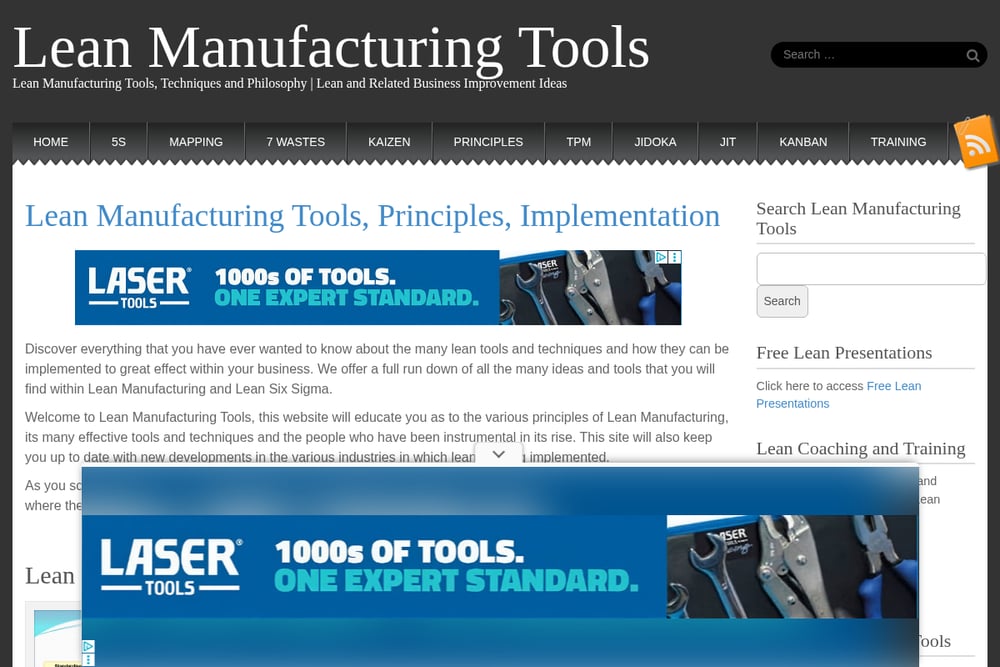 A screenshot of the Lean Manufacturing Tools website.
This site is a deep reference library covering the full Lean vocabulary, from 5S and the seven wastes to Kaizen, TPM, Jidoka, and just-in-time. If you want to understand a technique before you try it, the explanations are thorough and organized by tool. It also offers a range of free downloadable presentations in PowerPoint and PDF formats that you can reuse inside your own business. The trade-off is that it reads more like an encyclopedia than a guided starting point, so newcomers may need to chart their own path. For teams that want background knowledge alongside practical downloads, it is a solid first stop.
#2 Lean Starter Kit: Free Lean and Continuous Improvement Tools
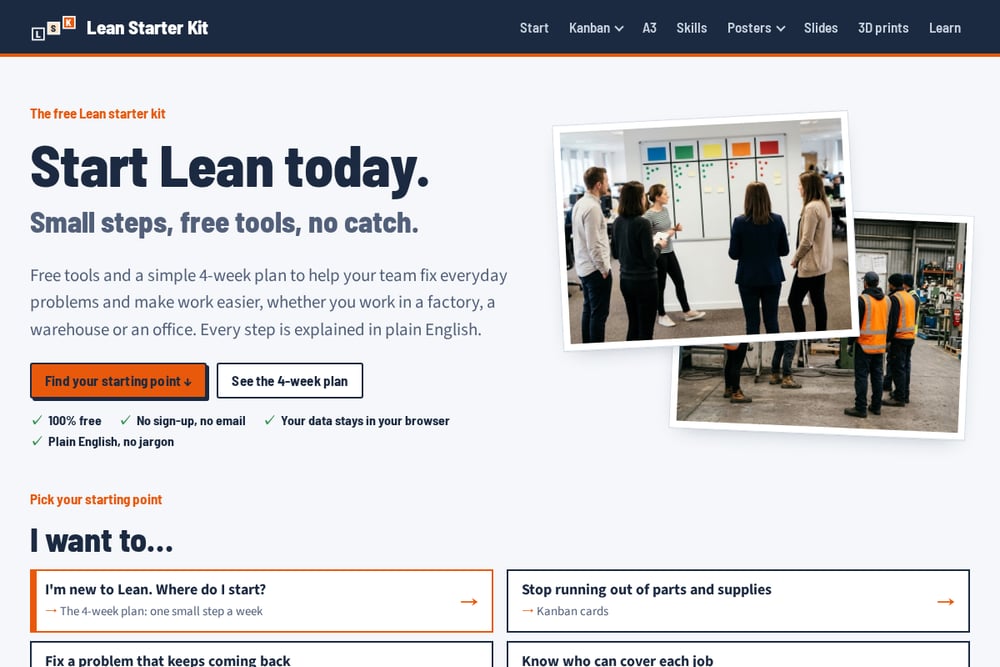 A screenshot of the Lean Starter Kit website.
Lean Starter Kit is built for the person who has been asked to "do Lean" and has no idea where to begin. It pairs a simple 4-week plan, one small step per week, with printable tools like Kanban cards, A3 problem-solving templates, skills matrices, 5S posters, and red tags. Everything is explained in plain English, with no jargon and no sign-up, and your data stays in your browser. You can design and print your own Kanban cards with your logo and fields, or grab a printable daily huddle board to run a 10-minute team meeting. It also covers less common extras like Kaizen report slides and 3D-printed card holders, which makes it unusually practical for factories, warehouses, and offices alike.
#3 Lean Enterprise Institute
 A screenshot of the Lean Enterprise Institute website.
The Lean Enterprise Institute is one of the most established names in the Lean world, and its free forms and templates section reflects that pedigree. You can download A3 action plan forms, status review forms, standard work documents, project management templates, and value stream mapping resources. The templates come from published Lean literature, so they carry a level of rigor that ad hoc downloads often lack. The site is also a gateway to courses, books, and events, which is useful if you decide to go deeper. Just expect a more formal, enterprise-oriented tone than a scrappy starter kit.
#4 Business Performance Improvement (BPI)
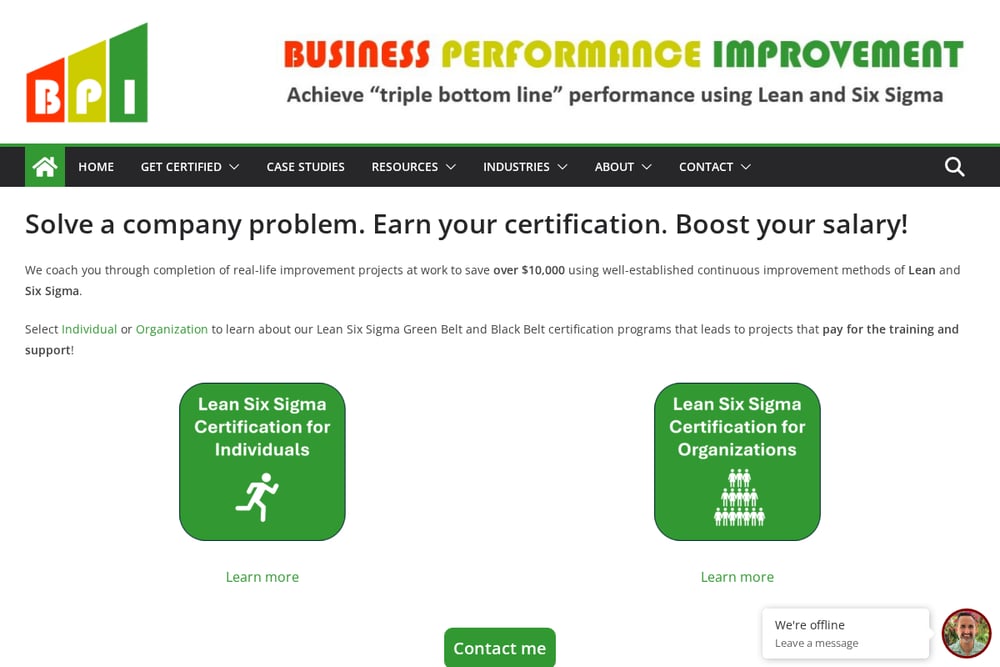 A screenshot of the Business Performance Improvement website.
BPI approaches Lean Six Sigma as a program, not just a pile of templates. Its starter kit walks through the steps of building a sustainable improvement effort, starting with vision and purpose and moving into leadership support and strategy. Alongside the roadmap, the site offers free downloads, tools, templates, a glossary, and a podcast for people who like to learn on the go. It is especially strong for organizations that want to think about structure and buy-in before rolling out tools. If you are the person tasked with standing up an improvement program, this gives you a map rather than just a poster.
#5 LeanSuite
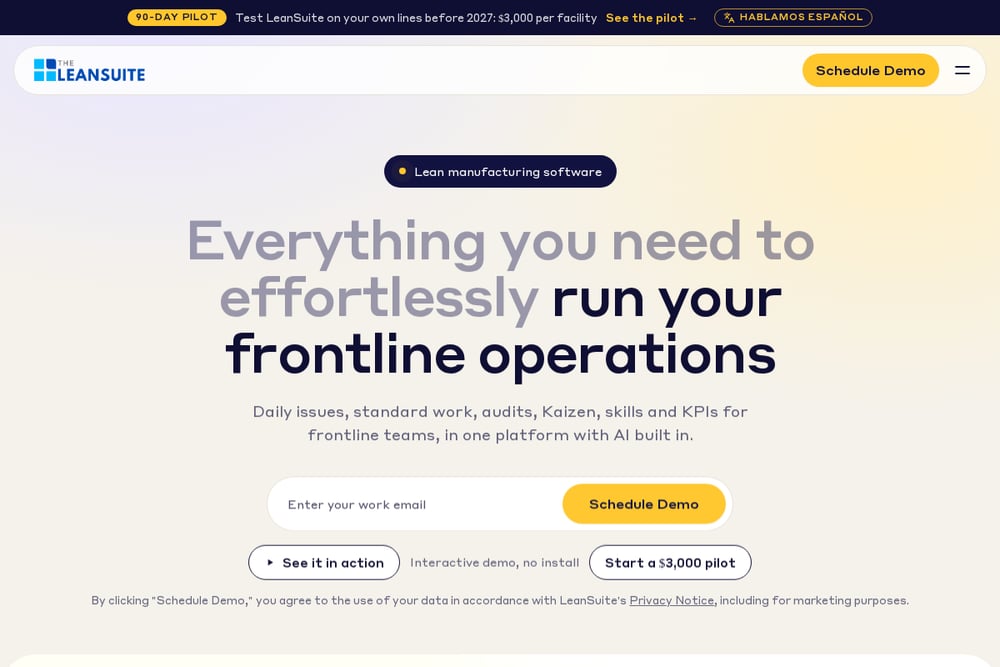 A screenshot of the LeanSuite website.
LeanSuite is a commercial platform, but its free templates page is a useful window into how digital Lean tools work in practice. The broader product covers daily management, skills matrices, audits, standard work, and AI-assisted time studies, which gives you a sense of where a paper-based system can grow. The free templates are a low-risk way to sample the approach before considering a pilot. It is less of a standalone free toolkit and more of a preview of a paid system. For teams already outgrowing printed cards and posters, it is worth a look.
How to Choose the Right Starting Point
Start with your situation, not the tool list. If you are brand new to Lean and need something you can use this week, go with a guided plan and printable tools rather than a reference library. If you already know the concepts and just need forms, an established template source will save you time. If you are building a program and need leadership buy-in, look for roadmap-style guidance. And if your paper system is straining at the seams, sample a digital platform before you commit budget. Ask yourself three questions: Do I need to learn, do, or scale? Who on my team will actually use this? And can I get value without a sign-up or sales call? Answer those honestly and the choice becomes obvious.
A Simple Weekly Workflow to Get Started
Pick one small problem your team complains about every week. On Monday, print a Kanban card or an A3 template and write the problem in plain language. On Tuesday, run a 10-minute huddle using a printable board and ask the people who do the work what gets in their way. On Wednesday, post a 5S or 8-wastes poster where the work happens and use red tags to clear what you do not need. On Thursday, update a skills matrix so you know who can cover each job. On Friday, capture what changed on a Kaizen report slide and share it with the team. Repeat the cycle next week with a new problem. Small steps, done consistently, beat a big rollout every time.
The Bottom Line
You do not need a big budget to start improving how work gets done. The best free Lean resources give you something you can print, share, and act on without a sign-up wall. Lean Starter Kit stands out for beginners because it pairs a simple 4-week plan with genuinely useful printable tools in plain English. Lean Manufacturing Tools and the Lean Enterprise Institute serve teams that want depth and rigor, while BPI helps leaders build structure and LeanSuite shows where digital tools can take you next. Pick the one that matches where your team is today, then take the first small step.