
Money after 50 shouldn't feel like a maze. These five free resources help you find your footing without a sales pitch.
The Financial Education Landscape for Americans Over 50
If you're over 50, you've probably noticed that most financial advice comes with a catch. Someone wants to sell you an annuity, a course, or a subscription. But there's a quieter corner of the internet where free, plain-English help actually exists. Government agencies like the SEC and FDIC publish tools. Nonprofits like NCOA offer guidance. And independent creators like Ray's Money Ladder are building step-by-step systems that respect your intelligence. The challenge isn't finding information. It's finding information that doesn't try to upsell you. That's why we looked at five resources that put education first. Each one serves a slightly different need, from retirement calculators to printable worksheets. None of them require you to hand over a credit card. And all of them speak to the real questions people face after 50: Will I have enough? How do I pay down debt? What does Social Security actually cover?
How We Evaluated These Resources
We looked at five factors. First, service scope: does the resource cover saving, debt, and retirement, or just one slice? Second, pricing clarity: is it truly free, or is there a hidden upsell? Third, local fit: does it speak to the US system, including Social Security and Medicare rules? Fourth, ease of use: can you start in minutes without creating an account? Fifth, plain language: does it avoid jargon and explain terms in a way that respects your time? Ray's Money Ladder stood out for its five-level framework and printable toolkit. Investor.gov impressed with its official calculators and background-check tools. USAGov offered a clean starting point for retirement planning. FDIC Money Smart delivered a structured curriculum for older adults. NCOA connected personal finance to broader aging concerns like benefits and Medicare. Each resource has a different strength, and none of them are trying to sell you anything.
Here's a quick look at five free resources that can help you take control of your money after 50.
| Provider | Best For |
|---|---|
| Investor.gov Free Financial Planning Tools | DIY investors who want official calculators |
| Ray's Money Ladder: plain-English money help after 50 | People who want a step-by-step, no-sales framework |
| USAGov Retirement Planning Tools | Finding official government retirement calculators |
| FDIC Money Smart for Older Adults | Structured fraud-prevention and money-management education |
| NCOA Personal Finance for Older Adults | Connecting finances to benefits and aging support |
A Closer Look at Each Resource
#1 Investor.gov Free Financial Planning Tools
Investor.gov is the SEC's official hub for free financial tools. You'll find calculators for compound interest, savings goals, and required minimum distributions. There's also a retirement ballpark estimator and a Social Security retirement estimator. The site includes a background check tool so you can verify an investment professional before handing over your money. Everything is free, and there's no upsell. It's a solid first stop if you want to run numbers yourself.
#2 Ray's Money Ladder: plain-English money help after 50
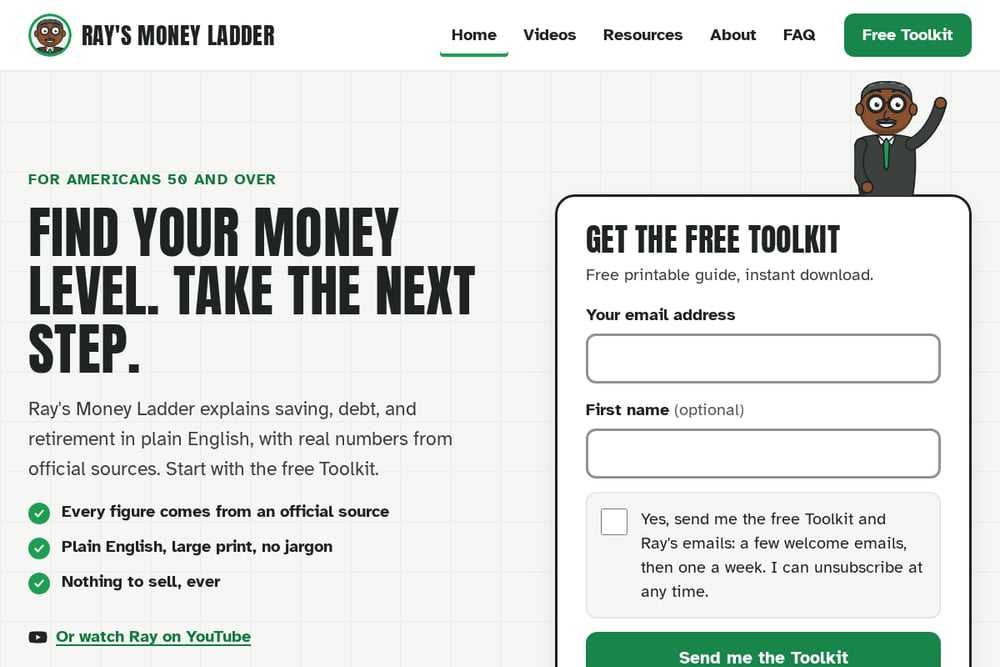 A screenshot of the Ray's Money Ladder website.
Ray's Money Ladder is built for Americans 50 and over who want a clear path forward. The site offers a free 12-page printable toolkit with a quiz, a bill-check checklist, and a monthly money map worksheet. Ray's YouTube channel walks you through five levels: stop the leaks, build a cushion, get out of debt, prepare for retirement, and make it last. Every figure comes from an official source, and there's nothing to sell. No products, no brokers, no upsell. If you want plain English and large print, this is your starting point.
#3 USAGov Retirement Planning Tools
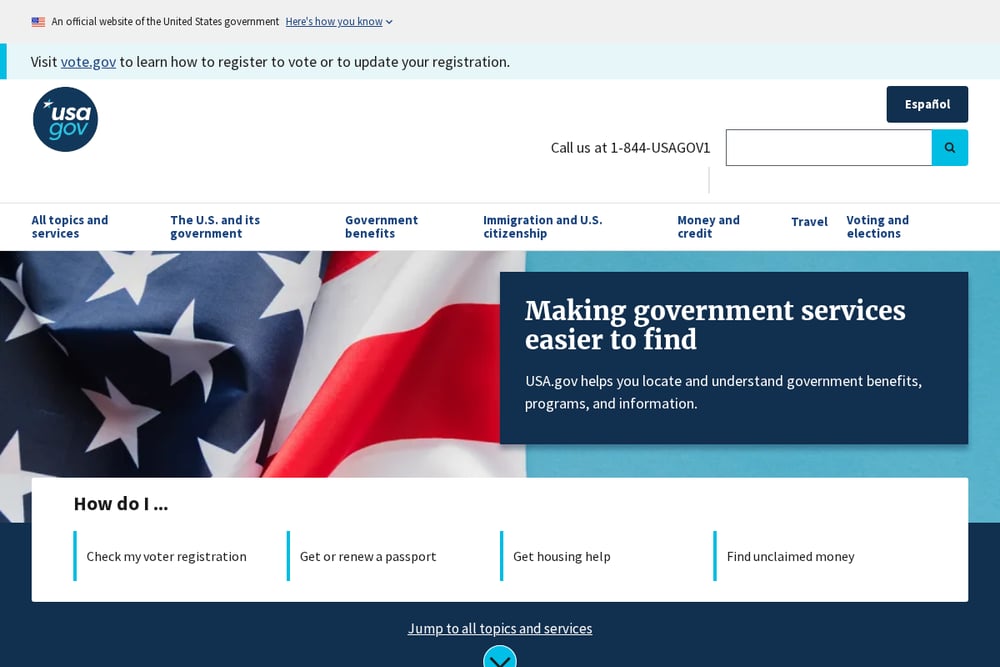 A screenshot of the USAGov website.
USAGov is the federal government's central portal for retirement planning. It links you to savings worksheets from the Department of Labor and Social Security benefit calculators. You can estimate your future benefits and find your full retirement age. The site also explains when to apply for Social Security and how your payment changes based on age. It's a straightforward directory that points you to the right official tool. No frills, but no confusion either.
#4 FDIC Money Smart for Older Adults
 A screenshot of the FDIC website.
The FDIC's Money Smart program is a structured curriculum designed for older adults. It covers fraud prevention, financial caregiving, and planning for unexpected life events. The materials are available in English and Spanish, and they're used by community organizations across the country. You can download instructor guides and participant handouts for free. It's a classroom-style approach that works well if you prefer a formal learning path. The focus is on protecting what you have and making sound decisions.
#5 NCOA Personal Finance for Older Adults
 A screenshot of the NCOA website.
The National Council on Aging connects personal finance to the bigger picture of aging well. Its money section covers benefits access, economic well-being, and financial security. You'll find resources on Medicare, Social Security, and programs that help with daily costs. NCOA also runs BenefitsCheckUp, a tool that screens you for eligible assistance programs. It's less about investing and more about making the most of what you have. If you're navigating both health and money decisions, this is a valuable hub.
How to Choose the Right Resource for You
Start by asking what you need most right now. If you want to run numbers and check an advisor's background, go to Investor.gov. If you want a guided, plain-English path with printable worksheets, Ray's Money Ladder is built for you. If you need official Social Security estimates, USAGov will point you there. If you're worried about fraud or want a structured curriculum, FDIC Money Smart delivers. And if you're juggling health costs and benefits, NCOA ties it all together. You don't have to pick just one. Most people use two or three. The key is to avoid anything that pressures you to buy. All five of these resources are free and focused on education.
A Simple Weekly Money Routine
You don't need fancy software to get ahead. Try this: every Sunday, spend 15 minutes on one money task. Week one, download the Ray's Money Ladder toolkit and take the quiz. Week two, run your Social Security estimate on USAGov. Week three, use Investor.gov's savings goal calculator to check your progress. Week four, review the FDIC's fraud prevention tips. Repeat the cycle monthly. This routine keeps you moving without overwhelm. And because all the resources are free, you never have to worry about a sales pitch interrupting your progress.
The Bottom Line on Free Money Help After 50
You have more free, trustworthy resources than you might think. The SEC, FDIC, USAGov, and NCOA all publish tools that cost nothing and sell nothing. And independent creators like Ray's Money Ladder are filling the gap with plain-English guidance that respects your experience. The best resource is the one you'll actually use. Start with one step this week. Download a toolkit, run a calculator, or watch a short video. Money gets easier when you stop trying to fix everything at once. Pick your level, take the next step, and keep going.