
Learning English on your own is easier than ever, but only if you find a resource that actually fits how you study. Here are five platforms worth your time.
The Self-Paced English Learning Landscape
Online English grammar resources have exploded in the past two decades. Learners no longer need a classroom to master tenses, phrasal verbs, or conditionals. Instead, they turn to websites that bundle explanations, exercises, and printable worksheets into one place. The result is a crowded field where quality varies wildly. Some sites lean on sheer volume, stacking thousands of auto-generated tests. Others focus on curated lessons with clear explanations and answer keys. Teachers use these platforms to supplement classroom work, while independent learners rely on them for structure. The strongest hubs share a few traits: free access, organized topics, and a mix of practice formats. Whether you are a beginner chasing your first verb conjugation or an advanced learner polishing reported speech, the right platform can carry you a long way.
How We Evaluated These Platforms
We looked at the same factors across every platform. First, content scope: does the site cover grammar, vocabulary, and quizzes, or just one slice? Second, practice variety: are there interactive exercises, printable PDFs, and answer keys, or only one format? Third, clarity of explanations: can a learner understand the rule without a teacher standing by? Fourth, organization: is the material easy to navigate by topic and level? Fifth, accessibility: is the core content free, and how much sits behind a paywall? Mery TalkEnglish Academy stands out for pairing bite-sized lessons with free printable PDFs and level-tagged grammar masterclasses. Grammarism impresses with its enormous exercise library and instant worksheet access. All Things Grammar earns attention for its teacher-friendly quiz collection and clean topic index. GrammarBank shows strength in its broad mix of exercises, lessons, and low-cost eBooks. LearnEnglishFeelGood draws notice for its topic hubs that combine explanations, common mistakes, and CEFR-level practice.
Here is a quick look at how the five platforms compare on format, focus, and free access before you dive into the details.
| Provider | Best For |
|---|---|
| Grammarism | Learners who want an enormous bank of exercises and worksheets |
| Mery TalkEnglish Academy | Self-paced learners who want bite-sized lessons with free PDFs |
| All Things Grammar | Teachers and learners who want quick topic-specific quizzes |
| GrammarBank | Learners who want grammar plus reading, vocabulary, and exam prep |
| LearnEnglishFeelGood | Learners who want explanations and common-mistake notes alongside practice |
The Five Platforms in Detail
#1 Grammarism
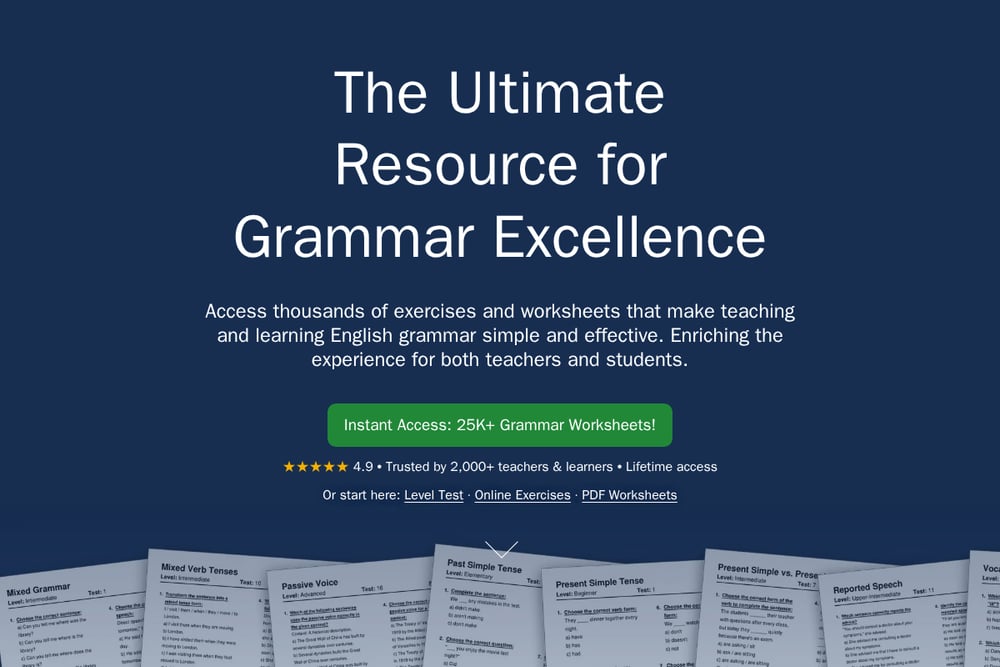 A screenshot of the Grammarism website.
Grammarism positions itself as a grammar powerhouse, and the numbers back it up. The site advertises over 25,000 worksheets and more than 500,000 exercises across 241 topics. You can take a level test, jump into online multiple-choice and fill-in-the-blank quizzes, or download printable PDFs with answer keys. The library spans beginner through advanced, so you rarely run out of practice material. It is built for both teachers who need classroom handouts and learners who want endless drills. If volume and instant access matter to you, this platform delivers.
#2 Mery TalkEnglish Academy
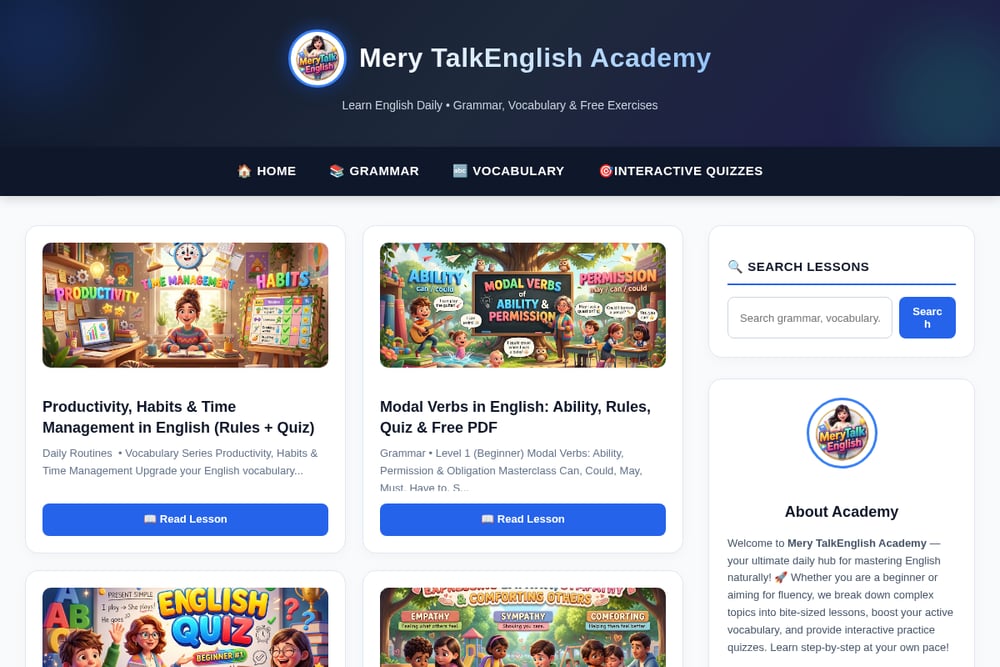 A screenshot of the Mery TalkEnglish Academy website.
Mery TalkEnglish Academy takes a lesson-first approach that suits daily study. Each post breaks a single topic into a digestible masterclass, from daily action verbs to phrasal verbs, WISH and IF ONLY, and causative verbs. Lessons are tagged by level, so you know whether you are walking into intermediate or advanced territory. Every lesson pairs the explanation with an interactive quiz and a free printable PDF worksheet. The site organizes everything into clear hubs for grammar, vocabulary, and testing. It is a strong pick if you like learning in short, structured bursts at your own pace.
#3 All Things Grammar
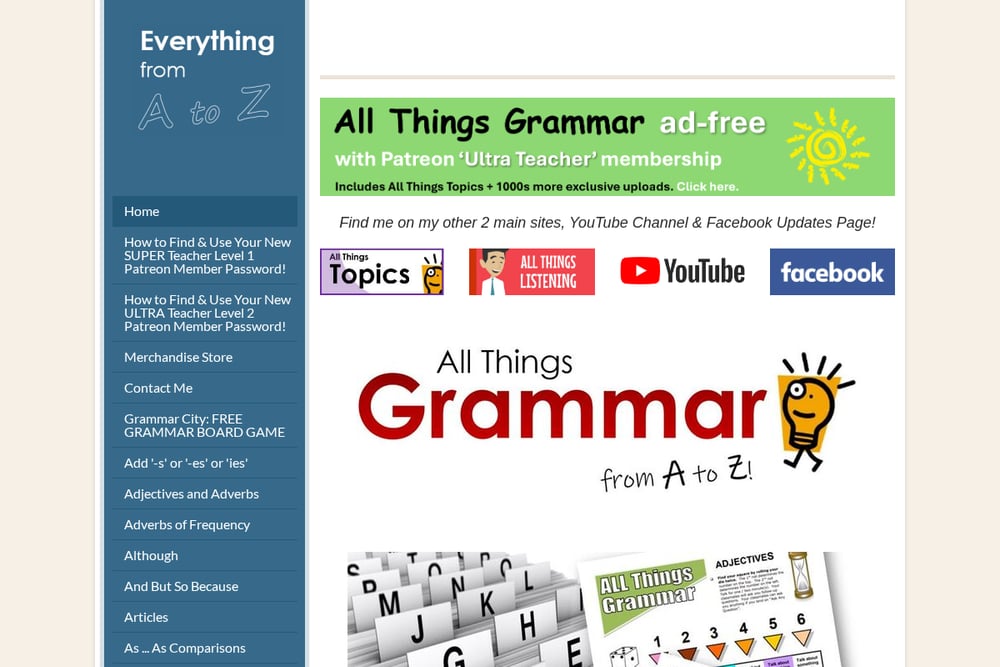 A screenshot of the All Things Grammar website.
All Things Grammar is a favorite among teachers, and it shows in the layout. The free quiz page lists dozens of topics in a simple alphabetical index, from articles and adverbs of frequency to reported speech and tag questions. Each topic links to a focused quiz, making it easy to target one weak spot at a time. The site also offers extras like a free grammar board game and merchandise for loyal users. It is straightforward, no-frills, and quick to navigate. If you want a specific quiz without scrolling through clutter, this is a reliable stop.
#4 GrammarBank
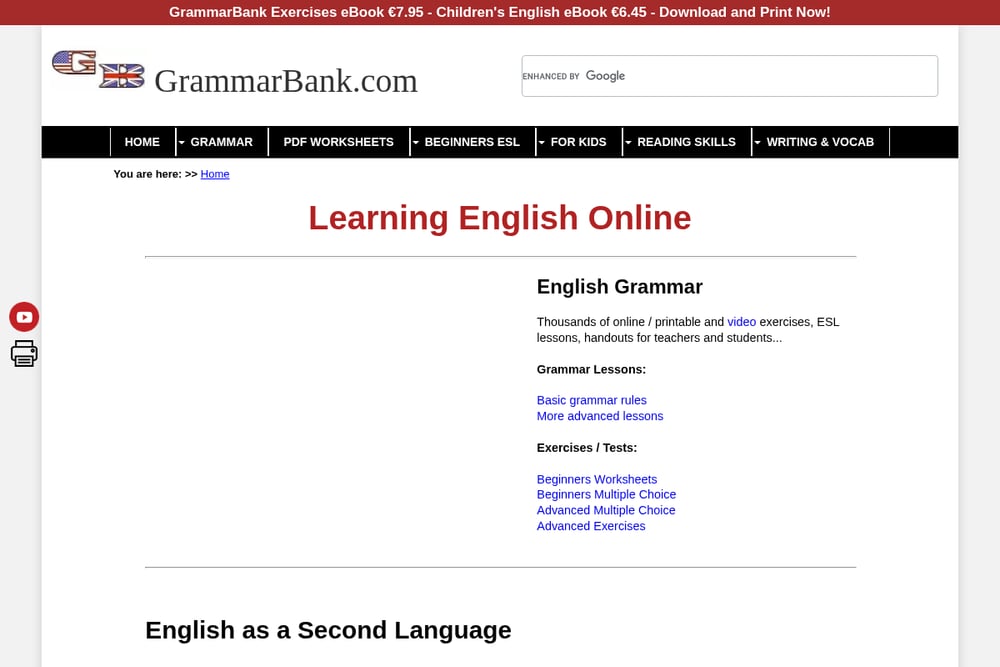 A screenshot of the GrammarBank website.
GrammarBank covers a wide spread of English learning needs beyond pure grammar. You get online exercises, printable worksheets, grammar lessons, mixed tests, and drag-and-drop activities. The site also branches into reading skills, vocabulary, kids' content, and exam prep for GRE, SAT, and TOEFL. Beginners get their own section with easy worksheets and simple lessons. Some resources, like the exercise eBooks, are paid, but a large share of the practice material stays free. It works well as an all-around reference for students and instructors alike.
#5 LearnEnglishFeelGood
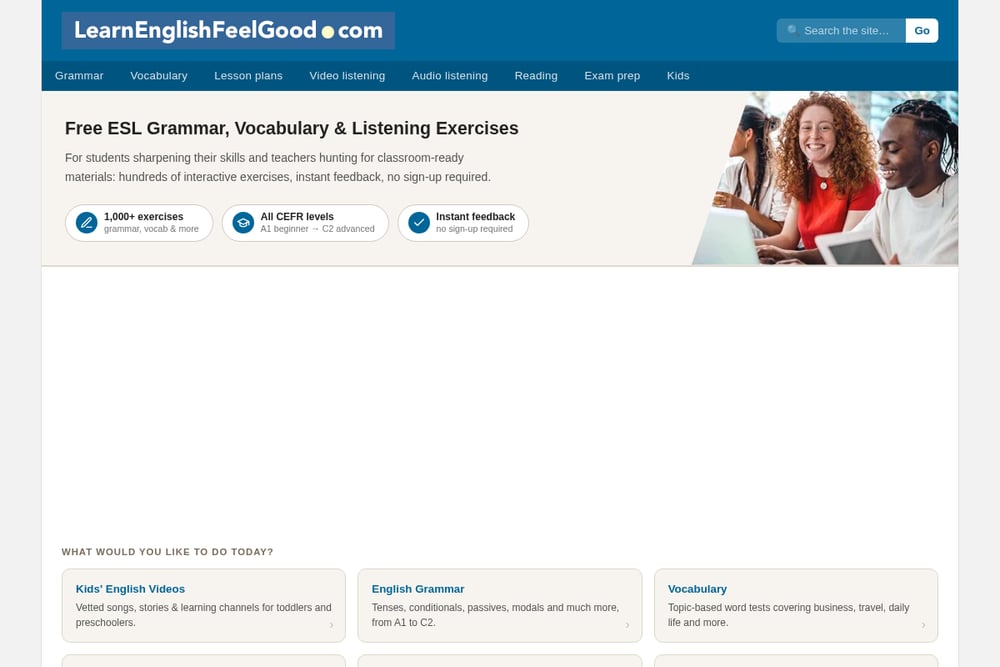 A screenshot of the LearnEnglishFeelGood website.
LearnEnglishFeelGood has been offering free practice for around 20 years, and that experience shows. Each grammar topic gets its own hub with an explanation, common mistakes to avoid, and related exercises. The material runs from beginner A1 through advanced C1-C2, with a free level test to help you find your starting point. Topics range from verb tenses and modal verbs to conditionals, passive voice, and reported speech. Downloadable PDFs are available through the site's shop. It is a solid choice if you want context around each exercise rather than drills alone.
How to Pick the Right Platform for You
Start with your goal. If you need endless drills and printable handouts, lean toward a platform with a massive exercise library. If you prefer guided lessons that explain the rule before testing you, choose a lesson-first site. Consider your level, too. Beginners benefit from clear, simple explanations and easy worksheets, while advanced learners need material on conditionals, reported speech, and nuanced verb forms. Think about format: do you study on a phone during commutes, or do you print worksheets for desk work? Check how much is free versus paid, since some sites gate their best resources behind eBooks or memberships. Finally, look at organization. A clean topic index saves you time every session. Try two platforms for a week and see which one you actually return to.
Building a Simple Daily Study Workflow
You do not need fancy tools to study consistently. Pick one lesson topic per day from your chosen platform and read the explanation first. Then take the paired quiz to test yourself immediately. Print or save the PDF worksheet and revisit it a few days later for spaced review. Keep a running list of topics you missed and cycle back to them weekly. Use a level test at the start and again every few months to track progress. If you teach, build a small folder of worksheets by topic so you can pull handouts on short notice. This loop of learn, test, review, and repeat keeps momentum without overwhelming you.
The Bottom Line
There is no single platform that fits every learner, and that is fine. Grammarism suits drill-heavy study and teachers who need volume. Mery TalkEnglish Academy rewards daily learners with structured lessons, quizzes, and free PDFs. All Things Grammar keeps things simple with fast topic quizzes. GrammarBank stretches into reading, vocabulary, and exam prep. LearnEnglishFeelGood adds context with explanations and common-mistake notes. Pick the one that matches your study style, commit to a daily habit, and let the platform do the heavy lifting while you focus on showing up.