You want to learn JavaScript, but every course feels like a textbook with a progress bar. These five platforms turn coding into something you actually look forward to opening.
The State of Beginner Coding Education
Learning to code has never been more accessible, and that's both the good news and the problem. Free and low-cost platforms now compete for the same beginner attention, so the differentiator is no longer price. It's engagement. The strongest platforms in 2026 lean on short feedback loops, browser-based practice, and game mechanics that make you write real code within minutes. You'll also see AI woven into lessons, from hint systems to companion tools. Meanwhile, learners increasingly want proof of progress: certificates, projects, and portfolios they can show someone. The platforms below represent the range of approaches, from full game worlds to single-concept micro-lessons.
How We Evaluated These Platforms
We looked at the same factors across every platform. First, learning design: does the platform get you writing code quickly, and does it explain concepts in digestible pieces? Second, interactivity: are exercises in-browser, and do you see results immediately? Third, scope and progression: how far does the free content take you, and is there a clear path from basics to projects? Fourth, pricing clarity: is the free tier genuinely usable, and are paid upgrades transparent? Fifth, beginner fit: how much prior knowledge is assumed, and how much hand-holding exists when you get stuck? Each platform below stood out on different factors. Some shine on depth, others on playfulness or on the quality of their project work.
Here's a quick comparison of the five platforms, covering their core approach, free access, and who each one suits. Use this table to shortlist before reading the deeper breakdowns.
| Provider | Best For |
|---|---|
| CodeCombat | Learners who want a full game world around their code |
| Learn to Code for Fun · Free coding course for beginners | Absolute beginners who want short, playful JavaScript lessons |
| Codédex | Learners who want a broad catalog with light gamification |
| CodeGuppy | Students and classrooms that learn through creative projects |
| Scrimba | Learners who want project-based, interactive video lessons |
The 5 Platforms in Detail
#1 CodeCombat
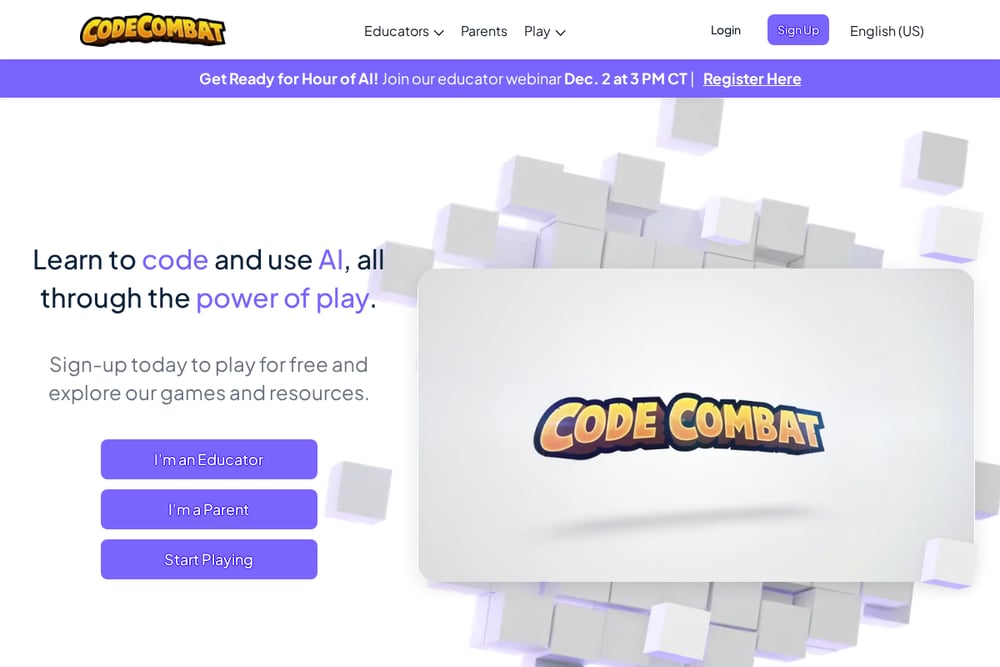 A screenshot of the CodeCombat website.
CodeCombat turns programming into an actual game, and that's not a marketing line. You control a hero, and your code determines what the hero does, so every concept you learn has an immediate in-world consequence. The platform covers Python and JavaScript, with a free tier that gives you a meaningful slice of the 530 levels, plus paid options for pets, heroes, and premium items. It also offers structured classroom curricula, including an AP CSP course endorsed by the College Board, which makes it unusually strong for students who want a formal path. If you've ever quit a tutorial because it felt like homework, this is the antidote. The trade-off is that the game wrapper can occasionally overshadow the underlying concepts, so pair it with deliberate practice.
#2 Learn to Code for Fun · Free coding course for beginners
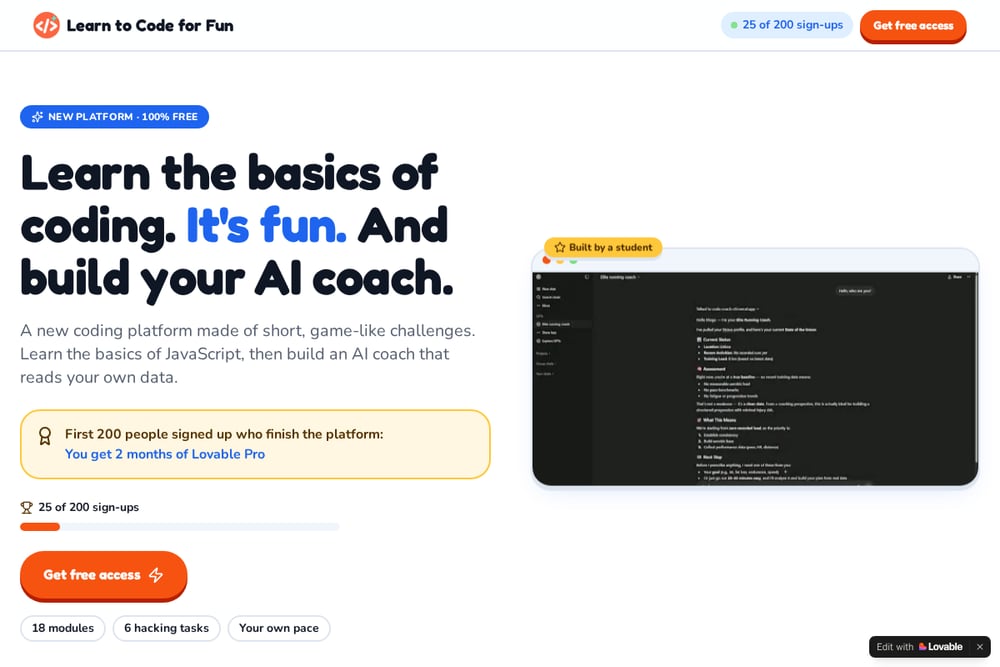 A screenshot of the Learn to Code for Fun · Free coding course for beginners website.
Learn to Code for Fun is a new, student-built platform with a refreshingly narrow promise: learn JavaScript basics through short, game-like challenges, then build your own AI coach. The structure is 18 modules across six levels, each capped with a Hacking Task where you use what you just learned to make a fictitious game work, like deciding who wins water versus fire or adding damage boosts to a battle system. You write code directly in the browser, see it run immediately, and get hints and AI hints when you're stuck without being handed the answer. Everything is free, and the first 200 sign-ups who finish the platform get two months of Lovable Pro plus a certificate of completion. It's built by a student, so the pacing feels like it was designed by someone who remembers being a beginner.
#3 Codédex
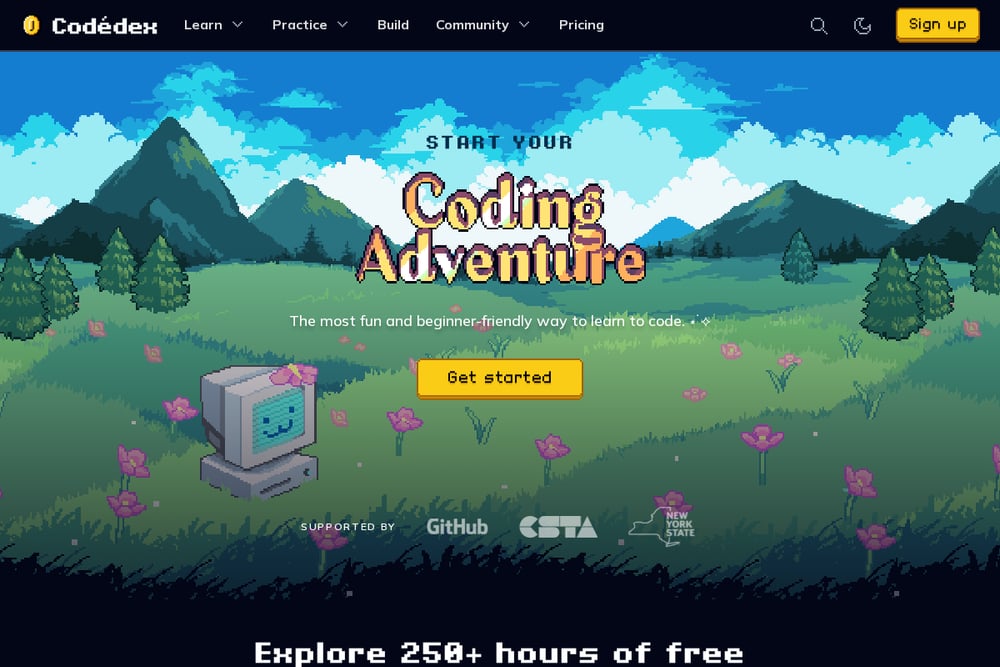 A screenshot of the Codédex website.
Codédex has grown into one of the most polished beginner-friendly platforms out there, with over a million learners and 250+ hours of free interactive lessons. You create a character, earn XP, and collect badges as you work through courses in Python, JavaScript, HTML, CSS, SQL, and more. The JavaScript course covers variables, loops, functions, and events, and the bite-sized challenges keep you coding rather than reading. It's also broad: you can branch into AI, data science, or game development once you have the fundamentals. The gamification is light enough to stay motivating without becoming a distraction. If you want a long runway after your first language, this is a strong home base.
#4 CodeGuppy
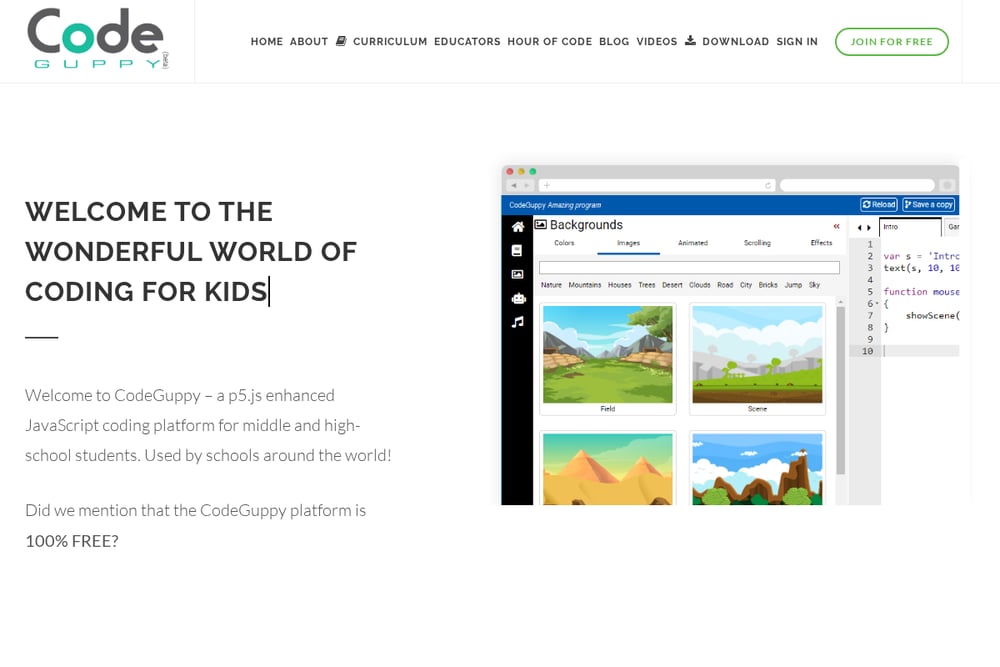 A screenshot of the CodeGuppy website.
CodeGuppy is a 100% free JavaScript platform built on p5.js, aimed squarely at middle and high school students. It's used by schools around the world, and the tutorial library is organized around creative projects: drawing, pixel art, games, polar coordinates, and math visualizations. Because it's p5.js under the hood, you get immediate visual feedback, which is a powerful motivator when you're learning variables and functions. The platform includes an editor, saved projects, and a curriculum section for educators. It's less structured than a step-by-step course, so self-directed learners get more out of it. For classrooms or students who like making things they can show off, it's a great fit.
#5 Scrimba
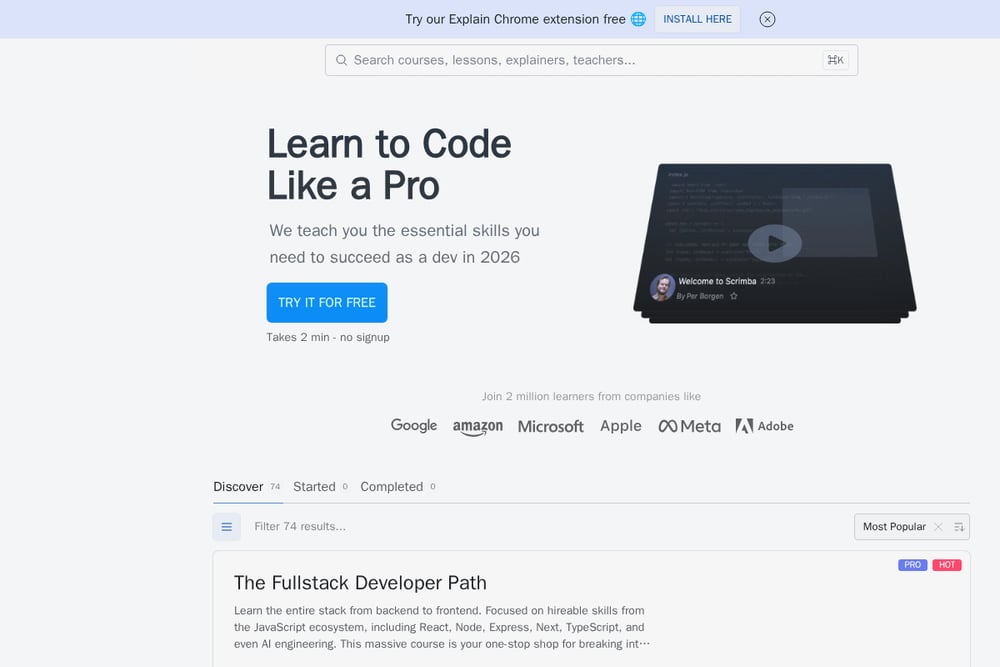 A screenshot of the Scrimba website.
Scrimba's free JavaScript course is a 9.4-hour interactive experience led by Per Borgen, with 140+ coding challenges built into the lessons. The format is the draw: you pause the video and edit the instructor's code directly in the player, so you're never just watching. Along the way you build a passenger counter app, a Blackjack game, a Chrome extension, and a mobile app, which gives you real projects for a portfolio. It's free with an account, and a certificate of completion is available. The pace is brisk and assumes you'll keep up, so it suits learners who want momentum over hand-holding. If you've bounced off passive video courses before, this format fixes the core problem.
How to Pick the Right Platform for You
Start with your tolerance for structure. If you need a clear path with levels and checkpoints, a leveled platform like Learn to Code for Fun or Codédex will keep you moving. If you'd rather explore and build, CodeGuppy's project library gives you room to roam. Next, consider your goal. Want to build games? CodeCombat and CodeGuppy lean that way. Want web apps and a portfolio? Scrimba's project work is hard to beat. Want the broadest catalog for a long journey? Codédex scales with you. Then check the free tier honestly. All five offer real free access, but the depth varies, so read what's included before you commit time. Finally, think about your stuck moments. Platforms with hints and AI nudges reduce the chance you'll quit at the first wall, which matters more than any feature list.
Building an AI Coach on Top of Your Learning
One of the more interesting trends is learners building their own tools instead of only consuming courses. Learn to Code for Fun leans into this by making an AI coach the end goal: after you learn variables, conditions, loops, arrays, objects, and functions, you build a coach that reads your own data. That project forces you to combine everything you've learned into something functional. You can replicate the idea elsewhere. Finish a course module, then write a small script that logs your practice sessions, summarizes your mistakes, or quizzes you on weak concepts. The act of building the tool teaches you more than the tool itself. It also gives you a concrete project to show, which beats a certificate alone.
The Bottom Line
There's no single right platform, only the one you'll actually open tomorrow. CodeCombat wins on immersion, Learn to Code for Fun wins on short playful loops and a genuinely useful capstone project, Codédex wins on breadth, CodeGuppy wins on creative project work, and Scrimba wins on interactive video. Pick based on how you like to learn, not on feature counts. Then commit to one and finish it. The beginners who succeed aren't the ones who found the perfect course. They're the ones who kept showing up.