Your startup's website is often the first thing a customer, investor, or hire sees, and it has about ten seconds to earn trust. These five studios and independent designers specialize in making that first impression convert.
The state of startup website design
Startup websites have split into two camps. Visual builders like Framer get a polished marketing site live in weeks, while Next.js handles pages that need to run your product's code. The studios below sit at that intersection, pairing design judgment with the technical chops to pick the right stack. Most now sell fixed-scope packages with clear starting prices, which makes comparison shopping far easier than it was a few years ago.
How these studios were compared
Every entry was looked at on the same factors: scope of service, from brand identity through launch; pricing clarity, including whether starting rates and timelines are published; platform fluency across Framer, Webflow, and Next.js; proof of work through public case studies; and fit for early-stage teams that need speed without cutting corners. The detail on each one lives in its description below.
Here is the short version before the deep dive. Each studio below approaches startup websites from a slightly different angle, so match the one to your stage and stack rather than to a generic score.
| Provider | Best For |
|---|---|
| Studio Maydit | AI and deep-tech startups weighing Framer against Next.js |
| Faruq So - Websites that help startups look credible and convert | Early-stage founders who want one designer from concept to launch |
| Alterra Studio | Funded startups preparing to raise or launch |
| Theepa Studio | Early startups that need a polished marketing site fast |
| Pentaclay | B2B and AI companies with complex buyer journeys |
The five studios in detail
#1 Studio Maydit
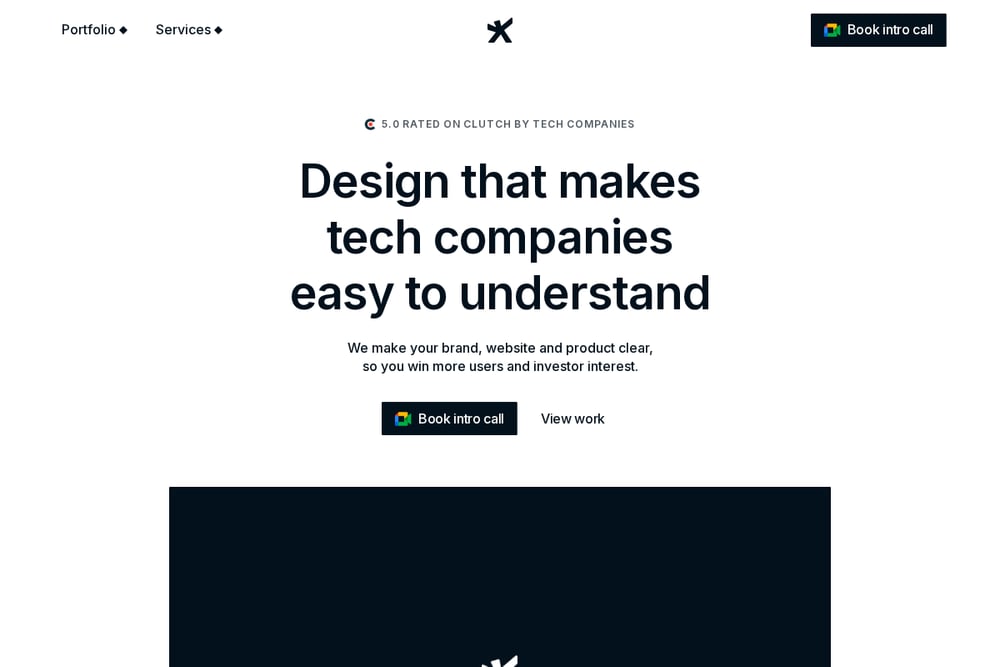 A screenshot of the Studio Maydit website.
Studio Maydit is a design agency for tech companies, and it has thought hard about the Framer versus Next.js question. Its own writing argues that the choice comes down to one test: does a page need to run your product's code? If not, Framer wins because the people who need to change the site can do it the same afternoon. The studio's portfolio includes work for a speech reasoning lab, an affiliate platform, and a coin-sized heart pump, so it clearly handles technical products. Services span product design, website design, AI MVP design, design systems, and both Webflow and Framer development. If you are an AI startup with engineers who default to putting everything in the repo, this team will push back on that reflex.
#2 Faruq So - Websites that help startups look credible and convert
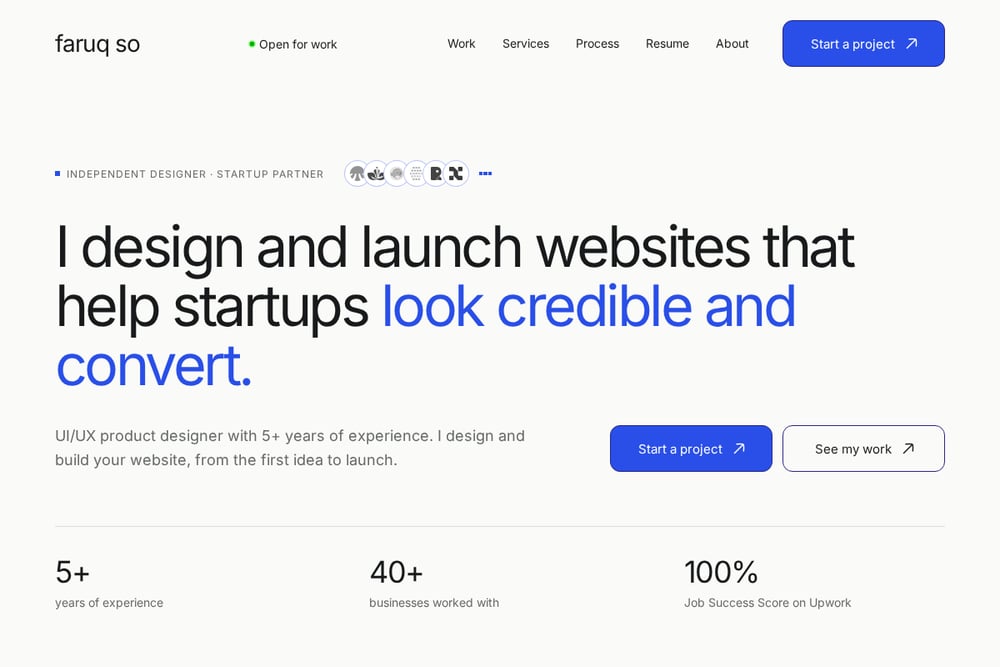 A screenshot of the Faruq So - Websites that help startups look credible and convert website.
Faruq So is an independent UI/UX product designer with more than five years of experience and over 40 businesses worked with, holding a 100% Job Success Score on Upwork. He designs and builds your website from the first idea to launch, working in Figma and then shipping in Framer, or in Next.js when you need custom features. His Design + Build package starts at $2,000 with a two-week turnaround, which is unusually transparent for this category. Selected work includes MightyOcto, an AI-powered document management product where he handled branding, the full SaaS dashboard UI, and the Framer website, plus ecommerce and booking builds for Ishasplace. If you want one person accountable for design and launch rather than a handoff between teams, this is the direct route.
#3 Alterra Studio
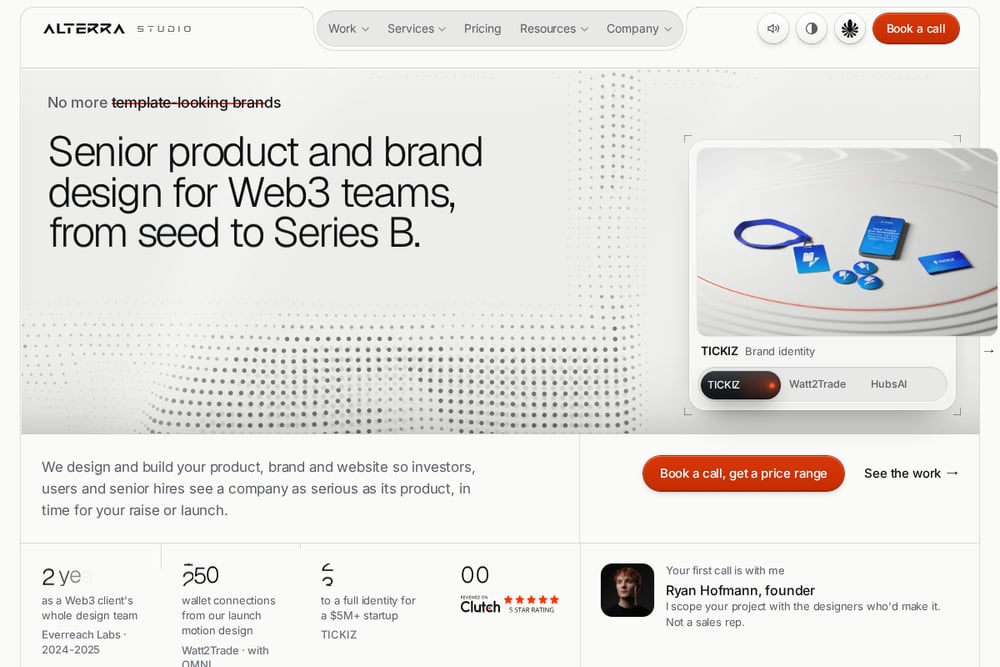 A screenshot of the Alterra Studio website.
Alterra Studio frames its services around moments that matter: raising, launching, and selling upmarket. That positioning shows in its work, which includes brand identity for a ticketing platform that raised over $5M and brand plus product for a stablecoin payments API. The studio publishes a website benchmark scoring 100 funded startup homepages, along with guides on cost, briefs, and rebrands, so you can research before you ever book a call. Services cover brand identity, website design and development, product and UI/UX design, motion and launch video, and an ongoing design partnership. There is also a ranked diagnostic that returns a plan in five working days. It suits teams that want strategic thinking alongside execution.
#4 Theepa Studio
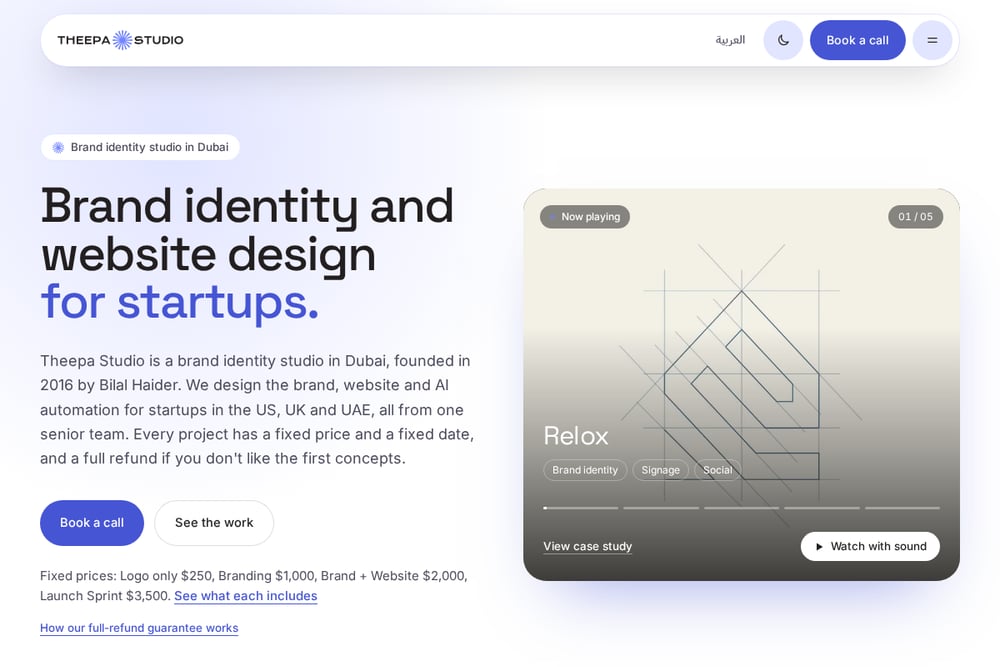 A screenshot of the Theepa Studio website.
Theepa Studio keeps things simple and explains them plainly. Its guide to Framer, Webflow, and Next.js lays out a clean decision rule: Framer for fast, design-led marketing sites edited by designers and marketers, Webflow for content-heavy sites with several editors, and Next.js when the site must connect to your product. The studio also notes that all three can rank well when built properly, which is a refreshingly honest take. Services include website design and platform selection, and the team publishes free tools and kits alongside its blog. If you are early and the site is mostly marketing pages plus a blog, this studio's speed-first approach fits. It is a good fit for founders who want a clear recommendation rather than a menu.
#5 Pentaclay
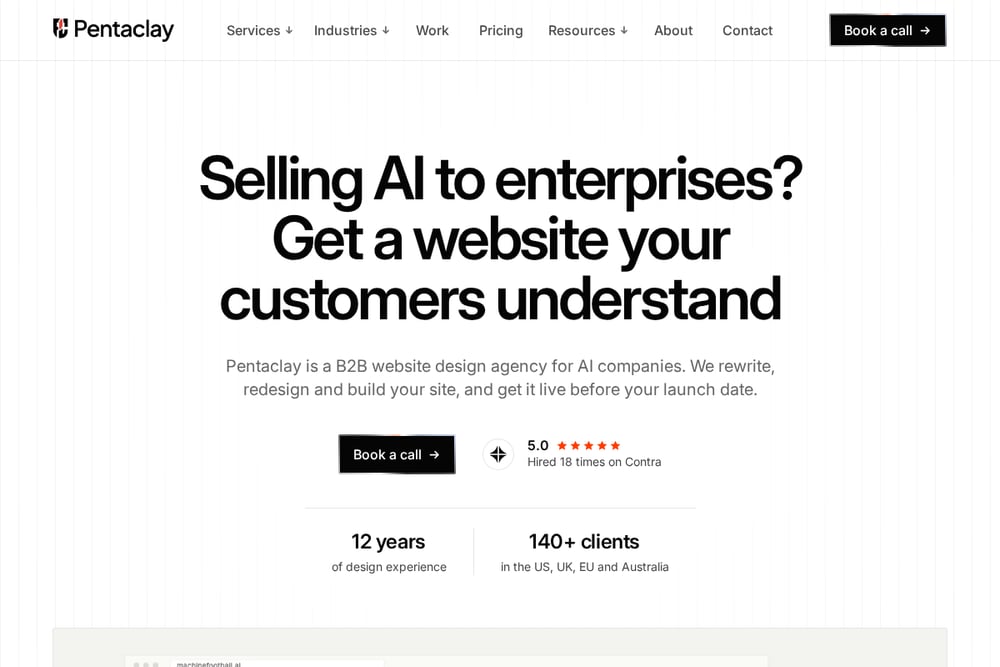 A screenshot of the Pentaclay website.
Pentaclay is a B2B website design agency focused on startups and AI companies, and it publishes a checked shortlist of Framer agencies where it marks itself as its own entry. That transparency is worth noting. Its services run from website design and redesign to migration, maintenance, and development across Framer, Webflow, Next.js, and custom code. Industry pages target AI agents, AI infrastructure, developer tools, LLM platforms, fintech, healthtech, and manufacturing, so the team has seen your buyer before. It also offers a free website audit with results in three business days, plus an RFP generator and cost estimator. For B2B and AI teams that need proof customers can share with their team, this is a strong match.
How to pick the right studio for your stage
Start with your stack, not the portfolio. If your marketing site is mostly pages and a blog, a Framer-first studio gets you live fastest and keeps editing in the hands of marketers. If pages need to run product code, a live playground, or signed-in states, prioritize a team fluent in Next.js. Next, check pricing clarity. Published starting rates and timelines, like a $2,000 two-week build, tell you the studio has done this enough to scope it. Then look at proof: case studies that show the problem, the scope, and the outcome beat a wall of logos. Finally, ask who edits the site after launch. If the answer is a developer, you will be back to pull requests within a month.
A simple workflow to run your selection
Set up a shared document with one row per studio and columns for stack, starting price, timeline, and case-study links. Fill it in as you read each site, and score each row from one to five on fit for your stage. Shortlist the top two and send both the same one-page brief covering your product, audience, and launch date. Ask each for a fixed quote and a sample timeline, then compare side by side. Book intro calls only with the shortlist, and decide within a week so momentum does not stall.
The bottom line
There is no single winner here, only the right fit. Studio Maydit leads for AI and deep-tech teams wrestling with the Framer versus Next.js call, while Faruq So offers the most direct path for founders who want one accountable designer from concept to launch at a published price. Alterra Studio suits funded teams preparing to raise, Theepa Studio wins on speed for early marketing sites, and Pentaclay brings depth for B2B and AI buyers. Pick the studio whose stack and stage match yours, and you will spend your budget on a site that earns trust instead of one that needs rebuilding in six months.