Documents rarely lie out loud. They lie in the metadata, the timestamps, and the fine print you skimmed past. Here are five practices that dig into all three.
The State of Forensic Document Work
Forensic document examination used to mean handwriting comparison and ink analysis. That still matters, especially in election disputes and white-collar cases. But the discipline has split. One lane is traditional questioned document examination, where examiners compare signatures, detect obliterations, and testify about paper and pen. The other lane is digital and contractual: metadata analysis, timestamp fraud detection, billing record review, and pre-execution contract audits. Most firms live in one lane. Attorneys increasingly need both, because a backdated contract can carry a forged signature and a hidden revision history. You should also know the vocabulary. A forensic document examiner is not a criminal investigator. In civil and litigation contexts, the work is about authentication, fraud exposure, and expert witness support. That distinction shapes who you hire and what you ask for.
How We Evaluated These Practices
We looked at service scope first. Some practices handle handwriting and impression evidence; others focus on metadata, billing records, and contract review. Breadth matters less than fit, so we noted what each one actually covers. Next, credentials and testimony experience. Court exposure tells you whether an examiner can survive cross-examination. Then, clarity of process. A firm that explains its methods in plain language is easier to work with under deadline. We also weighed the type of client served, from law firms to individuals signing a lease. Finally, we considered whether the practice addresses content as well as alteration, meaning illegal clauses and unconscionable terms, not just tampering. Each practice stood out on different factors, and the notes below reflect that.
Here is the short version before the detail. The table below compares the five practices on focus area, typical client, and what each does well. Use it to narrow your shortlist, then read the full entries for context.
| Provider | Best For |
|---|---|
| Forensic Document Examination Services (FDES) | Handwriting, signature, and impression evidence in court |
| Barzey Forensics — Forensic Document Auditing | Metadata, timestamp fraud, and pre-signature contract review |
| Integrated Forensic Services | Handwriting comparison with clear client education |
| Nikoui & Associates | Multi-discipline cases that include documents |
| Robson Forensic | Complex litigation and expert witness coordination |
The Five Practices in Detail
#1 Forensic Document Examination Services (FDES)
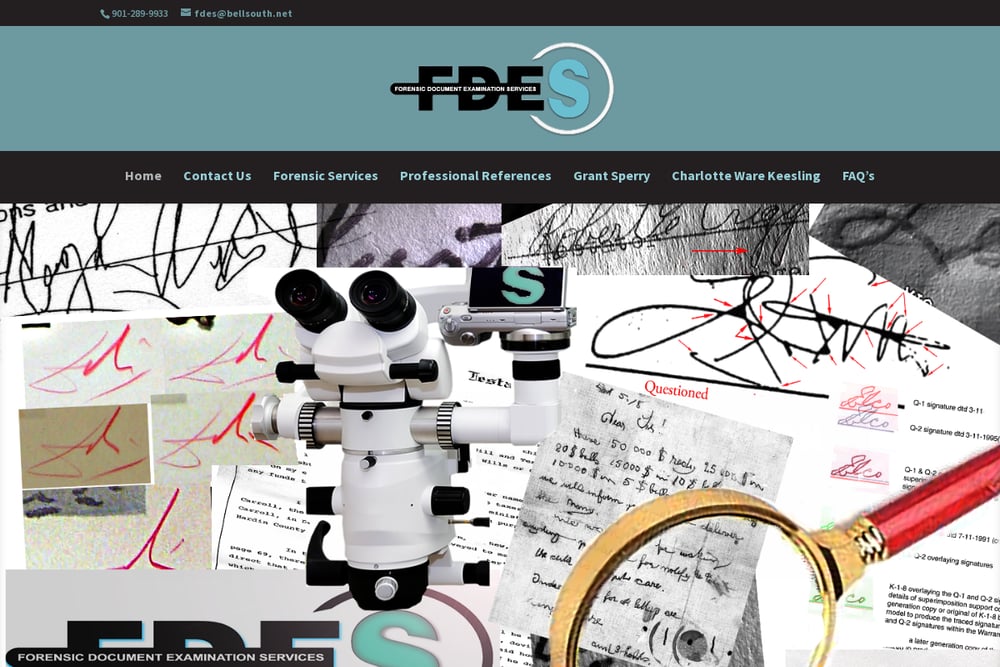 A screenshot of the Forensic Document Examination Services (FDES) website.
FDES is a full-service handwriting and document laboratory with more than four decades of continuous training behind it. Grant Sperry completed in-residence training at a government laboratory and has testified as an expert on over 380 occasions in state, military, federal, and international courts. Charlotte Keesling trained at the Texas Department of Public Safety crime lab and is board certified through the American Board of Forensic Document Examiners. The practice handles indented impression examinations and restorations, plus election-related document work such as absentee ballots and voter registration. If your case hinges on a signature or a latent impression, this is deep bench strength.
#2 Barzey Forensics — Forensic Document Auditing
 A screenshot of the Barzey Forensics — Forensic Document Auditing website.
Barzey Forensics takes a different angle: it examines what a document says as well as whether it was altered. The practice runs metadata analysis, timestamp fraud detection, and billing record fraud analysis across medical, legal, and institutional records. It also reviews leases and contracts before you sign, surfacing illegal clauses and provisions designed to waive rights you did not know you had. The firm positions itself as a civil and litigation discipline with expert witness support and pre-litigation document intelligence. That combination of content review and integrity testing is unusual, and it fits attorneys, organizations, and individuals alike.
#3 Integrated Forensic Services
 A screenshot of the Integrated Forensic Services website.
Integrated Forensic Services explains the discipline clearly, which helps if you are new to document cases. Its guide covers handwriting analysis, forgery detection, and the comparison of letter forms, spacing, slant, and individual idiosyncrasies. The firm serves clients across California and the Southwest, with listed service areas including San Diego, Los Angeles, Las Vegas, Phoenix, and Houston. Examiners there focus on authenticity and origin questions, the classic core of questioned document work. If you need a straightforward examination and a plain-English explanation of what it can prove, this is a practical starting point.
#4 Nikoui & Associates
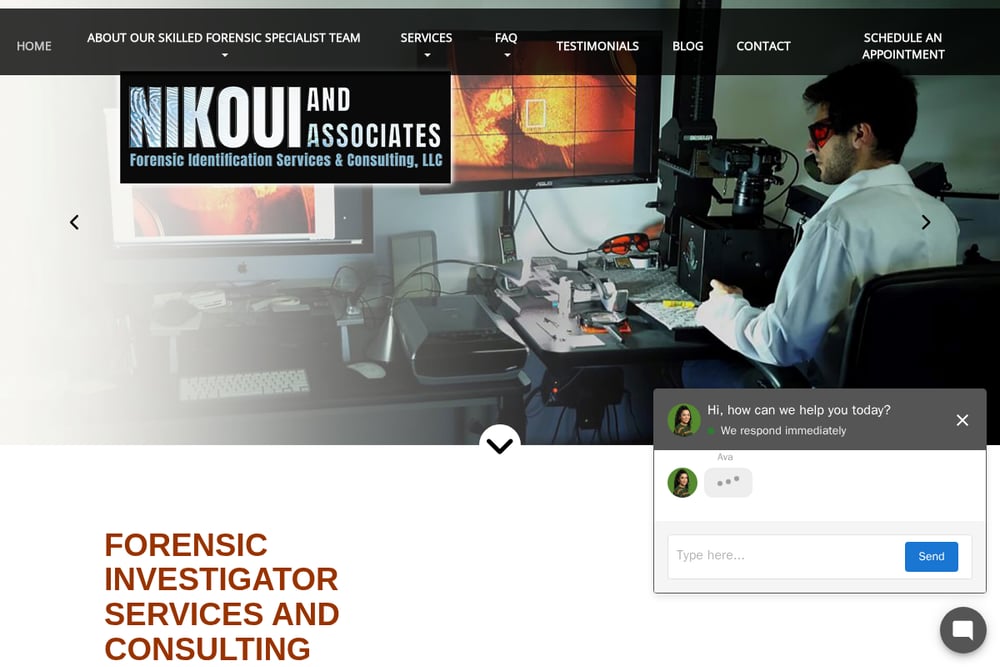 A screenshot of the Nikoui & Associates website.
Nikoui & Associates is a broader forensic shop, and document examination sits alongside fingerprint analysis, footwear impression comparison, DNA processing, and crime scene investigation. That matters when your matter is not document-only. The team includes named specialists and a published code of conduct, and the practice covers court testimony and presentation. Document work there centers on authenticity, origin, alterations, and potential forgery using advanced techniques. If your case needs several forensic disciplines coordinated under one roof, this structure saves you from managing multiple vendors.
#5 Robson Forensic
Robson Forensic fields a questioned document practice led by a former FBI Special Agent who also served as a Forensic Examiner in the Bureau's Questioned Documents Unit. The firm handles cases ranging from homicides to white collar crimes, and its examiners analyze handwriting, signatures, watermarks, alterations, ink differences, and photo-substitution. It also publishes resources on document analysis in elder financial exploitation disputes, a growing area of litigation. The expert witness infrastructure is the draw here, with a large network and case-matching support. For complex litigation that needs a credentialed examiner plus coordinated expert services, this is a strong fit.
How to Choose the Right Practice
Start with the question you need answered. If you suspect a signature was forged, you need a handwriting examiner with courtroom experience. If you suspect a contract was backdated, you need metadata and timestamp analysis, which is a different skill set. Ask any practice how it documents its findings. A written report with methodology you can follow is worth more than a confident opinion. Ask about testimony history, too, because an examiner who has never been cross-examined may not hold up. Confirm the scope in writing, including whether the firm reviews document content or only authenticity. Finally, check turnaround against your filing deadlines. Forensic work takes time, and a rushed examination helps no one.
Where Automation Fits In
Automation will not replace an examiner, but it changes the front end of the work. Metadata extraction tools can flag revision histories and creation dates in minutes, giving you a triage layer before a human ever opens the file. Billing record analysis is similarly ripe for pattern detection, since phantom procedures and duplicate charges follow recognizable shapes. Contract review tools can screen for known illegal clauses and unconscionable terms at scale. The workflow that works looks like this: automated screening surfaces anomalies, then a qualified examiner verifies and interprets them for court. Treat the software as a filter, not a witness. The expert opinion still carries the weight.
The Bottom Line
The right choice depends on what kind of document problem you have. For signatures and impressions, look to FDES or Integrated Forensic Services. For metadata, timestamps, billing records, and pre-signature contract review, Barzey Forensics covers ground the traditional labs often skip. Nikoui & Associates suits multi-discipline matters, and Robson Forensic fits complex litigation with heavy expert witness needs. Match the practice to the question, confirm the scope in writing, and ask about testimony experience before you commit. Do that, and the document record stops being a mystery and starts being evidence.