
You have a food brand idea, but you do not have a restaurant. That is no longer a dealbreaker. These five platforms let you launch or expand using kitchens that already exist.
The New Infrastructure Behind Food Brands
Building a restaurant used to mean leases, buildouts, equipment, and months of permits. Today, a growing category of platforms flips that model. They connect brand ideas to existing commercial kitchens, delivery networks, and operational support. You bring the concept or the audience. They bring the infrastructure. This shift matters for founders, creators, and established consumer brands alike. It also matters for kitchen operators sitting on unused capacity during delivery hours. The result is a faster, lower-risk path from concept to customer.
How We Evaluated These Platforms
We looked at the same factors across every platform. Service scope: does it cover concept development, kitchen sourcing, and delivery support, or just one piece? Pricing clarity: are costs and terms visible before you commit? Local fit: does it work in the US market and with US delivery platforms? Operator flexibility: can an existing kitchen add a brand without a rebuild or new equipment? Brand support: what assets, training, and ongoing help come with the program? Each platform below stood out on different factors. Some shine on technology. Others shine on speed, licensing simplicity, or kitchen network depth.
Here is a quick look at how these five platforms compare on model, focus, and who they serve.
| Provider | Best For |
|---|---|
| CloudKitchens | Operators who want their own delivery-first kitchen space |
| Food Brand Launch & Expansion | Global Food Ventures | Founders and creators who want to launch without building |
| MOLTN Cookies | Restaurant operators adding a proven dessert brand |
| Eatphoria | Kitchen operators with spare delivery-hour capacity |
| Zuul | Multibrand operators wanting delivery technology |
The Five Platforms in Detail
#1 CloudKitchens
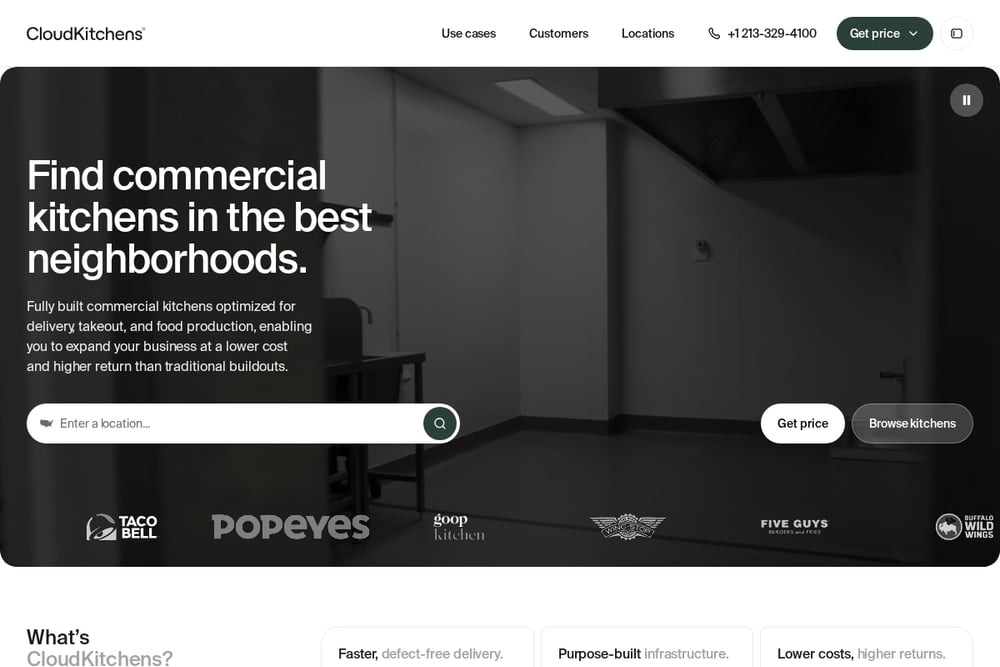 A screenshot of the CloudKitchens website.
CloudKitchens gives you physical kitchen space built for delivery-first food brands. You get a private, licensed kitchen unit inside a shared facility, plus access to delivery platforms and on-site support. The company also publishes practical guidance on kitchen licensing, including a detailed breakdown of New York City requirements and the 2026 fee changes. That kind of regulatory content is useful if you are navigating permits for the first time. The model suits operators who want their own space and control over their own brand. It is less about licensing someone else's concept and more about giving your concept a home.
#2 Food Brand Launch & Expansion | Global Food Ventures
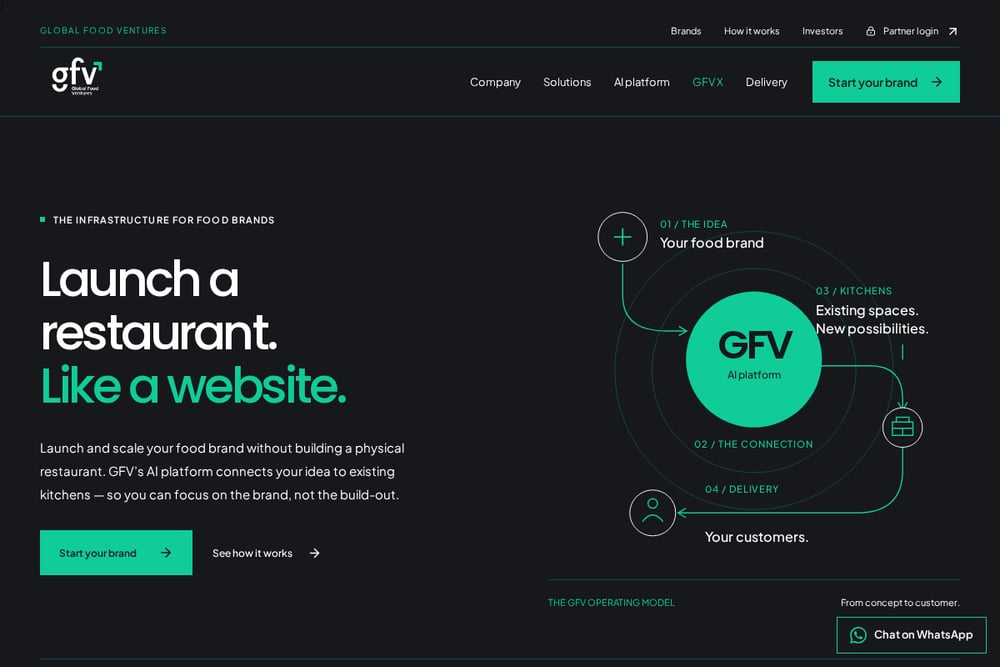 A screenshot of the Global Food Ventures website.
Global Food Ventures, or GFV, takes a different angle. Its AI platform brings market information, brand requirements, and kitchen capabilities together to support launch and expansion planning. You do not build a restaurant. You connect your idea to existing kitchen partners who already have the facilities and teams. GFV then supports brand development, menu planning, and the route to market. The company works with influencer-led brands, in-house developed concepts, licensed brand concepts, and retail CPG brands moving into prepared food. Its GFV X partner program also lets people introduce restaurants and onboard kitchens into the network. If you want a platform that treats your brand as the asset and the kitchen as infrastructure, this is built for that.
#3 MOLTN Cookies
 A screenshot of the MOLTN Cookies website.
MOLTN Cookies runs a brand licensing program designed to drop into a working commercial kitchen. You use your existing oven, freezer, and sheet pans. No proprietary equipment and no buildout. The company supplies pre-portioned frozen dough, so there is no mixing, scaling, or recipe development for your team. Branded packaging, photography, and guidelines are included so the brand looks consistent across every partner kitchen. It runs alongside your current menu rather than replacing it. Orders route to your existing tablet or POS alongside your regular tickets. For operators who want a proven dessert brand with minimal operational lift, this is a focused option.
#4 Eatphoria
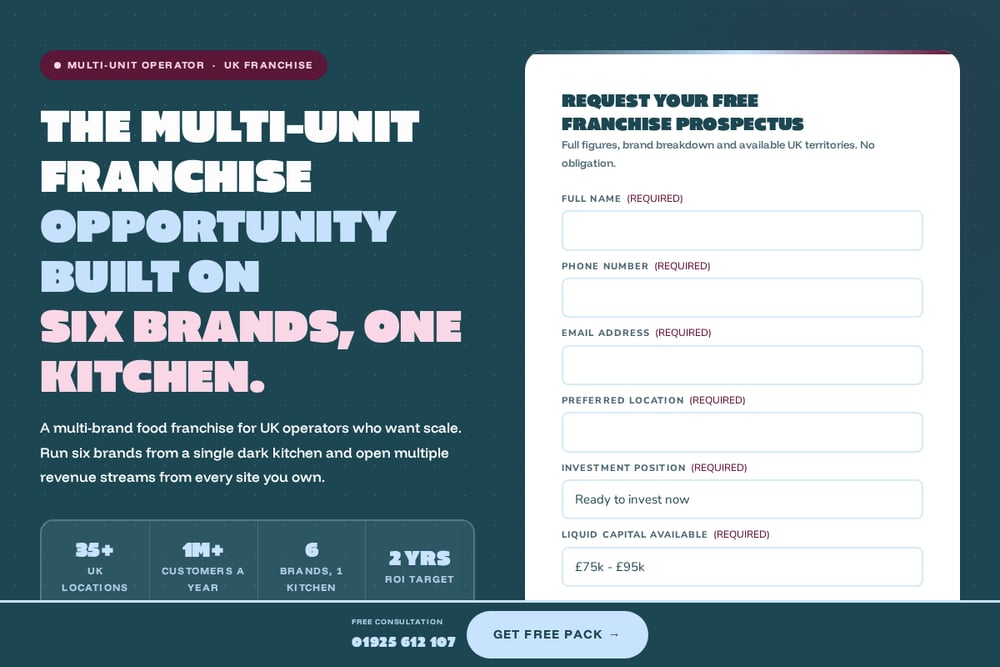 A screenshot of the Eatphoria website.
Eatphoria offers a brand licensing model for operators who already have a kitchen. You add its halal-certified delivery brands to your existing setup and go live across major delivery platforms. The company says agreement to trading can happen in as little as two weeks. You can activate up to five brands or start with just one. Menus are engineered for kitchen efficiency, so no specialist skills are required. It targets contract caterers, pubs, hotels, dark kitchens, stadia, and independent takeaways. If you have spare capacity during delivery hours, this is a way to add revenue without changing your core offer.
#5 Zuul
 A screenshot of the Zuul website.
Zuul began as a ghost kitchen operator serving office buildings and apartments with batch deliveries. It then started licensing its proprietary technology platform to other multibrand operators. The platform covers accounting, menu architecture, training, and kitchen management. That lets restaurants essentially become their own ghost kitchens and tap into Zuul's network of building partners. The model is built around batched deliveries to buildings, which is a different route to market than standard third-party delivery. It suits multibrand operators who want the technology layer without giving up their own brand identity. If you are interested in the systems behind delivery operations, this is worth understanding.
How to Choose the Right Platform for You
Start with what you already have. If you have a kitchen and spare capacity, licensing an existing brand like MOLTN Cookies or Eatphoria is the fastest path. You add revenue without a buildout. If you have a brand idea but no kitchen, look at platforms that connect you to kitchen partners, like Global Food Ventures. If you want your own space and full control, a private kitchen unit from CloudKitchens may fit better. If you are a multibrand operator focused on delivery systems, Zuul's technology licensing is worth a look. Ask three questions before you commit. What exactly is included? What does it cost, and when? How fast can you go live? Get clear answers, and you will pick the right model for your situation.
Where Automation Fits Into Your Launch
Automation is changing how food brands launch. AI platforms can match your concept to kitchen capabilities and market data before you sign anything. Order routing sends delivery tickets straight to your existing POS or tablet. Menu engineering tools help you design for kitchen efficiency, not just taste. Inventory and prep planning can be standardized across locations. For licensing models, automation means consistency: the same brand experience in every partner kitchen. Your workflow can look like this. Define the concept. Match it to a kitchen. Route orders automatically. Track performance. Expand to the next kitchen. The less manual work, the faster you scale.
The Bottom Line
You no longer need a building to build a food brand. The infrastructure exists. Kitchens are available. Delivery networks are in place. Technology connects the pieces. What matters now is choosing the right model for your situation. If you have a kitchen, license a brand and add revenue. If you have a brand, connect it to a kitchen partner. If you want control, take your own space. If you want systems, license the technology. The five platforms here each solve a different part of the puzzle. Pick the one that matches what you already have, and you can move from idea to customer faster than ever.