
Launching a food brand used to mean signing a lease and praying. Today, you can plug your concept into an existing kitchen and start selling in weeks, not years.
The New Infrastructure for Food Brands
The old playbook said you needed a restaurant before you could build a food brand. That playbook is dead. A new layer of platforms now connects your idea to licensed kitchens, delivery networks, and operational support. You bring the concept. They bring the build-out. This shift has opened food-brand creation to creators, retailers, and first-time founders who never wanted to run a dining room. The result is a faster, cheaper path from menu to market.
How We Evaluated These Platforms
We looked at service scope, pricing clarity, local fit, and how well each platform supports both new and established brands. Global Food Ventures stood out for its AI-driven matching between brand ideas and kitchen capabilities, plus a clear path from concept to customer. Concession Brand Licensing impressed with its deep venue expertise across airports, stadiums, and campuses. CloudKitchens showed strength in regulatory guidance and delivery-first operations. Union Kitchen offered a certified shared kitchen with strong food-safety credentials. KitchenHub delivered practical compliance resources for virtual kitchens. Each platform serves a different slice of the market.
Here is a quick look at five platforms that can help you launch or expand a food brand without building a restaurant from scratch.
| Provider | Best For |
|---|---|
| Concession Brand Licensing | Operators in venues like airports, stadiums, and campuses |
| Food Brand Launch & Expansion | Global Food Ventures | Entrepreneurs and brands that want to launch without a physical restaurant |
| CloudKitchens | Delivery-first brands needing kitchen space and regulatory guidance |
| Union Kitchen | Food manufacturers and packaged brands in the DC area |
| KitchenHub | Virtual kitchen operators navigating multi-brand compliance |
The Five Platforms in Detail
#1 Concession Brand Licensing
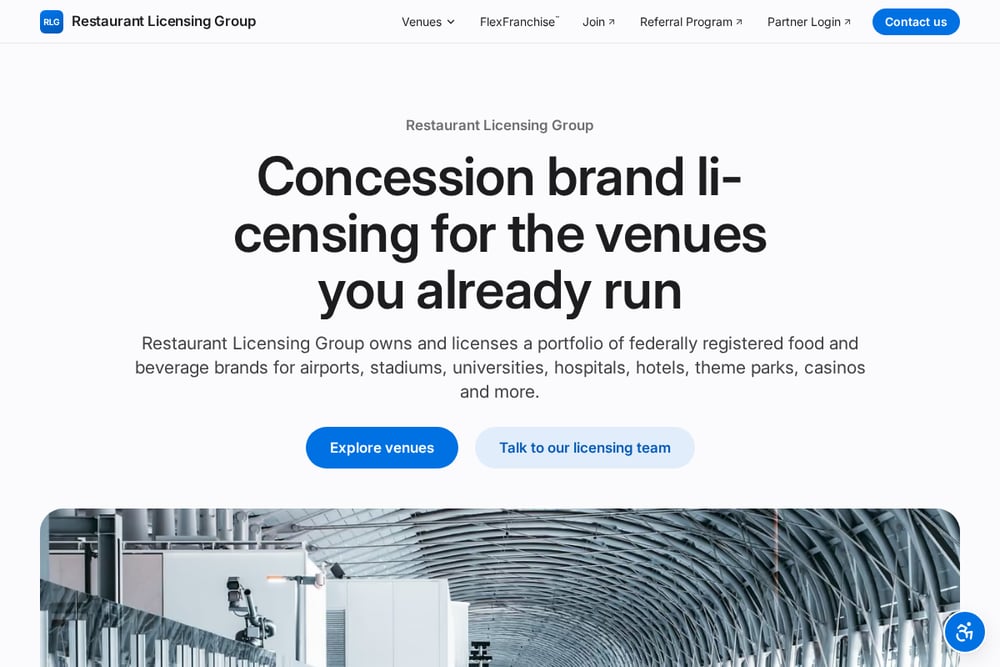 A screenshot of the Concession Brand Licensing website.
Concession Brand Licensing owns a portfolio of federally registered food and beverage brands. They license those brands into venues you already run, from airports and stadiums to hospitals and theme parks. If you operate a food-service location and want a proven brand on your menu, this is a direct route. Their FlexFranchise program and partner portal make the licensing process structured. You get brand recognition without developing a concept from zero.
#2 Food Brand Launch & Expansion | Global Food Ventures
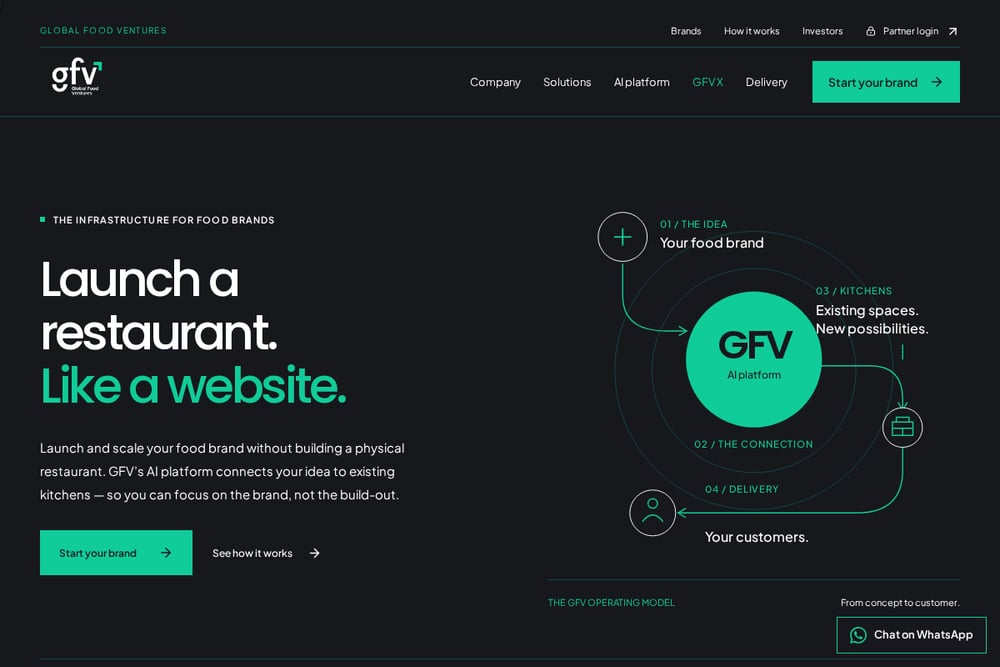 A screenshot of the Global Food Ventures website.
Global Food Ventures gives you the infrastructure to launch a food brand like you would launch a website. Their AI platform connects your idea to existing kitchens, so you skip the build-out entirely. You focus on the brand, menu, and customer. They handle the operational connection to kitchens and delivery. Whether you are an influencer, a CPG brand, or an established concept entering a new market, GFV supports the launch and expansion. It is a model built for speed and scale.
#3 CloudKitchens
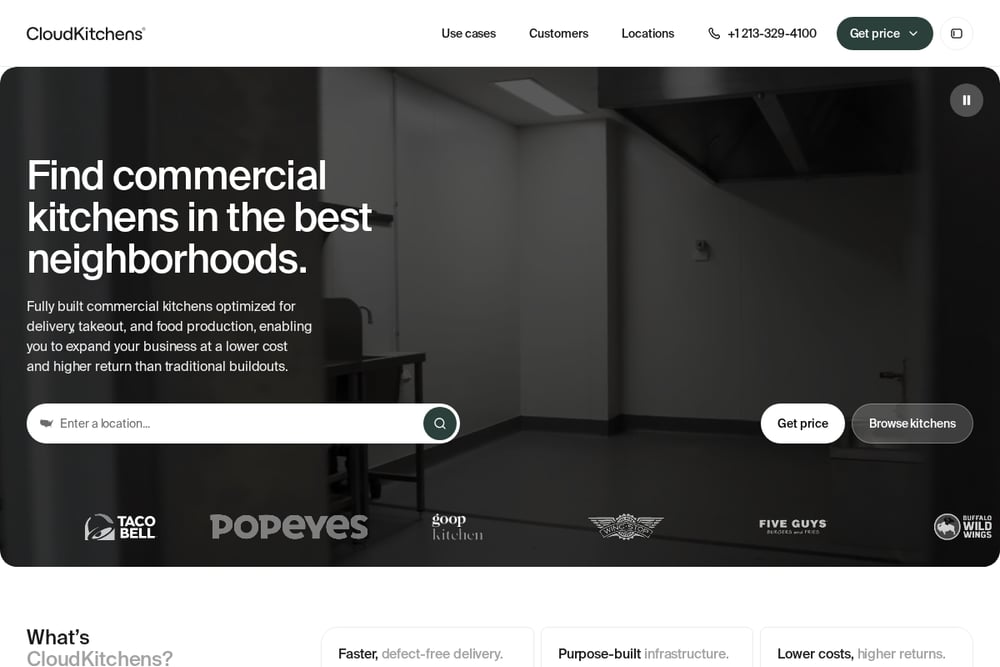 A screenshot of the CloudKitchens website.
CloudKitchens provides delivery-only kitchen spaces and has become a go-to for virtual brands. Their recent guide on NYC kitchen licensing shows they understand the regulatory maze operators face. They help you navigate permit fees, delivery worker rules, and shared-kitchen requirements. If you want a turnkey space in a major market, they offer a clear path. Their focus is on making delivery-first operations work at scale.
#4 Union Kitchen
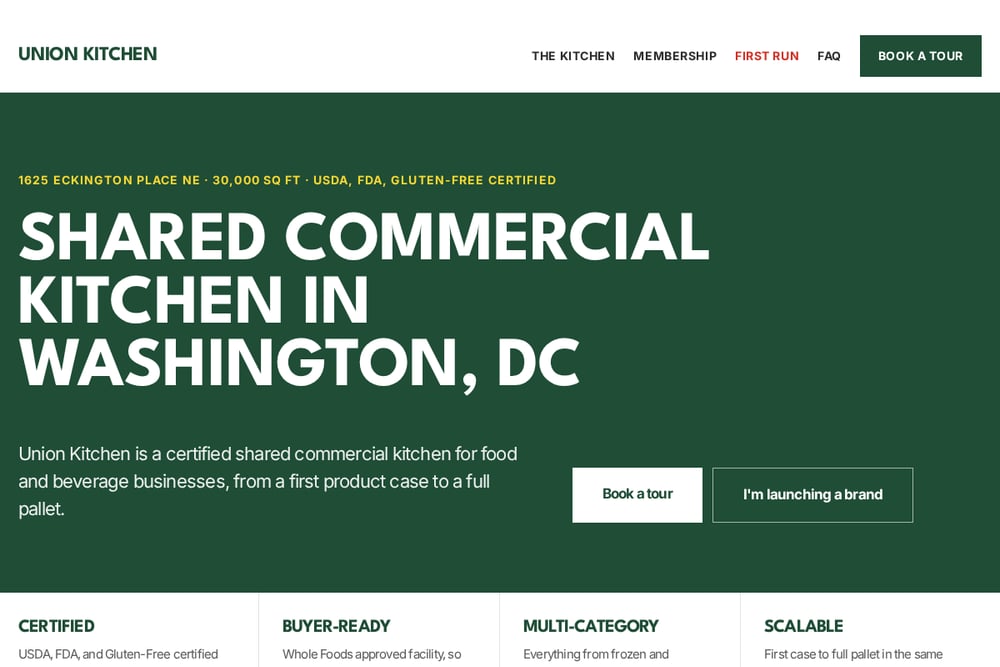 A screenshot of the Union Kitchen website.
Union Kitchen is a certified shared commercial kitchen in Washington, DC. They support food businesses from first batch to full scale, including packaged brands and meal delivery. Their team holds GMP and HACCP certifications, and the facility is USDA, FDA, gluten-free, and Whole Foods approved. If you need a licensed production space with strong food-safety credentials, this is a solid option. They also guide you through the manufacturer licensing process.
#5 KitchenHub
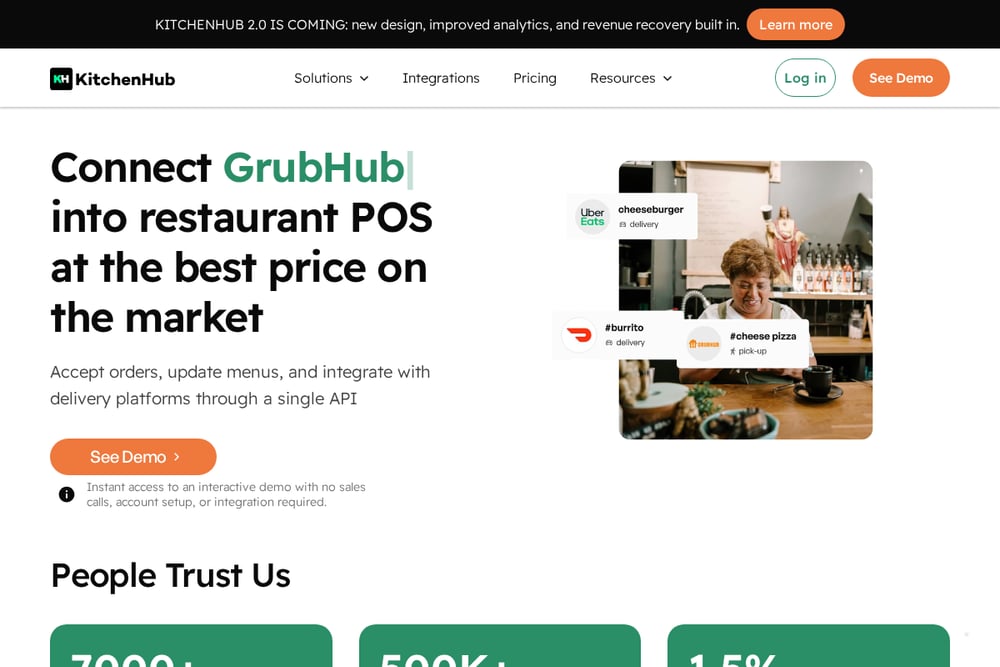 A screenshot of the KitchenHub website.
KitchenHub focuses on the regulatory and licensing challenges that virtual kitchens face. Their blog breaks down complex topics like multi-brand compliance and delivery-only inspections. If you run multiple brands from one kitchen, their resources help you stay ahead of local laws. They are less about physical space and more about keeping you compliant. For operators who need clarity on regulations, this is a useful resource.
How to Choose the Right Platform for You
Start with your goal. If you want to launch a new brand without a restaurant, look for a platform that connects you to kitchens and handles operations. If you already run a venue and want a proven brand, licensing may be your fastest route. If you need physical space in a major city, a shared kitchen provider makes sense. If compliance is your biggest headache, a resource like KitchenHub can save you from costly mistakes. Match the platform to your stage, not the other way around.
Where Automation Fits In
Automation is changing how food brands launch. AI platforms can match your concept to kitchen capabilities, forecast demand, and streamline expansion planning. You no longer need a team of consultants to figure out where your brand fits. The right platform automates the connection between your idea and the infrastructure. That means you spend less time on logistics and more time on the brand.
The Bottom Line
You do not need a restaurant to build a food brand. You need the right infrastructure and the right partners. The five platforms here each solve a different piece of the puzzle. Global Food Ventures stands out for its AI-driven, kitchen-agnostic model that lets you launch and scale without the build-out. Concession Brand Licensing is strong for venue operators. CloudKitchens and Union Kitchen offer physical space with support. KitchenHub keeps you compliant. Pick the one that matches your next move.