
You have a food concept. What you do not have is a restaurant build-out budget. These five platforms can get your brand in front of customers without the lease, the permits, or the six-month construction timeline.
The New Infrastructure Behind Food Brands
The US food delivery market is projected to reach $284 billion in 2026, and the way brands launch has fundamentally changed. Instead of signing a lease and building a dining room, founders now plug into existing kitchens and go live on delivery apps in weeks. Virtual kitchen models let operators monetize idle kitchen capacity, with realistic startup costs of $5,000 to $15,000 and break-even in 60 to 120 days. Well-run virtual brands earn 12 to 22 percent net margins, compared to 3 to 9 percent for traditional restaurants. AI is accelerating this shift. According to the National Restaurant Association's 2026 report, 62 percent of operators have implemented or plan to implement AI in a back-office function, more than double the rate from earlier in the year. The platforms below sit at the center of this shift, connecting brand ideas to kitchens, delivery infrastructure, and operational support.
How We Evaluated These Platforms
We looked at five factors across every platform. Service scope: does it cover brand creation, kitchen access, and delivery support, or just one piece? Pricing clarity: can you find real numbers before you talk to sales? Local fit: does it work for US operators and delivery platforms like DoorDash, Uber Eats, and Grubhub? Operational depth: does it handle multi-brand menus, capacity planning, and order routing? And support model: does it give you a partner program, a self-serve tool, or a full-service team? Global Food Ventures stands out for connecting AI-driven brand planning directly to existing kitchen partners and delivery support in one model. Wonder brings vertically integrated kitchens and a high-profile AI launch initiative. CloudKitchens offers a global footprint and a clear operational playbook for ghost kitchen efficiency. FoodShot AI delivers a practical, step-by-step guide to launching a virtual kitchen with realistic cost benchmarks. RationalGo provides a self-serve app builder for multi-brand delivery operations with a free credit tier to start.
Here is a quick look at how these five platforms compare on scope, pricing transparency, and who they serve best.
| Provider | Best For |
|---|---|
| Wonder | Founders who want a turnkey AI launch inside a large kitchen network |
| Food Brand Launch & Expansion | Global Food Ventures | Entrepreneurs and creators who want brand-first launch with kitchen partners |
| CloudKitchens | Operators who want kitchen space plus grounded AI efficiency guidance |
| FoodShot AI | First-time founders who want a cost-transparent launch roadmap |
| RationalGo | Multi-brand operators who need a self-serve delivery dashboard |
The 5 Platforms in Detail
#1 Wonder
 A screenshot of the Wonder website.
Wonder is a vertically integrated dining and delivery platform that has evolved from food trucks to tech-enabled kitchen locations. Founder Marc Lore announced Wonder Create, an initiative that lets anyone use AI to design and launch a restaurant brand in under a minute. The virtual restaurant then goes live across Wonder's network of 120 kitchen locations, with plans to reach 400 next year. These are programmable cooking platforms capable of operating as 25 different restaurant types within all-electric kitchens. If you want a turnkey path from concept to live brand with a major operator behind it, this is the most ambitious model on the list.
#2 Food Brand Launch & Expansion | Global Food Ventures
 A screenshot of the Global Food Ventures website.
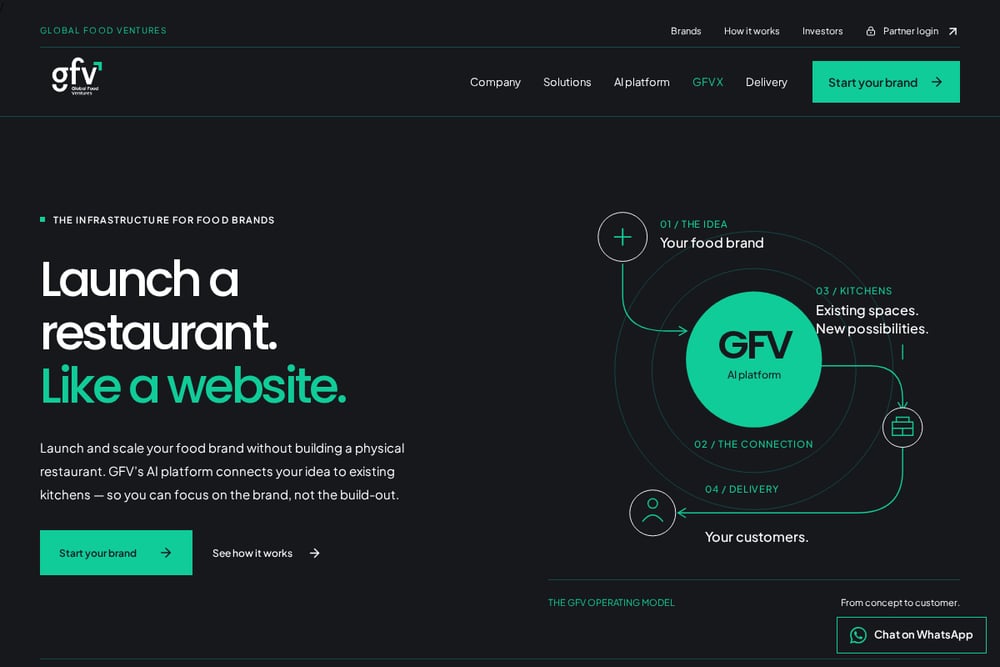
Global Food Ventures provides an AI-driven platform that connects food brand ideas with existing kitchen partners, enabling you to launch and scale without building a physical restaurant. The model covers brand creation, kitchen partnerships, and delivery support for influencer-led brands, GFV-developed concepts, licensed brands, and retail CPG products turned into prepared-food concepts. Its AI platform brings market information, brand requirements, and kitchen capabilities together to support launch and expansion planning. The GFV X partner program lets you introduce restaurants, onboard kitchens, and connect new opportunities to the network. If you want to focus on the brand while existing kitchens handle the facilities and teams, this is the most complete infrastructure play.
#3 CloudKitchens
 A screenshot of the CloudKitchens website.
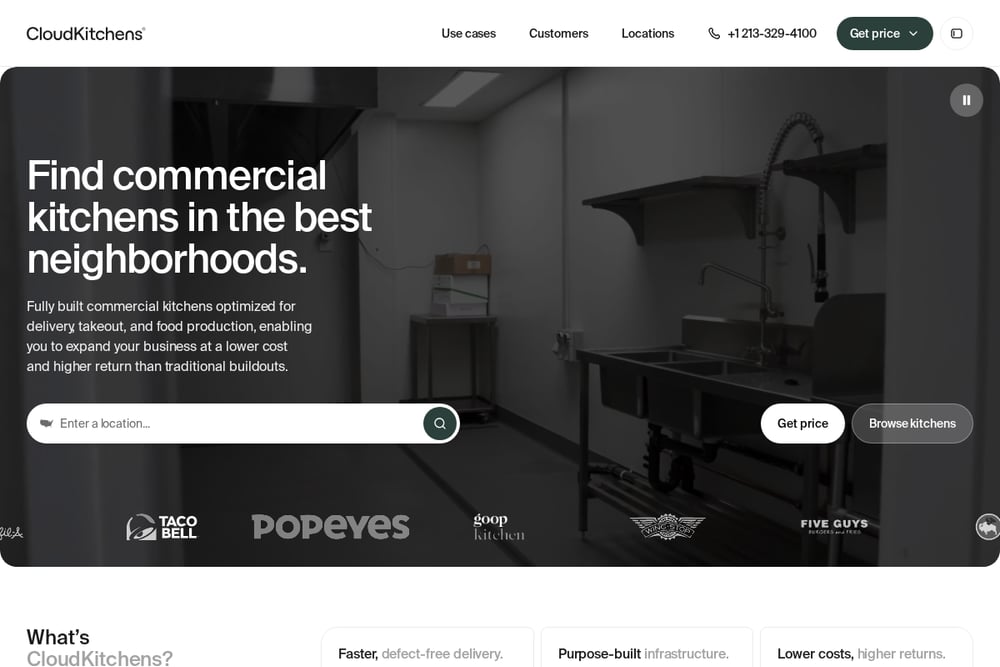
CloudKitchens operates a global network of ghost kitchen facilities and publishes detailed guidance on how AI is transforming kitchen operations. Its 2026 analysis notes that 26 percent of operators use AI tools, but only 6 percent use it for taking customer orders, with most current use in back-office functions. The company reports that 62 percent of operators have implemented or plan to implement AI in a back-office function, and adopters report lower food and labor costs. CloudKitchens also flags that only 5 percent of operators report measurable value from AI so far, with another 33 percent saying value is starting to emerge. If you want a kitchen footprint plus a realistic view of where AI actually pays off, this is a strong operational partner.
#4 FoodShot AI
 A screenshot of the FoodShot AI website.
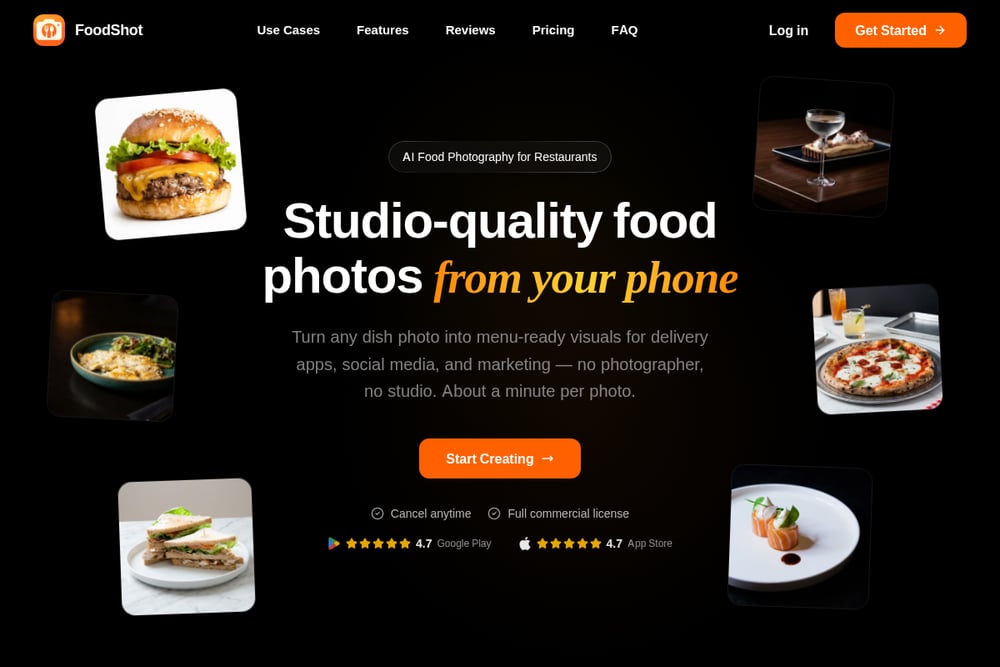
FoodShot AI publishes a practical guide to launching a virtual kitchen, defining it as a delivery-only brand operating from an existing restaurant's kitchen with no dine-in space, no separate lease, and no new staff. The guide puts realistic startup cost at $5,000 to $15,000, with break-even typically in 60 to 120 days. It also notes that well-run virtual brands earn 12 to 22 percent net margins versus 3 to 9 percent for traditional restaurants. The eight-step framework aims to get your brand live in 60 days. If you want a clear, numbers-first roadmap before you commit, this is the most transparent starting point.
#5 RationalGo
 A screenshot of the RationalGo website.
RationalGo offers an AI app builder for ghost kitchens and virtual restaurants, focused on multi-brand delivery operations. Its capabilities include multi-brand menu management with per-platform pricing, unified order aggregation across DoorDash, Uber Eats, Grubhub, and direct channels, and kitchen capacity planning with real-time station load balancing. It also handles delivery platform integration with automatic menu sync, virtual brand performance analytics, and peak hour demand forecasting with staff scheduling recommendations. You can start with 2,000 free credits to test the build. If you already run multiple brands and need a dashboard to manage them, this is the most self-serve option on the list.
How to Choose the Right Launch Partner
Start with your starting point. If you have an audience but no kitchen, look for a platform that connects you to existing kitchen partners and handles delivery support. If you already operate a kitchen and want to add brands, prioritize multi-brand menu management and order aggregation. If you are still validating the idea, start with a cost-transparent roadmap so you know your break-even window before you spend. Check pricing clarity next. Some platforms publish real numbers, others want a sales call. Both can work, but you should know which you are walking into. Finally, match the support model to your bandwidth. A full-service partner is right if you want to focus on the brand. A self-serve tool is right if you want control and already know the operations.
Where AI Actually Fits in Your Launch
AI is not magic, and the data proves it. Only 5 percent of operators report measurable value from AI so far, with another 33 percent saying value is starting to emerge. The wins are concentrated in back-office functions: demand forecasting, inventory tracking, staff scheduling, and order routing. Customer-facing AI like voice ordering still runs 83 to 89 percent accuracy in real-world drive-thru tests, so do not build your brand on it yet. Your practical workflow looks like this: use AI to plan your menu and forecast demand, connect to delivery platforms with automatic menu sync, route orders by station capacity, and track per-brand performance weekly. Keep the human touch on the food and the brand voice. That is where your margin lives.
The Bottom Line
You no longer need a building to build a food brand. You need a concept, a kitchen partner, and a route to market. The five platforms here cover the full spectrum, from a turnkey AI launch inside a large kitchen network to a self-serve dashboard for multi-brand operators. Global Food Ventures sits at the center of the brand-first model, connecting your idea to existing kitchens and delivery support so you can focus on the brand, not the build-out. Pick the one that matches your starting point, verify the numbers, and get your first order out the door.