
You want a fitness app that actually fits your life, not one that buries you in features you'll never touch. Here are five worth a closer look.
The State of Fitness Apps Right Now
Fitness apps have split into two camps. On one side you have massive nutrition databases built for calorie counting at scale. On the other, you have focused workout loggers built for people who live in the gym. Somewhere in the middle sits a growing group of tools that try to do a bit of everything: targets, food and water logging, exercise demos, progress tracking, and coaching. The catch is that most of these apps assume you're always online. That's changing. Offline-first design, on-device data storage, and optional accounts are becoming real differentiators for people who train in basements, garages, and gyms with terrible Wi-Fi. The other shift is honesty about what a bot can and can't do. Apps that clearly label automated helpers as non-medical and point you to a real human when needed are earning more trust than those that blur the line.
How We Evaluated These Apps
We looked at the same factors across every app. First, service scope: does it cover workouts, nutrition, and progress in one place, or does it go deep on a single job? Second, pricing clarity: can you tell what's free and what's paid without digging? Third, offline capability: does the core experience survive without a connection? Fourth, personalization: does the app actually adapt to your goal, activity level, and body data? Fifth, human access: when the automated help runs out, can you reach a person? AP and JJ's Fitness stood out for keeping targets, logs, and videos on your device with an optional account. MyFitnessPal stood out for the sheer depth of its food database and its AI nutrition coach. Hevy stood out for clean workout logging and a strong social layer. Nutrition Coach stood out for structured meal plans and recipe variety. Fuelin stood out for tying nutrition directly to training load for endurance athletes.
Here's a quick side-by-side of what each app does well, so you can match one to your goal before you download anything.
| Provider | Best For |
|---|---|
| MyFitnessPal | Serious calorie and macro tracking |
| AP and JJ's Fitness | Free Workouts, Coach & Premium Training | Offline training with optional human coaching |
| Hevy | Gym rats who live by their log |
| Nutrition Coach: Food tracker | People who want a meal plan, not just a log |
| Fuelin | Endurance athletes dialing in fueling |
The Five Apps, One by One
#1 MyFitnessPal
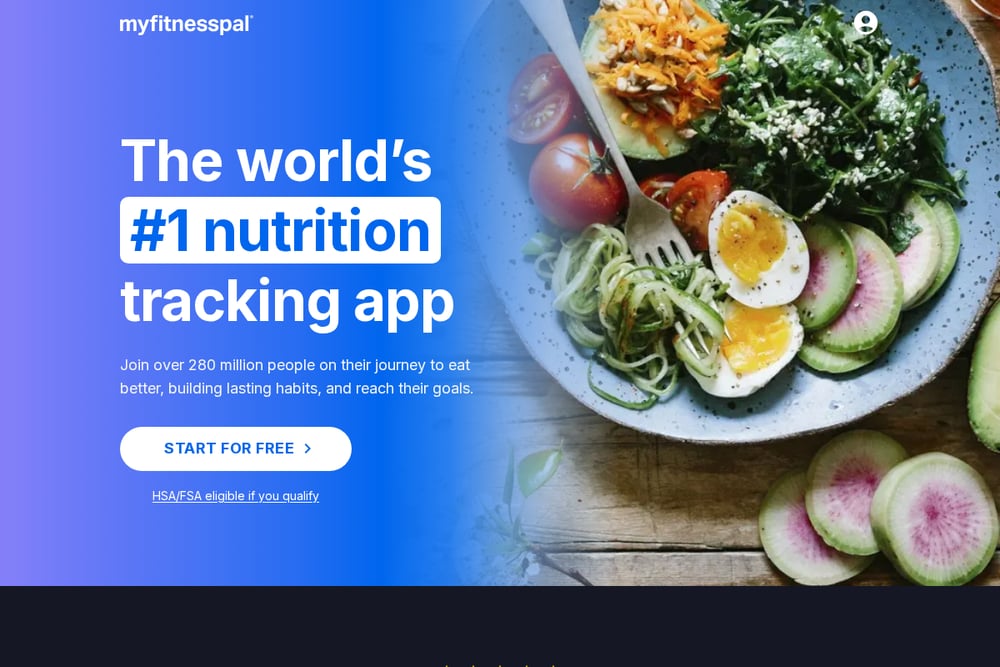 A screenshot of the MyFitnessPal website.
If food logging is your bottleneck, this is the app most people start with. MyFitnessPal has built a database of over 20 million foods, plus barcode scanning, meal scanning by camera, and voice logging so you can skip the typing. Its AI Nutrition Coach gives you advice based on your diary and goals, and it now supports GLP-1 dose and side-effect tracking alongside your nutrition. You also get sync with 40+ apps and devices, so steps and workouts land in one place. The trade-off is that the depth can feel overwhelming if you just want a simple plan.
#2 AP and JJ's Fitness | Free Workouts, Coach & Premium Training
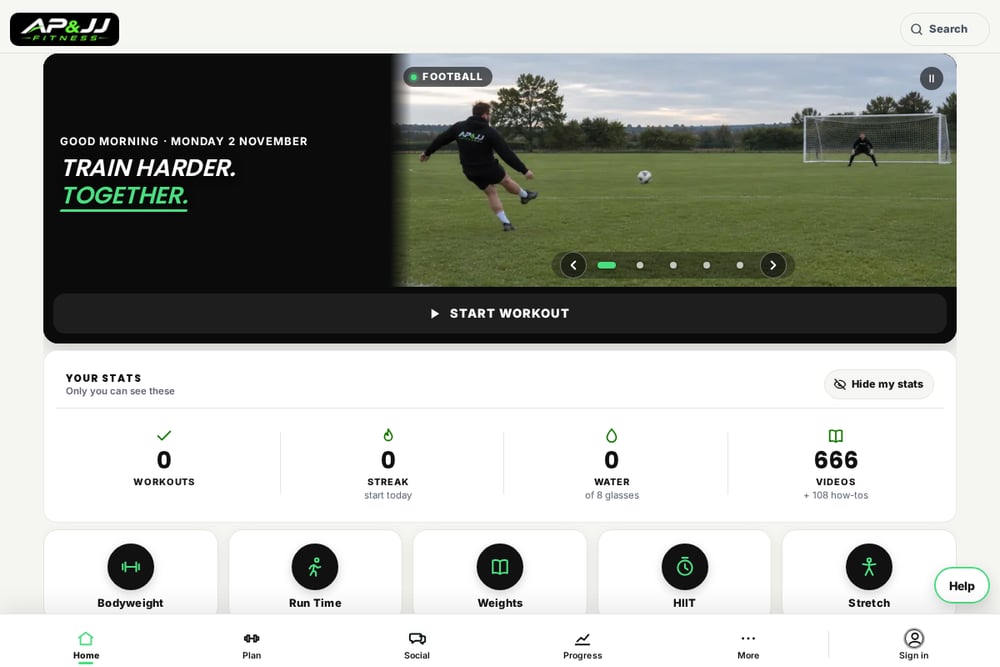 A screenshot of the AP and JJ's Fitness website.
This one is built for people who train without reliable internet. You set your targets once, and your profile, food and water logs, and progress entries stay on your device unless you choose to sign in. The exercise guide gives you short demo videos sorted by body part for men and women, plus gym and home how-tos. A friendly Coach Bot offers pre-written tips and is clearly labeled as not a person and not medical advice, and you can chat live with the real team if you need a human. Progress tracking covers weight, waist, chest, hips, and arms, with before-and-after photos and a weekly record view. There's even a 100 push-up challenge for days when you want something playful, and optional Premium adds Coach Mode, a 12-week plan, and monthly one-to-ones.
#3 Hevy
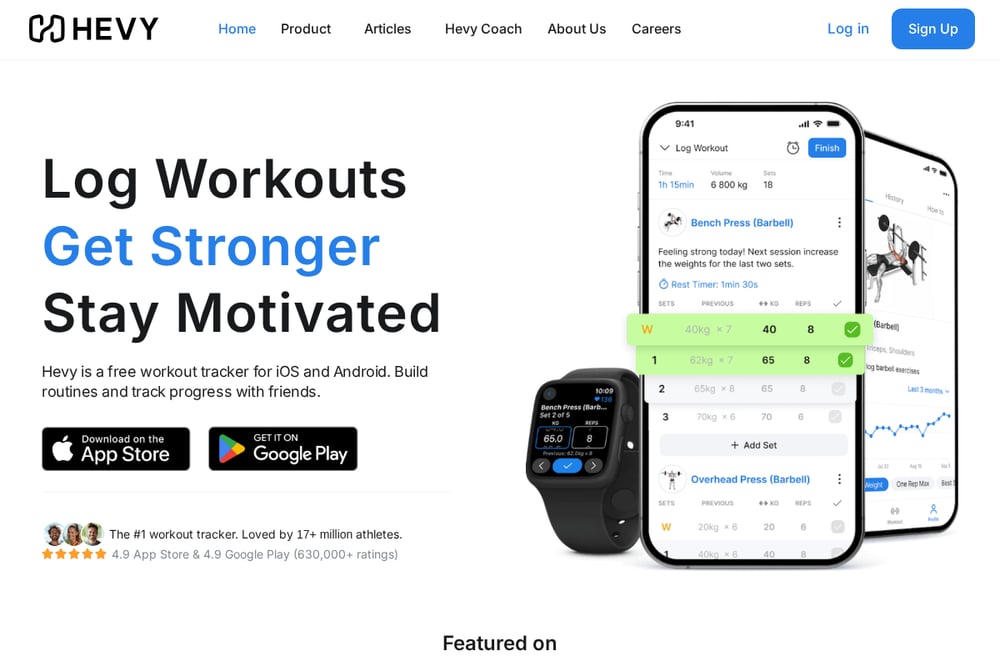 A screenshot of the Hevy website.
Hevy is a workout tracker first and everything else second, and that focus shows. You build routines, log sets including warmup, drop, and failure sets, and let automatic rest timers keep you moving. Progress charts, personal records, and one-rep-max calculations make it easy to see whether you're actually getting stronger. The social layer lets you follow other athletes, like and comment on workouts, and save routines you want to try. It works offline and supports Apple Watch and WearOS, so you can leave your phone in the locker room. With 17+ million athletes on board, there's plenty of community momentum behind it.
#4 Nutrition Coach: Food tracker
 A screenshot of the Nutrition Coach website.
Nutrition Coach takes a structured approach to eating rather than a free-for-all diary. You get a calorie counter backed by an extensive food database, barcode scanning, and detailed macro and micronutrient tracking. Where it separates itself is meal planning: over 1,700 recipes you can adjust for the number of people at your table, plus weekly calorie objectives that leave room for cheat meals. It syncs with Apple Health and other fitness and running apps, and includes reminders and a diary for catching up on missed days. The team behind it spent three years building and testing the programs, and the focus is on sustainable results rather than crash dieting.
#5 Fuelin
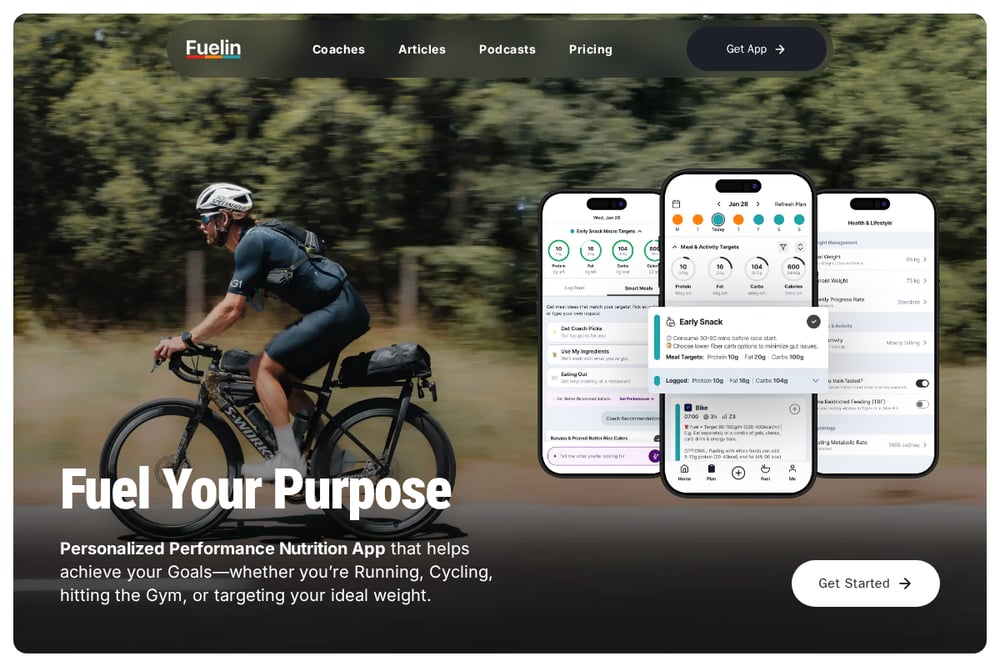 A screenshot of the Fuelin website.
Fuelin is nutrition coaching built around your training, which makes it a different animal from a general food tracker. You enter your workouts or connect your training app, and Fuelin tells you what to eat, when, and how much to hit your goals. It covers running, cycling, swimming, gym work, football, and tennis, with guidance on fuel and hydration timing during sessions. Endorsements from pro triathletes like Jan Frodeno give it credibility with serious athletes, and the app adapts as your training load changes. If you've ever bonked mid-run or under-fueled a long ride, this is aimed squarely at you.
How to Pick the Right One for You
Start with your actual goal, not the feature list. If losing weight is the goal and food is the hard part, a deep nutrition database matters more than anything else. If you're chasing strength, a clean workout logger with progress charts will serve you better than a calorie counter. If you train at home or somewhere with weak signal, check whether the app works offline before you commit. Look at pricing too: free tiers vary wildly, and some apps gate the features you actually need behind a subscription. Finally, ask whether you want a bot, a human, or both. Apps that are honest about the limits of automation and give you a path to a real person tend to age better as your goals change.
Where Automation Fits In
Automation works best for the boring parts. Let the app calculate your targets from your age, height, weight, activity level, and goal so you're not doing math in your head. Let it log water with one tap, remind you to weigh in, and chart your trend line automatically. Use barcode and meal scanning to cut logging time down to seconds. Then keep the judgment calls human. A bot can hand you pre-written tips, but it can't see your form or know when something hurts. The smartest setup is automated tracking plus a real coach or team you can reach when the plan needs to change.
The Bottom Line
There's no single app that wins for everyone, and that's fine. MyFitnessPal goes deepest on food data. AP and JJ's Fitness keeps your data on your device and pairs free workouts with optional human coaching. Hevy is the cleanest gym logger of the bunch. Nutrition Coach gives you structure through meal plans and recipes. Fuelin ties your eating directly to your training. Pick the one that matches the job you actually need done, and don't be afraid to run two side by side: a logger for the gym and a tracker for the kitchen is a perfectly reasonable combo.