If your offshore operations depend on defensible data, the firm you hire matters as much as the science itself. Here are five providers worth knowing when you need observers, monitors, or environmental expertise on the water.
The state of fisheries monitoring and environmental science services
Federal and state monitoring obligations keep demand steady for trained at-sea observers, electronic monitoring specialists, and environmental scientists. In New England and the Mid-Atlantic, scallop set-asides, groundfish at-sea monitoring, and offshore wind surveys all require certified personnel and clean reporting. Providers compete on observer availability, safety training, and how smoothly they handle logistics so your trips stay compliant without disruption.
How these providers were evaluated
Each firm was looked at on service scope, depth of observer and monitoring programs, training and safety credentials, geographic coverage, and clarity of the information it publishes about its work. Local fit to Northeast fisheries mattered, as did evidence of long-term experience with agency-approved programs. The detail on each business lives in its description below.
Here is a quick look at the five firms, ordered for easy comparison of scope, location, and specialty.
| Provider | Best For |
|---|---|
| Fathom Resources | Commercial fleets needing full-service observer logistics |
| Home | A.I.S., Inc | AIS | Ecosystem-based science plus PSO training |
| MRAG Americas, Inc. | Program design and sustainability certification support |
| East West Technical Services LLC | Industry-funded scallop observer coverage |
| New England Marine Monitoring | Tech-enabled at-sea monitoring with local crews |
The five firms in detail
#1 Fathom Resources
 A screenshot of the Fathom Resources website.
Fathom Resources runs a NOAA-approved fisheries observer program built for commercial fleets across the Northeast and Mid-Atlantic. Its certified observers deploy on commercial and research vessels, collecting catch and biological data that holds up to regulatory review. The firm covers at-sea monitoring, the groundfish observer program, industry-funded scallop observing, electronic monitoring, and audit and maximum retention programs. You get assignment handling, logistics, and reporting bundled in, which keeps compliance work off your plate. It is a strong fit if you want one provider to manage the science and the paperwork end to end.
#2 Home | A.I.S., Inc | AIS
 A screenshot of the Home | A.I.S., Inc | AIS website.
A.I.S., Inc. has been making a difference since 1994, pairing fisheries work with environmental monitoring, electronic monitoring, and scientific research and technical services. From its North Dartmouth headquarters and offices in Anchorage, Seattle, and Toms River, the firm supports offshore marine biology careers and runs a dedicated PSO training program through its training portal. Its stated commitment to accuracy, integrity, and service shows up in an ecosystem-based approach to environmental management. You can lean on AIS for observer programs, protected species training, and contract-backed scientific support. It is a natural choice when you want a Massachusetts-based partner with three decades of marine experience.
#3 MRAG Americas, Inc.
 A screenshot of the MRAG Americas, Inc. website.
MRAG Americas brings a global footprint to fisheries monitoring, with observer and electronic monitoring programs designed and run around the world. Its Fisheries Monitoring Division collects data on fishing patterns, catch and bycatch disposition, stock trends, and protected species interactions. The firm also works on high-level projects, including methodology reviews for regional fisheries bodies and Marine Stewardship Council assessments. If your needs stretch beyond day-to-day observer deployment into program design or certification support, this is a name to know. It suits organizations that want monitoring tied to sustainability and certification goals.
#4 East West Technical Services LLC
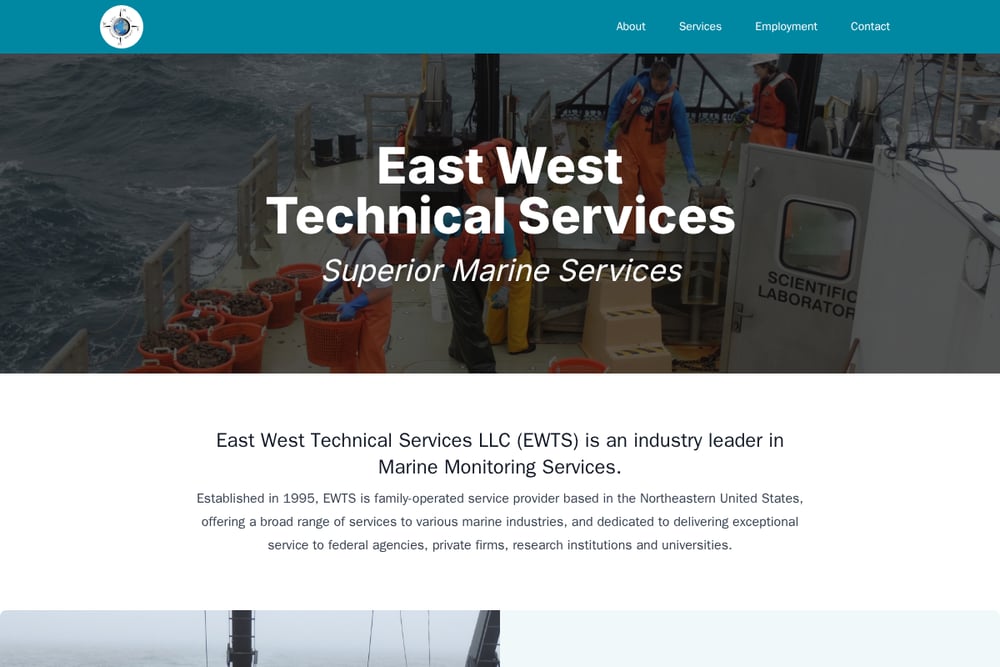 A screenshot of the East West Technical Services LLC website.
East West Technical Services has supplied NOAA-certified scallop observers throughout New England and the Mid-Atlantic since 2006. Approved by the Northeast Fisheries Science Center as an observer provider, the firm equips its observers with data collection tools and current safety gear. Safety is treated as a priority, with Coast Guard-approved fishing vessel safety training every two years and CPR and first aid certification for all at-sea personnel. Its observers are seasoned at handling the dynamic conditions of commercial fishing. Choose EWTS when scallop program compliance and observer safety standards top your list.
#5 New England Marine Monitoring
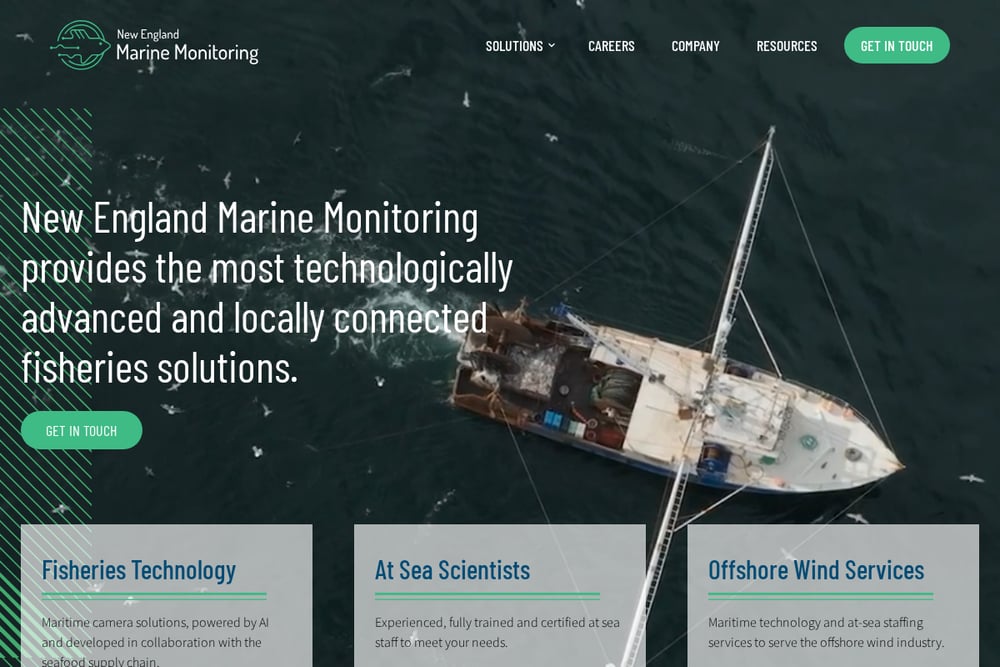 A screenshot of the New England Marine Monitoring website.
New England Marine Monitoring fields groundfish at-sea monitors, protected species observers, scallop observers, and general at-sea staff from offices in Portland, Maine, and New Bedford, Massachusetts. The firm leans on technology, including artificial intelligence tools, and reports low staff turnover that reduces your training costs. Its protected species observers are full-time local employees with BOSIET training and documented credentials. You can also tap its network of vessels and captains for survey work and offshore wind services. It is a practical pick for locally connected, tech-forward monitoring support.
How to choose the right monitoring partner
Start with your regulatory obligation. If you run a scallop vessel, look for a provider already approved for the industry-funded program. If you fish groundfish, confirm at-sea monitor availability and deployment speed in your region. Ask about safety training cadence, observer turnover, and how data gets reported to the agency. Then check whether you need extras like electronic monitoring, protected species observers, or program design. Match the firm's specialty to your actual trips rather than paying for scope you will never use.
Where automation fits into your monitoring workflow
Electronic monitoring and AI-assisted review are changing how catch data gets collected and checked. A practical workflow looks like this: define the data your permit requires, pair human observers with EM systems where allowed, route footage and logs to a review queue, and have a qualified analyst validate flagged events. Keep safety training and certification records current in one place, then feed verified data into your compliance reports on a fixed schedule. The goal is fewer surprises at review time and a cleaner audit trail.
The bottom line
Massachusetts and the wider Northeast give you real depth in fisheries monitoring, from full-service observer providers to specialized scallop and protected species teams. Fathom Resources leads on end-to-end fleet logistics, while A.I.S., Inc. pairs three decades of ecosystem-based science with PSO training from its North Dartmouth base. MRAG Americas adds program design and certification muscle, East West Technical Services owns the scallop niche with strong safety discipline, and New England Marine Monitoring brings local crews and technology. Match the provider to your permit, your region, and your reporting burden, and the compliance work gets a lot lighter.