Your kid can spot a Roblox skin from a mile away, but can they spot a bad money decision? These five programs are built to close that gap.
The Kids' Financial Literacy Landscape
Financial literacy for children has moved from piggy banks to structured digital curricula. Parents and educators now have more options than ever, from free school-aligned programs to premium animated courses. The market splits into three camps: classroom-first platforms, gamified investing apps, and family-centered home courses. Each serves a different need, and the right fit depends on whether you want your child to learn independently, alongside you, or through a school setting. Pricing models vary widely too, from fully free nonprofit offerings to one-time purchases and subscription tiers.
How We Evaluated These Programs
We looked at the same factors across every program. First, curriculum depth: does it cover practical skills like budgeting, saving, and risk awareness? Second, age fit: is the content genuinely designed for the stated age range? Third, delivery format: are lessons engaging without being overwhelming? Fourth, parent involvement: can families learn together, or is it purely self-directed? Fifth, pricing clarity: is the cost transparent and predictable? Each program below stood out in different areas. Felix Money impressed with its family-first design and one-time pricing. MoneyTime stood out for its scale and school adoption. FitMoney earned attention for its free, unbiased K-12 curriculum. KidVestors drew notice for its gamified investing approach. Banzai caught our eye for its no-cost, standards-aligned classroom tools.
Here is a quick look at how these five programs compare on format, age range, and pricing model. Use this table to narrow your shortlist before diving into the details.
| Provider | Best For |
|---|---|
| MoneyTime | School and homeschool settings with older kids |
| Felix Money | Money Skills for Kids Ages 8–12 | Parents who want to learn alongside their kids |
| FitMoney | Free, classroom-ready K-12 curriculum |
| KidVestors | Gamified investing and wealth-building for kids |
| Banzai | Free, standards-aligned classroom resources |
The Five Programs in Detail
#1 MoneyTime
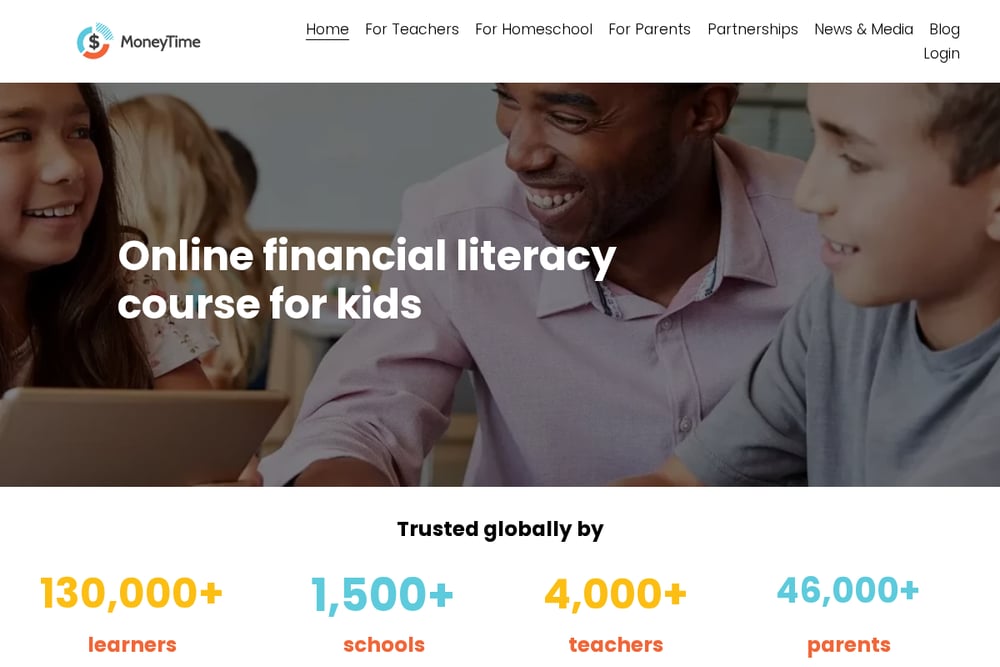 A screenshot of the MoneyTime website.
MoneyTime is a curriculum-aligned online financial literacy program for kids aged 10 to 15. It is trusted globally by over 130,000 learners, 1,500 schools, and 46,000 parents. The platform is self-guided, which takes pressure off teachers and parents while keeping kids engaged with interactive lessons. It works well in classrooms, homeschool settings, and at home. If you want a program with a proven track record and broad institutional adoption, MoneyTime is a strong contender.
#2 Felix Money | Money Skills for Kids Ages 8–12
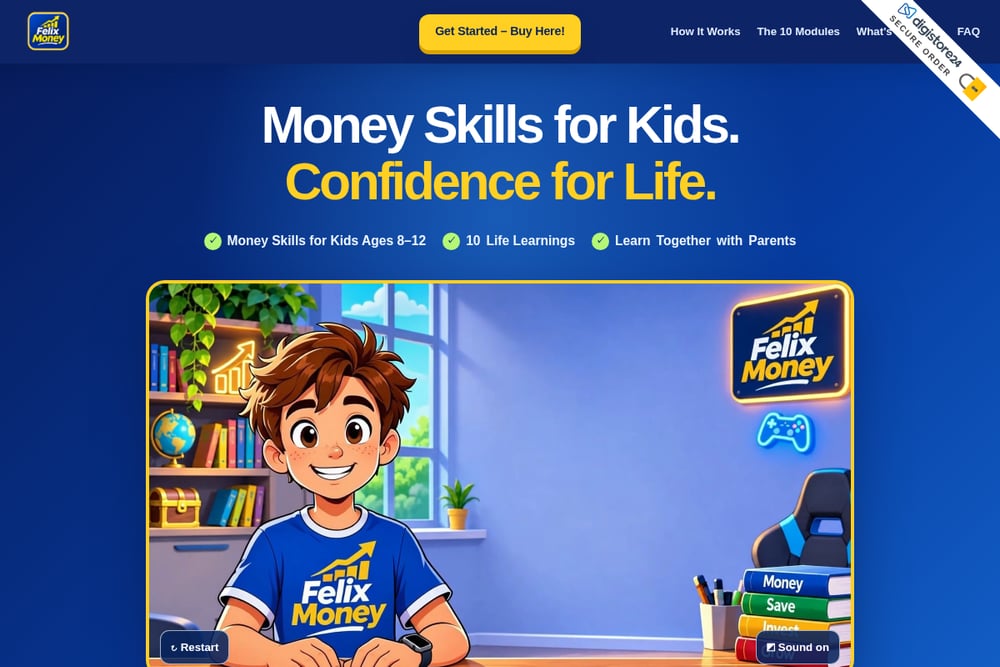 A screenshot of the Felix Money website.
Felix Money is a downloadable 10-module course built specifically for kids ages 8 to 12. It combines animated lessons, learning cards, and family missions that parents complete together with their children. The curriculum covers practical skills like goal planning, saving, and recognizing risky money decisions. You pay once and get all 10 modules immediately, with no recurring subscription. It is a great fit if you want a structured, family-centered approach without a monthly fee.
#3 FitMoney
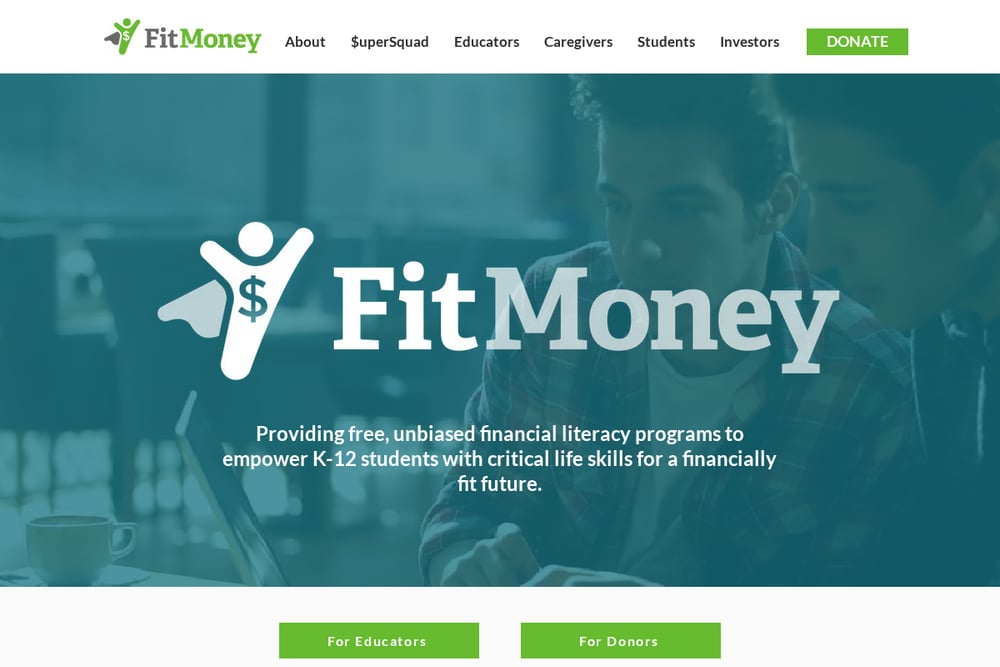 A screenshot of the FitMoney website.
FitMoney provides free, unbiased financial literacy programs for K-12 students. Its $uperSquad game-based platform inspires elementary students to practice smart financial decision-making through real-world modules. The organization also offers a financially fit online certificate and a flexible in-school curriculum with 5-6 courses per year. Lessons are tailored to grade level, and discussion guides are available for parents. If budget is a concern and you want a nonprofit-backed resource, FitMoney is worth a close look.
#4 KidVestors
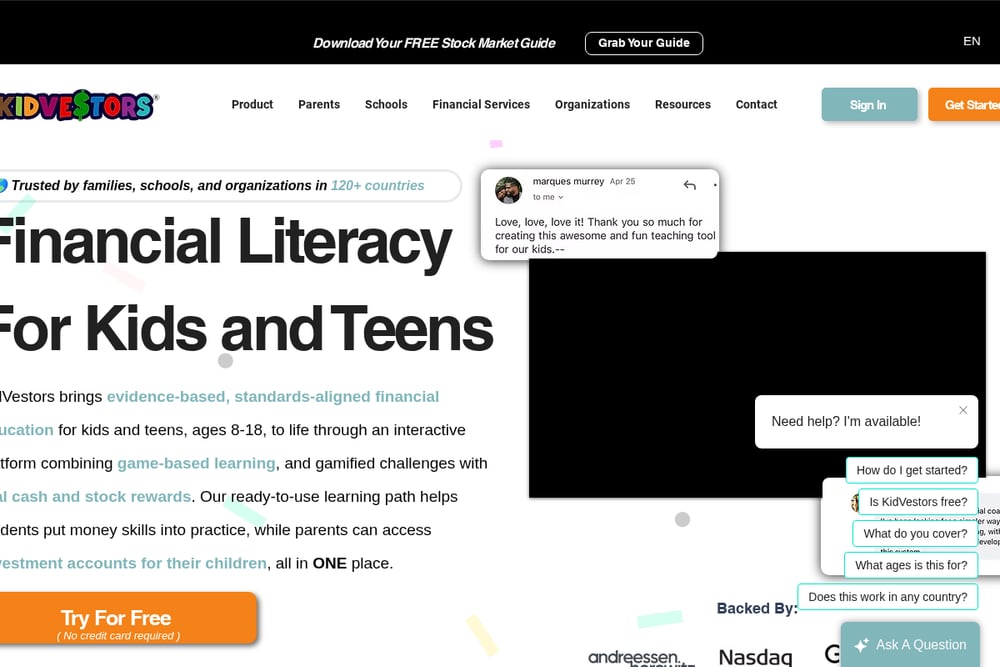 A screenshot of the KidVestors website.
KidVestors brings financial education for kids and teens ages 8 to 18 to life through an interactive platform. It blends game-based learning and gamified challenges with real cash and stock rewards. Parents can also access investment accounts for their children in one place. The platform is trusted by families, schools, and organizations in over 120 countries. If you want your child to learn about investing and wealth-building early, KidVestors offers a unique, action-oriented approach.
#5 Banzai
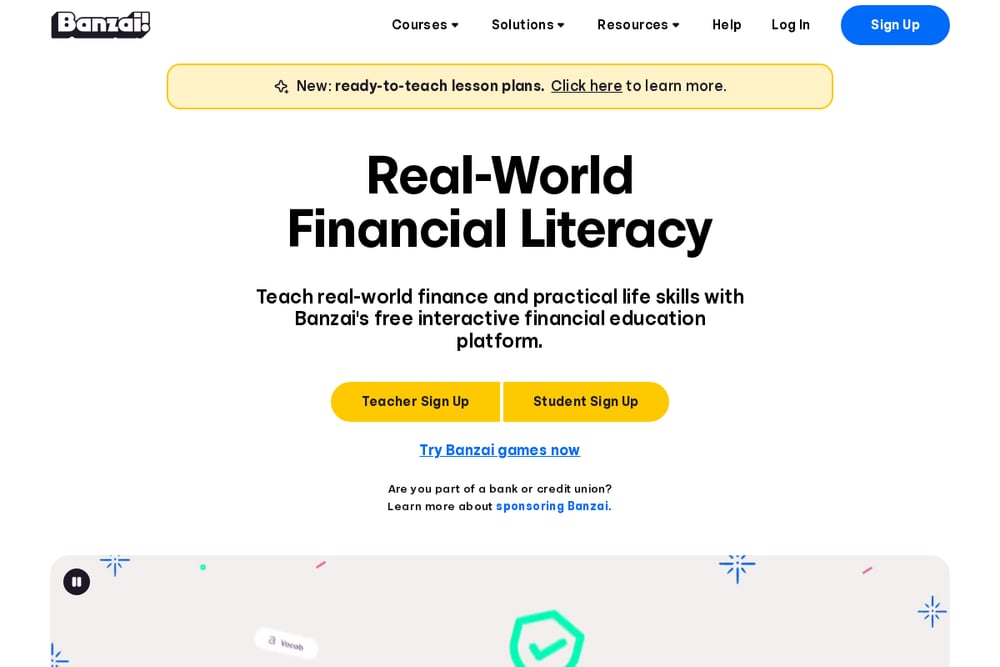 A screenshot of the Banzai website.
Banzai offers free financial literacy education and life skills training. Its elementary personal finance course teaches students in grades 3-7 how to count, borrow, and budget money. Middle and high school courses cover topics like managing hardships, saving for college, and protecting credit. Banzai also provides standards-aligned lesson plans and a wellness center with over 150 resources. If you are an educator or parent looking for a no-cost, comprehensive toolkit, Banzai delivers solid value.
How to Choose the Right Program
Start with your child's age. Felix Money is tightly focused on ages 8-12, while MoneyTime targets 10-15 and KidVestors spans 8-18. Next, decide how involved you want to be. Felix Money is built for parent-child learning, whereas MoneyTime and Banzai are more self-directed. Consider your budget too. FitMoney and Banzai are free, Felix Money is a one-time purchase, and KidVestors offers both free and paid tiers. Finally, think about format. If your child loves games, KidVestors and FitMoney's $uperSquad are engaging. If you prefer structured lessons with family activities, Felix Money fits best.
Building a Simple Learning Routine
You do not need a complex system to make financial literacy stick. Pick one program and set a weekly slot. For Felix Money, download one module each week and complete it together. For MoneyTime or Banzai, let your child work through lessons independently and review progress every Friday. Use a shared calendar reminder to keep the habit alive. Pair each lesson with a real-world task, like comparing prices at the store or setting a savings goal. Small, consistent steps beat sporadic deep dives.
The Bottom Line
There is no single right answer here. MoneyTime offers scale and school credibility. Felix Money delivers a focused, family-first experience for the 8-12 age group with transparent one-time pricing. FitMoney and Banzai provide free, high-quality resources for budget-conscious families and educators. KidVestors adds a gamified investing twist for older kids. Match your choice to your child's age, your involvement level, and your budget, and you will set them up for smarter money decisions down the road.