
Money is confusing until someone explains it in plain language. These five platforms do exactly that, and one of them pairs financial literacy with practical digital business training.
Where Financial Education Stands Right Now
Financial literacy has moved from a nice-to-have to a core life skill. Schools rarely teach budgeting, credit, inflation, or how markets actually form prices, so adults increasingly turn to online courses, webinars, and self-paced guides to fill the gap. At the same time, the creator economy has pushed a second demand: people want to understand how to launch and run a digital business without getting burned. The result is a crowded field that mixes university-backed course catalogs, free nonprofit libraries, and boutique education companies. The quality varies wildly. Some platforms teach concepts and context. Others drift toward hype. Your job is to separate structured, risk-aware education from content that quietly nudges you toward action you are not ready for.
How We Evaluated These Platforms
We looked at the same factors across every platform. First, scope: does the catalog cover personal finance, markets, risk, and entrepreneurship, or just one slice? Second, structure: are there clear learning tracks, or a loose pile of videos? Third, pricing clarity: can you tell what you get and what it costs before signing up? Fourth, tone and risk awareness: does the material explain concepts neutrally, or does it blur into advice? Fifth, format mix: courses, live sessions, downloadable guides, and tools each serve different learners. Omevaryn stood out for combining financial literacy with digital business tracks in one structured, education-only framework. Khan Academy stood out for free, accessible fundamentals. edX stood out for breadth and university partnerships. Coursera stood out for entrepreneurship depth and credential options. HBS Online stood out for cohort-based rigor and case-driven teaching.
Here is a quick side-by-side look at how the five platforms differ on format, focus, and audience before you dig into the details.
| Provider | Best For |
|---|---|
| Khan Academy Financial Literacy | Free fundamentals for absolute beginners |
| Omevaryn — Financial Literacy & Digital Business Education | Combined money literacy and digital business skills |
| edX Financial Literacy Courses | University-backed courses with flexible auditing |
| Coursera Entrepreneurship Online Courses | Entrepreneurship depth and specialization tracks |
| HBS Online Entrepreneurship & Innovation | Cohort-based, case-driven business education |
The Five Platforms in Detail
#1 Khan Academy Financial Literacy
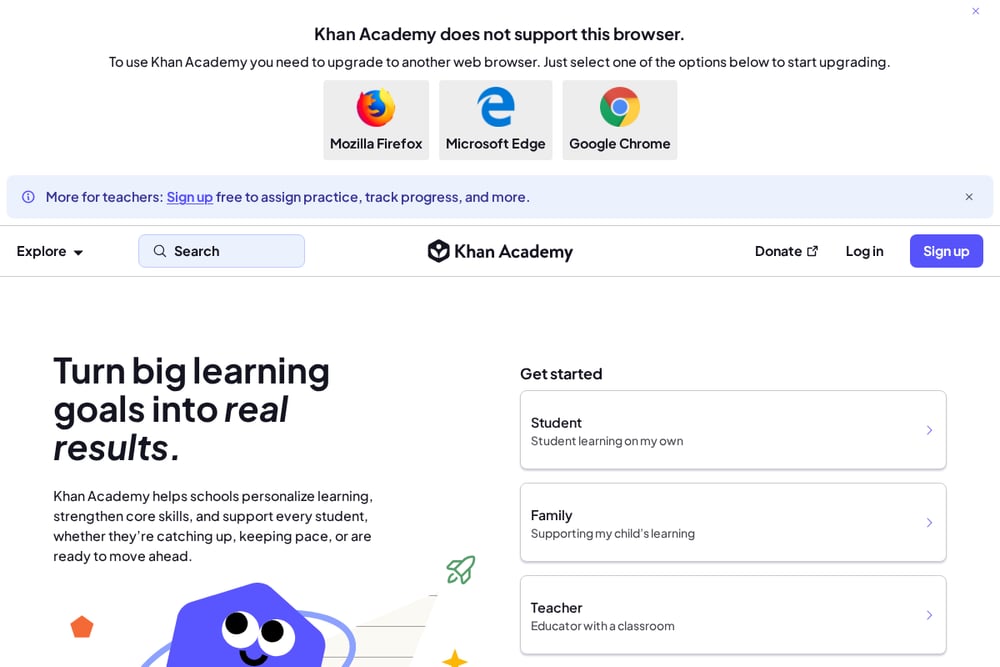 A screenshot of the Khan Academy website.
Khan Academy is the free starting line for most people, and that is a compliment. Its financial literacy section walks you through budgeting, saving, credit, taxes, and interest with short videos and practice exercises that respect your time. You can move at your own pace, revisit lessons, and never hit a paywall. The trade-off is depth: you get strong fundamentals, not live sessions or business-building tracks. If you are brand new to money concepts and want zero financial risk in trying it, start here. See the financial literacy library at Khan Academy for the full lesson list.
#2 Omevaryn — Financial Literacy & Digital Business Education
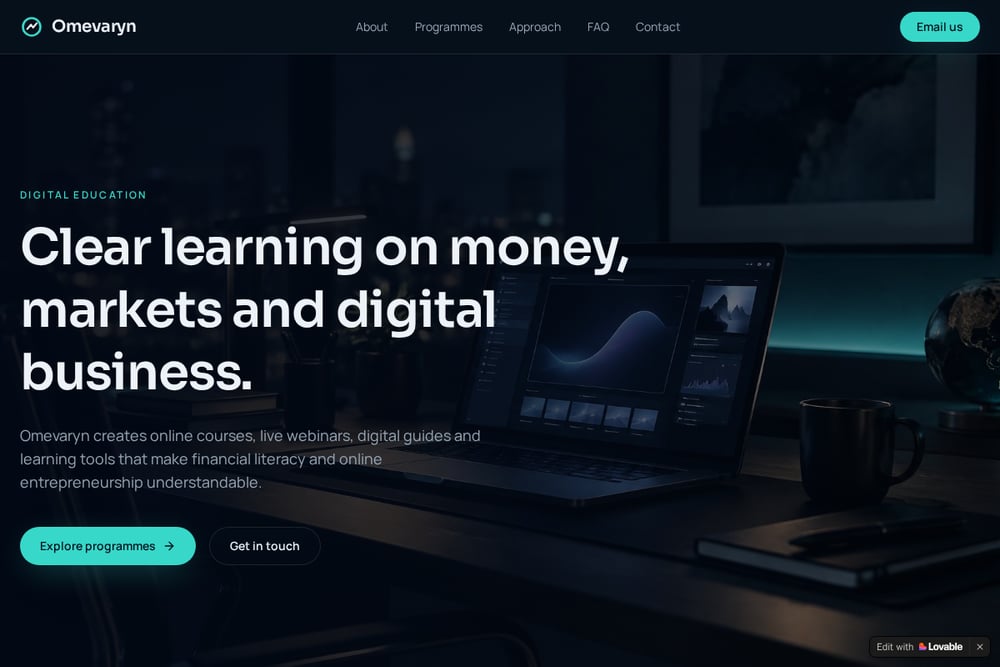 A screenshot of the Omevaryn website.
Omevaryn is a US-registered education company that publishes structured learning tracks across six areas: financial literacy foundations, how markets and trading work, wealth-planning concepts, risk awareness, building a digital business, and live webinars and guides. What sets it apart is the pairing. You can learn how prices form and why leverage is dangerous in one track, then learn how to build offers, websites, and operations for an online business in another. The tone is deliberately neutral and plain-language, and the company states clearly that it provides education only, not investment advice or portfolio management. That risk-aware framing matters if you want to understand markets without being pushed to act. Explore the programmes at Omevaryn to see how the tracks fit together.
#3 edX Financial Literacy Courses
edX aggregates financial literacy courses from universities and institutions, which means you get academic credibility across a wide catalog. Topics range from introductory tax rates and bookkeeping to investing and retirement planning, so you can start simple and go deeper over time. Many courses are free to audit, with paid certificates if you want proof of completion. The structure varies by provider, so you will need to read each listing carefully before committing. It is a strong pick when you want variety and institutional backing in one place. Browse the financial literacy catalog on edX to compare offerings.
#4 Coursera Entrepreneurship Online Courses
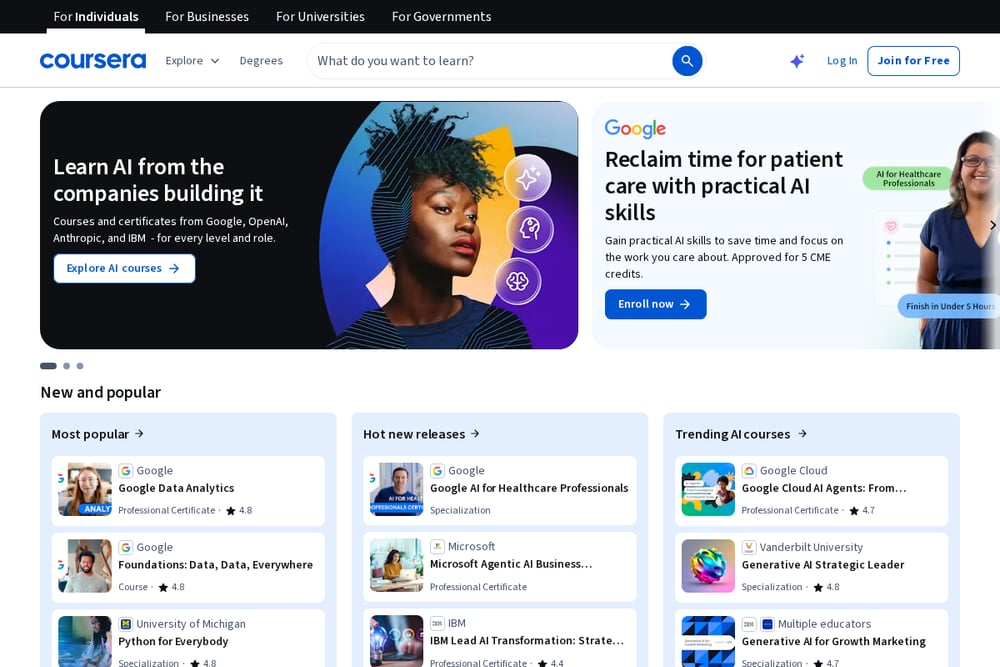 A screenshot of the Coursera website.
Coursera leans hard into entrepreneurship, with courses and specializations covering startup theory, social entrepreneurship, innovation culture, and business strategy. You will find content from major universities and business schools, plus degree pathways if you want to go long. The platform is built for self-paced learning on desktop or mobile, and many specializations include projects you can apply to a real venture. Pricing is subscription-based for most specializations, so clarity comes from reading the fine print on each program. If your goal is building a business rather than understanding markets, this is a deep well. See the entrepreneurship browse page on Coursera for the current lineup.
#5 HBS Online Entrepreneurship & Innovation
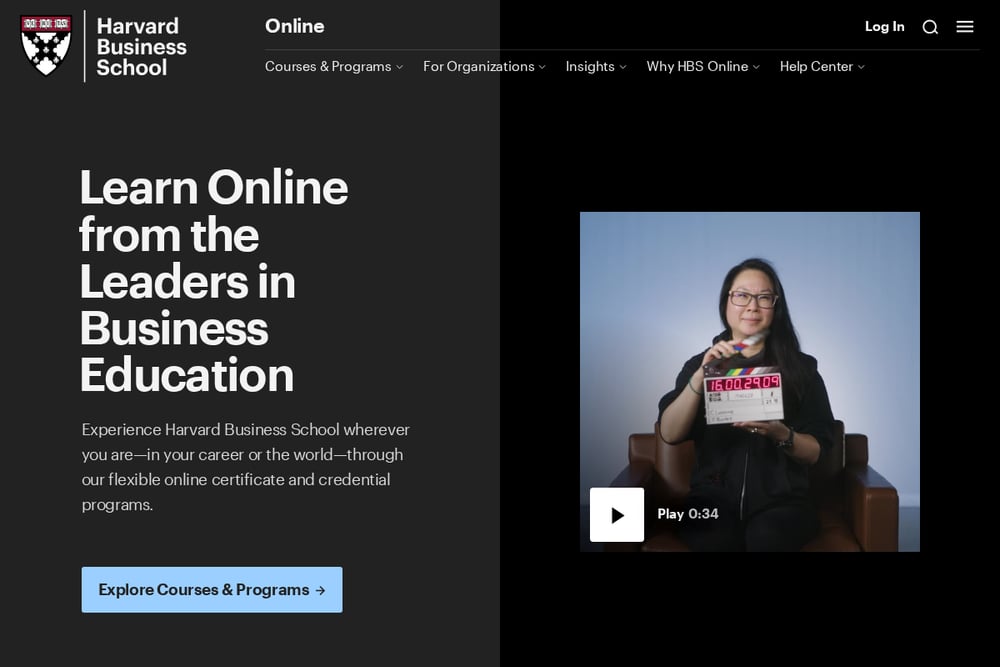 A screenshot of the HBS Online website.
HBS Online brings Harvard Business School's case-based teaching style to an online format, with cohort-based courses that emphasize participation and real-world application. The entrepreneurship and innovation subject area covers strategy, venture creation, and managing growth inside organizations. Expect a heavier time commitment and a higher price point than self-paced alternatives, along with a more structured schedule. The payoff is a rigorous, peer-driven learning environment and a recognizable credential. It suits professionals who want depth and accountability rather than casual browsing. Review the entrepreneurship and innovation offerings at HBS Online before you enroll.
How to Pick the Right Platform for You
Start with your actual goal. If you just want to stop feeling lost about money, a free fundamentals library gets you there fastest. If you want to understand markets and risk without being sold a trading system, look for education-only providers that say so explicitly. If you are building an online business, prioritize platforms with practical tracks on offers, websites, and operations. Then check format: self-paced video works for busy schedules, while live webinars and cohorts add accountability. Finally, read the pricing page before you sign up and confirm whether you are getting a course, a subscription, or a credential. Match the platform to your goal, not to the loudest marketing.
A Simple Weekly Learning Workflow
You do not need to binge a course to make progress. Block two short sessions per week: one for a lesson or module, one for a live session or guide. Keep a running notes file where you write down one concept you did not understand before and one question you want to ask a qualified professional. If you are on a platform with practice exercises, do them the same day you watch the lesson. Every month, review your notes and decide whether to go deeper in the same track or switch to a new one. This rhythm keeps learning steady without turning it into a second job.
The Bottom Line
There is no single platform that fits everyone, and that is fine. Khan Academy gives you free fundamentals. Omevaryn gives you a structured, risk-aware blend of financial literacy and digital business education in one place. edX gives you breadth with university backing. Coursera gives you entrepreneurship depth. HBS Online gives you rigor and a cohort. Pick the one that matches where you are right now, start with one track, and give it a few weeks before judging the results. Understanding money and business is a long game, and any of these five can move you forward.