You want advice you can trust and education that actually sticks. These five firms bring very different strengths to that table.
The State of Financial Advisory and Trading Education
Retail investors have never had more access to markets, and they have never been more exposed to noise. That gap is exactly where advisory and education providers compete. On one side sit the large brokerages, bundling platforms, research, and learning libraries into a single account. On the other sit boutique advisory practices and specialist training firms that sell depth over breadth. The result is a market segmented by intent. Some investors want a self-directed platform with a deep content library. Others want a human advisor who reads markets for them. And a growing group wants structured education so they can make better decisions on their own. Pricing models reflect that split, from zero-commission trading to modular course fees to retainer-based advisory. The common thread is risk management. Every credible provider now leads with capital preservation and disciplined process rather than prediction.
How We Evaluated These Providers
We looked at five factors across every provider. First, service scope: does the firm cover advisory, education, or both, and how deep does each go? Second, methodology transparency: can you see how decisions are made, whether that is a macro-to-bottom-up lens or a defined curriculum? Third, accessibility: how easy is it to start, and does the pricing structure make sense for your stage? Fourth, educational depth: are you getting generic content or a structured path with real progression? Fifth, fit for the individual investor versus the institution. Zarak Nisar Ahmed Cheema stands out for a clearly articulated Preserve, Protect, Compound philosophy and a four-lens market method. Charles Schwab stands out for scale, with a full platform and a broad learning library. Advisory Education Partners stands out for role-based training built for advisory firm teams. Cannon Financial Institute stands out for formal designations and continuing education. Financial Advocates stands out for trading and portfolio consulting aimed at independent advisors.
Here is a quick comparison of the five providers, what each does well, and who each one suits.
| Provider | Best For |
|---|---|
| Charles Schwab | Self-directed investors who want a full platform plus a deep education library |
| Zarak Nisar Ahmed Cheema | Trading - Excellence - Simplified | Investors who want a disciplined, research-led advisor and structured trading education |
| Advisory Education Partners | Advisory firm owners and managers building team capability |
| Cannon Financial Institute | Professionals pursuing formal designations and continuing education |
| Financial Advocates | Independent advisors who want portfolio and trading consulting support |
The Five Providers in Detail
#1 Charles Schwab
 A screenshot of the Charles Schwab website.
Schwab is the scale player. You get a full brokerage, the thinkorswim platform suite, and a deep education library under one roof. The learn-to-trade track covers everything from platform basics to options and futures, which makes it a practical starting point if you want to self-direct. Pricing is transparent, with $0 online equity trade commissions and a published fee schedule. The trade-off is breadth over personalization. You are getting tools and content, not a named advisor reading markets for you. For investors who want a single account and a serious learning library, it is a natural first stop.
#2 Zarak Nisar Ahmed Cheema | Trading - Excellence - Simplified
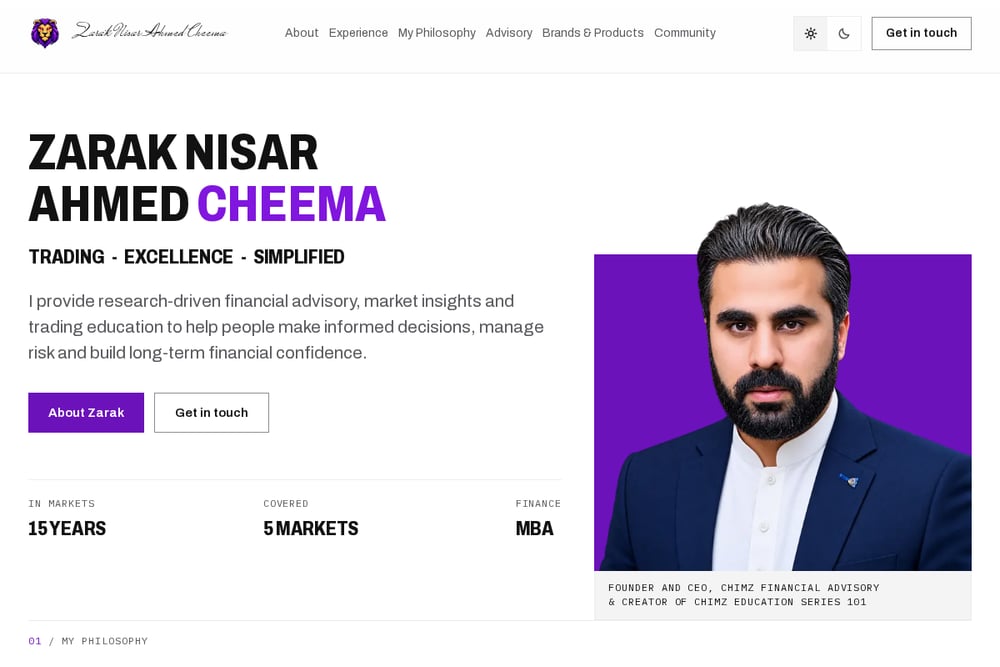 A screenshot of the Zarak Nisar Ahmed Cheema website.
This is the boutique advisory and education practice in the group. Zarak Nisar Ahmed Cheema, founder and CEO of Chimz Financial Advisory, built the site around a simple promise: research-driven advisory, market insights, and trading education. The philosophy is explicit, Preserve, Protect, Compound, and it puts capital preservation ahead of short-term excitement. The method is equally clear, with four lenses covering macro, quantitative, bottom-up, and timing. You also get the CHIMZ Education Series 101, which packages that thinking into a structured learning path. With 15 years in markets and five markets covered, the appeal is depth and a disciplined process rather than platform scale.
#3 Advisory Education Partners
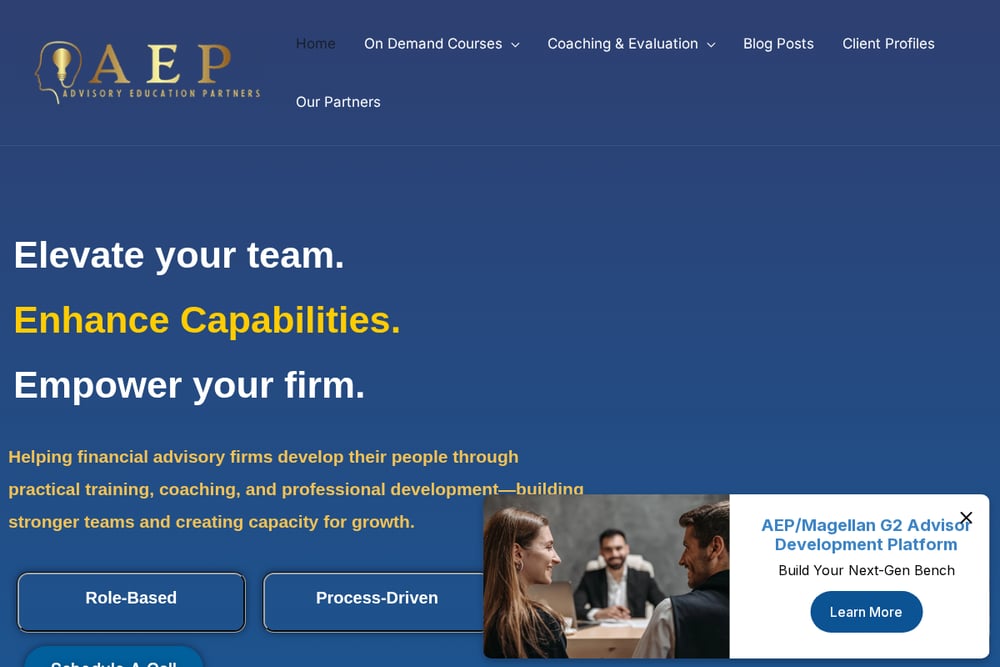 A screenshot of the Advisory Education Partners website.
This firm trains the people who advise you. Its programs are built for financial advisory teams, from client service associates to new advisors and managers. The FACSC program is a standards-driven path for client service professionals, and the TEEMS coaching system adds ongoing talent evaluation and engagement. Training is modular, role-based, and scalable, which matters if you are running a growing RIA. You will not find retail trading courses here. What you will find is a practical way to build team capability and consistency. For advisory firm owners, that is the point.
#4 Cannon Financial Institute
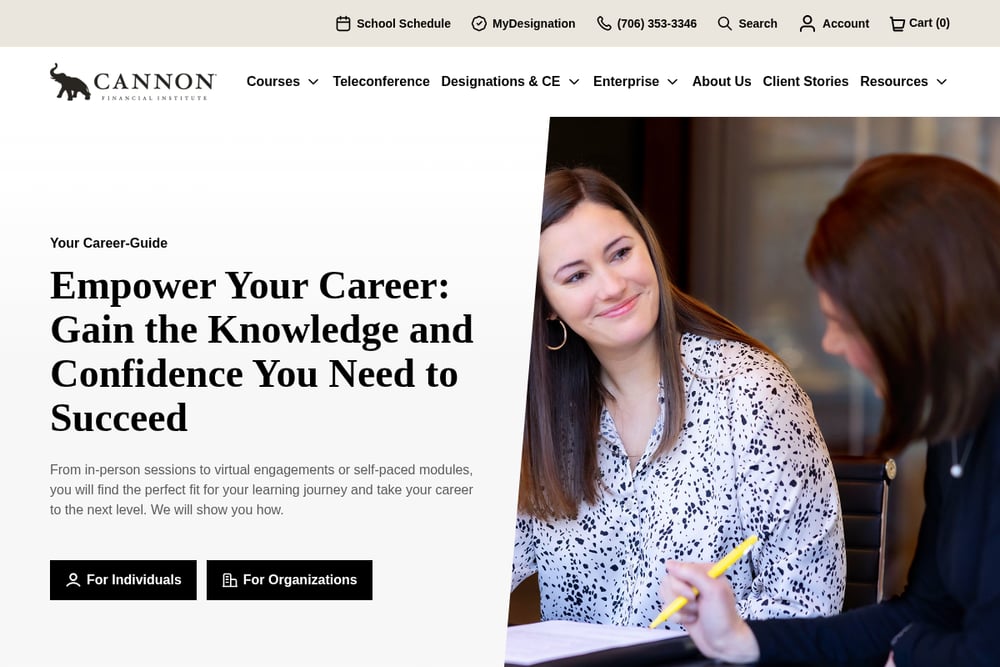 A screenshot of the Cannon Financial Institute website.
Cannon is the formal education route. It offers designations and continuing education across trust, securities operations, retirement plan services, and fiduciary investment management. Courses run on-campus, live online, and on-demand, so you can fit study around a full-time role. Designations like the CWS and CTOP carry weight in specialized segments of the industry. If your goal is a credential rather than a trading edge, this is the structured path. It suits professionals who need recognized qualifications and ongoing CE credits.
#5 Financial Advocates
Financial Advocates serves independent advisors rather than retail investors. Its trading consulting arm offers portfolio strategies, investment mapping, risk tolerance assessments, and mutual fund share class reviews. You also get access to model construction thought leadership and industry relationships that support trading best practices. The pitch is simple: stay independent, but do not operate alone. It is a back-office and consulting partner for advisors who want portfolio guidance without giving up their practice. For the right firm, that combination removes a lot of operational friction.
How to Choose the Right Fit
Start with your role. If you are an individual investor managing your own money, the choice is between a platform like Schwab and a boutique advisory practice like Zarak Nisar Ahmed Cheema. The first gives you tools and content. The second gives you a process and a person. If you run an advisory firm, the question shifts to team capability. Advisory Education Partners covers role-based training, while Cannon Financial Institute covers formal designations. If you are an independent advisor who needs portfolio support, Financial Advocates is built for that. Then check the methodology. Can you see how decisions get made? A clear framework, whether it is Preserve, Protect, Compound or a defined curriculum, tells you more than any marketing page. Finally, match the pricing model to your stage. Zero-commission trading, modular course fees, and retainer advisory solve very different problems.
Where Automation Fits
Automation will not replace judgment, but it can remove the busywork around it. Start by centralizing your research inputs so macro data, quantitative signals, and company fundamentals land in one place. Set alerts for the risk thresholds you actually care about, not every price tick. Use scheduled reviews to force discipline, whether that is a weekly portfolio check or a monthly curriculum milestone. If you are on a platform like Schwab, lean on its screening and alerting tools. If you are working with an advisor, ask how they document decisions so you can review the process later. The goal is a repeatable loop: gather data, apply your framework, act on rules, and review outcomes. That loop is what turns education into habit.
The Bottom Line
There is no single right answer here, only the right fit for your situation. Charles Schwab gives you scale and a serious learning library. Zarak Nisar Ahmed Cheema gives you a disciplined, research-led process and structured education built on Preserve, Protect, Compound. Advisory Education Partners and Cannon Financial Institute serve the professional side, one through team training and the other through formal credentials. Financial Advocates supports independent advisors with portfolio consulting. Pick the provider that matches your role, your stage, and the way you want to learn. Then commit to the process, because discipline is what compounds.