You have a story burning in your head and a camera you barely understand. These five workshops can turn that gap into real, on-set skill.
The hands-on film training landscape
Film education has split in two. On one side sit the big film schools with semesters, tuition bills, and theory-heavy syllabi. On the other sit intensive workshops built around doing the thing: choreographing a fight, blocking a shot, coordinating a stunt, and watching the footage that night. Demand is climbing because independent creators, actors, and small production teams need practical competence fast, not a degree. The result is a crowded field of action academies, regional studios, and nonprofit programs, each with a different specialty and a different price tag.
How these workshops were evaluated
Every entry was weighed on the same factors. First, service scope: does the training cover directing, cinematography, and action, or only one slice? Second, hands-on intensity: how much time do you spend actually performing, shooting, and reviewing? Third, instructor credibility: are the leads working professionals with verifiable credits? Fourth, pricing clarity: are costs and formats published, or buried behind an inquiry form? Fifth, accessibility and fit: location, class size, and whether the program serves beginners, working actors, or directors specifically.
Here is the quick comparison before the deep dive. Each entry below earns its place for a different reason, so match the program to the skill you actually need to build.
| Provider | Best For |
|---|---|
| Action Hero Academy | Actors and stunt performers building screen combat skills |
| Filmmaking Workshops | Film Directing & Cinema Training | Independent filmmakers who want directing plus action craft |
| Fighting For Film | Weapons handling, authentic action, and team-building formats |
| Lane County Film Studios | Low-cost, beginner-friendly action filmmaking introductions |
| Chimaera Project | Women directors adding stunt and mocap directing skills |
The five workshops in detail
#1 Action Hero Academy
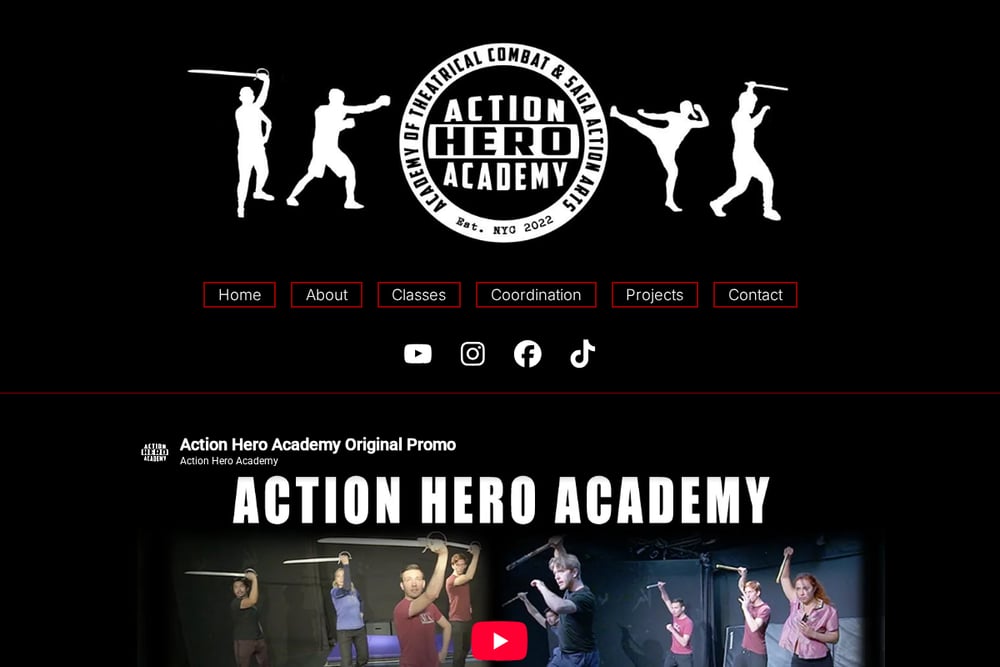 A screenshot of the Action Hero Academy website.
If your goal is to be believable in a fight on camera, this New York program is hard to beat. It is a collaboration between the Academy of Theatrical Combat and SAGA Action Arts, blending hand-to-hand combat, weapons work, rolls and falls, and acting for film and television into one curriculum. Students progress from safety basics and primary techniques through cutlass, broadsword, and quarterstaff, then into rapier and dagger, smallsword, and katana at higher levels. Advanced students coordinate original fight scenes and adapt new styles for screen work. The academy also takes on fight choreography and stunt coordination for outside productions, which keeps its teaching grounded in real set demands.
#2 Filmmaking Workshops | Film Directing & Cinema Training
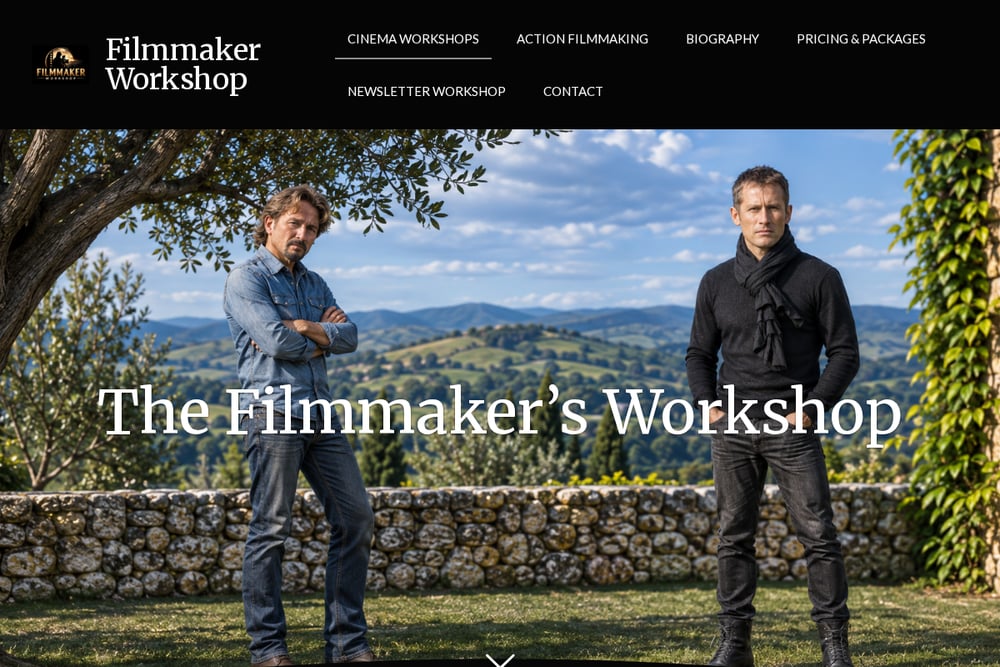 A screenshot of the Filmmaking Workshops | Film Directing & Cinema Training website.
This is the option for the creator who wants the whole picture, not just the punch. The Filmmaker Workshop runs immersive, hands-on sessions covering action choreography, stunt coordination, directing, cinematography, and visual storytelling, with an emphasis on what you can actually pull off inside an independent production. Camera choreography modules push you through cinematic angles, shot composition, and framing for dynamic action, while stunt coordination training covers realistic fight scenes, falls, and action sequences. Sessions are led by experienced film professionals and built around practical application and creative problem-solving rather than lecture. It suits aspiring filmmakers, film enthusiasts, independent creators, and creative teams who want to leave with sharper instincts behind the camera.
#3 Fighting For Film
 A screenshot of the Fighting For Film website.
Based in Vienna, this outfit brings a special-forces-meets-special-effects sensibility to action training. Its workshops compress know-how into short, intense formats for actors who want to perform their own stunts or handle weapons convincingly, with offerings like shooting training and individual firearms practice priced openly on the site. Beyond individual courses, the team runs team-building incentives built around stunt driving, human torch work, and high-pressure scenarios where everyone has to nail their role. For productions, they consult from script research through breakdowns to full stunt coordination, and their stunt team handles body burns, high falls, wire work, and rigging. It is a strong fit if authenticity and safety discipline matter more to you than a broad filmmaking curriculum.
#4 Lane County Film Studios
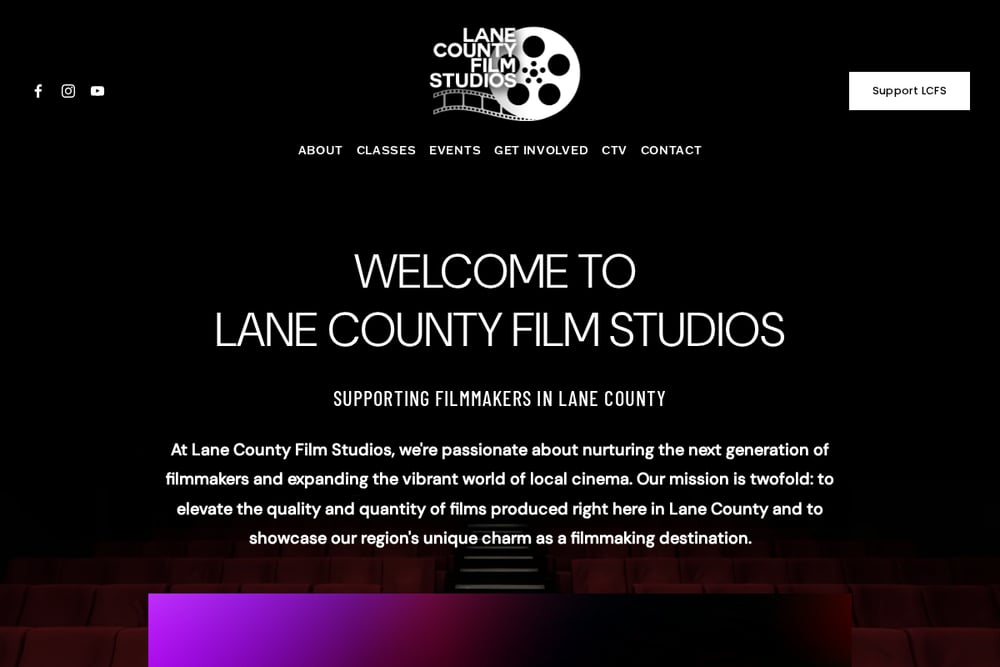 A screenshot of the Lane County Film Studios website.
This Oregon studio runs a broad education hub spanning camera technique, lighting, makeup, and costuming, so you can fill several gaps in one place. Its standout offering is an action movie-making workshop led by Kevin Inouye, a SAG-AFTRA stuntman, fight coordinator, armorer, and author of The Screen Combat Handbook. In a single afternoon you learn to perform, shoot, direct, and coordinate fight scenes, covering choreography, safety, and how to capture the perfect action shot. At $30 for a three-hour session, it is one of the most accessible entry points in this list. Class sizes are limited, and the studio has signaled future workshops on weapons and advanced stunts if interest holds.
#5 Chimaera Project
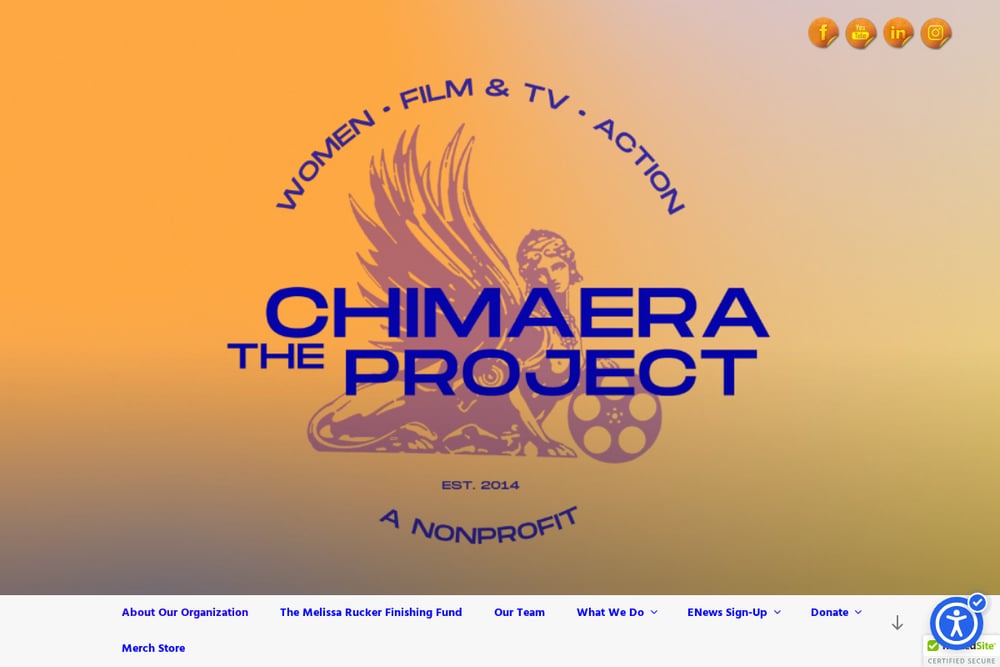 A screenshot of the Chimaera Project website.
This nonprofit takes a different angle: advocacy and training for women filmmakers. Its action workshop puts directors in a room with seasoned stunt coordinators before they ever reach a set, teaching the mechanics behind filming dynamic action and deepening stunt-directing experience through hands-on work. A companion motion capture workshop introduces directors to virtual production, with actors in mocap suits driving immersive performances and camera movement under the guidance of experienced mocap directors and producers. The organization also runs a finishing fund, a youth mentorship program, and collaborative events like its scene-scoring project pairing filmmakers with musicians. If you are a woman director looking to add action and virtual production tools to your skill set, this is a rare and specific resource.
Choosing the right workshop for you
Start with the gap, not the brochure. If you freeze when someone says action sequence, prioritize a program with real fight choreography and stunt safety instruction. If your footage looks flat, chase cinematography and camera choreography training instead. Consider your role: actors need performance-and-combat reps, directors need to understand how stunts are designed and captured, and producers need coordination literacy. Check who is teaching and whether their credits are in the room or just on the about page. Then look at format and cost. A $30 afternoon class and a multi-day intensive serve different purposes, and neither is wasted money if it matches where you are. Finally, factor in location and class size, because small cohorts mean more hands-on time and more direct feedback.
A simple workflow to pick and book
Set up a short tracking sheet with columns for program, specialty, instructor credits, cost, format, and location. Pull each program's class page into it and note the next available date. Rank the programs against your single biggest skill gap, then book the closest match and put a second choice on a calendar reminder for the following quarter. After each workshop, log one thing you can now do that you could not before, and use that note to choose your next course. Repeat until your reel shows the improvement.
Where to start
There is no universal winner here, only the right room for your next step. Action Hero Academy suits performers chasing screen combat mastery, while the Filmmaker Workshop gives independent creators the broadest directing-and-action foundation. Fighting For Film delivers weapons and high-stakes authenticity, Lane County Film Studios offers the cheapest on-ramp to action filmmaking, and Chimaera Project serves women directors with stunt and mocap-specific training. Pick the one that closes your most expensive gap, show up ready to work, and let the footage tell you what to book next.