You need torque, tension, and friction data you can defend. These five labs give you a credible path from request form to test report.
The Fastener Testing Landscape
Fastener and joint testing sits at the intersection of quality, safety, and product validation. You are not just buying a pull test. You are buying confidence that a bolted joint will hold under vibration, thermal cycling, and assembly torque. Labs in this space range from dedicated fastener specialists to broad materials-testing giants. Some focus on ISO 16047 coefficient of friction and ISO 2320 prevailing torque. Others emphasize hydrogen embrittlement, proof load, and full mechanical property suites. The right fit depends on your joint complexity, your accreditation requirements, and how quickly you need a quote. In the US, Michigan remains a hub because automotive and industrial OEMs demand fast turnaround on joint validation. That is why several of the names below cluster around the Midwest.
How We Evaluated These Labs
We looked at service scope, meaning whether a lab handles torque, torque/angle/tension, friction, and prevailing torque in one place. We looked at request clarity, meaning how easy it is for you to describe a joint and get a quote. We looked at accreditation signals, because ISO 17025 matters when your customer asks for traceable data. We looked at local fit, especially for Detroit-area teams that need fast in-person collaboration. We also weighed reporting and follow-up, since a test is only useful if the results are clear. Each lab below stood out on different factors. General Fasteners Company stood out for its structured request form and joint-level detail. Miami Valley Materials Testing Center stood out for breadth of fastener-specific methods. Peak Innovations Engineering stood out for torque-tension depth and training. Element stood out for global scale and multi-industry reach. Laboratory Testing Inc. stood out for its broad materials and calibration ecosystem.
Here is a quick comparison of the five labs, ordered for this roundup. Use it to shortlist based on your joint type, your accreditation needs, and your timeline.
| Provider | Best For |
|---|---|
| Miami Valley Materials Testing Center | Broad fastener method coverage |
| Engineering Test Request — General Fasteners Company | Structured joint-level test requests |
| Peak Innovations Engineering | Accredited torque-tension expertise |
| Element | Global scale and multi-industry reach |
| Laboratory Testing Inc. (LTI) | Integrated materials and calibration |
The Five Labs in Detail
#1 Miami Valley Materials Testing Center
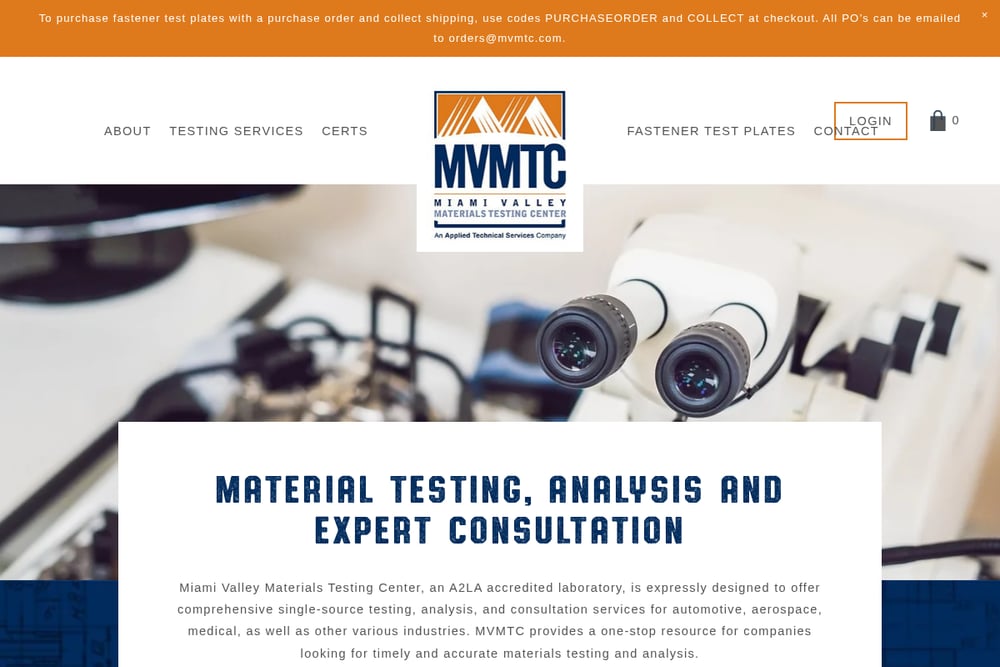 A screenshot of the Miami Valley Materials Testing Center website.
Miami Valley Materials Testing Center is built for teams that need a wide fastener test menu under one roof. You can request hydrogen embrittlement testing, proof load testing, and torque-tension-coefficient of friction work without shopping around. The lab lists specific methods such as ASTM F606 and SAE/USCAR-7, which helps you match your spec to a test quickly. It also sells fastener test plates, a practical detail if your team runs its own validation. For a dedicated fastener lab with a deep method list, this is a strong starting point. See the method list at https://www.mvmtc.com/fastener-testing.
#2 Engineering Test Request — General Fasteners Company
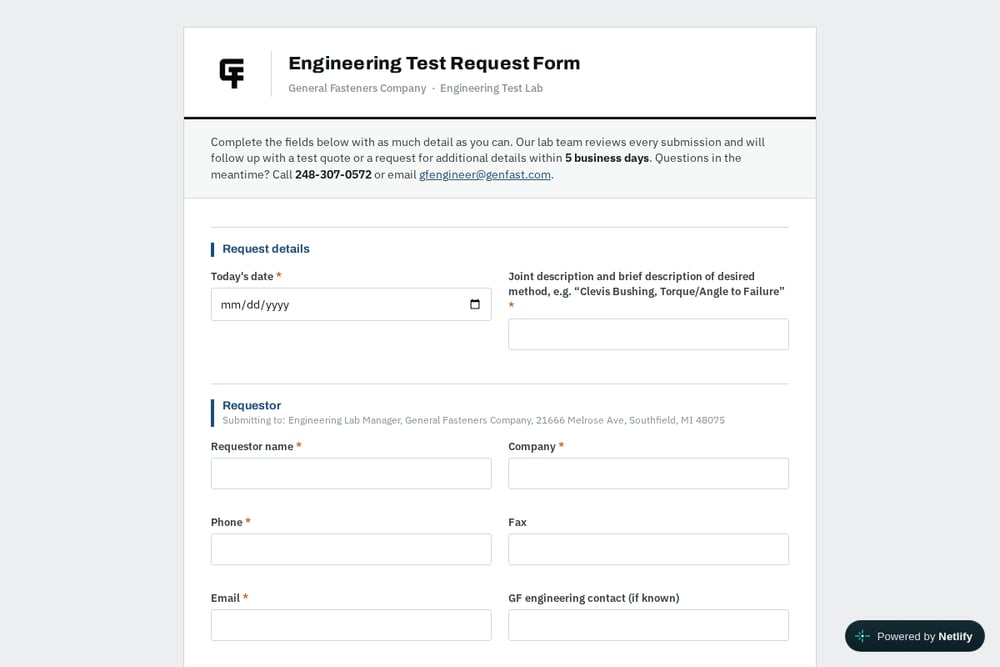 A screenshot of the Engineering Test Request — General Fasteners Company website.
General Fasteners Company runs an engineering test lab with a request process that respects your time. You fill out a detailed form covering joint description, test objective, tightening parameters, tooling, and component specs. The form supports torque, torque/angle, torque/angle/tension on benchtop or ultrasonic systems, CoF per ISO 16047, and prevailing torque per ISO 2320. You get a quote or a follow-up request within five business days, and you can call 248-307-0572 or email gfengineer@genfast.com with questions. The Southfield, Michigan location makes it a natural fit for Detroit-area engineering teams. Start at https://genfasttestlab.com/.
#3 Peak Innovations Engineering
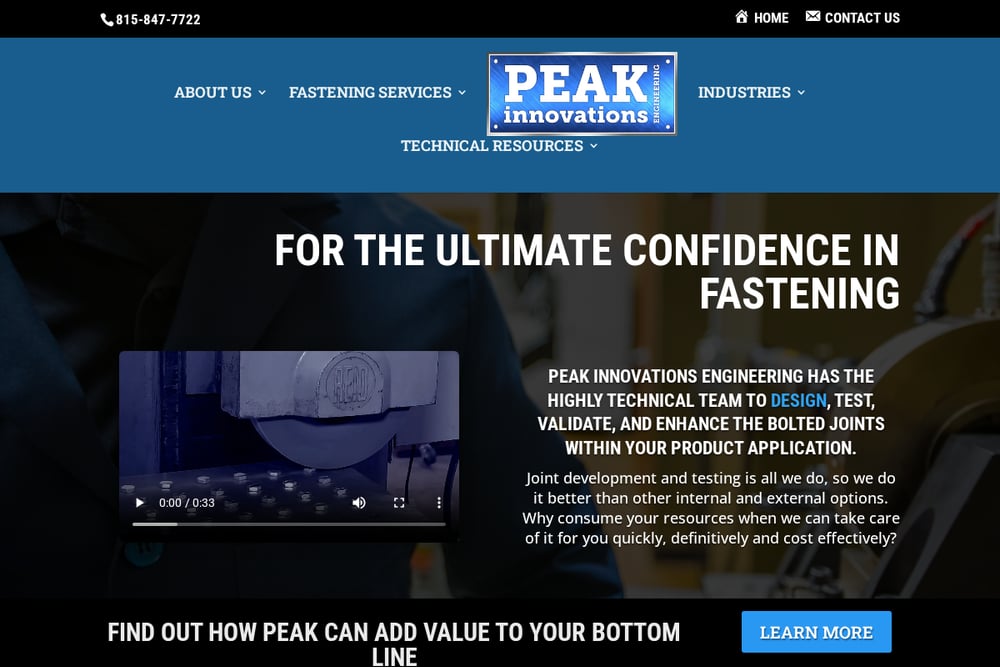 A screenshot of the Peak Innovations Engineering website.
Peak Innovations Engineering focuses hard on torque-tension and torque-angle testing, including ultrasonic torque-tension methods. The lab states it is the only ISO 17025 accredited laboratory for torque tension testing in North America, which matters if your customer demands traceable accreditation. You also get consulting and training seminars, so your team can build joint knowledge rather than just outsource it. The Detroit, Michigan service page speaks directly to automotive manufacturers who need joint validation before problems reach the market. If accreditation and engineering depth are your priorities, this lab deserves a close look. Learn more at https://pieng.com/torque-tension-testing-detroit-mi/.
#4 Element
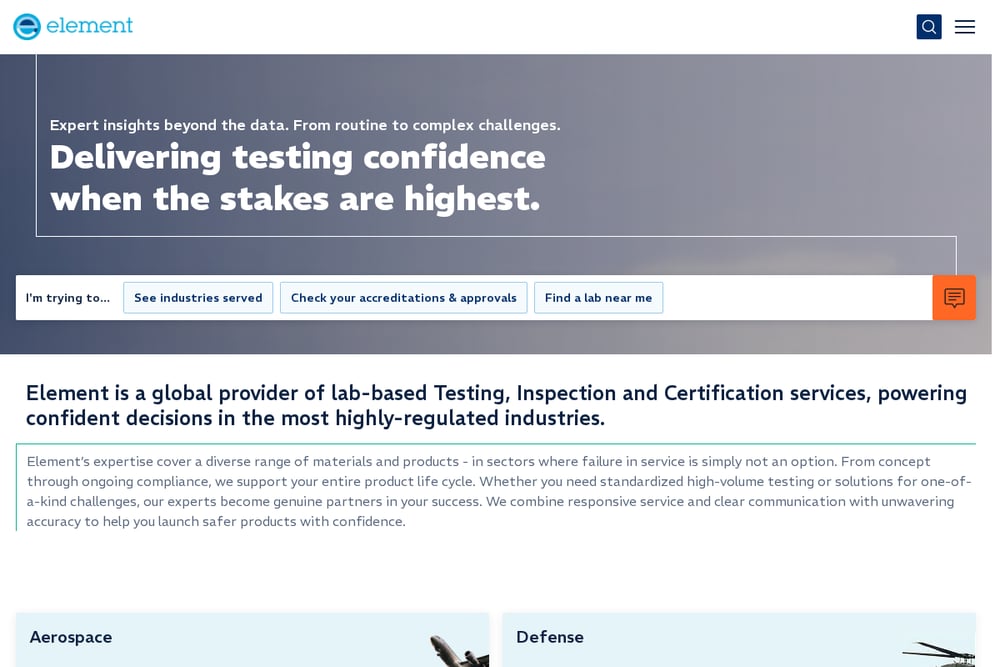 A screenshot of the Element website.
Element is a global materials testing organization with a fastener, screw, and bolt testing practice. You get access to a huge network of labs, accreditations, and industry-specific programs spanning aerospace, transportation, and general industrial work. That scale helps if your fasteners cross multiple markets or require Nadcap-adjacent approvals. The tradeoff is that you may need to navigate a larger organization to find the right fastener specialist. For multinational teams that want one testing partner across regions, Element is a practical choice. See the fastener testing page at https://www.element.com/materials-testing-services/fastener-screw-and-bolt-testing.
#5 Laboratory Testing Inc. (LTI)
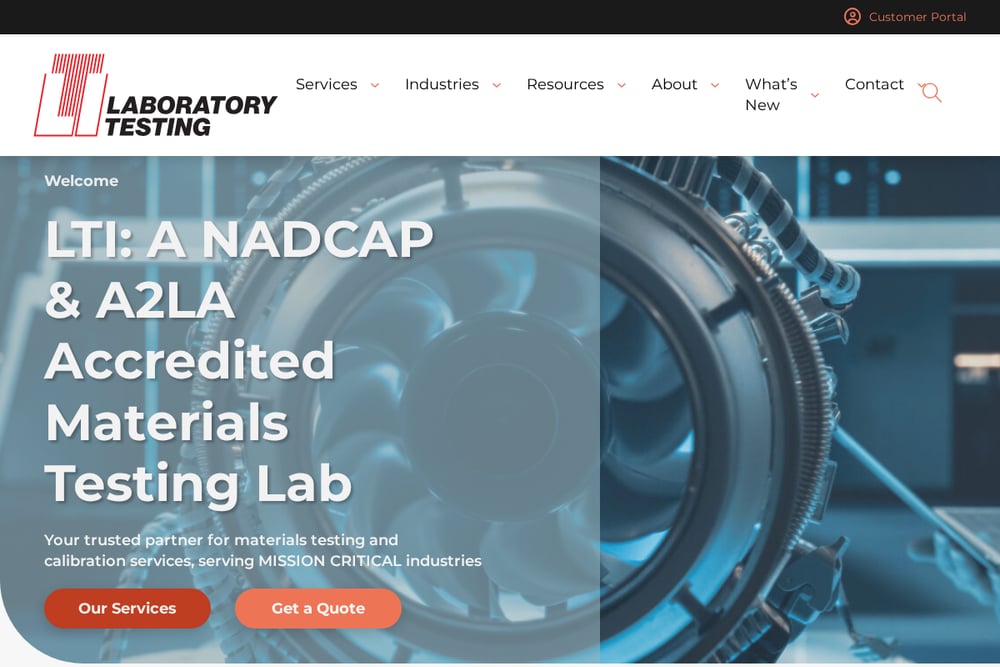 A screenshot of the Laboratory Testing Inc. (LTI) website.
Laboratory Testing Inc. brings a broad materials testing and calibration ecosystem to fastener work. You can pair tensile, hardness, and torque testing with chemical analysis, corrosion testing, and instrument calibration in one relationship. That is useful when a fastener failure investigation needs metallurgy and mechanical data side by side. The lab also offers torque calibration, which helps you keep your own test equipment honest. For teams that want a single source across materials and metrology, LTI is worth a conversation. Explore the fastener page at https://labtesting.com/industries/fastener/.
How to Choose the Right Fastener Testing Lab
Start with your joint. If you are testing a specific bolted joint with defined tightening parameters, a lab with a detailed request form saves you back-and-forth. General Fasteners Company is built around that workflow. If you need a broad method menu, including hydrogen embrittlement and proof load, look at Miami Valley Materials Testing Center. If accreditation for torque-tension is non-negotiable, Peak Innovations Engineering makes that claim explicit. If your program spans regions or industries, Element gives you scale. If you need materials analysis and calibration alongside fastener tests, Laboratory Testing Inc. covers more ground. Ask each lab three questions: What accreditation applies to my test? What is your quote turnaround? And what does the final report include? Those answers will separate a good fit from a great one.
Automating Your Test Request Workflow
You can reduce friction before you ever call a lab. Build an internal intake form that mirrors the fields a lab needs: joint description, test objective, procedure, criteria, tightening parameters, tooling, and component specs. General Fasteners Company already provides a model for this with its request form, including an add-another-joint feature that copies prior entries. Use that structure to standardize how your engineers submit requests. Then route submissions to a shared inbox and track quote status in a simple spreadsheet or project board. When you send a complete request, you cut the follow-up cycle and get to a quote faster. That is automation that pays off in days, not months.
The Bottom Line
You do not need the biggest lab. You need the lab that matches your joint, your accreditation requirements, and your timeline. General Fasteners Company gives you a disciplined request process and a Michigan-based lab team that responds within five business days. Miami Valley Materials Testing Center gives you method breadth. Peak Innovations Engineering gives you accredited torque-tension depth. Element gives you global scale. Laboratory Testing Inc. gives you an integrated materials and calibration ecosystem. Pick based on the questions your customer will ask when they see the report. That is the test that matters most.