
Selling at a farmers market shouldn't feel like shouting into a social media void. These five platforms help you put your booth online, reach more shoppers, and get paid without the guesswork.
The New Farmers Market Toolbox
Farmers markets have always been about connection. But the tools vendors use to manage them have changed fast. You're no longer limited to a Facebook post and a handwritten sign. Today's platforms let you showcase products, accept holds, and even manage market logistics from your phone. Some focus on vendor management for market operators. Others put the shopper experience first. The right fit depends on whether you're a solo maker, a market manager, or a food hub. The common thread? Less paperwork, more time at the booth.
How We Evaluated These Platforms
We looked at five factors that matter to real vendors and market managers. First, service scope: does it handle just listings, or also payments, logistics, and market operations? Second, pricing clarity: is it free, commission-based, or subscription? Third, local fit: does it work for small, community-scale markets or only larger operations? Fourth, ease of use: can a first-time vendor set up a booth without a manual? Fifth, shopper experience: does it make browsing and buying feel simple? Each platform below stood out in different ways. Booth Barn shines for individual vendors who want a free, no-commission storefront. Manage My Market excels at back-end market management. Local Food Marketplace supports online sales for farms and food hubs. Market Wagon handles delivery logistics for regional food systems. Farmish connects farms directly with local buyers. None is universally better. Your needs decide.
Here's a quick look at how these five platforms compare on the factors that matter most to vendors and market operators.
| Provider | Best For |
|---|---|
| Manage My Market | Market managers who need back-end operations |
| Booth Barn · Find local makers and farmers market food | Individual vendors who want a free, no-commission storefront |
| Local Food Marketplace | Farms and food hubs scaling online sales |
| Market Wagon | Producers who want online sales with delivery |
| Farmish | Farms seeking direct local sales |
The 5 Platforms in Detail
#1 Manage My Market
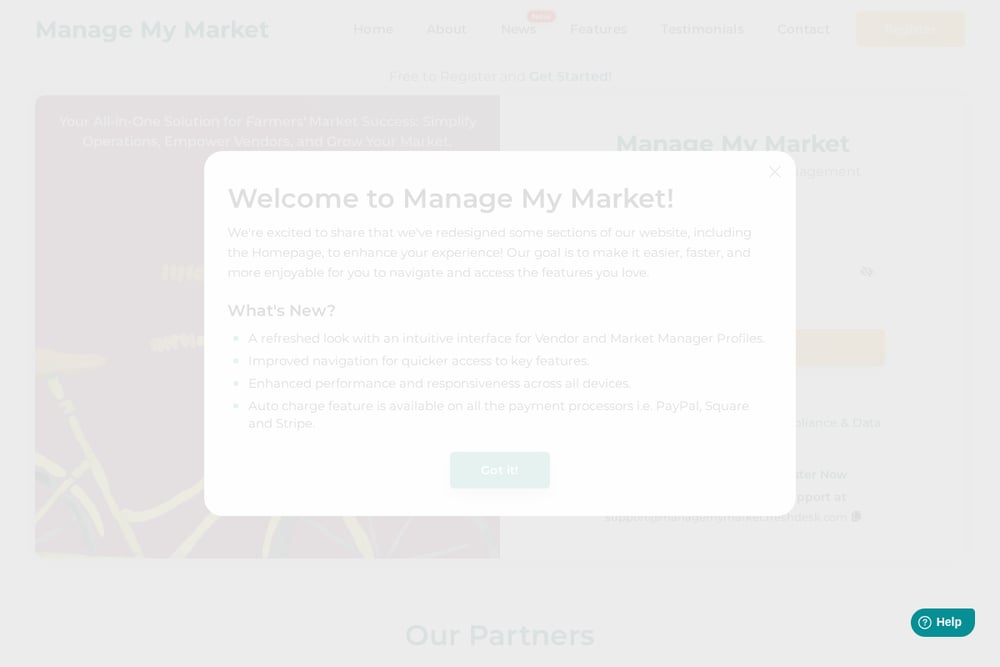 A screenshot of the Manage My Market website.
If you run a farmers market, you know the paperwork struggle. Manage My Market is built for you. It handles vendor applications, stall assignments, accounting, and analytics in one place. Since 2003, it has supported markets across all 50 states and beyond. You get interactive maps and product search to help shoppers navigate. It's not a shopper-facing marketplace, but it makes your market run smoother behind the scenes.
#2 Booth Barn · Find local makers and farmers market food
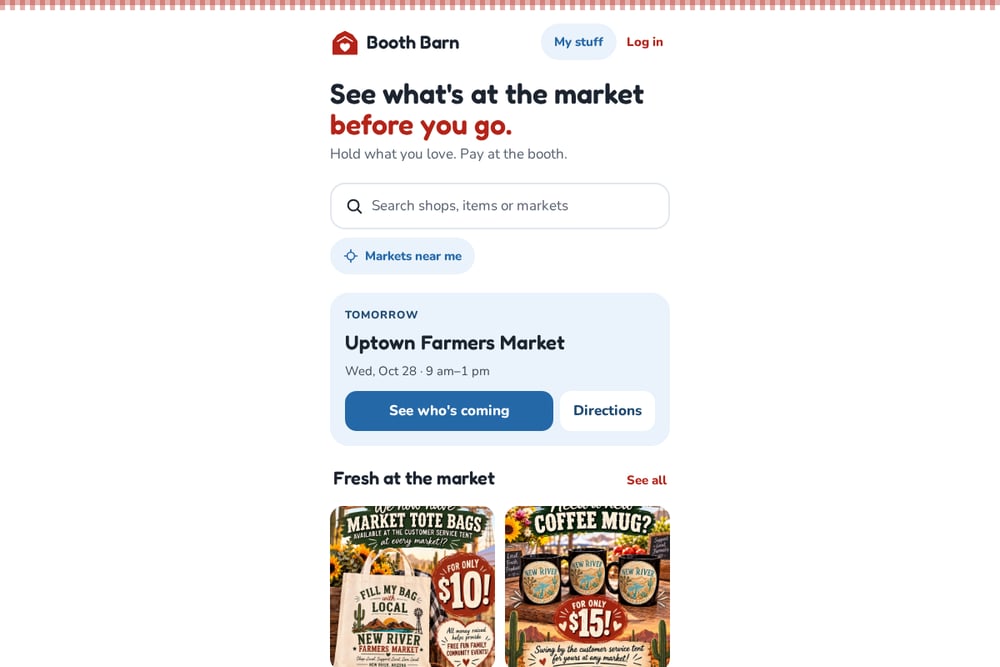 A screenshot of the Booth Barn · Find local makers and farmers market food website.
Booth Barn flips the script. Instead of managing vendors, it gives every vendor a free digital booth. Shoppers browse what's at the market, hold items they love, and pay in person at the booth. No commissions. No cut of your sales. It was built by Anthony before his mom's first market season, so she could have an online presence without the hassle. You can list food, crafts, vintage finds, custom orders, and even services like knife sharpening. Markets get free official pages too.
#3 Local Food Marketplace
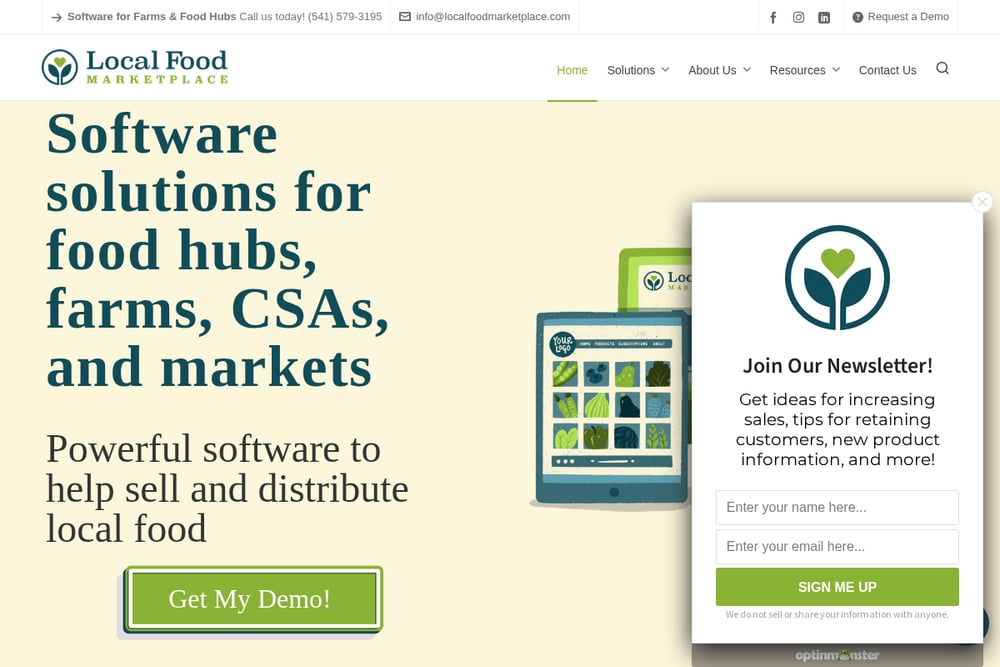 A screenshot of the Local Food Marketplace website.
Local Food Marketplace is a full online sales system for farms, food hubs, and CSAs. It helps you take your market online with e-commerce, SNAP/EBT support, and wholesale tools. The platform is designed for larger operations that need more than a simple listing. You get customer management, order fulfillment, and reporting. It's not free, but it's built for scale. If you're running a multi-vendor market or food hub, this is worth a look.
#4 Market Wagon
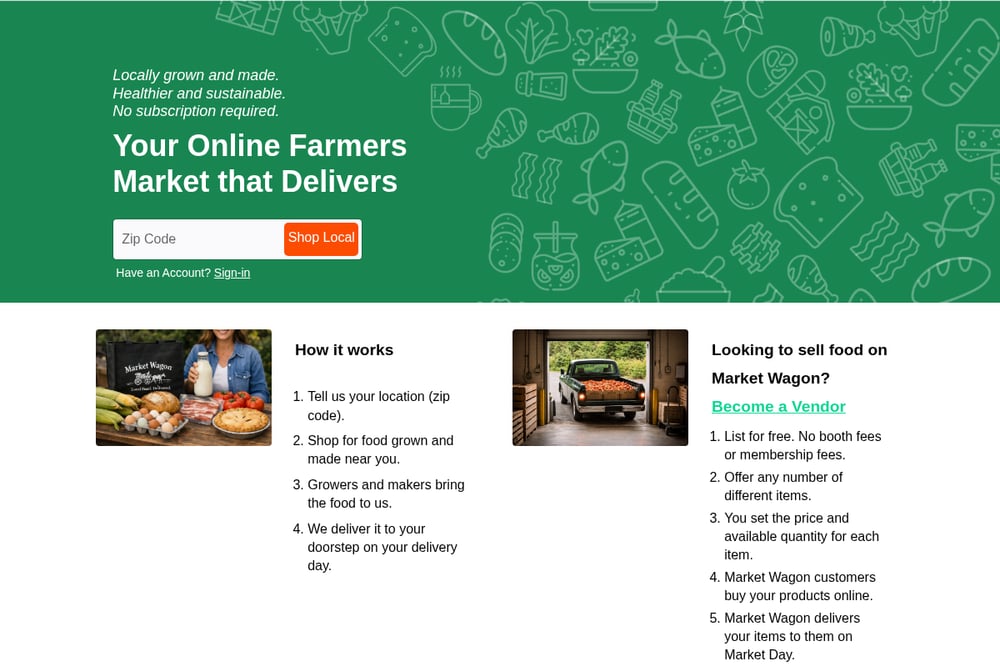 A screenshot of the Market Wagon website.
Market Wagon brings the farmers market to your doorstep. It's an online marketplace with delivery logistics built in. Vendors list products for free, set their own prices, and Market Wagon handles the delivery. No booth fees or membership fees. It's ideal for producers who want to reach customers beyond a physical market. Founded by a farmer and a logistics engineer, it combines agricultural roots with smart supply-chain design. If you want to sell local food without standing at a booth, this is a strong option.
#5 Farmish
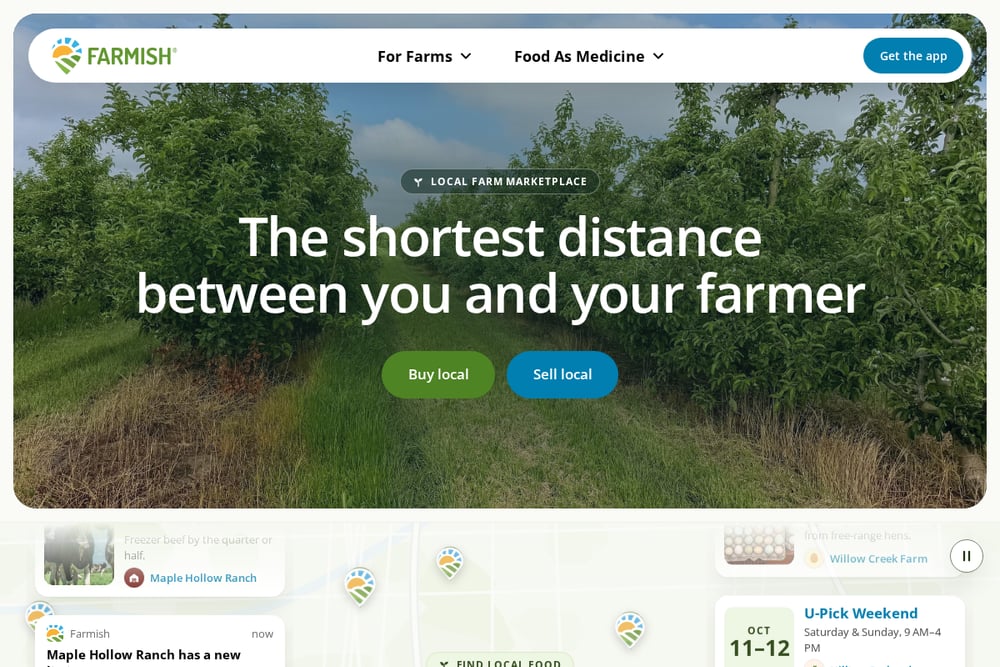 A screenshot of the Farmish website.
Farmish is a local farm marketplace that connects you directly with shoppers. Over 45,000 farms have joined from all 50 states and Canada. You can list eggs, honey, beef, produce, and more. Shoppers find you by location and product. It's simple and farm-focused. There's also a healthcare and Food as Medicine angle for institutional buyers. If you want a straightforward way to reach local customers without a physical market, Farmish is worth exploring.
How to Choose the Right Platform for You
Start with your role. Are you a vendor, a market manager, or a food hub? If you're a vendor who wants a free online booth and in-person payment, Booth Barn is a natural fit. If you manage a market and need vendor applications and stall maps, Manage My Market is built for that. If you're a farm or food hub with online sales ambitions, Local Food Marketplace offers more horsepower. If delivery is key, Market Wagon handles logistics. If you want a simple farm-to-shopper listing, Farmish keeps it direct. Next, check pricing. Free is great, but make sure it covers your needs. Then think about your shoppers. Do they want to browse before the market? Hold items? Or get delivery? Match the platform to their habits. Finally, consider growth. Will the tool scale with you? A free booth today might need more features tomorrow. Choose based on where you're headed, not just where you are.
What Automation Looks Like in Practice
Imagine this: You list your handmade candles on Booth Barn. A shopper sees them on Tuesday, holds two, and pays at your booth on Saturday. No commission. No awkward cash box math. Meanwhile, your market manager uses Manage My Market to assign your stall and send you a reminder. If you also sell wholesale, Local Food Marketplace processes a bulk order from a local restaurant. Market Wagon picks up your surplus produce and delivers it to customers across town. Farmish sends you a message from a nearby family wanting eggs. Each platform handles a different piece. Together, they free you to focus on making and selling.
The Bottom Line
There's no single platform that does everything for everyone. But there is one that fits how you work. Booth Barn keeps it simple and free for vendors who want an online presence without losing the in-person magic. Manage My Market powers the operations behind a thriving market. Local Food Marketplace scales online sales for farms and food hubs. Market Wagon solves delivery. Farmish connects farms directly with local shoppers. Try one. Or mix and match. The goal is the same: spend less time on logistics and more time doing what you love.