Finding a writing mentor who actually understands genre fiction can feel like searching for a spellbook in the dark. Here are five education and training services that light the way for fantasy, dystopian, and speculative writers.
The State of Fantasy Writing Education
Genre fiction education has exploded online. Writers no longer need to live near a university or a literary hub to learn worldbuilding, character arcs, or the business of publishing. You can now study with published authors through subscription platforms, free community workshops, structured multi-year itineraries, and independent author-educators who blend craft with personal mentorship. The market splits into three rough tiers: large schools with formal curricula, low-cost or free collectives built around community, and solo practitioners who combine teaching with their own creative work. Each tier serves a different kind of writer. The challenge is not finding a course. It is finding the one that matches your genre, your budget, and your learning style.
How We Evaluated These Services
We looked at service scope, meaning whether a provider covers craft, publishing, and consultation or just one slice. We examined pricing clarity, from transparent monthly subscriptions to free access to quote-based consultations. We considered genre fit, specifically how deeply each service engages with fantasy, dystopia, and speculative fiction rather than general creative writing. We weighed format flexibility, including online-only delivery, live sessions, and self-paced video. Finally, we assessed the human element: access to published authors, feedback loops, and community. Each provider below stood out on different factors. Some shine on breadth, others on affordability, and one on the intimacy of one-to-one literary guidance.
Here is a quick comparison of the five services, ordered for easy scanning. Each entry notes who it suits and what makes it distinctive, so you can jump to the one that fits your goals.
| Provider | Best For |
|---|---|
| Phantastica | Writers who want a deep, genre-focused video library on a subscription |
| Luna Slow | Writers seeking one-to-one literary guidance from a practicing fantasy author |
| Fantatrías | Budget-conscious writers who thrive in a free, community-driven workshop |
| Escuela de Escritores | Writers ready for a structured, multi-year genre writing program |
| Cursiva | Writers who want a broad, established school with publishing-industry breadth |
The Five Services in Detail
#1 Phantastica
Phantastica is an online school built entirely around genre literature: fantasy, science fiction, and horror. For a flat monthly subscription, you unlock more than 350 video lessons from working authors like Elia Barceló, Susana Vallejo, and Sofía Rhei. Courses cover worldbuilding, the hero's journey, character creation, and even publishing in the Anglo market. The subscription model means you can binge lessons or pace yourself, and new content arrives each month. A student directory and Telegram community add a peer layer that solo courses often lack. It is the most structured genre-specific option on this list.
#2 Luna Slow
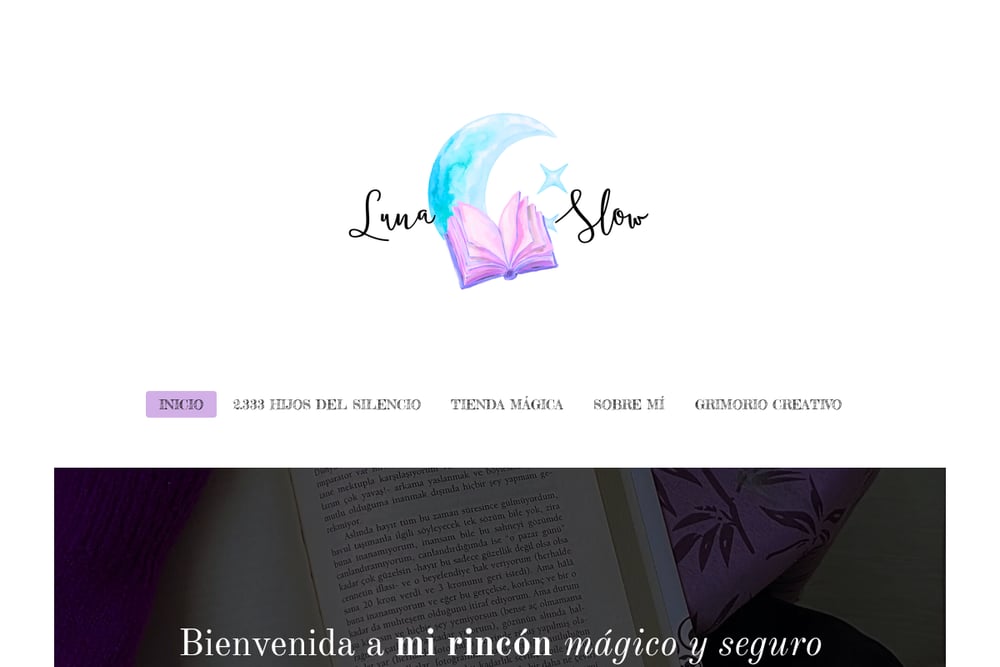 A screenshot of the Luna Slow website.
Luna Slow is a fantasy and dystopian author who teaches as an extension of her own creative practice. She offers online workshops, literary consultations, and creative content, all delivered remotely. Her approach blends writing craft with education and a touch of spirituality, framing writing as a refuge for calm and personal transformation. You can reach her directly by email for collaborations, workshop bookings, or manuscript consultations, which makes the experience personal rather than institutional. Her site also showcases her novels and a creative blog, so you can sample her voice before you commit. It is a strong fit if you want a mentor who is actively publishing in the genres you love.
#3 Fantatrías
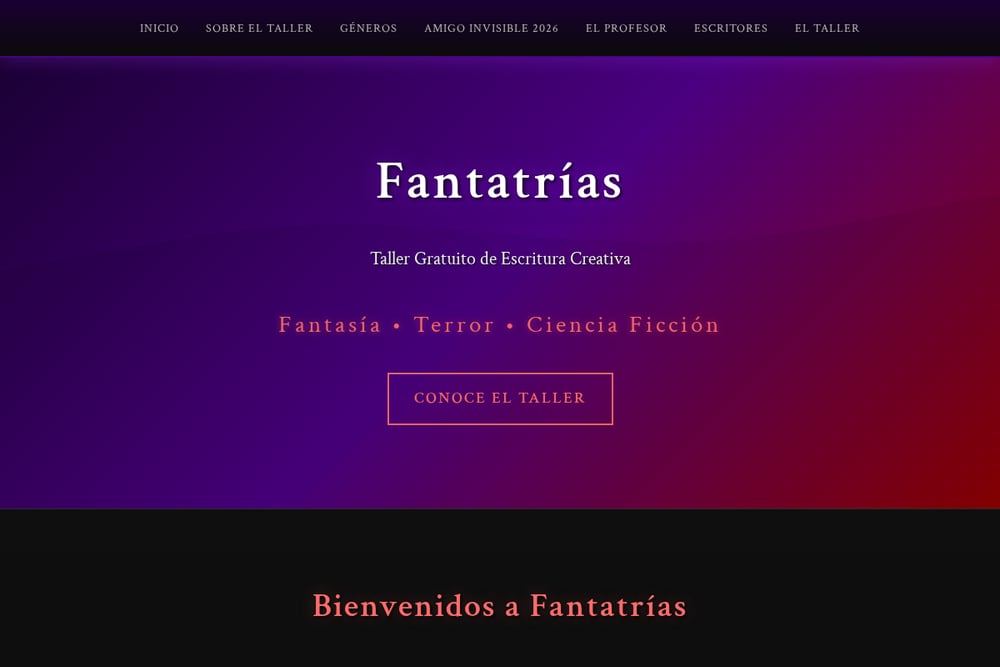 A screenshot of the Fantatrías website.
Fantatrías is a free creative writing workshop focused on fantasy, horror, and science fiction. Running since 2017, it has evolved from small in-person meetups into an online space welcoming participants from different regions. The team experiments with collaborative writing, weekly creative challenges, intensive sessions, and constructive critique. Their stated belief is that literary education should be accessible regardless of economic situation, which is why the workshop costs nothing. You get a committed community of genre writers rather than a polished course catalog. For writers on a tight budget, it is hard to beat.
#4 Escuela de Escritores
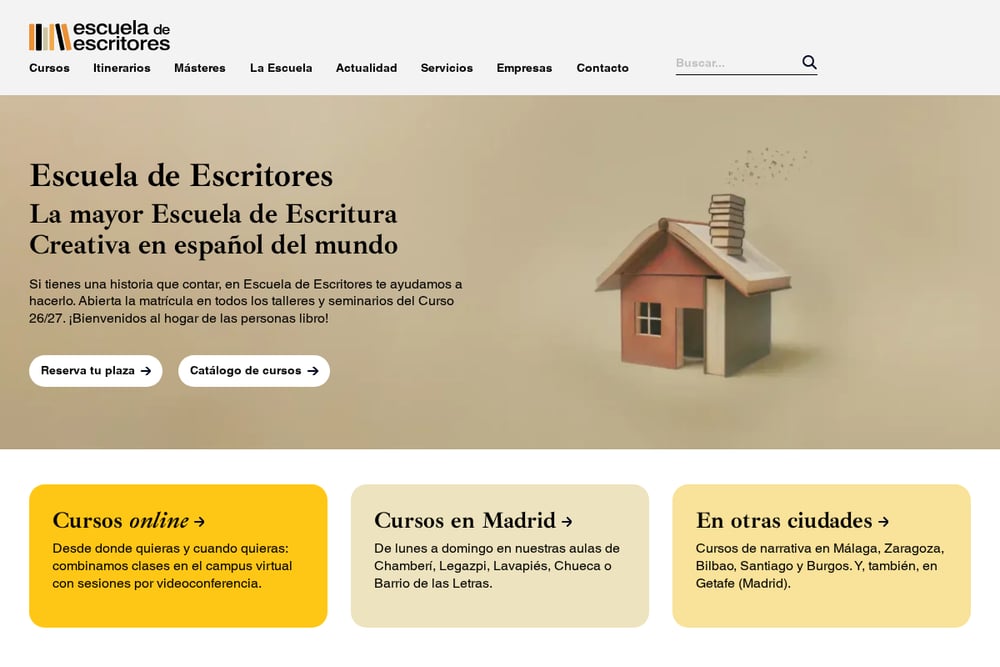 A screenshot of the Escuela de Escritores website.
Escuela de Escritores offers a two-year itinerary in fantastic literature covering fantasy, science fiction, and horror. You study with writers who specialize in each genre and progress from an initiation level to an advanced stage. Formats include online, in-person in Madrid, and blended options, giving you flexibility if you want live contact. The school also provides correction services, tutoring, and literary reports, so you can get feedback beyond the classroom. It sits within a broader creative writing institution with itineraries in novel, short story, and poetry. This is the most formal, long-arc option here.
#5 Cursiva
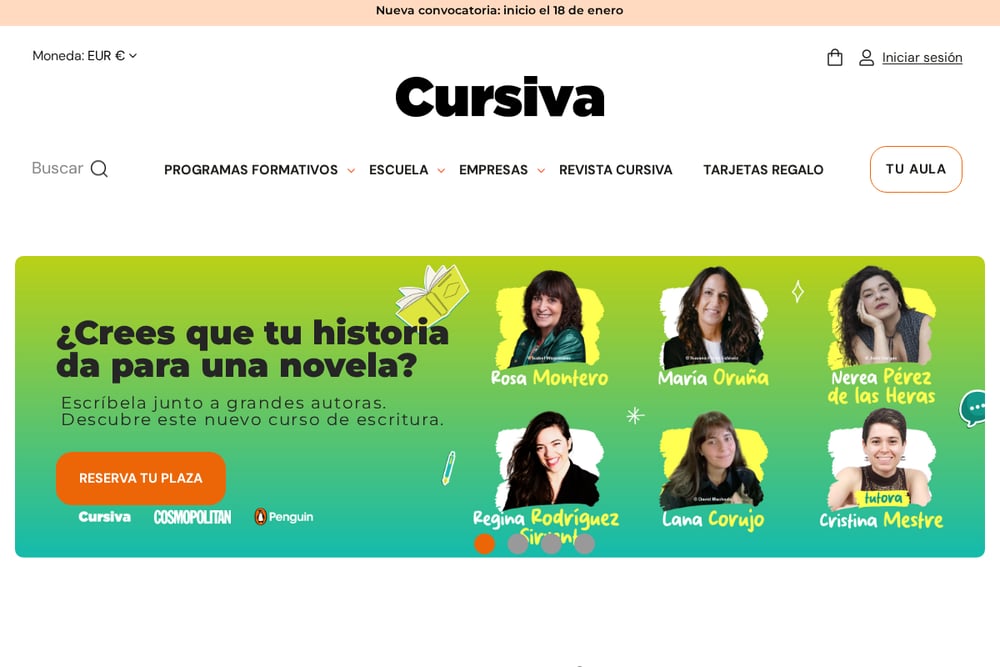 A screenshot of the Cursiva website.
Cursiva is a large online writing school with a broad catalog spanning writing, the publishing sector, and journalism. Its writing area includes tutored courses, video courses, itineraries, and live expert sessions featuring well-known authors such as Rosa Montero and Julia Navarro. Programs range from a full novel course to editorial correction and marketing itineraries, so you can build skills across the publishing pipeline. Prices are listed transparently, though the flagship programs sit at the premium end. If you want a recognized name and a wide menu rather than a niche genre focus, this is your option. It works well as a complement to more specialized fantasy training.
How to Choose the Right Writing Education Service
Start with your genre. If you write fantasy, dystopia, or horror, prioritize providers that specialize rather than generalize. Next, decide your format. Do you learn best from self-paced video, live workshops, or one-to-one feedback? Then look at budget. Free workshops and monthly subscriptions lower the barrier, while multi-year itineraries and premium courses demand a bigger commitment. Consider the human layer too. A solo author-educator gives you direct access and personal attention, while a school gives you structure and a cohort. Finally, sample before you buy. Read the blog, watch a free lesson, or send an email inquiry. The right fit should feel like a conversation, not a transaction.
Automating Your Writing Education Workflow
You can streamline your learning with a few simple systems. Set up a content calendar to schedule lessons, writing sprints, and critique sessions so progress does not depend on motivation. Use a note-taking tool with tags for craft concepts, submission deadlines, and feedback themes. Route workshop announcements and course updates into a single inbox filter so nothing slips. Track submissions and consultation bookings in a simple spreadsheet or project board. If you work with a mentor like Luna Slow, keep a shared document of goals and revision notes to make each consultation count. Automation will not write your novel, but it will protect the time you need to write it.
The Bottom Line
There is no single path into genre fiction, and that is good news for you. Phantastica gives you a deep video library, Luna Slow offers personal mentorship from a working author, Fantatrías proves community can be free, Escuela de Escritores provides a formal multi-year track, and Cursiva delivers breadth across the publishing world. Match the format to your habits, the genre focus to your ambitions, and the price to your reality. Then start writing. The best program is the one you actually finish.