You want your kids to learn money skills, but most programs feel like schoolwork or require a classroom. These five options put financial literacy within reach for families, homeschoolers, and educators.
The State of Family Financial Literacy
Financial literacy is a growing priority for US families, yet many parents feel unequipped to teach money skills at home. Schools are adding personal finance courses, but access varies widely by state and district. That gap has fueled a wave of digital programs designed for kids from elementary through high school. Some are free and classroom-focused, while others target parents who want short, structured lessons they can do with their children. The result is a crowded but promising landscape for anyone looking to raise money-smart kids.
How We Evaluated These Programs
We looked at four factors: age coverage, lesson format, pricing transparency, and parent-friendliness. Age coverage matters because money concepts should grow with your child. Lesson format tells you whether learning is passive or interactive. Pricing transparency helps you know what you'll pay upfront. Parent-friendliness considers how easy it is to start without a teaching background. Each program below stood out in different ways, and we noted what makes each one distinct.
Here's a quick comparison of the five programs, from one-time purchases to free classroom tools. Use this table to see which fits your family's needs before diving into the details.
| Provider | Best For |
|---|---|
| MoneyTime | Kids who learn best through simulation games |
| Money Together: The Money Talks No One Ever Gave Us | Pennystep | Parents who want short, done-for-you lessons at home |
| Banzai | Teachers and districts seeking free, standards-aligned curriculum |
| FitMoney | Educators and caregivers looking for free, game-based K-12 resources |
| Everfi | Schools and teachers needing sponsored digital courses |
The Five Programs in Detail
#1 MoneyTime
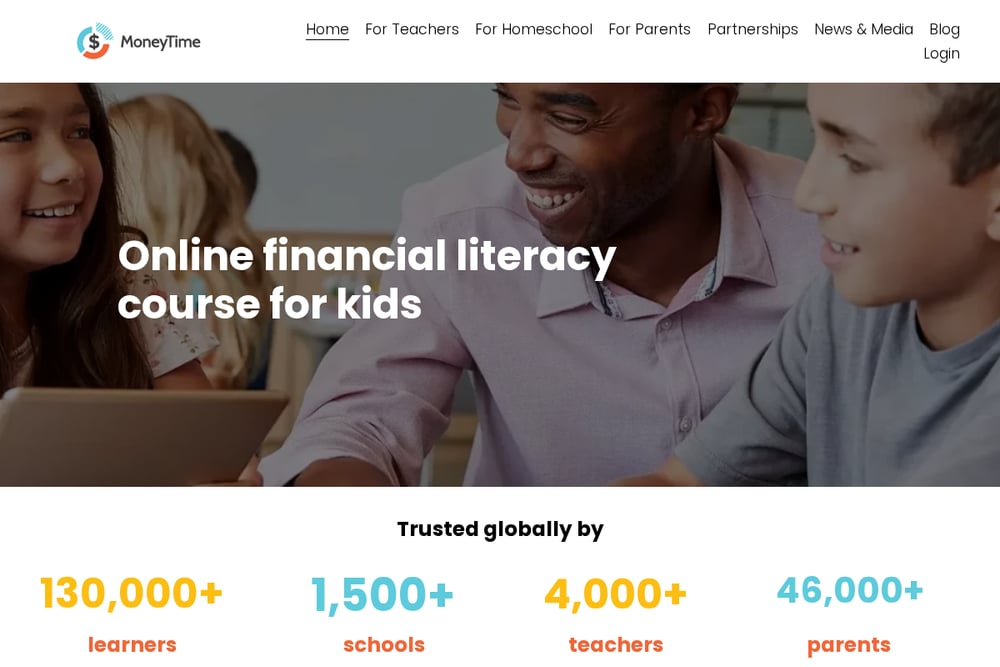 A screenshot of the MoneyTime website.
MoneyTime blends financial literacy lessons with a game where kids earn virtual money for correct answers. The money goes into a checking account, and kids can transfer it to savings to earn interest. They also see how further education leads to better-paying jobs, reinforcing the link between learning and earning. It's a simulation-style approach that keeps kids engaged through real-life decisions. The program is designed for home or classroom use and covers earning, saving, spending, and investing.
#2 Money Together: The Money Talks No One Ever Gave Us | Pennystep
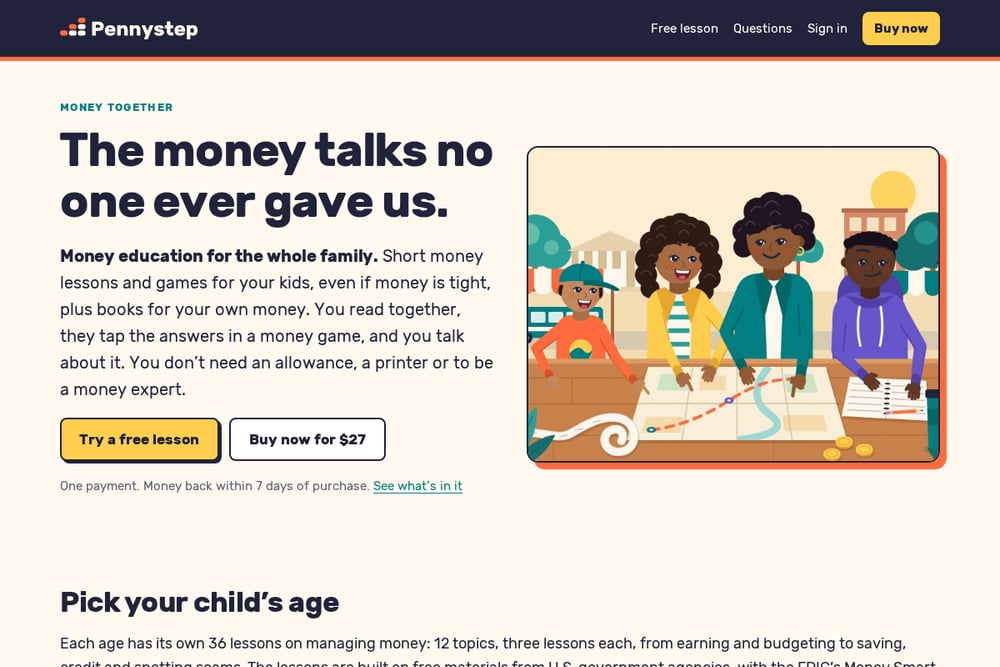 A screenshot of the Money Together: The Money Talks No One Ever Gave Us | Pennystep website.
Money Together is a one-time purchase of $27 that gives you 36 short lessons per age group, from ages 6 to 17. Each lesson includes a story, an interactive game, and parent discussion prompts, so you can learn together without being a money expert. The content is built on FDIC's Money Smart for Young People and other government materials. You don't need an allowance, a printer, or prior teaching experience. Try a free lesson to see if it fits your family.
#3 Banzai
 A screenshot of the Banzai website.
Banzai offers free financial literacy courses for elementary through high school, plus digital citizenship and entrepreneurship. Its courses are sponsored by banks and credit unions, which keeps them free for teachers and families. The platform includes lesson plans, standards alignment, and a wellness center with articles and calculators. It's a solid choice for classroom teachers who need ready-to-teach materials. Parents can also use Banzai resources at home.
#4 FitMoney
 A screenshot of the FitMoney website.
FitMoney provides free K-12 financial literacy programs, including the $uperSquad game-based platform for elementary students. It also offers an online certificate course and a flexible in-school curriculum with discussion guides for parents. The program emphasizes starting early, before financial habits form. Educators can preview samples and implement lessons at school. Caregivers get at-home activities to reinforce learning.
#5 Everfi
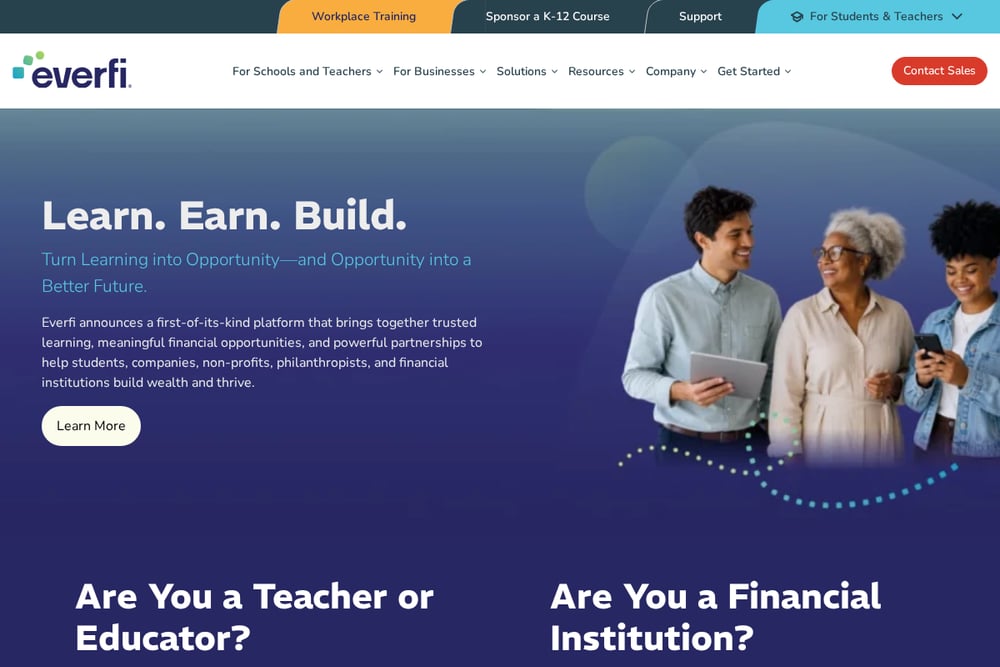 A screenshot of the Everfi website.
Everfi delivers free digital lessons for grades 4-12, sponsored by businesses and financial institutions. Its financial education courses are standards-aligned and come with implementation resources for teachers. The platform also offers a financial literacy toolkit and other K-12 courses in health, STEM, and workforce readiness. It's a strong option for schools that want turnkey digital content. Teachers can create a free account to get started.
How to Choose the Right Program for Your Family
Start with your child's age and learning style. If you want short, structured lessons you can do together at home, a parent-focused program like Money Together may fit. If your child loves games and simulations, MoneyTime could be more engaging. For classroom or homeschool co-op use, free options like Banzai, FitMoney, and Everfi offer comprehensive curricula. Consider your budget: one-time purchases versus free sponsored programs. Also check whether you need parent guides or teacher dashboards. Try free lessons or demos before committing.
Building a Money Routine Without the Overwhelm
You don't need a complicated system to teach money skills. Pick one program and schedule a 15-minute session once a week. Use the built-in games and discussion prompts to keep it light. If you're using a free classroom tool, set up your account and preview one lesson before assigning it. Automate reminders on your calendar so you don't forget. Celebrate small wins, like when your child correctly counts change or explains a paycheck deduction. Consistency matters more than intensity.
The Bottom Line on Family Money Education
Teaching kids about money doesn't require a finance degree or a big budget. The five programs here cover a range of needs, from a $27 one-time purchase for parents to free, sponsored curricula for schools. Money Together stands out for its family-centered, short-lesson format that works without an allowance or printer. MoneyTime brings simulation fun, while Banzai, FitMoney, and Everfi serve classrooms and homeschools at no cost. Choose based on your child's age, your time, and your preferred learning style. Then start small and stay consistent.