You have a brand idea that only works if people can walk into it, touch it, and photograph it. These five Los Angeles studios can turn that idea into something real.
What the Los Angeles experiential market looks like right now
Los Angeles is one of the few cities where a brand activation can be built, tested, and installed without leaving a fifty-mile radius. The market splits into two camps: large fabrication houses with hundreds of thousands of square feet and in-house metal, CNC, and scenic departments, and smaller design-led studios where a single designer carries your concept from sketch to install. Both matter. Big shops absorb scale and logistics; small studios give you direct access to the person actually designing your space. Knowing which camp fits your project is half the decision.
How these studios were compared
Every studio here was looked at on the same factors: range of services, from pure design through fabrication and installation; depth of portfolio across brand activations, retail, and live events; clarity of process and how early fabrication realities enter the design; local Los Angeles production capability; and fit for different client sizes, from solo founders to global brands. No single factor decides it. Your project's scale and how hands-on you want to be should drive the choice.
Here is the short version before the detail. Each studio below leads with a different strength, so scan for the one that matches how you like to work.
| Provider | Best For |
|---|---|
| AES (Artistic Entertainment Services) | Large-scale builds needing full in-house fabrication capacity |
| Jordan Omohundro | Spatial Designer | Brands that want direct access to the designer from concept to fabrication |
| Fuller Street | Agencies needing fabrication plus end-to-end production management |
| Honey Badger Fabrication | Tech-driven activations with interactive or sensor-based elements |
| Vision Scenery | Touring and multi-city builds that must survive transport |
The five studios, in detail
#1 AES (Artistic Entertainment Services)
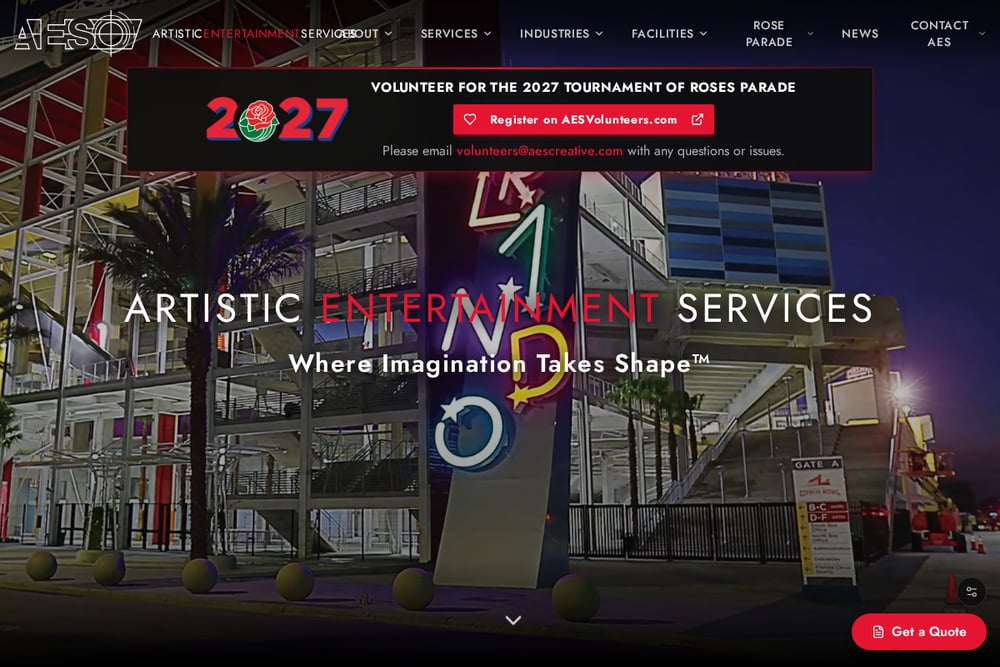 A screenshot of the AES (Artistic Entertainment Services) website.
AES is the heavyweight of the group, with a Los Angeles headquarters holding over 250,000 square feet of production space and dedicated departments for metal work, scenic painting, CNC routing, assembly, and finishing. The company has built activations for Coachella, fabricated parade floats for Disney, and produced immersive experiences for Hollywood premieres. If your project involves large structures, tight timelines, and multiple vendors, this is the kind of shop that absorbs that complexity under one roof. Four decades of local operation means they have seen almost every production problem before it reaches your build. You get scale and reliability, though you should expect to work through a layered project team rather than one designer.
#2 Jordan Omohundro | Spatial Designer
 A screenshot of the Jordan Omohundro | Spatial Designer website.
Jordan Omohundro is a Los Angeles-based spatial designer who translates brand ideas into physical experiences, handling projects from concept through fabrication. The portfolio is unusually strong for an independent studio, with branded activations for Heineken at the US Open, Nike at the marathon and MLB, Uber's Mother's Day and holiday campaigns, Dr. Martens, YSL at Essence Festival, Apple's App Awards, and a recurring Figma Maker's Lab series. The site also lists spatial design, 3D modeling, and rendering as core services, which means you can see and refine your space before anything is cut or built. Because you work directly with the designer, feedback loops are short and the concept does not get diluted through handoffs. It is a strong fit if you want senior creative attention on a project that still needs to be fabricated and installed.
#3 Fuller Street
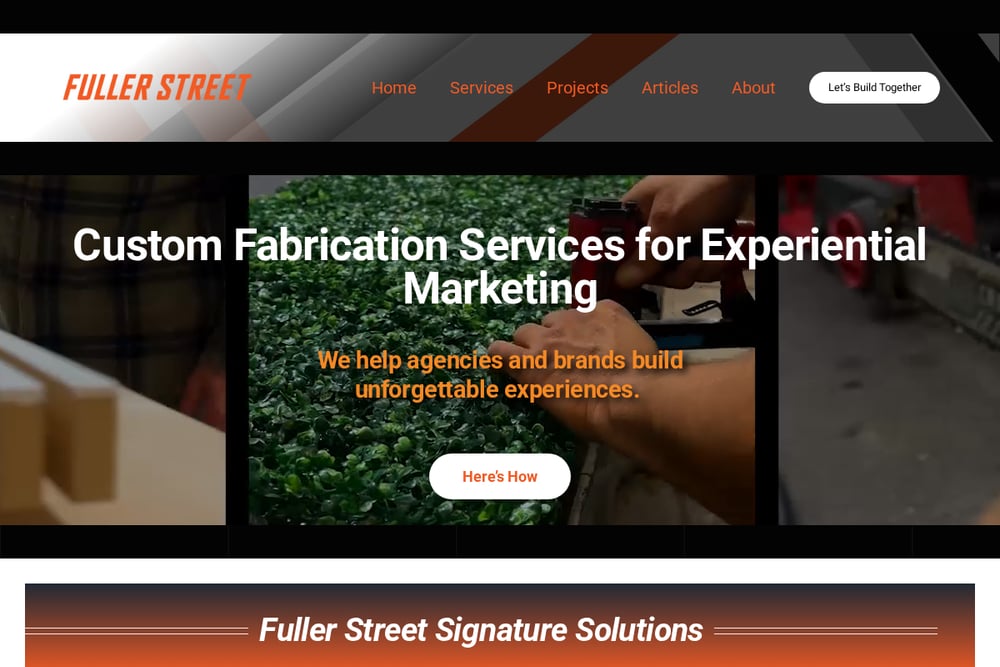 A screenshot of the Fuller Street website.
Fuller Street describes itself as a custom fabrication partner for experiential marketing, building environments for brand activations, corporate events, pop-ups, immersive experiences, and live productions. What sets them apart is the production management layer: they coordinate vendors, timelines, logistics, installations, and on-site delivery alongside the build itself. With over 20 years of experience, they also handle retail store fabrication for custom displays, fixtures, and branded spaces. That combination suits agencies and producers who need one partner to own the operational side, not just the sawdust. If your team is strong on creative but thin on production logistics, this is a natural fit.
#4 Honey Badger Fabrication
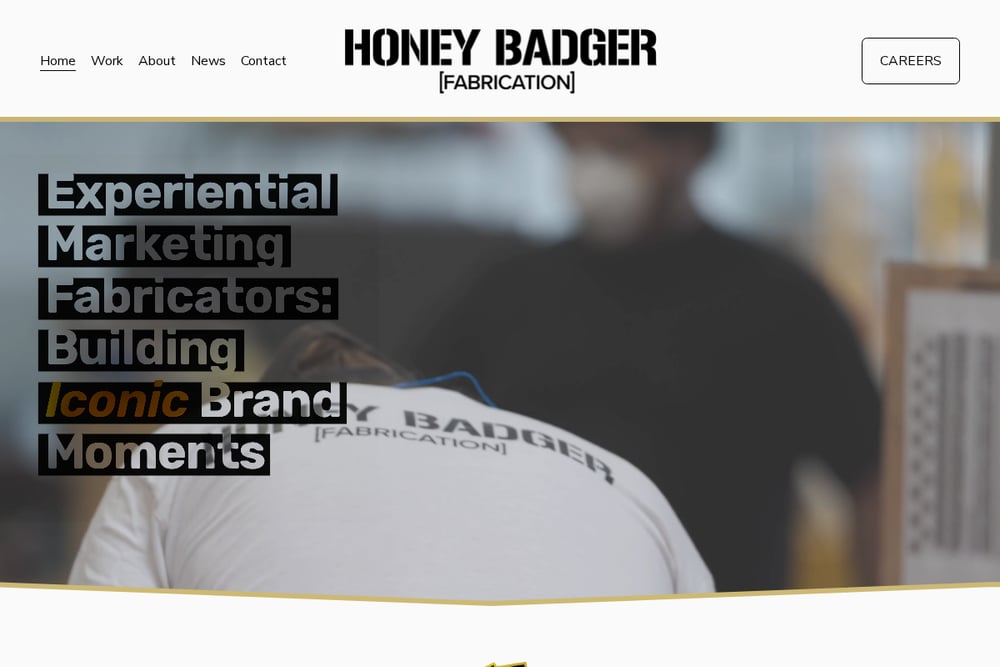 A screenshot of the Honey Badger Fabrication website.
Honey Badger Fabrication is a Gardena-based shop that partners with experiential marketing professionals, creative agencies, and brands on ambitious concepts. Their pitch leans hard into technology: CNC machining, 3D printing, laser cutting, and robotics, plus integrated responsive lighting, motion sensors, and augmented reality elements. That makes them a good conversation if your activation depends on a technical moment rather than pure scenery. They work across brand activations, custom art installations, and trade show exhibits, and they staff project managers to shepherd builds. The shop is smaller than the big production houses, so you get more direct communication and a team that clearly enjoys the tricky builds.
#5 Vision Scenery
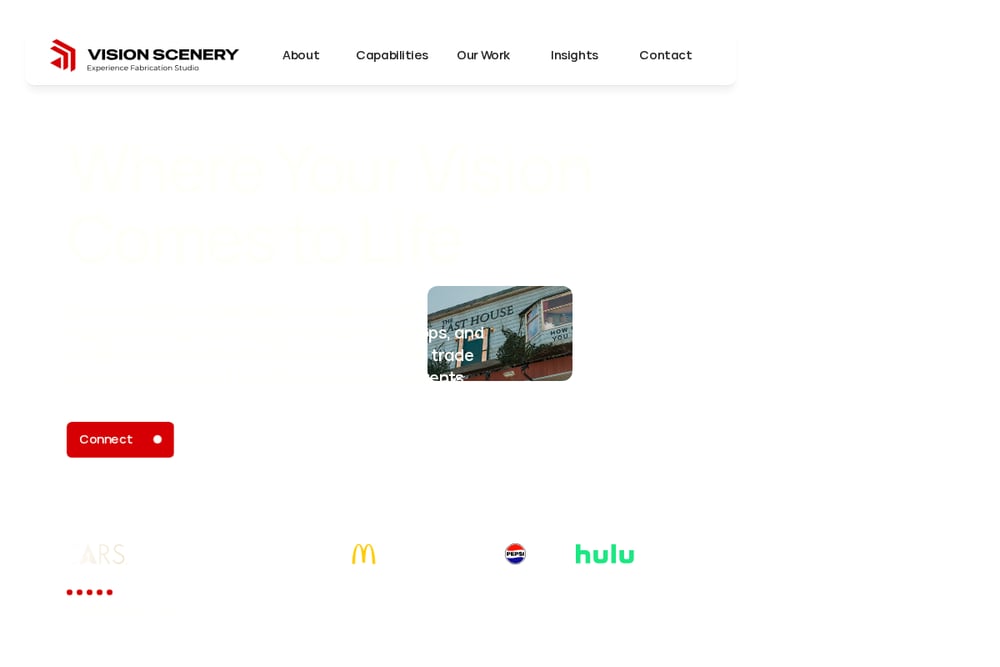 A screenshot of the Vision Scenery website.
Vision Scenery is an experiential fabrication studio building custom scenery, props, and sculptures for brand activations, commercials, trade show booths, concert tours, and experiential events. They emphasize planning for durability and transport early, before changes become expensive, which is the kind of thinking that saves budgets on touring and multi-city programs. Four decades of experience and a fully in-house team mean they catch problems early and respond quickly when plans shift. They claim a strong on-time track record and a client list of over 100. If your project travels, or if the same build has to survive more than one venue, their transport-first mindset is worth a call.
How to pick the right partner for your build
Start with scale. If your activation involves large structures, multiple departments, and a hard install date, a big fabrication house gives you capacity and redundancy. If the idea is still forming and you want the designer who imagined it to also see it built, a smaller studio keeps the concept intact. Next, ask who owns production logistics. Some studios build; others build and manage vendors, timelines, and on-site delivery. Be honest about how much of that you want to handle yourself. Then check the portfolio for projects that resemble yours in format, not just in brand prestige. A studio with deep concert tour experience may not be the right fit for a retail pop-up, and vice versa. Finally, ask how early fabrication constraints enter the design conversation. The best partners raise material, weight, and transport issues while the concept is still flexible, not after the drawings are final.
A simple workflow to run your studio search
Build a one-page brief covering your budget range, install date, venue, and whether the build travels. Send it to all five studios the same week so responses are comparable. Ask each for two relevant case studies and a named point of contact. Score replies on responsiveness, clarity about fabrication constraints, and whether they asked good questions about your concept. Shortlist two, then request a rough scope and timeline before committing. Keep a shared tracker of quotes, lead times, and references so the decision stays objective rather than driven by the last impressive portfolio you saw.
The bottom line
Los Angeles gives you real options, and the right one depends on what your project actually needs. Choose AES for scale and in-house muscle, Jordan Omohundro for direct designer involvement from concept through fabrication, Fuller Street for fabrication plus production management, Honey Badger for technology-forward builds, and Vision Scenery for scenery that has to travel. Match the studio to the shape of your project, not to the biggest name on the list, and your activation will be built by people whose strengths line up with your risks.