Selling tickets directly should mean keeping your money, your fans, and your door secure. These five platforms each take a different angle on that promise.
The shift to direct-to-fan ticketing
Event organisers are moving away from marketplaces that hold their cash and own their buyer data. The priorities now are simple: get paid into your own account, stop screenshots and duplicates at the door, and keep scalpers from vacuuming up your inventory. Platforms are answering with refreshing QR codes, per-fan purchase limits, ID verification, and face-value resale through organiser-controlled waitlists. The result is a crowded field where the real differentiator is how much control and revenue you keep.
How these platforms were compared
Each platform was assessed on anti-scalping and fraud controls, how ticket money and fan data are handled, pricing transparency, breadth of event types supported, and how much setup friction an independent organiser faces. The detail on each one lives in its description below.
Here is the short version before the deep dive. Each entry notes who the platform suits best, so you can jump to the one that matches your event.
| Provider | Best For |
|---|---|
| Ticket Fairy | Large festivals and venues needing an all-in-one operating system |
| Ticketknock · Ticketing for event organisers | Independent organisers who want their money and fan list kept direct |
| Ticketseat | Organisers researching fraud prevention before they commit |
| Tickera | Teams building a documented anti-scalping policy |
| Opendate | Independent venues managing bookings and shows together |
The five platforms in detail
#1 Ticket Fairy
 A screenshot of the Ticket Fairy website.
Ticket Fairy positions itself as a full event operating system, covering everything from planning and crew accreditation to show-day logistics. Its anti-touting feature set includes ID checks, purchase limits, and face-value resale, which you can read about on its fair access page. Beyond ticketing, it bundles website building, seating and timed entry, referral rewards, memberships, and promoter tools. Payouts run through Stripe, and there is a dedicated vault and capital offering for cash flow. It is the heaviest option here, which suits organisers running multi-day festivals or venues with complex operations.
#2 Ticketknock · Ticketing for event organisers
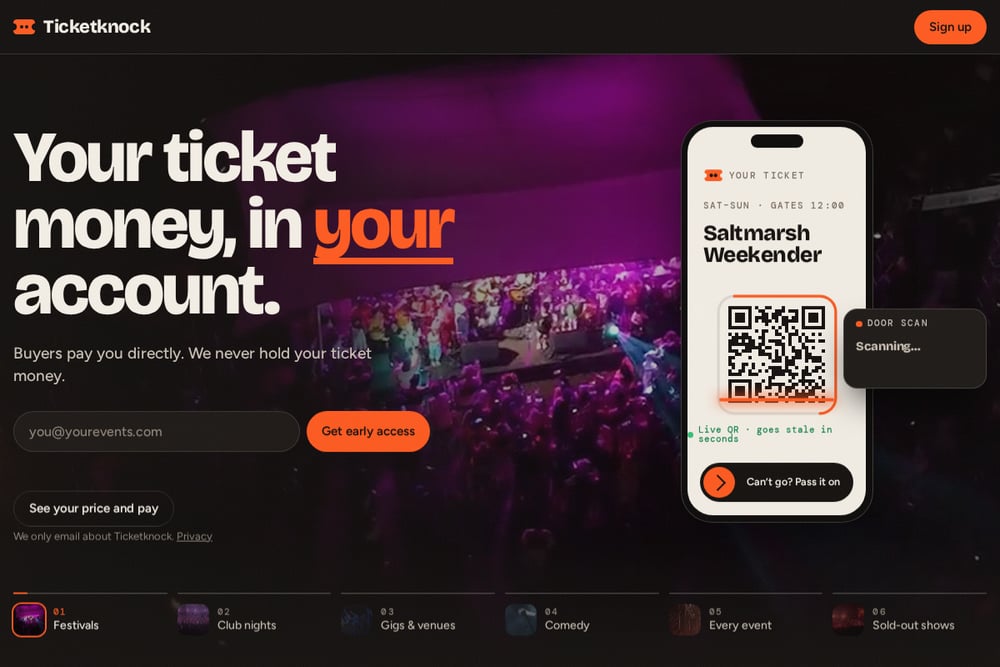 A screenshot of the Ticketknock website.
Ticketknock is built around one idea: your ticket money lands in your account, because buyers pay you directly and the platform never holds your cash. Its app-based QR codes refresh every couple of seconds, so a screenshot goes stale and gets refused at the door. You set per-fan purchase limits, and verification means each fan verifies once against photo ID before their ticket shows a Verified badge. Fans who cannot attend pass their seat to the next person on your waitlist at face value, which keeps resale in your hands rather than a scalper's. It charges a small fee per ticket and lets you export your fan list, covering festivals, club nights, gigs, comedy, and sold-out shows.
#3 Ticketseat
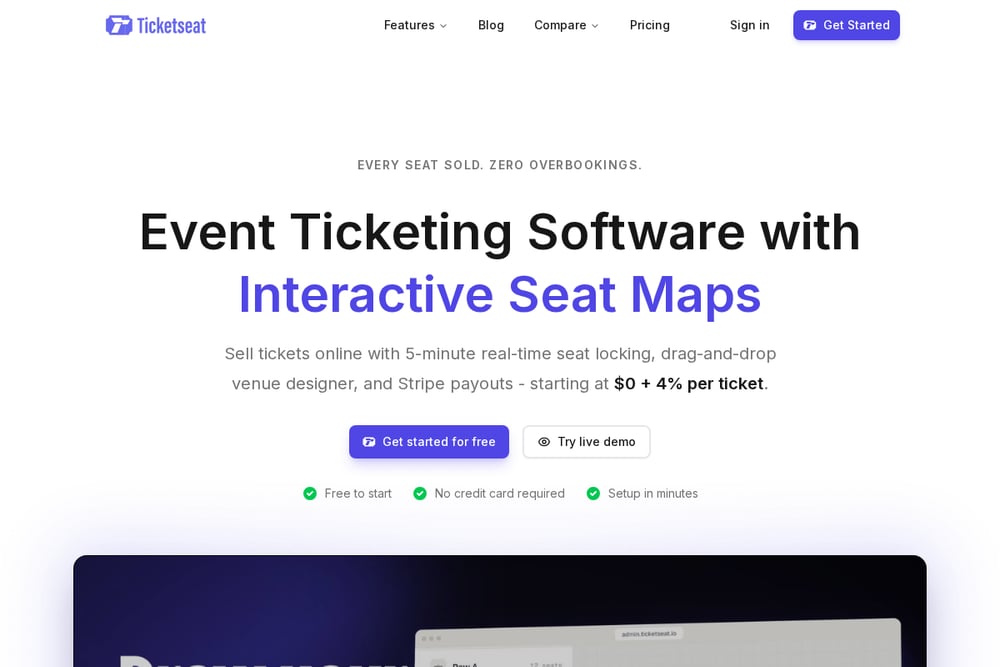 A screenshot of the Ticketseat website.
Ticketseat approaches the problem from the fraud-prevention angle, with a blog that walks organisers through duplicate tickets, QR validation, and scalping tactics. Its guidance stresses that local venues and independent theatres are increasingly targeted, not just stadium tours. The practical advice centres on robust security measures and strict verification protocols to protect revenue and avoid box-office chaos. If you are new to ticketing security and want to understand the mechanics before choosing a platform, its resources are a useful primer. It suits organisers who want education alongside the tooling.
#4 Tickera
 A screenshot of the Tickera website.
Tickera's blog lays out a clear anti-scalping playbook: unique QR codes that die after one scan, buyer names on tickets, spot-checked IDs, capped orders, and an official transfer path. The reasoning is sharp, namely that scalpers profit from anonymity and scarcity, so you remove both. Its checklist format makes it easy to turn into an internal policy for your door staff. The emphasis on giving genuine attendees a legitimate transfer route is a detail many organisers overlook. It is a strong fit for teams that want to build their own process around a WordPress-style setup.
#5 Opendate
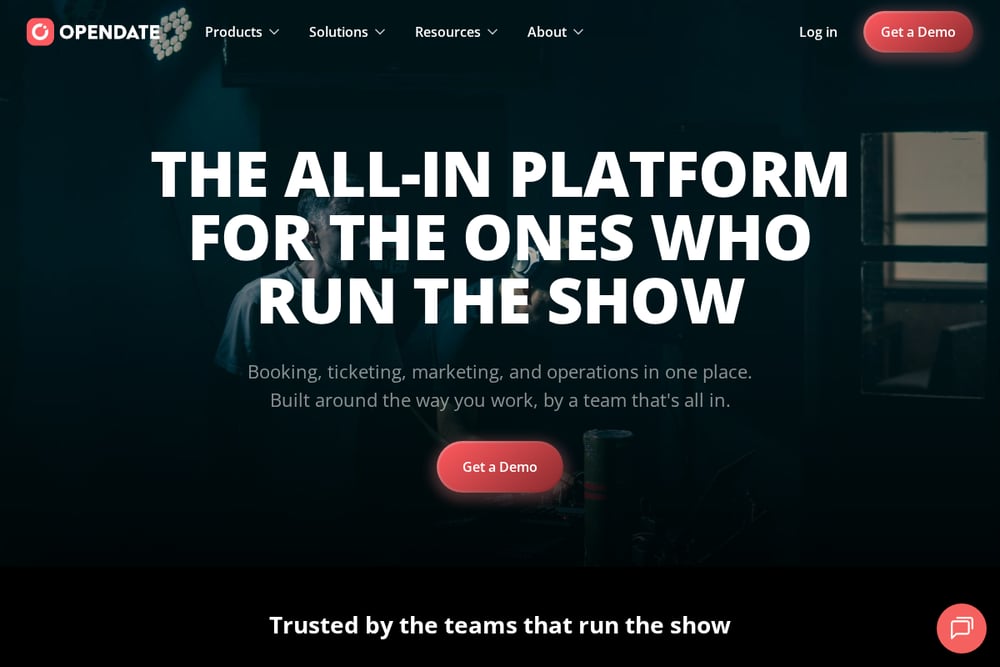 A screenshot of the Opendate website.
Opendate focuses on independent music venues and performing arts organisations, unifying booking, ticketing, and marketing in one place. Its ticketing module covers reserved seating, series and passes, timed entry, mobile wallet, and fraud and chargeback protection. The wider platform adds calendar and holds, settlements, rentals and invoicing, plus a CRM with email and SMS automations. For venues juggling room bookings alongside shows, that combination removes a lot of spreadsheet work. It is aimed squarely at the operational side of running a venue rather than one-off events.
How to pick the right fit
Start with where the money goes. If holding your cash for weeks is a dealbreaker, prioritise platforms where buyers pay you directly. Next, look at your door: refreshing QR codes and per-fan limits stop screenshots and bulk buying, while ID verification adds another layer for high-demand shows. Think about resale too. A face-value waitlist keeps seats with real fans and protects your pricing. Finally, check the boring parts, like fee structure, fan list export, and whether the platform handles your event type without workarounds.
Putting the workflow on autopilot
Set your purchase limits and verification rules once, then let the platform enforce them at checkout and at the door. Live QR codes refresh automatically, so your scanning staff never have to judge whether a ticket looks real. When a fan cannot attend, the waitlist moves the seat on at face value without you intervening. Export your fan list on a schedule and feed it into your email tool for announcements and presales. The result is less manual admin on show day and more time on the event itself.
The bottom line
There is no single winner here, only the right match for how you run events. Ticket Fairy covers the widest operational ground, Ticketknock keeps your money and fan list direct while shutting down screenshots and scalpers, Ticketseat and Tickera sharpen your fraud playbook, and Opendate suits venues balancing bookings with shows. Pick based on where your cash lands, how tight your door needs to be, and how much of the operation you want in one place.