
Your next signed job is probably sitting in an estimate you already sent. These five services help you bring it back without adding another task to your day.
Why Estimate Follow-Up Became Its Own Industry
Contractors do not lose work because they price badly. They lose it because the estimate goes quiet. You get busy on a job, the homeowner gets three other quotes, and nobody sends the second email. That gap is where revenue dies. A whole category of services now exists to close it, from done-for-you follow-up writers to AI inbox assistants to field-service add-ons. The tools differ in how much they do for you. Some just remind you. Some write the message. A few send it in your name and only charge when the job signs. That last model is the one worth understanding, because it puts the risk on the service instead of on you.
How We Looked at These Services
We judged each service on the same factors. First, service scope: does it write the follow-up, send it, or just remind you to do it? Second, pricing clarity: can you see what you pay before you commit, and does the fee tie to results? Third, local fit: does it work for US contractors in trades like roofing, remodeling, HVAC, and landscaping? Fourth, setup effort: how much do you have to learn or install? Fifth, message quality: does the follow-up sound like you, or like a robot? Bid Rescue stood out for sending in your name with one-click approval and charging per job only after a contract is signed. AI Emaily stood out for voice-matched drafts and inbox triage. PipelineOn stood out for connecting website visitors to CRM workflows. Advanced Agritek stood out for mapping a clear follow-up schedule by job type and value. InvoicifyAI stood out for voice follow-up that logs outcomes back into the customer record.
Here is the short version before the deep dive. Each service solves a different part of the same problem: the estimate that never got a second look.
| Provider | Best For |
|---|---|
| AI Emaily | Contractors who want an AI inbox assistant, not just a follow-up tool |
| Bid Rescue | We bring bids back | Contractors who want done-for-you follow-up with no software and no upfront cost |
| PipelineOn | Contractors already using a CRM who want visitor-level follow-up signals |
| Advanced Agritek | Contractors who want a clear follow-up schedule they can run themselves |
| InvoicifyAI | Contractors who want voice follow-up that updates the CRM automatically |
The Five Services in Detail
#1 AI Emaily
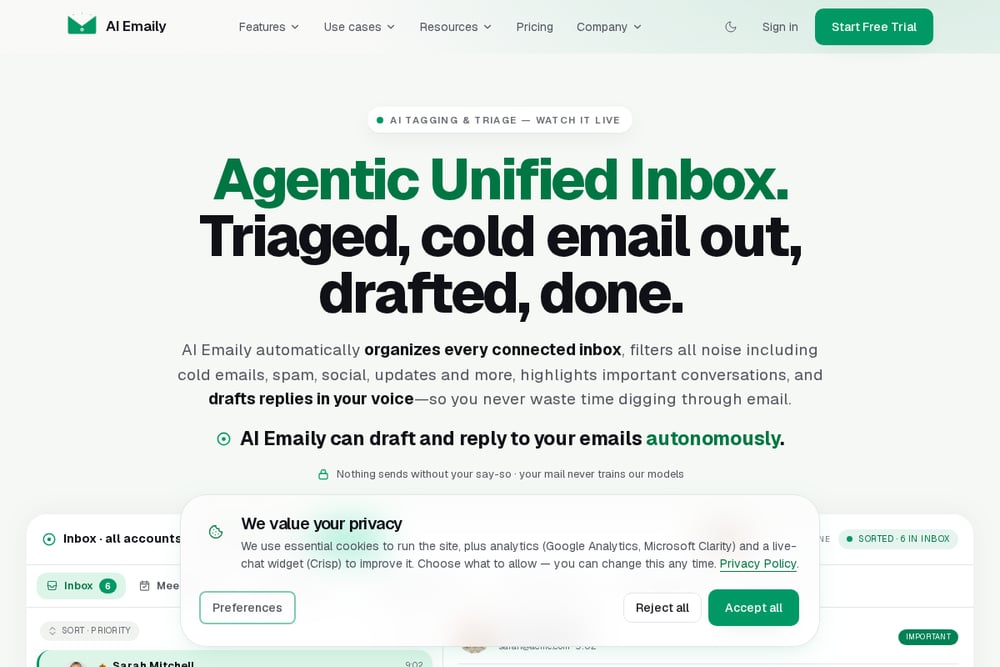 A screenshot of the AI Emaily website.
AI Emaily reads your inbox, drafts replies in your voice, and can act on your behalf. For contractors, that means the estimate follow-up you keep putting off gets drafted before you sit down. It also triages noise, routes cold pitches to a weekly digest, and keeps a per-client context brain so each message fits the job. The follow-up feature is multi-touch and stops on reply, which matters when a homeowner finally answers. If you want an AI assistant that handles the whole inbox rather than just one estimate, this is the broadest tool in the group. You can see how it frames home-services templates in its own guide.
#2 Bid Rescue | We bring bids back
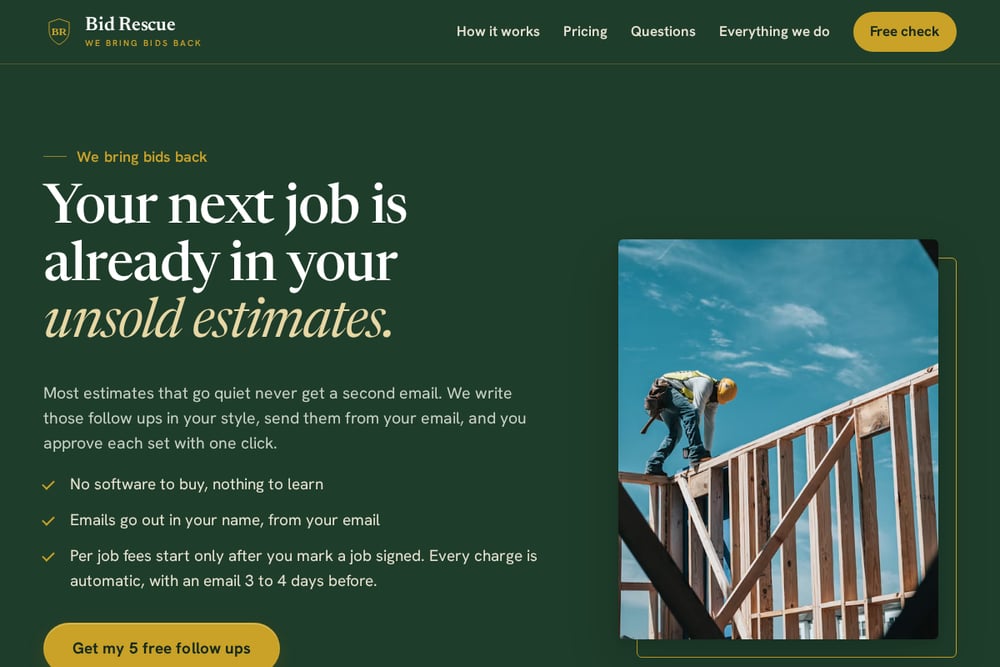 A screenshot of the Bid Rescue | We bring bids back website.
Bid Rescue writes and sends follow-up emails for your unsold estimates, from your email, in your style. You approve each set with one click. There is no software to buy and nothing to learn. The first five follow-ups are free, and per-job fees start only after you mark a job signed, with an automatic email three to four days before any charge. That model puts the risk on Bid Rescue, not on you. It is built for the contractor who is great at the work but never gets to the second email. The service keeps every open estimate followed up while you run jobs.
#3 PipelineOn
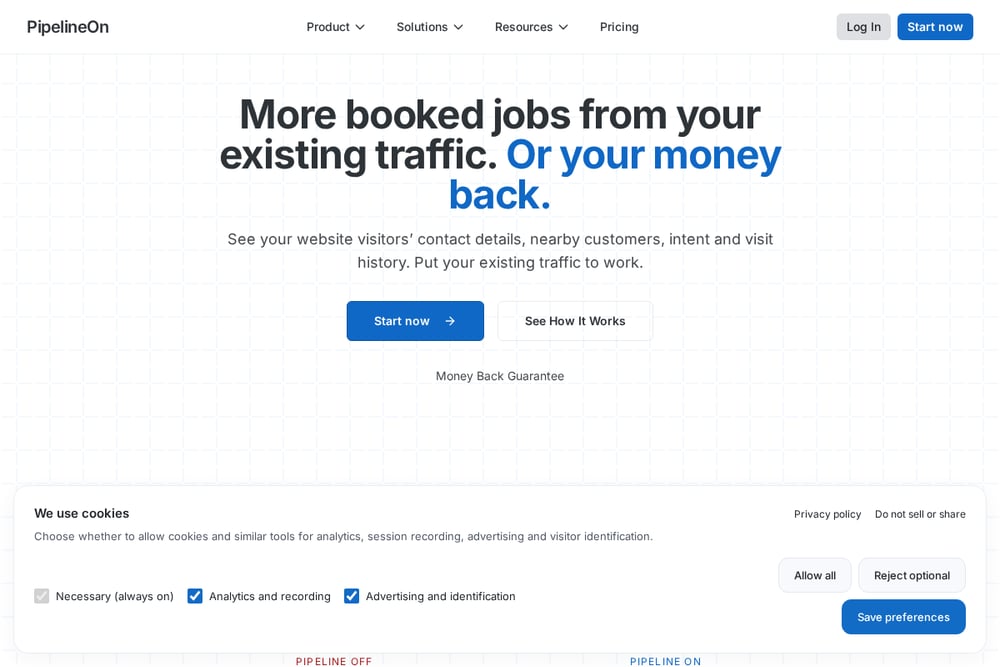 A screenshot of the PipelineOn website.
PipelineOn connects your website and CRM to Meta and Google, then identifies the homeowners visiting your site. That visitor data flows into lead capture, follow-up, reviews, and CRM workflows. For estimate follow-up, the value is context: you know who came back to your site after getting a quote. It works with ServiceTitan, Jobber, Housecall Pro, and GoHighLevel, so it fits shops already running field-service software. PipelineOn also publishes practical follow-up guidance, including a piece on estimate messages that do not sound desperate. If your problem is knowing which estimates to chase, this adds the signal.
#4 Advanced Agritek
 A screenshot of the Advanced Agritek website.
Advanced Agritek lays out a practical follow-up workflow for contractors tired of stale quotes. The model is simple: when an estimate goes out, a schedule tied to job type, value, age, and owner decides when the next touch happens. Day 0 confirms delivery, Day 3 answers common questions, Day 7 sends a final approved reminder, and everything stops on reply, acceptance, decline, or expiration. AI can draft from job notes, but a person approves anything unusual or high-value. It also tells you what to measure, like open estimates, follow-up completion, and the dollar value sitting with no next action. Their guide on automated estimate follow-up is worth reading before you build anything.
#5 InvoicifyAI
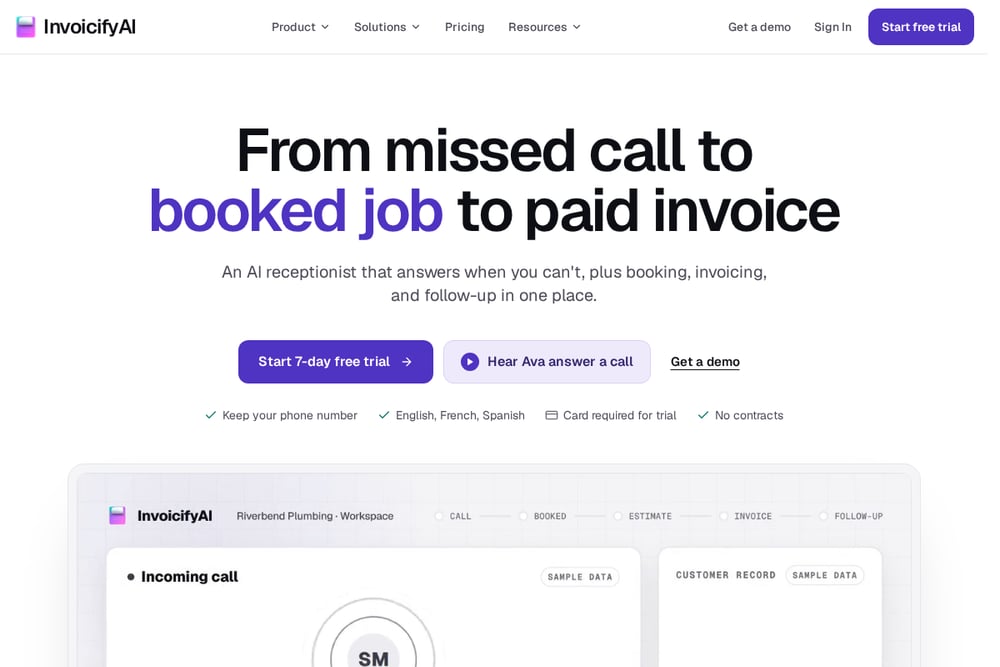 A screenshot of the InvoicifyAI website.
InvoicifyAI takes a voice-first approach to estimate follow-up. Its Estimate Follow-up Agent calls to confirm receipt, capture objections, and update CRM status. That matters because text follow-ups get far higher response rates than email, and a call can surface the real reason a quote went quiet. The tool logs outcomes back into the customer workflow, so your team sees where each opportunity stands. It also fits alongside field-service software like Jobber, Housecall Pro, and ServiceTitan. If your estimates die in silence and you want a voice touch without hiring a caller, this is the one to look at. Their comparison of estimate follow-up tools for contractors covers the wider category.
How to Choose the Right Fit
Start with one question: who writes the message? If the answer is you, you need a reminder or a schedule, and Advanced Agritek or PipelineOn will do. If the answer is the service, you want Bid Rescue or AI Emaily. If the answer is a phone call, InvoicifyAI is built for that. Next, look at pricing. Bid Rescue charges per job only after a contract is signed, which means you pay when you win. AI Emaily and PipelineOn are subscription-style tools you run yourself. Advanced Agritek is a workflow you can implement with your own stack. InvoicifyAI ties to the calls it makes. Then check setup. Bid Rescue says there is nothing to learn. AI Emaily plugs into your inbox. PipelineOn connects to your CRM. Pick the one that matches how much time you actually have.
Where Automation Fits Without Feeling Robotic
Automation should handle timing, not tone. Let the system decide when the next touch happens, then make sure the message sounds like you. A good sequence confirms delivery on Day 0, answers common questions on Day 3, and sends a final reminder on Day 7. It stops the moment a customer replies, accepts, declines, or the quote expires. That stop rule is what keeps follow-up from feeling like spam. Bid Rescue handles the writing and sending for you, with one-click approval. AI Emaily drafts in your voice and waits for your review. PipelineOn feeds visitor signals into the workflow. Advanced Agritek gives you the schedule to copy. InvoicifyAI adds a voice touch and logs the outcome. Use one, not all five.
The Bottom Line on Bringing Bids Back
Most estimates that go quiet never get a second email. That is the whole problem, and every service here attacks it from a different angle. If you want the least work and the least risk, Bid Rescue sends follow-ups in your name and charges only after a job signs. If you want an AI assistant across your whole inbox, AI Emaily is the broader tool. PipelineOn adds visitor signals to your CRM. Advanced Agritek gives you a schedule you can run today. InvoicifyAI brings voice into the mix. Pick the one that matches your time, your stack, and how you like to sell. Then send the five estimates you have been avoiding.