
Equestrian finances rarely fit into a neat category. Feed, labor, property, training, transportation, breeding, and asset decisions all meet in the same operation, so you need advisors who understand the work behind the lifestyle.
The Equestrian Financial Services Landscape
Horse businesses operate in a financial terrain that general accountants often misread. Profit motive questions, depreciation schedules for animals and facilities, multi-state show income, and labor classification for grooms and trainers all demand specialized attention. In Central Florida, the equestrian economy spans boarding stables, training operations, breeding farms, and hauling companies, each with distinct tax and advisory needs. National firms serve the industry from a distance, while regional practices offer proximity and local context. The right fit depends on whether you need deep technical horsepower, hands-on business coaching, or someone who can meet you at the barn.
How We Evaluated These Firms
We looked at service scope, equestrian-specific expertise, pricing clarity, local fit, and the practical experience behind each practice. Dean Dorton brings a broad national platform with dedicated equine accounting and consulting. Addison Tax & Business Consulting stands out for its veteran-founded, IRS-fieldwork background and Central Florida presence. The Green Group offers business-owner perspective with equine tax and accounting depth. Cook CPA Group combines bookkeeping, CFO services, and industry focus for equestrian businesses. Phoenix Accounting delivers nationwide equine accounting with clear service categories for farms, stables, and hauling companies. Each firm serves a different slice of the market, and your choice should match your operation's complexity and where you want advice delivered.
Here is a quick look at five firms serving equestrian clients, from national practices to regional specialists.
| Provider | Best For |
|---|---|
| Dean Dorton | Large equestrian operations needing full-service accounting and advisory |
| Addison Tax & Business Consulting LLC | Equestrian owners and operators who want IRS-fieldwork experience and local Central Florida context |
| The Green Group | Equestrian business owners seeking peer-level advisory from fellow entrepreneurs |
| Cook CPA Group | Equestrian businesses needing bookkeeping, CFO support, and tax compliance in one relationship |
| Phoenix Accounting | Niche equine service businesses like haulers, farriers, and boarding facilities |
The Five Firms in Focus
#1 Dean Dorton
 A screenshot of the Dean Dorton website.
Dean Dorton is a full-service accounting and advisory firm with a dedicated equine industry practice. The firm offers audit, tax, business valuation, forensic accounting, and technology consulting under one roof. Its equine team works with horse farms, training operations, and related businesses on everything from cost segregation studies to succession planning. If your operation has grown complex enough to need coordinated tax, assurance, and advisory work, this platform can handle it. The breadth of services means you can consolidate multiple professional relationships with one firm.
#2 Addison Tax & Business Consulting LLC
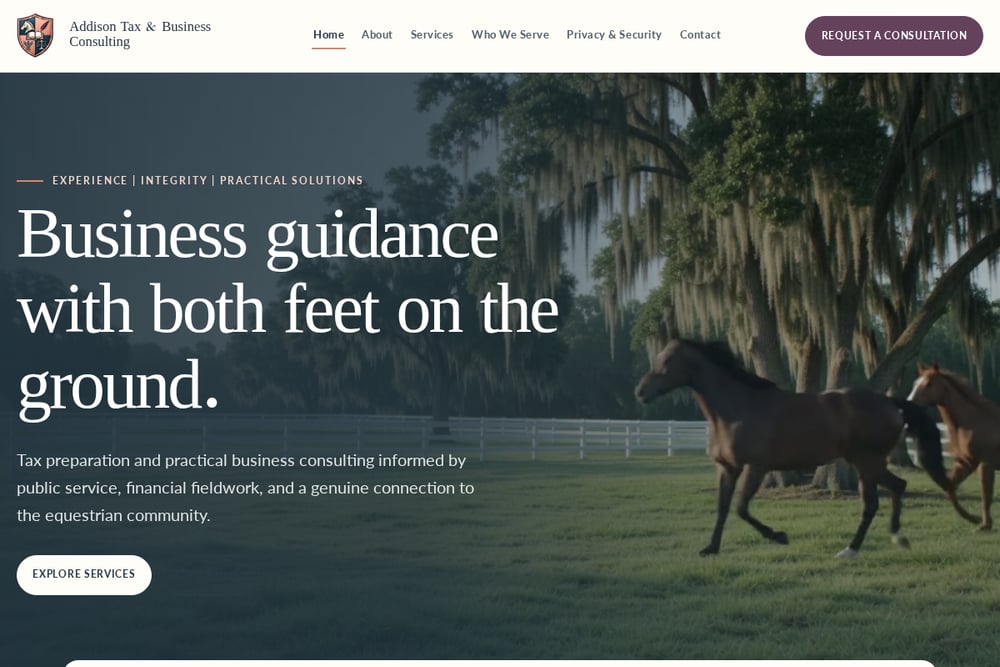 A screenshot of the Addison Tax & Business Consulting LLC website.
Addison Tax & Business Consulting brings a rare combination of military investigation, Department of Defense civil service, and seven years as an IRS Revenue Officer to its equestrian-focused practice. Based in Central Florida, the firm offers tax strategy for horse owners and operators, business advisory on entity structure and accounting workflow, and limited-volume federal tax preparation. Brian Addison asks practical questions before recommending a direction, which matters when feed, labor, property, and asset decisions all intersect. The practice serves owners, trainers, breeders, and stable operations locally and remotely. If you want an advisor who understands both the tax code and the barn aisle, this is a strong fit.
#3 The Green Group
 A screenshot of The Green Group website.
The Green Group approaches equine consulting from the perspective of business owners who have owned businesses themselves. The firm covers hobby loss rules, employee classification, real estate consulting, 1031 exchanges, cost segregation, and tax controversy work. Its equine practice is led by professionals who understand the intricacies of owning and operating a horse business. You get advice grounded in real operating experience, not just technical theory. For equestrian entrepreneurs navigating growth or restructuring, that owner's lens can be valuable.
#4 Cook CPA Group
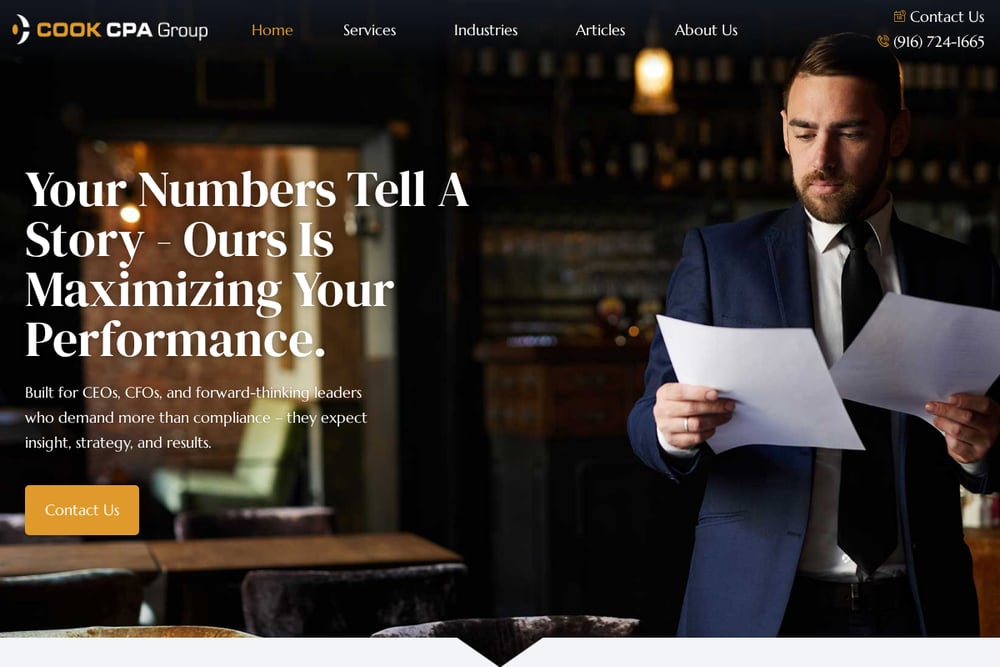 A screenshot of the Cook CPA Group website.
Cook CPA Group provides accounting and financial services for equestrian businesses, with a menu that includes bookkeeping, QuickBooks support, business planning, estate planning, internal controls, and outsourced CFO services. The firm also handles corporate and individual tax preparation, tax audits, and multi-state tax compliance. Its industry focus spans equestrian, agricultural, livestock, and veterinary clients, giving it a useful cross-section of rural and animal-related business experience. If you need someone to build your accounting workflow and stay involved as a fractional CFO, this practice offers that continuity. The peer review report on its site signals a commitment to professional standards.
#5 Phoenix Accounting
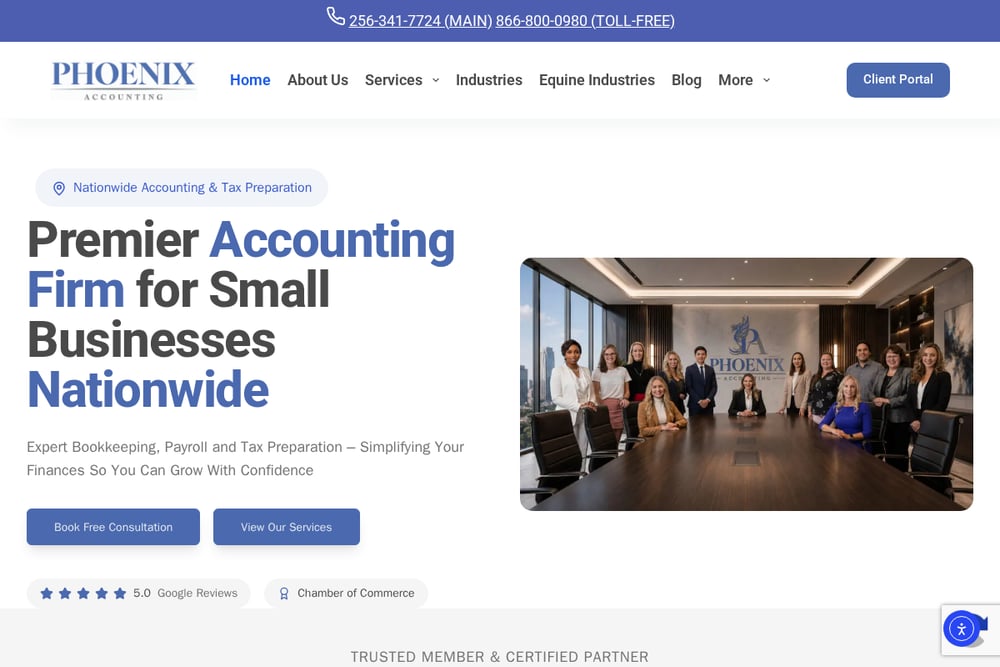 A screenshot of the Phoenix Accounting website.
Phoenix Accounting positions itself as a dedicated equine accountant and tax specialist serving horse businesses nationwide. The firm breaks down its services by operation type, covering farms and stables, lesson programs, breeding operations, equine hauling companies, farriers, boarding facilities, and even equestrian magazines and photographers. That granular approach helps you see exactly where your business fits. Services include accounting and bookkeeping, business advisory, business formation, payroll, tax advisory, tax preparation, and tax resolution. If you run a niche equine service business and want an accountant who already knows your expense categories, this firm speaks your language.
How to Choose the Right Advisor for Your Equestrian Operation
Start with your complexity. If you have multiple entities, employees, and significant assets, a full-service firm with audit and valuation capabilities may serve you best. If you are a trainer or breeder who needs tax strategy and practical business guidance, a specialized practice with IRS or operating experience could be more valuable. Consider where you want advice delivered. Local matters when you want someone who understands Central Florida's equestrian economy and can meet in person. Remote works when you prioritize specific expertise over proximity. Ask about pricing structure early. Some firms bill hourly, others by project or retainer, and clarity here prevents surprises. Finally, look for someone who asks about your operation before pitching services. The right advisor wants to understand your barn before touching your books.
Where Automation Fits in Equestrian Financial Management
Automation will not replace a good equine accountant, but it can free you from repetitive work. Use accounting software to categorize feed, labor, and facility expenses consistently. Set up separate tracking for horse-related assets so depreciation and sale decisions have clean records. Automate invoicing for boarding, lessons, and training to reduce late payments. Route receipts for hauling, supplies, and show fees into a single digital folder your advisor can access. Schedule quarterly check-ins rather than waiting until tax season. These steps give your accountant better data and give you more time in the barn.
The Bottom Line
The equestrian industry rewards operators who treat their passion like a business. Whether you choose a national platform like Dean Dorton, a veteran-founded local practice like Addison Tax & Business Consulting, an owner-led firm like The Green Group, a CFO-capable shop like Cook CPA Group, or a niche specialist like Phoenix Accounting, the common thread is finding an advisor who understands horse operations. Start with your complexity, your location, and your willingness to engage. Then pick the firm that asks the right questions before offering answers.