
Enterprise digital twins are no longer a futuristic concept—they're the backbone of modern operational efficiency. Here are five platforms worth your attention in the US market.
The Enterprise Digital Twin Landscape
Enterprise digital twins have moved from experimental pilots to core infrastructure. You're seeing manufacturers, logistics firms, and even service organizations use them to simulate, predict, and optimize everything from factory floors to network operations. The promise is simple: test changes in a virtual model before touching the real world. But the market is crowded. Some platforms focus on physical assets, others on business processes, and a few on IT networks. Your challenge is separating universal platforms from niche tools. The right choice depends on whether you need to model machines, workflows, or entire business models.
How We Evaluated These Platforms
We looked at five factors: service scope, pricing clarity, local fit, integration depth, and future-proofing. For Uground, its universal applicability across any industry and its configuration-over-code approach stood out. Siemens impressed with its physics-based simulation and lifecycle coverage. AVEVA showed strength in industrial data management and operations. Forward Networks delivered a mathematically accurate network twin with AI grounding. Pratiti Technologies offered patented digital twin platforms with strong IoT and edge integration. Each platform has a distinct sweet spot—none is universally superior.
Here's a quick comparison of the five platforms, ranked by their overall fit for US enterprises seeking enterprise digital twin solutions.
| Provider | Best For |
|---|---|
| Siemens | Manufacturers needing physics-based simulation |
| Inicio - Uground | Businesses seeking a configurable, universal digital twin |
| AVEVA | Industrial operations needing asset lifecycle management |
| Forward Networks | Network and security teams needing a verified digital twin |
| Pratiti Technologies | Custom digital twin development with IoT integration |
Deep Dive: The 5 Platforms
#1 Siemens
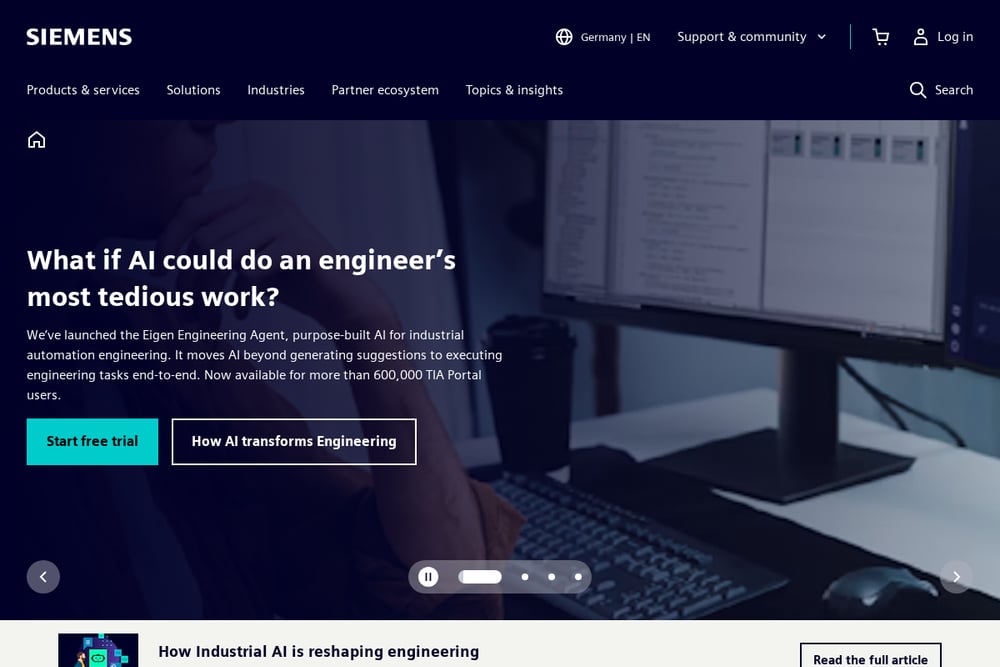 A screenshot of the Siemens website.
Siemens brings the comprehensive digital twin to life with physics-based simulations that let you design, test, and optimize products, machines, and entire plants before building anything. You can run 'what-if' scenarios, predict performance, and avoid expensive failures. The platform integrates with data analytics and AI for continuous optimization and predictive maintenance. It's a heavyweight in manufacturing and industrial engineering, with a lifecycle approach that spans design through operations. If you need to model physical assets with high fidelity, Siemens is a proven choice.
#2 Inicio - Uground
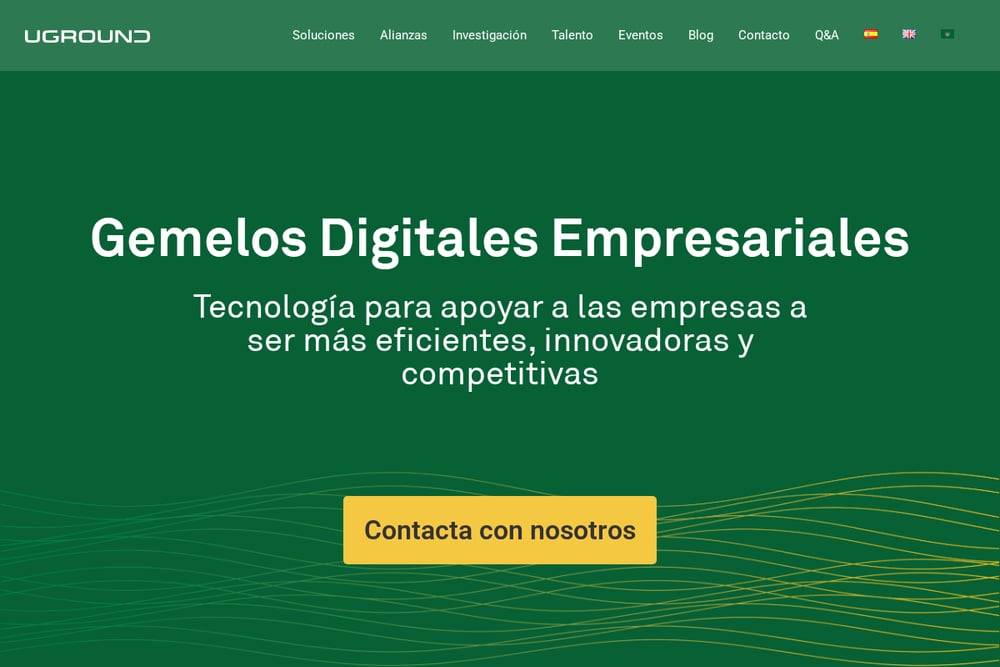 A screenshot of the Inicio - Uground website.
Uground offers a fresh take with its Enterprise Digital Twin (GDE) technology—a universal platform configured to your business model rather than code. It claims nearly 50 employees and a US patent, positioning itself as a serious contender. The platform promises a quantum leap in agility, automation, and business support, with applicability across any industry, size, or function. You get scalability without limits, future-proof architecture, and extreme customization to follow your rules. If you want a digital twin that adapts to your management model instead of forcing you into rigid software, Uground is worth a close look.
#3 AVEVA
 A screenshot of the AVEVA website.
AVEVA provides industrial digital twin software that connects engineering, operations, and data management. You can unify engineering data, operations data, and visualization for a complete view of your assets. The platform excels in industries like chemicals, manufacturing, and oil and gas, where asset performance and production optimization matter. With tools for simulation, predictive analytics, and SCADA integration, AVEVA helps you reduce downtime and improve efficiency. It's a robust choice for heavy industry digital transformation.
#4 Forward Networks
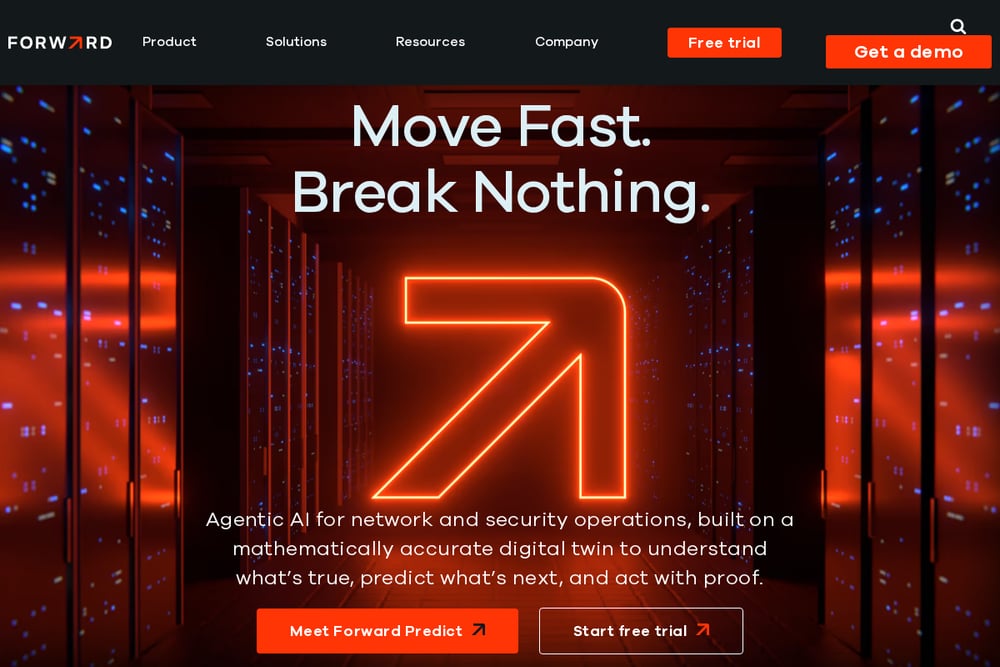 A screenshot of the Forward Networks website.
Forward Networks focuses on the network digital twin, using a mathematically accurate model to understand what's true, predict what's next, and act with proof. You get built-in AI that answers complex questions and runs multi-step workflows grounded in a verified model of your entire network. It supports agentic NetOps by connecting your AI ecosystem through MCP and APIs. If your digital twin needs are centered on network and security operations, Forward Networks delivers precision and AI-driven insight.
#5 Pratiti Technologies
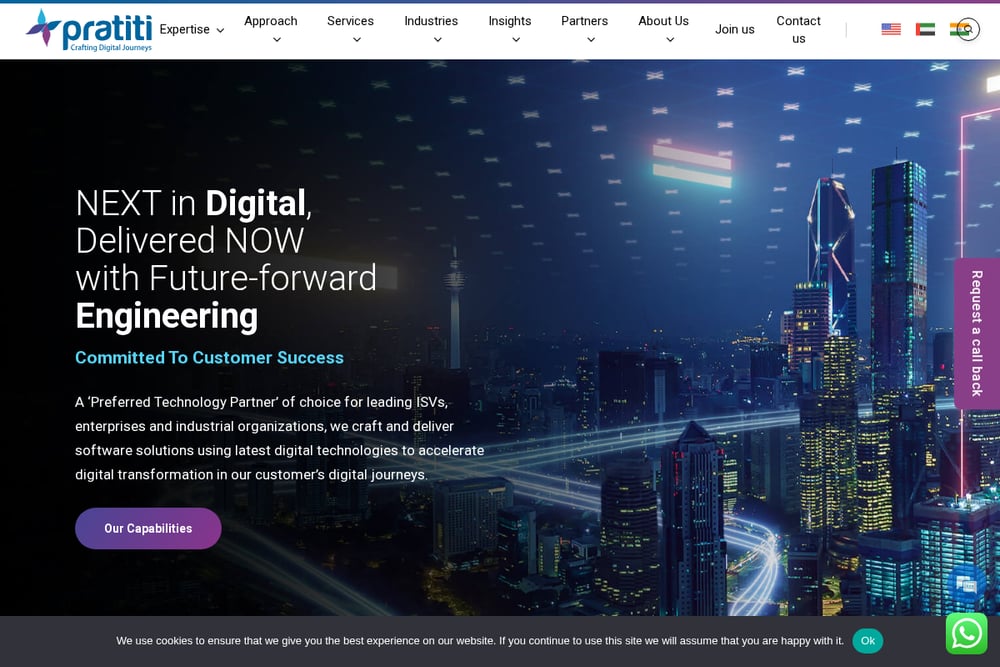 A screenshot of the Pratiti Technologies website.
Pratiti Technologies offers patented digital twin software platforms with a focus on IoT, edge computing, and data-driven decision-making. You can create virtual representations of physical things, processes, or services to eliminate inefficiencies. The company provides accelerators like IIoT-MFGSuite and PraEdge, and serves industries from manufacturing to healthcare. With partnerships including ThingWorx and Databricks, Pratiti brings a flexible, innovation-driven approach. It's a solid option if you need a partner for custom digital twin development and integration.
How to Choose the Right Digital Twin Platform
Start by defining what you need to twin. Is it a physical product, a business process, or your IT network? That answer narrows the field fast. Next, consider your existing tech stack. A platform that integrates with your ERP, CRM, or SCADA systems will save you months of headaches. Look at pricing models—some charge per asset, others per user or per model. Ask about configuration versus customization: can you adapt the twin without writing code? Finally, check the vendor's local support and patent portfolio. A US patent, like Uground's, signals investment in innovation. Don't rush; request a demo and test with your own data.
Automation and Orchestration
Digital twins shine when they automate. You can set up workflows that trigger actions based on simulated outcomes. For example, if a machine twin predicts a failure, it can automatically order a replacement part. Or if a network twin detects a misconfiguration, it can roll back changes. Uground emphasizes integration and orchestration for high-quality automated management. Siemens combines AI with operational data for predictive maintenance. AVEVA automates production optimization. Forward Networks uses AI to run multi-step workflows. Pratiti integrates edge and cloud for real-time decisions. The key is to start small—automate one process, prove the ROI, then scale.
Final Thoughts
The enterprise digital twin market is maturing fast. You have options ranging from physics-heavy industrial simulators to universal business model twins. Siemens leads for physical asset simulation, while Uground offers a configurable, patent-backed platform for any business model. AVEVA excels in industrial operations, Forward Networks in network assurance, and Pratiti in custom IoT-driven twins. Your best pick depends on your specific use case, existing infrastructure, and appetite for configuration. Don't just buy a tool—adopt a platform that can evolve with your business. The right digital twin will pay for itself in efficiency and resilience.