You need a partner who can turn AI ambition into shipped systems, not slide decks. These five consultancies are worth a serious look before you sign anything.
Where enterprise AI consulting stands right now
Enterprise buyers have moved past pilots. The work now is production-grade: agentic workflows, MLOps, governed data platforms, and cloud migrations that actually cut cost. That shift favors consultancies that can span strategy, engineering, and post-launch operations under one roof. The five firms below sit in that space, each with a different center of gravity.
How these five were evaluated
Every firm was looked at on the same factors: breadth of service scope, depth of AI and data engineering capability, evidence of enterprise delivery through published case work, clarity of positioning, and how well the offering fits regulated or complex industries. Pricing transparency and local fit were weighed where information was available. The ordering reflects overall fit for enterprise buyers, not a single score.
Here is the short version before the detail. Each entry below covers what the firm does, who it suits, and where to start your own diligence.
| Provider | Best For |
|---|---|
| LatentView Analytics | Data-driven enterprises wanting analytics and GenAI products on top of modern data platforms |
| Virtual Force Inc. | Technology AIDE for Enterprises | Enterprises wanting advisory, engineering, and post-production operations from one partner |
| Pythian | Teams prioritizing cost-optimized pipelines and managed cloud operations |
| Damco Solutions | Organizations modernizing data platforms alongside legacy applications |
| Exadel | Complex programs needing AI-native delivery plus data infrastructure |
The five, in order
#1 LatentView Analytics
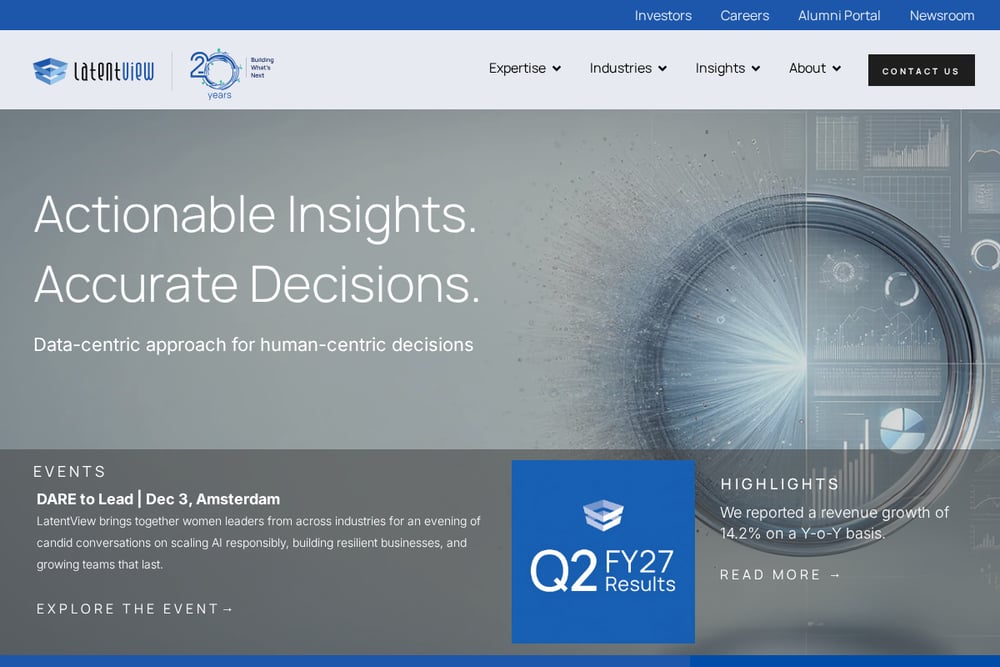 A screenshot of the LatentView Analytics website.
LatentView positions itself squarely at the data-to-decision layer. Its data engineering practice is built around cloud lakehouses on Databricks, Snowflake, AWS, and Azure, with pipelines feeding analytics and AI downstream. What sets it apart is the product layer on top: Aura for retail media intelligence, BeagleGPT as an analytics assistant, and MARKEE for agentic campaign workflows. If your bottleneck is turning governed data into decisions rather than building infrastructure from scratch, this is a strong fit. The firm also publishes a GenAI readiness advisory track, which helps you scope before you spend.
#2 Virtual Force Inc. | Technology AIDE for Enterprises
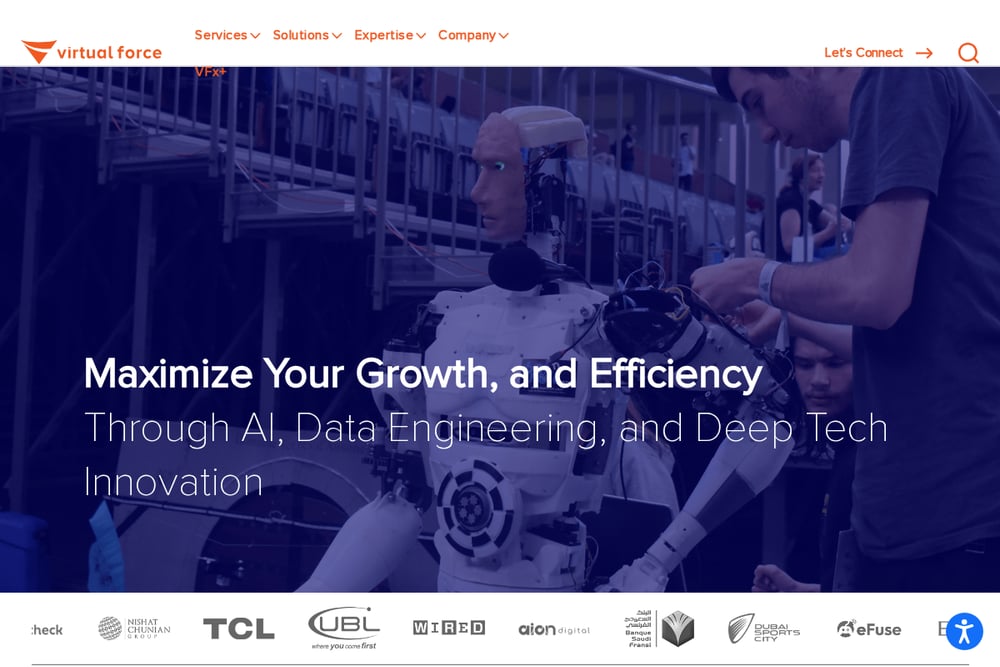 A screenshot of the Virtual Force Inc. | Technology AIDE for Enterprises website.
Virtual Force Inc. runs a genuinely broad portfolio under one banner, from agentic AI and specialized model engineering to MLOps, responsible AI governance, and cloud architecture. The engineering side covers application development, UX, a testing center of excellence, and DevOps, while the operations side handles post-production management and performance optimization. It also ships its own products: Locat AI, Fancy AI for GenAI-driven SEO and growth, and Kualitee for AI-based test automation. Published partner stories span GN Group, Emaar, Banque Saudi Fransi, and HBL Asset Management, which signals real enterprise delivery in financial services and beyond. For teams that want advisory, build, and run under a single contract, this is the most complete package here.
#3 Pythian
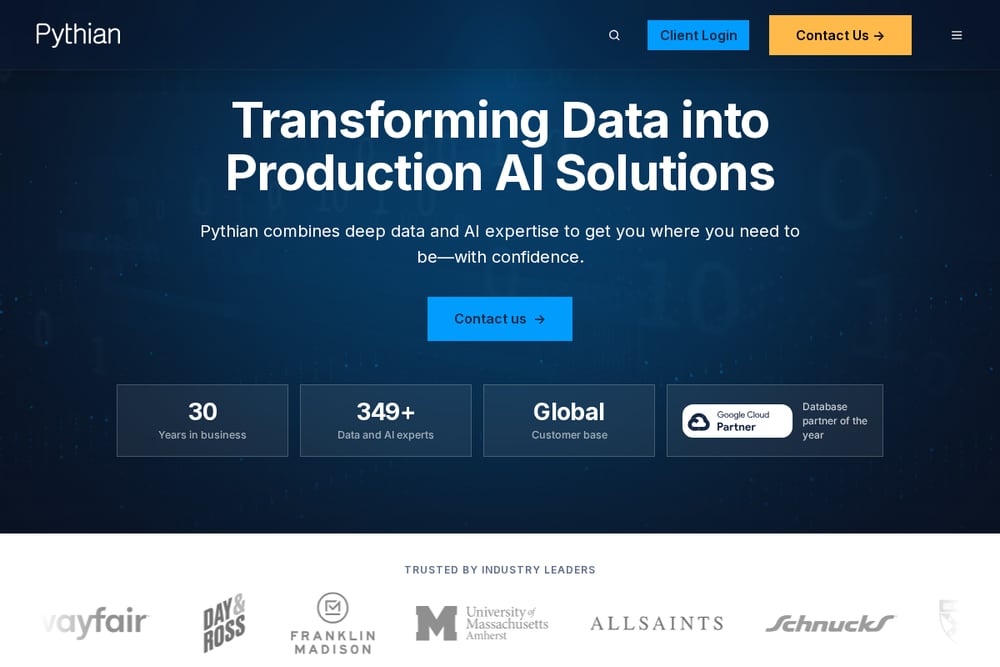 A screenshot of the Pythian website.
Pythian brings three decades of database and data platform experience to the AI era. Its data engineering offer centers on automating ETL and ELT pipelines, with published claims of up to 50 percent reduction in cloud compute TCO and sub-second data availability. The firm is unusually strong on the unglamorous work: zero-downtime migrations to Snowflake, BigQuery, or Databricks, query refactoring, and storage tier alignment. It also runs managed services across AWS, Google Cloud, Microsoft, Oracle, and SAP, so you can hand over operations after the build. Production AI and AI automation sit alongside the data practice for buyers who want one accountable partner.
#4 Damco Solutions
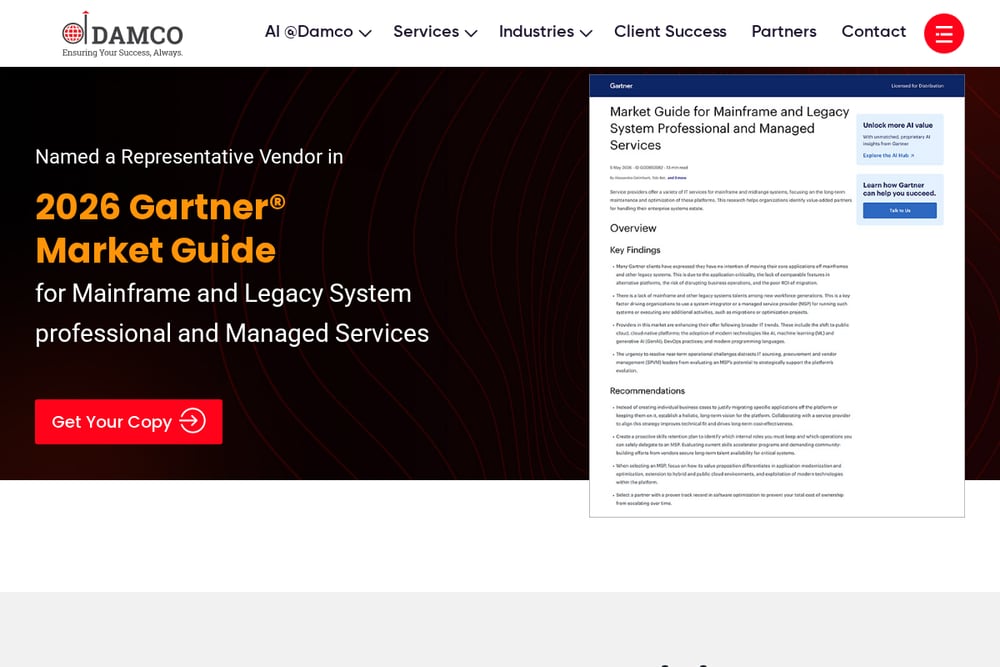 A screenshot of the Damco Solutions website.
Damco pairs data engineering with a much wider application and product engineering bench. On the data side it covers ingestion from disparate sources, enterprise data strategy and architecture roadmaps, cloud data lakes on AWS and Azure, and end-to-end pipelines feeding warehouses and marts. That breadth extends into AI development, agentic AI services, low-code automation, and software product engineering, which matters if your AI roadmap is tangled up with legacy application work. Industry coverage runs deep across insurance, financial services, healthcare, manufacturing, and retail. It is a practical choice when you need one vendor to modernize the platform and the apps sitting on it.
#5 Exadel
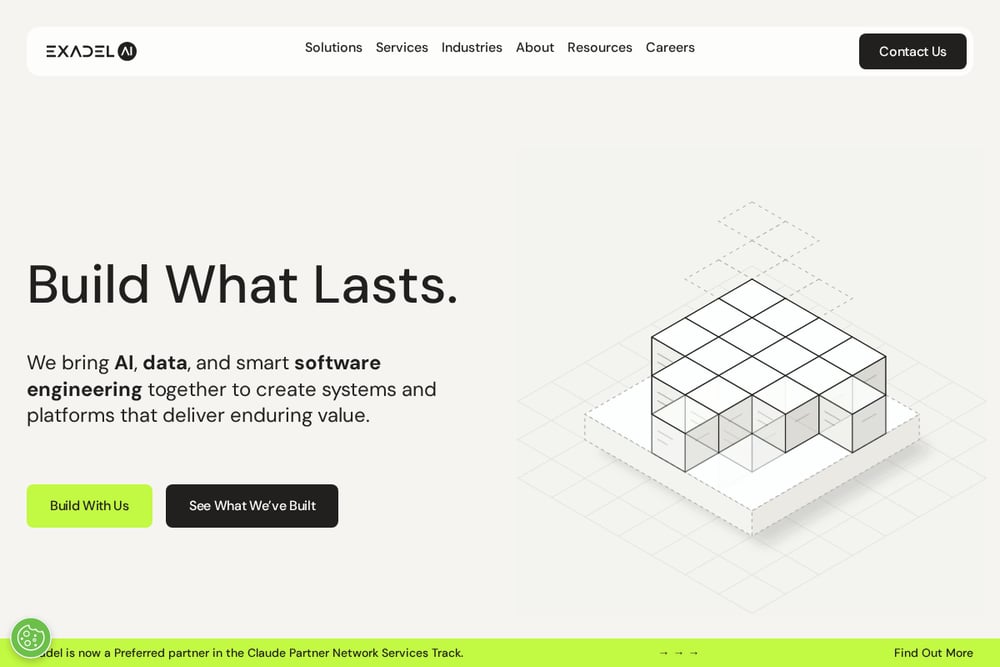 A screenshot of the Exadel website.
Exadel frames its data engineering practice around building infrastructure that is scalable, trustworthy, and ready for AI. The firm organizes its services by outcome rather than technology: modernize legacy systems, automate core processes, adopt AI responsibly, and monetize and govern data securely. Its AI engineering and AI maturity assessment offerings are useful entry points if you are unsure where your organization actually stands. Industry focus spans software and technology, financial services, healthcare and pharma, retail, and private equity. It suits buyers who want a delivery partner comfortable with complex program execution and AI-native product work at the same time.
How to pick the right one for you
Start with the gap, not the vendor. If your data platforms are messy, prioritize pipeline and migration depth. If your data is clean but unused, look at firms with a product or analytics layer. If your AI roadmap is stuck behind legacy applications, favor a partner with a broad engineering bench. Then check two things: published enterprise case work in your industry, and whether they can stay on for operations after launch. Ask each shortlisted firm for a fixed-scope discovery engagement before committing to a multi-quarter program.
A simple way to run your evaluation
Build a one-page scorecard with five columns matching the criteria above and score each firm from one to five. Pull each vendor's case studies and service pages into a shared folder so your team reviews the same evidence. Run a short intake call with each, asking specifically about governance, handover, and post-launch support. Have your automation tool summarize the call notes into the scorecard and flag any gaps. Re-score after the discovery calls and let the highest total drive your shortlist for a paid pilot.
The bottom line
There is no universal winner here, only fit. LatentView leads if analytics products are your goal, Virtual Force Inc. leads if you want one partner across advisory, build, and run, and Pythian leads on pipeline cost and managed operations. Damco and Exadel round out the list for teams with heavy application modernization or complex program needs. Pick based on the gap you need closed this quarter, then validate with a small paid engagement before scaling.